What Caused The Bronze Age Collapse?
Around 1200 BCE, the most advanced societies of the eastern Mediterranean began to come apart within the span of a few generations. Palaces burned, trade routes went silent, and entire writing systems vanished from use. The Mycenaean kingdoms of Greece, the Hittite Empire in Anatolia, the port cities of Cyprus, and much of the Levant suffered the sharpest political breakdowns. Egypt held together as a state but emerged battered by warfare, economic strain, and a steady loss of its grip on the Levant. Historians still debate the mix of causes, and the evidence points not to one catastrophe but to several pressures striking different regions at different speeds.

The Bronze Age itself had begun roughly two thousand years earlier, around 3300 BCE in Mesopotamia and the wider Near East, spreading later to the Aegean and Europe at different times. Metalworkers learned to harden copper by alloying it, producing arsenical bronze and, later, the more durable tin bronze used for tools, weapons, vessels, and ornaments. Control of bronze meant control of wealth, and the kingdoms that mastered its trade grew rich. The same centuries produced hieroglyphic writing, the war chariot, and even early soap-like cleaning agents recorded on Mesopotamian clay tablets around 2800 BCE. Farming villages gave way to cities, centralized kingdoms, specialist crafts, and long-distance exchange. By the 13th century BCE, regional powers such as Egypt and the Hittites fielded large armies, ran centralized bureaucracies, raised monumental buildings, and maintained a web of diplomacy documented in cuneiform letters between kings.
The leading explanations for this powerful age coming to an end fall into three overlapping categories: environmental stress, warfare, and the failure of the interlocking institutions that had made these societies prosperous.
Weather

Climate sits at the base of many recent accounts of the Bronze Age collapse. In a 2012 study, University of New Mexico researcher Brandon L. Drake synthesized several paleoclimate records and argued that cooler, drier conditions reduced agricultural output across the region in the decades leading up to the collapse. Drake read the evidence as a sustained decline in precipitation severe enough to constitute a prolonged drought, one that could have undercut the food base of many Bronze Age kingdoms at once. Earthquakes appear in the picture as well: a series of seismic events, sometimes called an "earthquake storm," is thought to have damaged cities across the Aegean and Anatolia during the same window.
Neither drought nor earthquake needs to have acted alone. Ruined walls and granaries left communities short of shelter and stores, while failed harvests emptied what reserves remained. The result was a food shortage, political instability, and a declining population. Households rationed, moved, and competed for what was left. The timing and weight of these natural shocks varied across regions, which is part of why the collapse looks uneven rather than uniform.
War

Scarcity strained the social bonds that held these kingdoms together, and the poorest were the first to feel it. Egyptian records from the later New Kingdom document delayed rations, worker grievances, official corruption, and unrest. The clearest surviving example is the Turin Strike Papyrus, which records the earliest known labor strike in history. In Year 29 of Ramesses III, around 1157 BCE, the royal tomb workers at Deir el-Medina downed tools and marched on the mortuary temples after their grain rations repeatedly failed to arrive, crossing the necropolis walls with the cry that they were hungry.

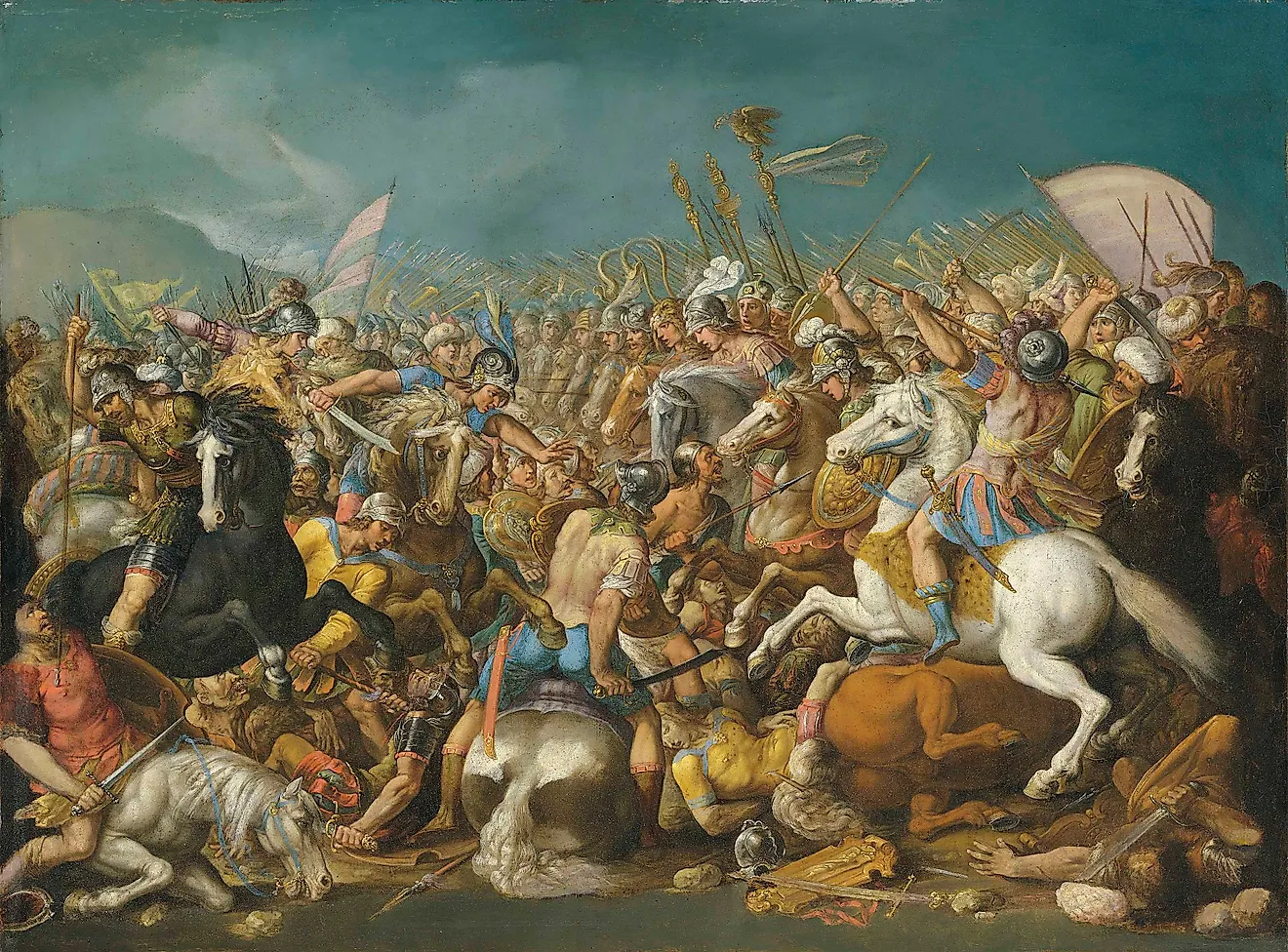
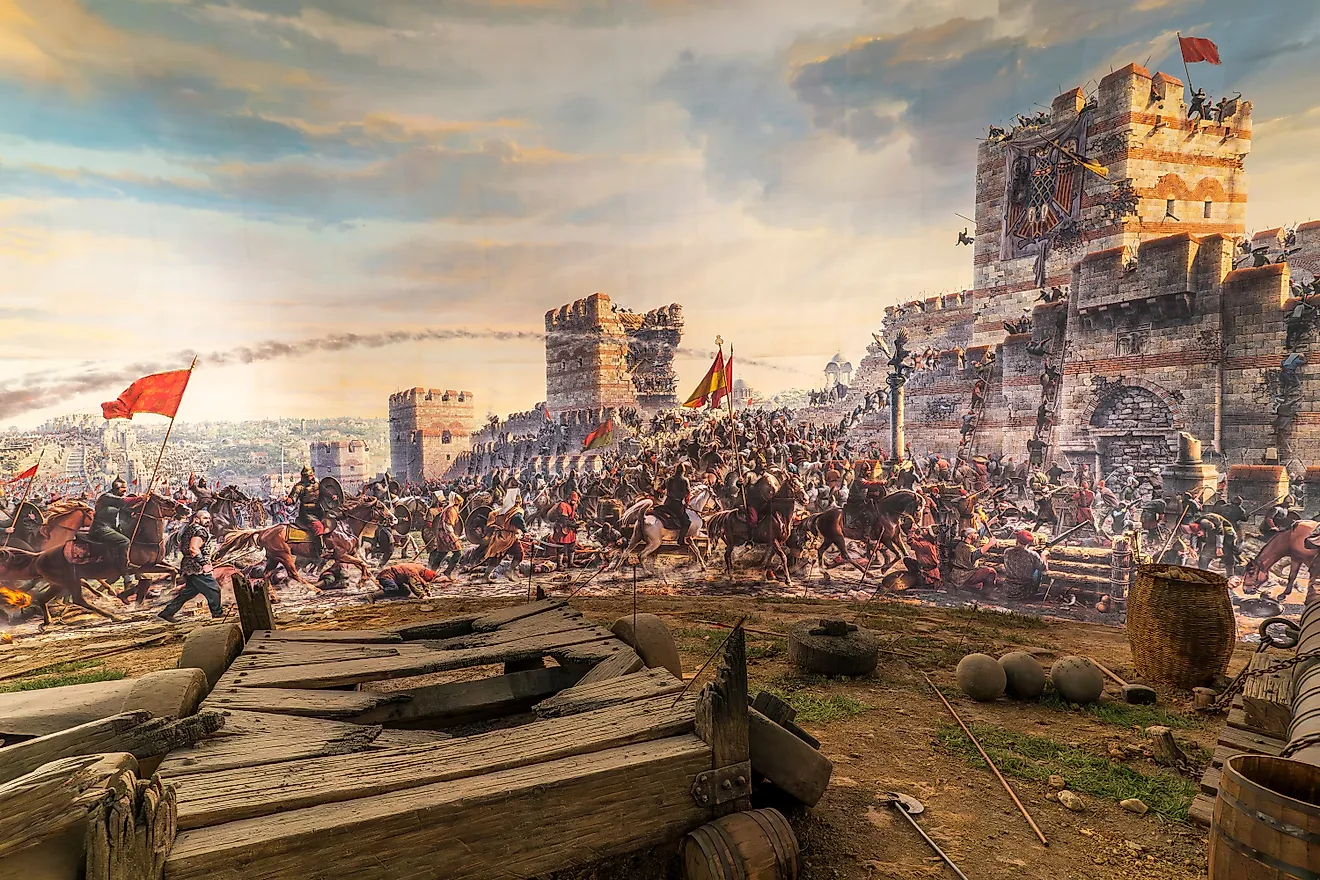
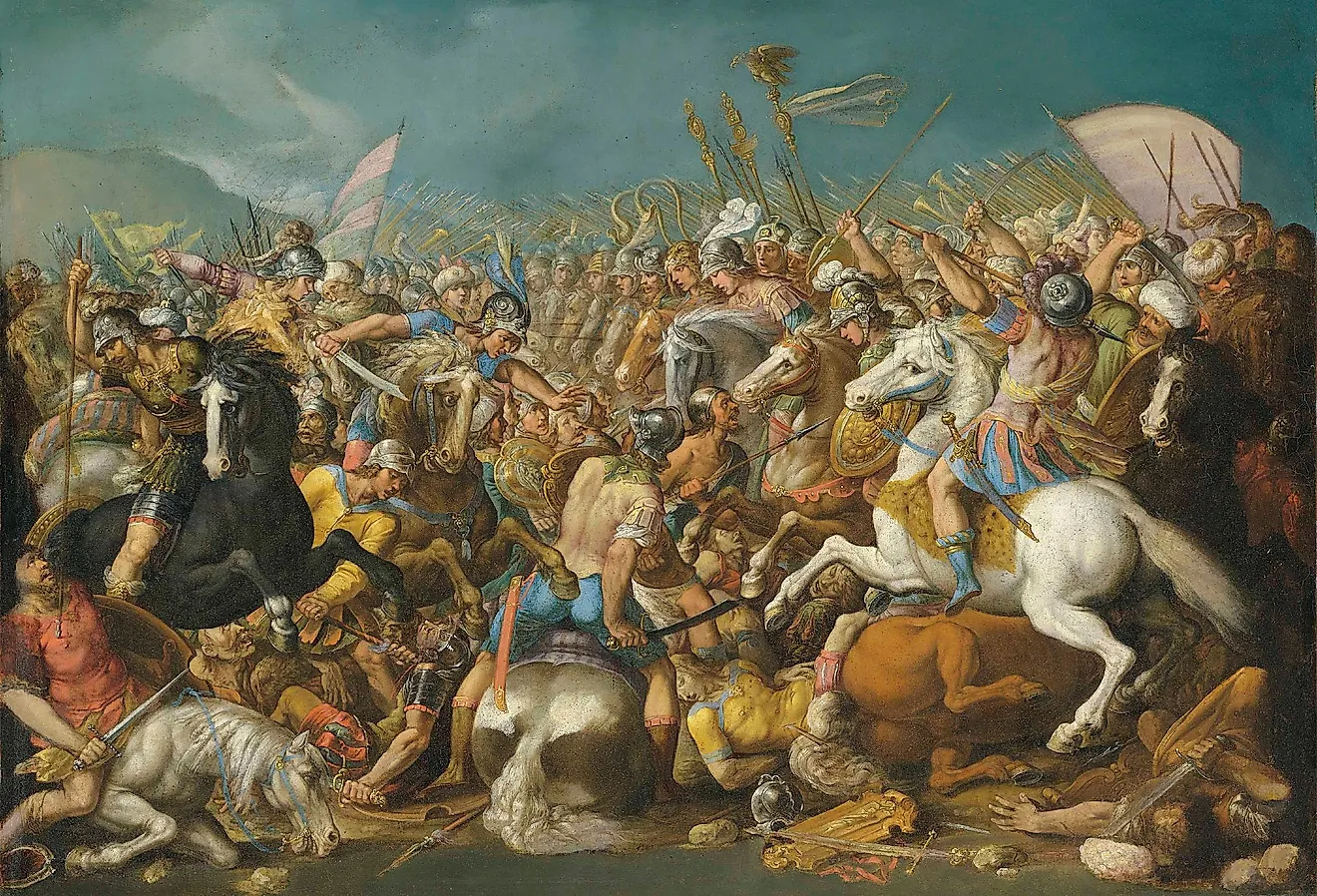
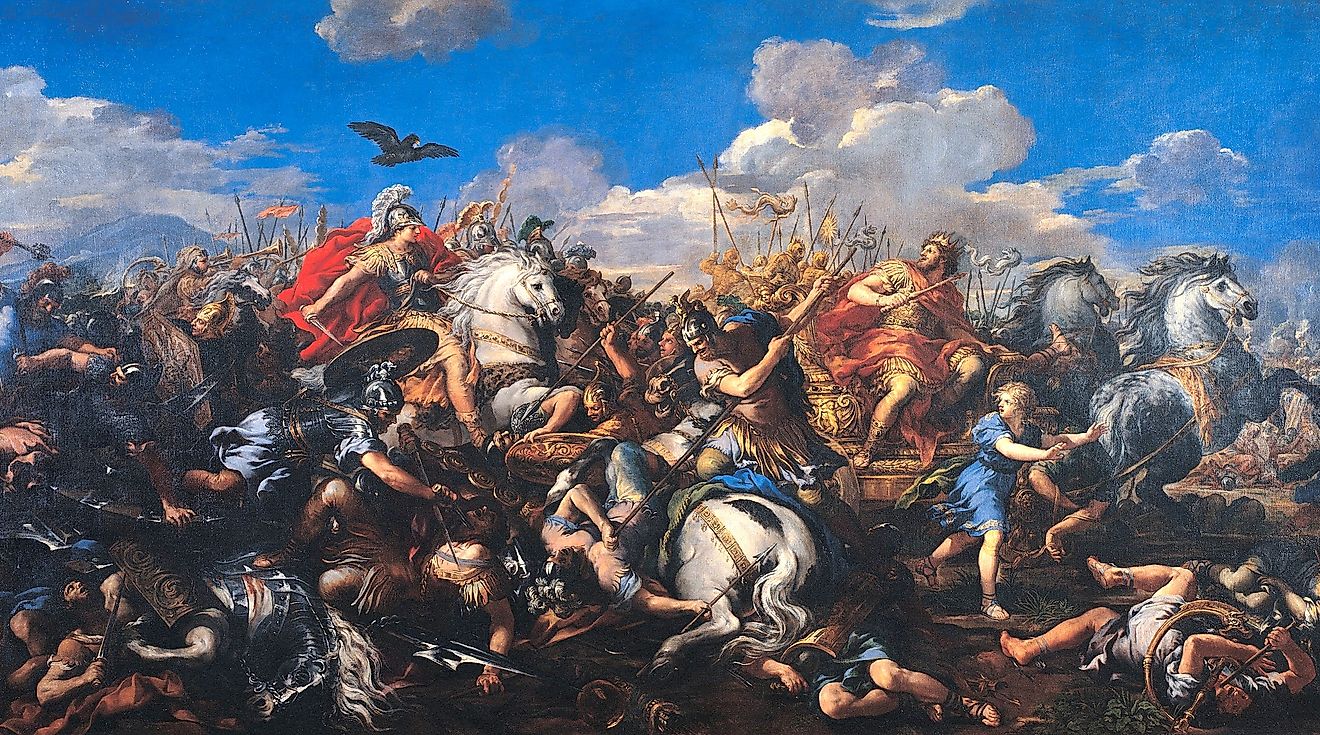
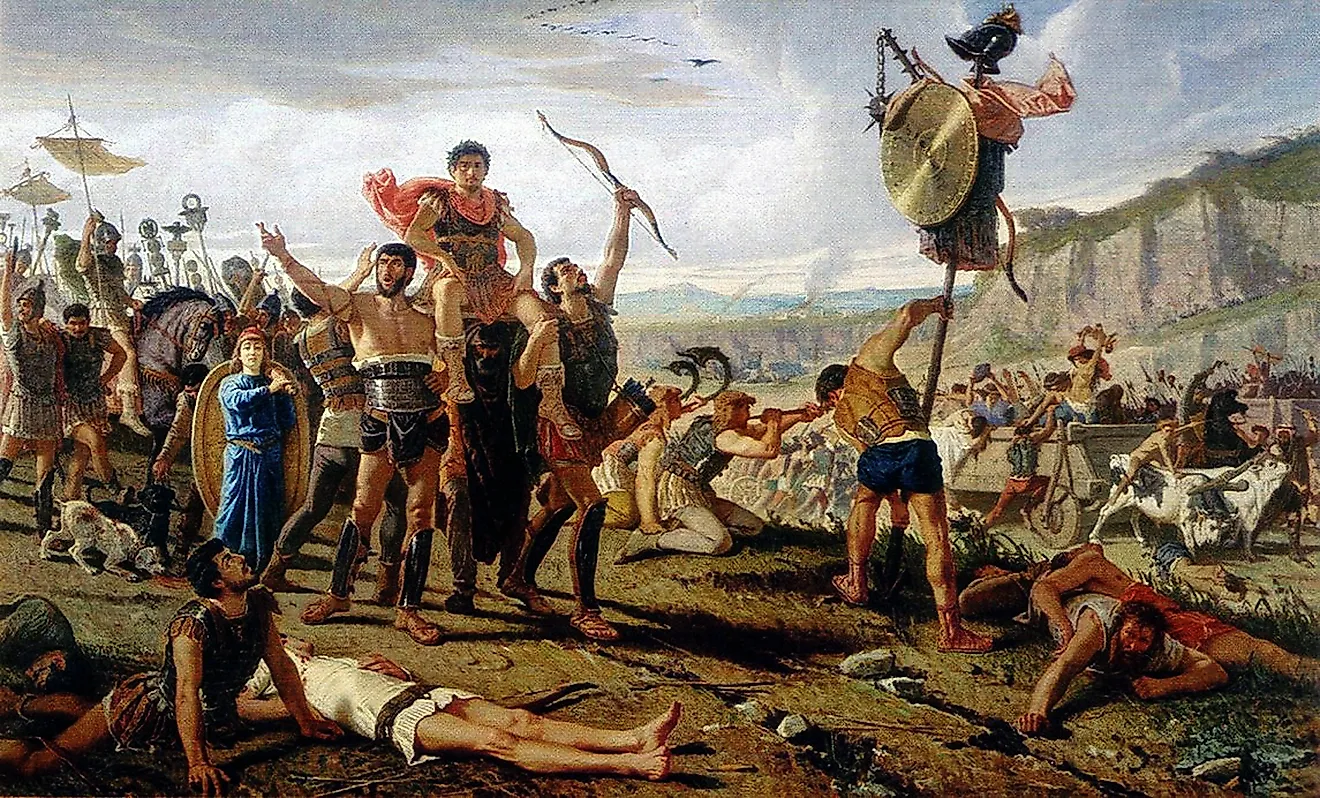
As internal cohesion frayed, external threats multiplied. The most famous are the so-called Sea Peoples, a modern collective label for several groups named in Egyptian inscriptions of the late 13th and early 12th centuries BCE. Their identities and origins remain genuinely uncertain, and scholars disagree over whether they triggered regional collapses, took advantage of instability already underway, or were themselves displaced populations on the move. The historian Robert Drews offered a different angle in 1993, proposing that a shift in warfare drove the catastrophe: mobile infantry armed with javelins and long swords had learned to defeat the expensive chariot armies on which the great kingdoms depended, stripping those states of their military edge.

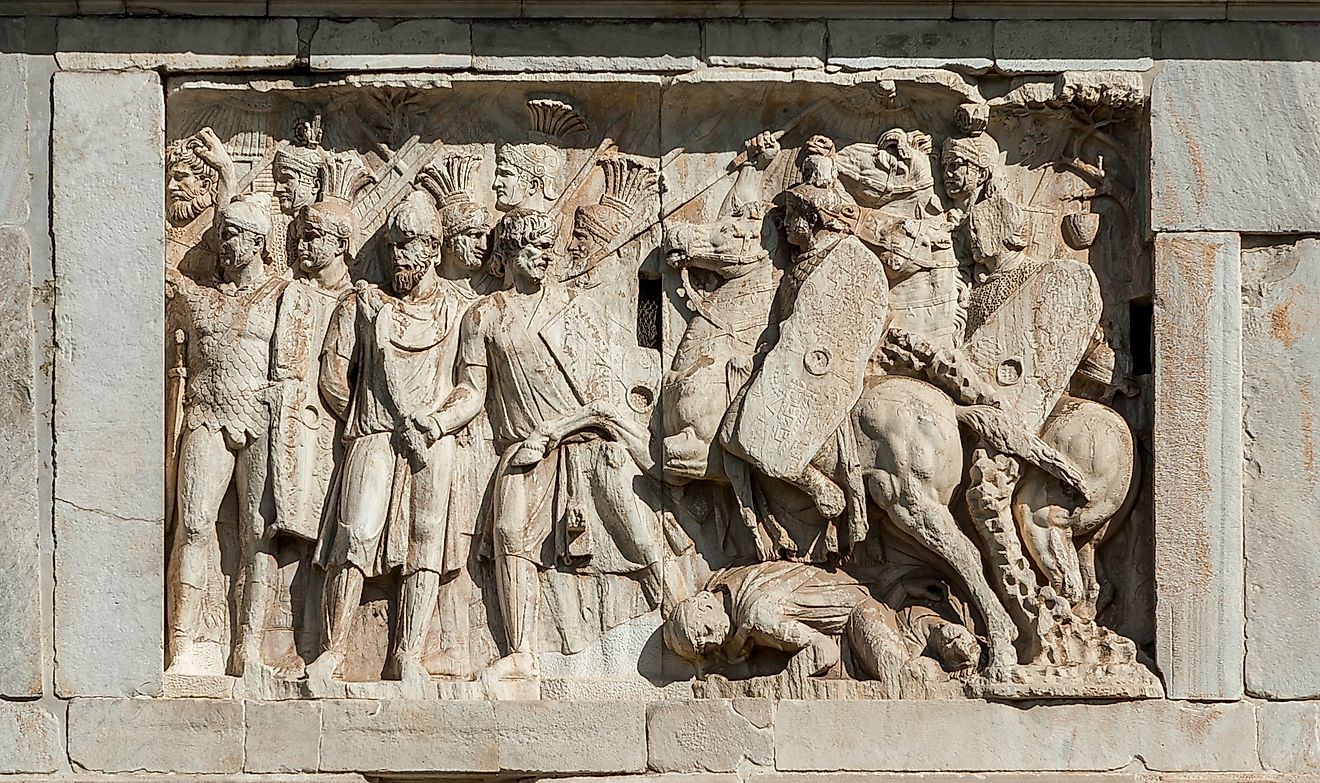
Egyptian inscriptions credit Ramesses III with defeating attacking forces on land and at sea, though these royal accounts should not be taken to mean every group was permanently destroyed or driven off. Egypt faced several conflicts with foreign groups during this period, each adding to its military and economic burden. Archaeology confirms that new populations settled in parts of the Levant around this time, but their numbers, origins, and relationships to the enemies depicted in Egyptian battle reliefs remain debated. What is clear is that sustained warfare fell on institutions already exhausted and stretched thin.
Institutional Failures

The deepest wound may have been to the systems of administration themselves. Over centuries, Bronze Age states had built elaborate machinery for governing: palace bureaucracies, written records, managed trade, workshop production, and organized armies. Writing systems like Egyptian hieroglyphs and Mycenaean Linear B made large-scale administration possible in the first place. Yet many scholars argue that the very features that let these societies flourish also left them fragile. Their prosperity rested on tight interdependence, on maritime shipping, diplomatic ties, palace redistribution, agricultural surplus, specialist labor, and the long-distance movement of metals and luxury goods. Cut enough of those threads, and the whole fabric unravels.

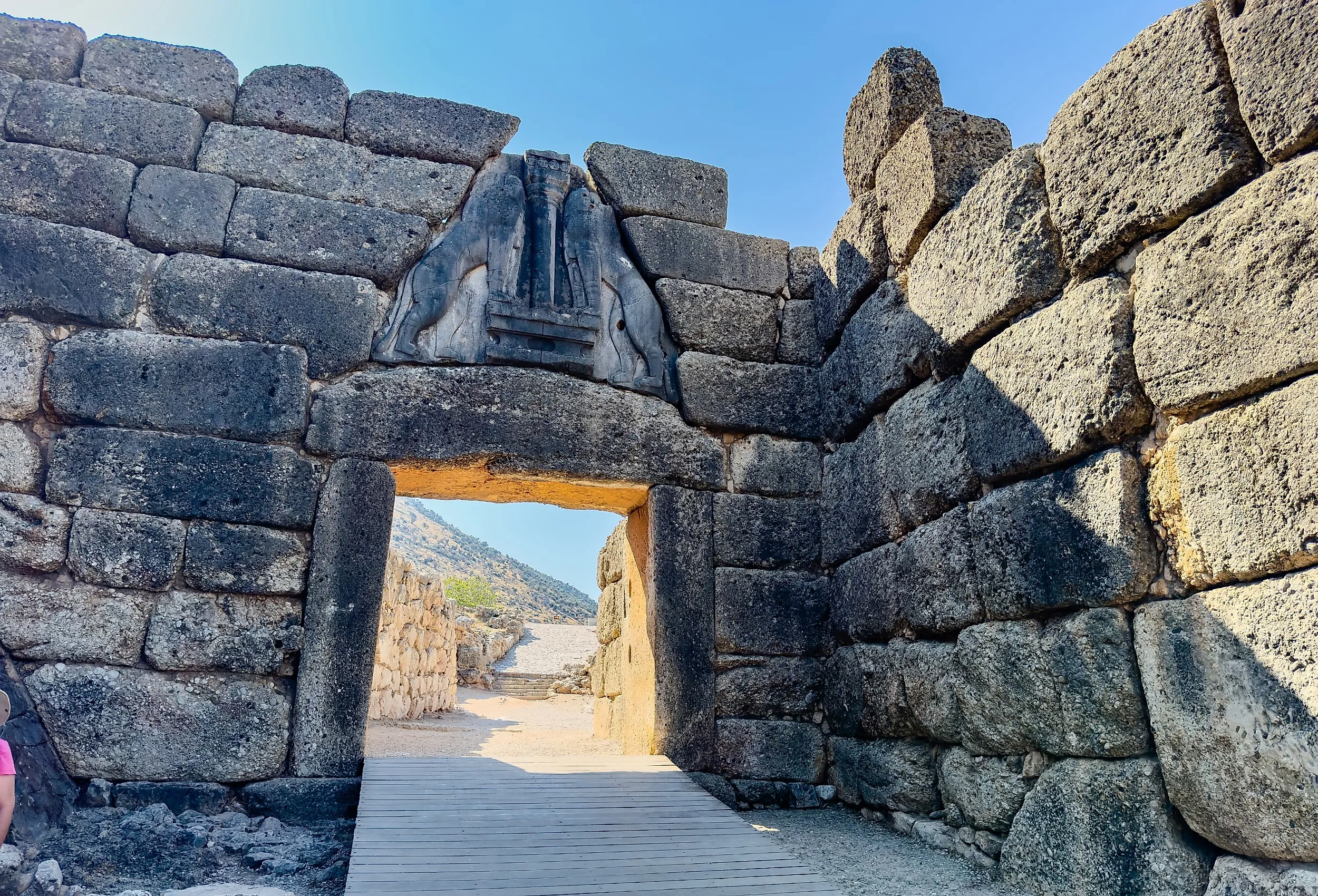
Because the breakdown unfolded over decades rather than in a single year, some states weathered it better than others. The Mycenaean palace system and the Hittite Empire both disintegrated around the start of the 12th century BCE, though the causes and timing differed among regions and individual sites. Palace-centered Mycenaean states relied on centralized administration, agricultural surpluses, specialist production, and regional and long-distance exchange, leaving their institutions vulnerable to multiple disruptions. Egypt and the major states of Mesopotamia survived the transition, likely because their political institutions, military capacities, economies, and regional circumstances differed from those of the states that collapsed. In Greece, the fall of the Mycenaean palaces opened onto the long period conventionally called the Greek Dark Age, while other regions followed different paths.
End of the Bronze Age
The close of the Bronze Age was a slow-motion upheaval rather than a single event. Over a little more than a millennium, these civilizations had accumulated extraordinary power, knowledge, and technical skill, and much of it did not survive. The Hittite Empire lost its standing as a political force entirely. Egypt and the Mesopotamian states endured but spent generations fending off warfare and administrative decay. Scholars may never fully reconstruct what happened, yet the recurring suspects, environmental stress, warfare, and systemic failure, are enough to explain a world coming apart.

In Greece, the centuries from roughly 1200 to 800 BCE are called the Greek Dark Age because Linear B fell out of use and almost no contemporary written records survive. The period that followed brought new settlement patterns, new political arrangements, and new alliances. Though the collapse gutted the old institutions and scattered many communities, the societies that emerged were rebuilt on different foundations. Bronze Age inheritances such as Sumerian pictographs and early cleaning agents had already reshaped the ancient world, and over the following centuries, iron gradually replaced bronze as the working metal. Ironworking spread, new states and trade networks formed, and the eastern Mediterranean entered a new age built from the wreckage of the old one.