The Strongest Ancient Navies Ever Assembled
In the ancient world, a powerful navy could defend coastlines, transport armies, control trade, and project influence far beyond a nation's borders. Determining the strongest ancient navies is not simply a matter of counting ships. Some fleets achieved dominance through innovative tactics, superior shipbuilding, experienced crews, or the ability to sustain operations over great distances. Others changed history by defeating seemingly invincible rivals or by creating maritime empires that shaped trade and culture for centuries.
These seven navies stand among the greatest assembled before 500 AD, leaving legacies that outlasted the battles they fought.
Athenian Navy

During the fifth century BC, Athens transformed itself from a regional Greek city-state into the leading Greek naval power in the Aegean. Revenue from the silver mines at Laurion financed the construction of hundreds of triremes under the guidance of the statesman Themistocles.
The Athenian trireme was among the most advanced warships of its day. Measuring about 120 feet (37 meters) long, each vessel was powered by roughly 170 highly trained rowers arranged in three tiers. Rather than relying on large numbers of soldiers, triremes used bronze-covered rams to disable enemy ships through carefully timed collisions.
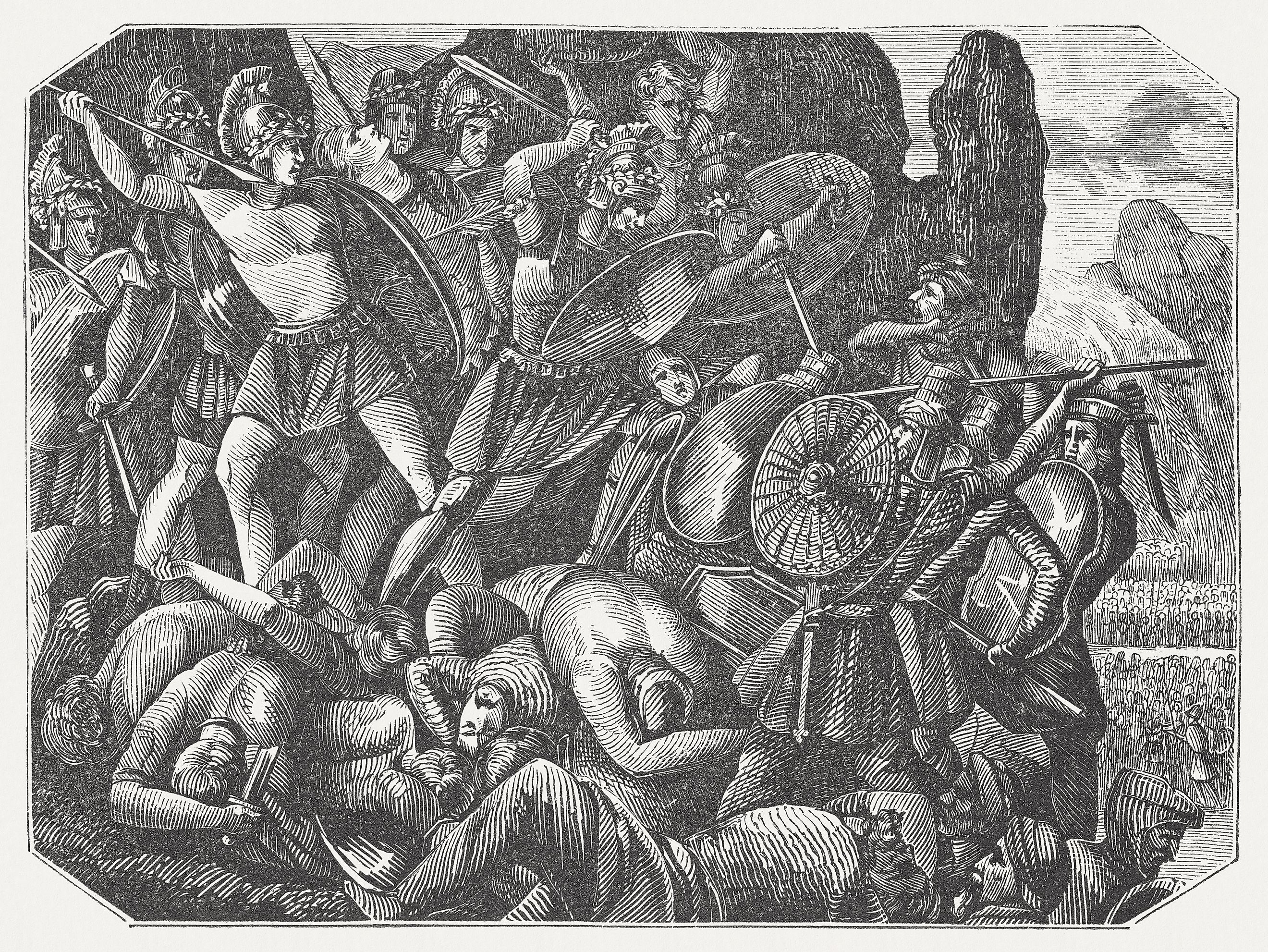
The Athenian fleet's defining moment came at the Battle of Salamis in 480 BC, when the Greeks defeated a much larger Persian force in the narrow straits off Salamis. The victory preserved the independence of the Greek city-states and paved the way for the flourishing of Classical Greek civilization. Athens later used its naval strength to build the Delian League into a maritime empire, establishing a model of sea power that influenced naval warfare for centuries.
Persian Achaemenid Navy

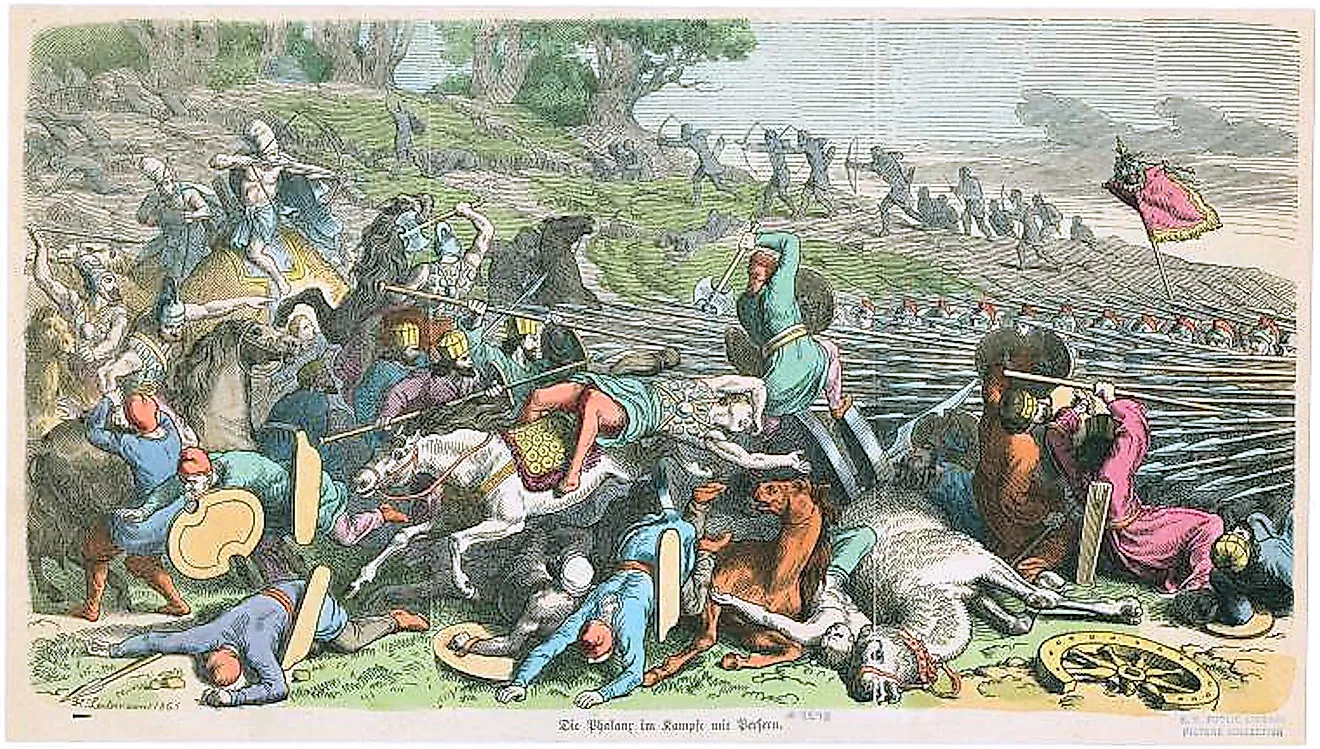
The Achaemenid Persian Empire spanned Egypt, the Near East, and Central Asia, making naval power essential for defending its vast coastlines and supporting military campaigns. Persian rulers assembled multinational fleets from subject peoples, including the Phoenicians, Egyptians, Cypriots, and Greeks of Asia Minor. These experienced fleets excelled at transporting armies, protecting supply lines, and coordinating operations across enormous distances. Engineers even constructed pontoon bridges across the Hellespont to move troops into Europe, demonstrating the logistical sophistication of Persian military planning.
During Xerxes' invasion of Greece in 480 BC, some ancient sources claim Persia mobilized more than 1,000 warships, an astounding number in any era. Although the navy suffered famous defeats to Greek forces at Salamis (480 BC) and Mycale (479 BC), it continued to shape Mediterranean politics by supporting rival Greek city-states with ships and financial aid, proving that naval power could be exercised through diplomacy as well as combat. So, while the Achaemenid navy is remembered more for its defeats than for its major victories, it was essential to the projection of Persian power and the expansion of the empire.
Carthaginian Navy

Founded by Phoenician settlers in North Africa sometime around 800 BC, Carthage became the dominant naval power of the western Mediterranean through a combination of commercial success and maritime expertise. Its merchant fleet connected ports across North Africa, Spain, Sicily, Sardinia, and Corsica, while its warships protected the valuable trade routes that sustained the city's prosperity.
Carthage invested heavily in naval infrastructure, including its famous circular military harbor, or cothon, which housed hundreds of warships and facilitated rapid wartime construction. The fleet relied primarily on quinqueremes, larger vessels than Greek triremes that carried more marines while remaining fast and maneuverable. Experienced crews gave Carthage a decisive advantage over many of its rivals.
For centuries, Carthage controlled much of the western Mediterranean until its long rivalry with Rome culminated in the Punic Wars (264 BC-146 BC). Although Roman innovations and persistence eventually secured victory and the destruction of Carthage, the Carthaginian navy served as a model for the Roman fleet, which then took over its dominant position.
Roman Imperial Navy

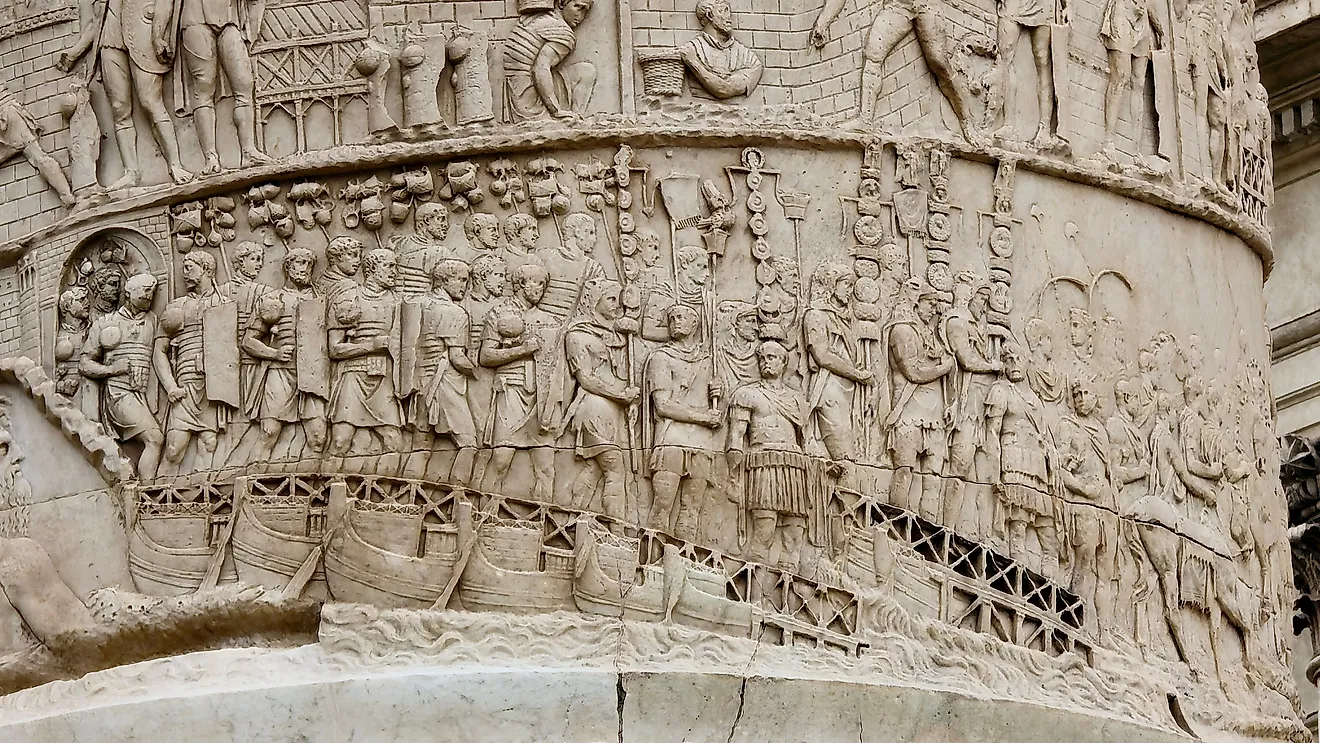
The Roman Empire began as a land-based power, but the Punic Wars (264 BC-146 BC) with Carthage transformed it into one of antiquity's greatest naval powers. Roman shipbuilders rapidly expanded the fleet by copying captured Carthaginian quinqueremes, while years of warfare produced increasingly experienced sailors and commanders. By the end of the Punic Wars, Rome had surpassed and completely destroyed its greatest maritime rival.
During the Imperial period, the Roman navy shifted its focus away from major fleet battles and toward maintaining secure shipping lanes across the Mediterranean, which the Romans called Mare Nostrum, or "Our Sea." Permanent fleets based at Misenum and Ravenna suppressed piracy, escorted grain shipments from Egypt, transported troops, and protected trade throughout the empire.
This maritime security helped sustain centuries of economic prosperity and political stability. Although Rome's legions often receive greater historical attention, the empire's ability to govern territories across Britain, Gaul, and the Near East depended heavily on the navy's control of the Mediterranean.
Ptolemaic Egyptian Navy

Following Alexander the Great's death in 323 BC, the Ptolemaic Kingdom of Egypt emerged as one of the leading naval powers of the Hellenistic world. Centered on Alexandria, the kingdom invested heavily in shipbuilding, commerce, and naval infrastructure to protect its possessions and control eastern Mediterranean trade routes.
Ancient writers describe enormous Ptolemaic polyremes, warships that far exceeded the size of traditional triremes. Some of these vessels may have held thousands of oarsmen and sailors, perhaps serving more as symbols of royal prestige than as viable combat ships. The somewhat smaller and more functional ships, derived from Greek designs, protected Egypt's grain trade while competing with the neighboring Seleucid Empire for regional influence.
Alexandria's outstanding harbor facilities, aided by the famous Lighthouse of Alexandria, made the city one of antiquity's premier naval centers. While the Ptolemaic navy eventually declined as Roman influence expanded during the first century BC, it left a lasting legacy of technological innovation and maritime organization.
Syracusan Navy

The Greek city of Syracuse occupied a strategic position on Sicily's eastern coast, allowing it to develop one of the Mediterranean's strongest navies during the 300s BC. Under rulers such as Dionysius I, the city expanded its fleet, strengthened its shipyards, and introduced advances in naval construction and military engineering.
Syracuse earned lasting fame during the Peloponnesian War (431 BC-404 BC) by defeating the massive Athenian Sicilian Expedition in 413 BC, when the Syracusans skillfully trapped the Athenian fleet in the harbor and deprived it of its maneuvering advantage. Syracuse later resisted Rome during the siege of 214 BC-212 BC, where the defensive inventions traditionally attributed to Archimedes became legendary even in eventual defeat.
Although Syracuse never ruled a large maritime empire, its ability to hold its own against stronger opponents through superior naval preparation and strategic planning earned it a reputation as one of the ancient world's most formidable naval powers.
Han Dynasty Navy

While Mediterranean fleets often dominate discussions of ancient naval warfare, China's Han Dynasty also developed an impressive navy before 500 AD. Established in 206 BC, the Han Empire relied on naval forces to control its extensive river systems, secure coastal regions, and support military campaigns throughout southern China.
Unlike Mediterranean navies designed for open-sea combat, Han fleets specialized in river and coastal warfare. Known as the Tower Ship Navy for their tall, well-fortified ships, which were paired with smaller "spear ships" designed for ramming, the fleet protected vital waterways such as the Yangtze River, a major commercial and administrative route. Key naval victories during the 100s BC were important parts of the expansion of the Han Empire.
Although surviving evidence is less extensive than for many Mediterranean navies, archaeological discoveries and historical records show that the Han Dynasty developed an effective maritime force whose emphasis on logistics, transportation, and river warfare influenced Chinese military strategy for centuries.
Fleets That Shaped History
The triremes that defended Greece at Salamis and the Han vessels that patrolled China's great rivers served very different waters, yet both reshaped the politics, economics, and culture of their worlds. Although their ships disappeared long ago, many principles developed by these early naval powers remain familiar today. Control of strategic waterways, secure supply lines, technological innovation, and well-trained crews continue to define effective maritime strategy. The strongest ancient navies demonstrated that dominance at sea could determine the destiny of civilizations, even ones far from the shore.