10 Key Battles in the Peloponessian War
Lasting nearly thirty years, the Peloponnesian War (431 BCE to 404 BCE) was a complex and multifaceted affair between the Greek city-states of Athens and Sparta, which culminated in Spartan supremacy. It was an historic event in Classic Greece, marking the first major use of total war for the ancient Greeks, and shifting the balance of power from a democratic hegemony to a war-based oligarchy, creating lasting effects for the ancient Greek world, even after Athens regained its supremacy. Therefore, to better understand the war, and how it shaped the Greek and broader Mediterranean world, it is worth analyzing ten of its key battles. Doing so helps one comprehend major turning points in the conflict. Ultimately, these battles explain why, despite arguably beginning with an advantage, Athens ended up losing.
The Spartan Invasion of Attica (431 BCE)

In 431 BCE, after years of power accumulation by the Athenian-dominated Delian League, and following more immediate tensions between Spartan and Athenian allies, Sparta declared war on Athens. While Athens was superior in terms of its naval capacity, Sparta had a stronger land army. Thus, Sparta began by invading Attica, the region that made up the countryside surrounding Athens. The Spartans destroyed the farmland, thereby greatly weakening the Athenian food supply. Furthermore, they consistently reinvaded Attica for the first ten years of the war, ensuring that the food supply remained stressed. However, due to Athens' Long Walls, the Spartans were unable to attack the city itself.

The invasion(s) of Attica had major negative impacts. First, as people fled from the countryside into the city, Athens became overcrowded. This put economic stress on a city that was already challenged due to the aforementioned destruction of its farmland. Furthermore, the overcrowding contributed to the outbreak of a plague in 430 BCE. This killed between 75,000 to 100,000 people, or 25% to 35% of the entire population. Perhaps most notably, it killed the Athenian politician and general Pericles, who had led Athens to the height of its power in the years leading up to the war. In short, while the Spartan invasion of Attica failed to defeat Athens, it did give Sparta an immediate advantage.
The Battle of Pylos and Sphacteria (425 BCE)

Regardless, the Peloponessian War was hardly a one-sided affair, and two notable Athenian victories occurred in 425 BCE near the neighboring islands of Pylos and Sphacteria. In Pylos, the Spartans sent a land and sea force to isolate an Athenian base. The plan failed when an Athenian fleet arrived and defeated the Spartan ships. The impact of this defeat was further compounded by the fact that nearly 500 Spartan soldiers were now stranded on the nearby island of Sphacteria. The Athenians, now led by famed politician and general Celon, who advocated bringing the war to Sparta, assaulted the island. Over 100 Spartans were killed, and the Athenians captured the remaining 292. This battle shocked the Greek world by demonstrating that the Spartans, despite years of victories up to this point, were not unbeatable. Furthermore, the Athenians now had leverage, and they threatened to execute the Spartan hostages if the invasions of Attica continued. Invasions of Attica subsequently stopped for several years, and the Spartans took an inarguable hit to their reputation as elite warriors who never surrendered.
The Battle of Delium (424 BCE)

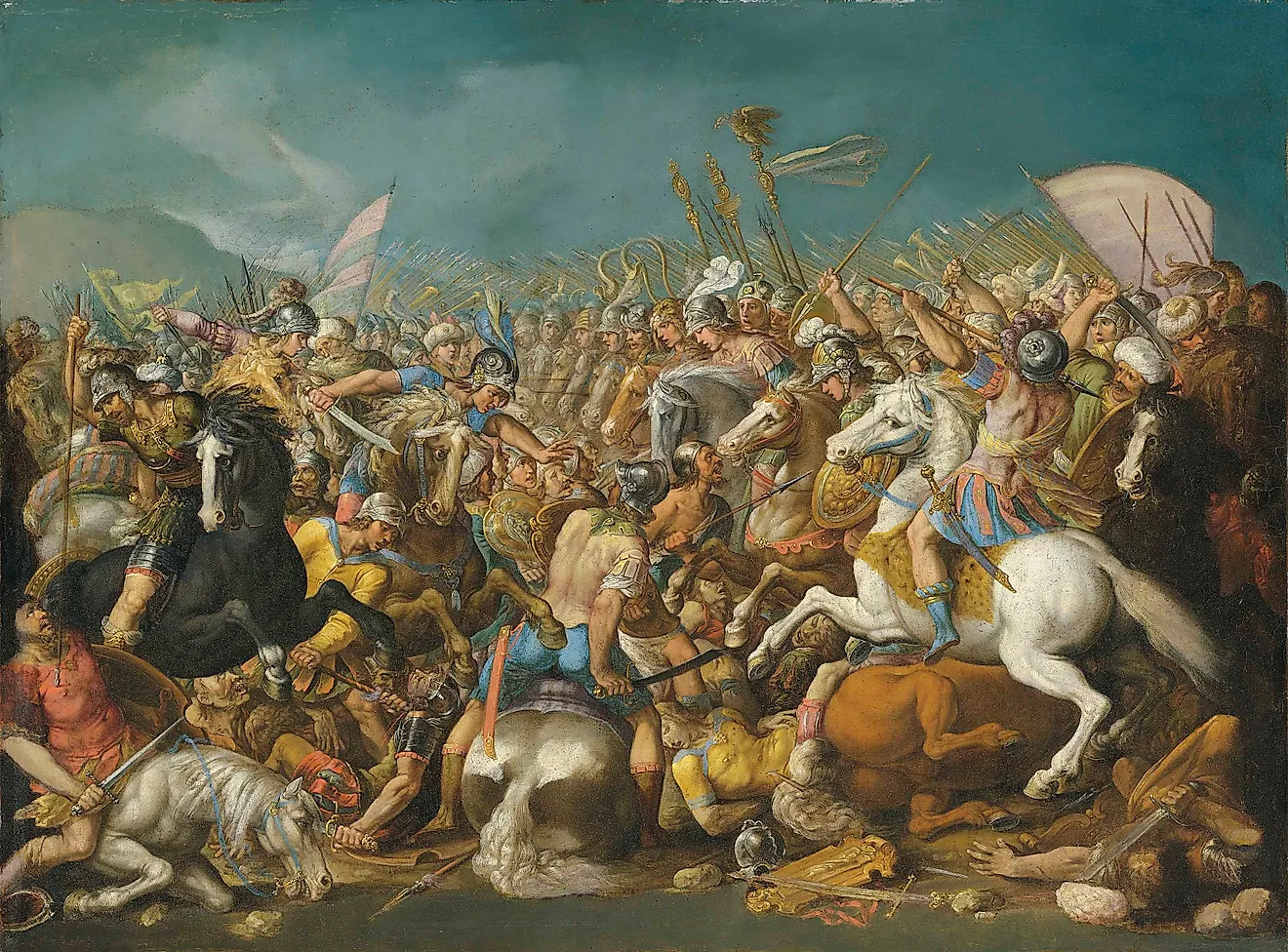
Now with some momentum, the Athenians tried to make progress in the land war. Therefore, they invaded Boetia, a region to the northwest of Attica and one controlled by the Spartan-allied Thebes. The Athenian army quickly captured a temple near the town of Delium, setting up a garrison. However, the Boetian army promptly counterattacked. Utilising the hoplite phalanx battle style, in which units called hoplites locked their shields together to provide protection, and the first few ranks of soldiers pushed their spears over the shields, the Boetians pushed the Athenians back on their left flank. Despite the Athenians also gaining some ground on the Boetian left flank, cavalry reinforcements halted these advances. Finally, once the Boetians broke through, the entire Athenian army collapsed, and thousands were either captured, killed, or wounded. Hence, the Battle of Delium showed that Sparta and its allies still possessed a superior land army.
The Battle of Amphipolis (422 BCE)

In 424 BCE, Sparta took the northern city of Amphipolis. A crucial strategic location due to its resource-rich environment, Athens tried to recapture it in 422. Led by Cleon, the Athenians slowly moved towards the city walls to prepare for a siege. Spartan general Brasidas then launched a surprise attack. Completely unprepared, the Athenian troops fled and suffered heavy casualties. Cleon was also killed. Nonetheless, Brasidas was killed as well, and while Sparta maintained control over the city, both sides were exhausted from years of fighting. This led to the Peace of Nicias in 421. While it only lasted a fraction of its intended fifty years, the peace marked the end of the first phase of the Peloponessian War.
The Battle of Mantinea (418 BCE)

The war started up again in 418 BCE when Argos, a city in the Peloponnese region, formed an alliance with Martinea, Elis, and Athens in an attempt to challenge Spartan domination in the region. Athens supported this coalition, which, naturally, threatened the Spartans, and the two sides met for battle near the city of Mantinea. Utilising the aforementioned hoplite phalanx battle style, the Spartan right flank eventually managed to push back the coalition forces, which thereby caused the entire army to collapse and flee. This victory was crucial to restoring Sparta's reputation, which was damaged by the Battle of Pylos and Sphacteria. More generally, it signified that the Peace of Nicias was unsuccessful and led to nearly fifteen more years of fighting between Athens and Sparta.
The Battle of Syracuse (413 BCE)

This second phase of the war saw the Athenians suffer more and more catastrophic failures, perhaps the largest of which was the Battle of Syracuse in 413 BCE. In an attempt to capture the Sparta-allied Sicily, Athens attacked Syracuse, the island's largest and most powerful city. Although warmly recieved by Athens-allied cities looking for Athens to shake Syracuse's stronghold on the island, the Athenian forces led by Nicias delayed attack, leading to worse conditions for battle.

The fighting occurred on land and at sea. On land, the Athenians tried to siege the city, but failed due to its strong defenses. At sea, the Athenian fleet was trapped in the Great Harbour of Syracuse, causing it to lose tens of thousands of soldiers and hundreds of ships. The entire expeditionary force was lost, either killed, captured, or enslaved. This was arguably the most crucial moment in the war. Up to this point, Athens' strength came from its sea dominance. With this dominance now in question, many Athenian allies, including Chios, Miletus, and Byzantium, rebelled. In Athens, echoes of the plague renewed doubt about victory. In short, while the war continued for nearly ten years afterward, the Battle of Syracuse was the beginning of the end for Athens.
The Battle of Cyzicus (410 BCE)

This is not to say that Athens never again experienced success. For instance, the Battle of Cyzicus in 410 BCE saw the Athenian fleet decisively beat the Spartans in the Sea of Marmara. Athenian generals Alcibiades, Thrasybulus, and Theramenes devised a scheme in which they lured the Spartan fleet out of their harbour with a small force. Thereafter, a far larger Athenian fleet surrounded and devastated the Spartans. This victory temporarily buoyed Athenian morale and gave them control over grain from Black Sea trading routes. Nevertheless, the scale of their previous defeat at Syracuse meant that Athens never fully capitalized on its victory, as their empire was falling apart internally, with low treasury, morale, and political turmoil at home.
The Battle of Notium (406 BCE)

Athens continued its downhill trajectory in the Battle of Notium, where it suffered a strategically minor but metaphorically emphatic loss. The battle began when Athenian commander Antiochus ignored the orders of his superior, Alcibiades, and attempted to lure the Spartan fleet near Notium, a minor city in Anatolia, into an attack. This backfired when the Spartans launched a well-planned and organised counterattack, destroying the Athenian ships and killing Antiochus in the process. Despite explicitly trying to avoid the battle, Alcibiades was blamed for the defeat and subsequently exiled. The Battle of Notium was thus important because it weakened both Athens' position in the Aegean Sea and the leadership of a state that was already experiencing immense problems.
The Battle of Arginusae (406 BCE)

The Battle of Arginusae in 406 BCE also hindered Athens' leadership. Occurring between the Spartan and Athenian fleets near the island of Lesbos, the Athenians formed a double line of ships, which prevented the Spartans from breaking through. Spartan admiral Callicratidas was also killed in the battle. All this resulted in the Spartan fleet retreating. Nonetheless, after the fighting, a massive storm began, sinking many Athenian ships and resulting in thousands of sailors drowning. News of this event angered the Athenian public and led to a trial in which six generals were executed for failing to rescue the sailors. Therefore, even though Athens won the battle, its military leadership was now decapitated, leaving the Athenians at a strategic disadvantage for the rest of the war.
The Battle of Aegospotami (405 BCE)

The final major battle of the Peloponnesian War occurred at a small river called Aegospotami near the Dardanelles. The battle began as a five-day standoff, with the Athenian fleet sailing out each morning to challenge the Spartans. However, only on the fifth day, after the Athenians left their ships unguarded while they returned to shore to search for food, did the Spartans attack. This decision surprised the Athenians and resulted in almost their entire fleet being destroyed. With this, the Spartans now controlled the Dardanelles, meaning that they also controlled a crucial grain shipping lane. They subsequently blockaded and besieged Athens, forcing the Athenians to surrender in 404 BCE.