The Most Impregnable Cities of the Ancient World
Ten years of siege to capture a city through deception. A causeway half a mile long built across open sea to reach walls that still didn't fall to battering rams. A Roman army spending months constructing an earthen ramp up a desert plateau rather than risk a frontal assault.
An impregnable city was a fortress considered nearly impossible to capture by direct assault. Its walls, terrain, and defenses forcing attackers to rely on siege warfare, starvation, deception, or engineering rather than brute force. Before 500 AD, a small number of cities earned that reputation repeatedly. Their defenses withstood famous sieges, exhausted powerful armies, and shaped the development of military strategy for centuries after.
No city proved truly unconquerable, but these fortresses came closest. What their histories share is a consistent and humbling lesson. The stronger the defenses, the more victory depended on engineering, logistics, and ingenuity. An impregnable city did not make conquest impossible. It made it costly, and only the most determined enemies prevailed.
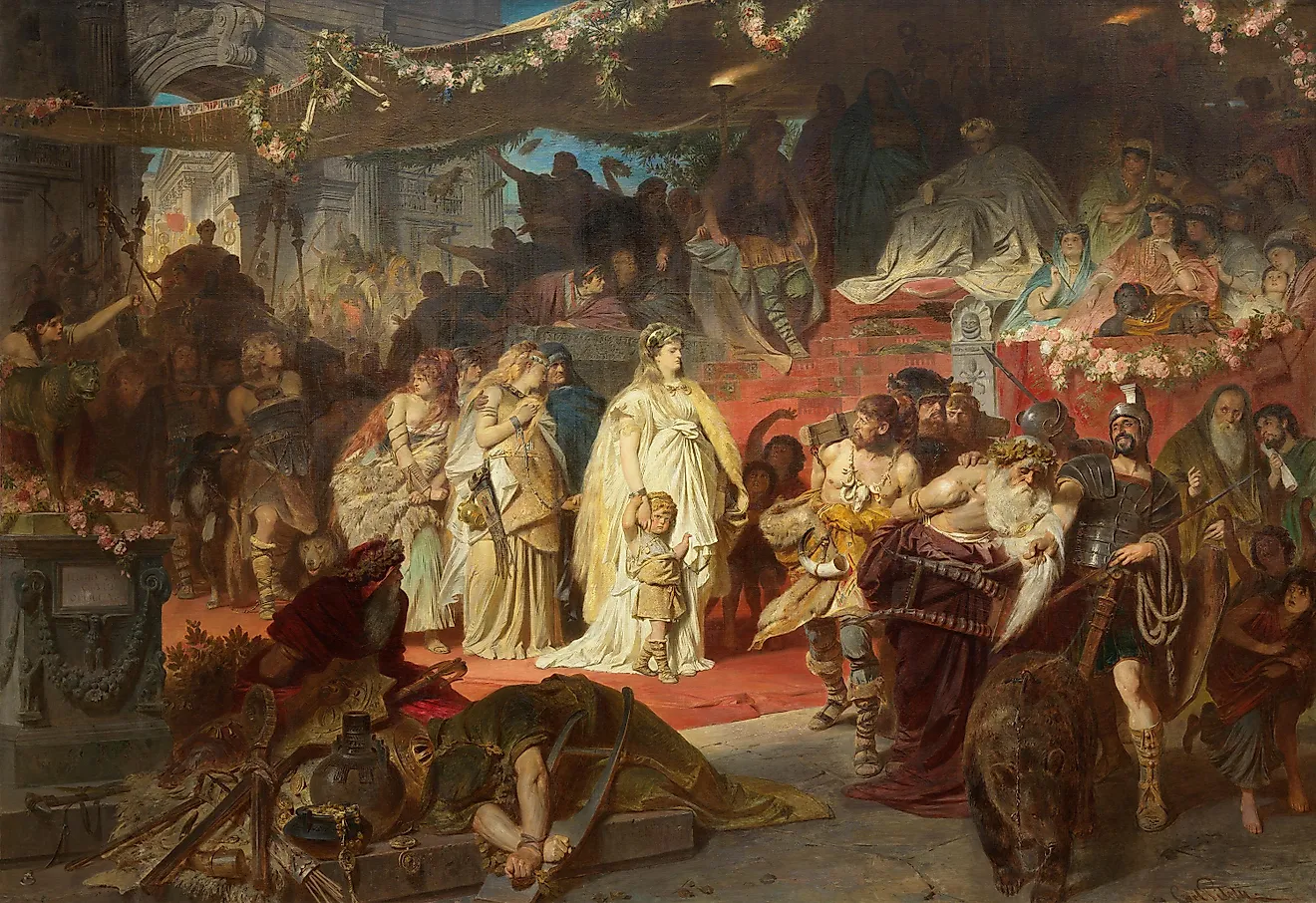
Troy

Ten years of siege, and the Greeks never actually broke through. They built a horse instead.
Troy stood on the hill of Hisarlik in northwestern Turkey, 105 feet above sea level, its limestone walls running up to 16 feet thick and 26 feet high. Dating to 1750-1180 BCE, the settlement was reinforced by towers and narrow gateways that funneled attackers into exposed positions. Anyone approaching from the northeast had to climb a steep, narrow path where defenders above could see them coming from the moment they started up.
Excavations between 1932 and 1938 by American archaeologist Carl W. Blegen turned up evidence of violent conflict. They found subdivided houses, large storage jars, unburied human remains, and destruction layers. His team also found Greek-style arrowheads and piles of sling stones. In 2025, archaeologists found thousands more carefully shaped sling stones near the palace walls, confirming that the fighting was prolonged and organized rather than a single catastrophic assault.
According to legend, the Achaeans besieged Troy for ten years before capturing it around 1180 BCE, and even then, they didn't breach the walls. They bypassed them entirely, leaving a massive wooden horse structure containing hidden soldiers outside the gates, waiting for the Trojans to drag the gift inside themselves. Once they did, the soldiers emerged at night to open the gates for more soldiers to pour in.
Babylon

The Babylon Ruins.
Cyrus the Great captured the most heavily fortified city in the ancient Near East without breaking a single wall. He diverted the river and walked in through the bottom of it.
Under King Nebuchadnezzar II (605-562 BCE), Babylon's defenses had grown into something that offered no clear point of attack. His father Nabopolassar had built two parallel walls, the Imgur Enlil and the Nēmet Enlil, separated by a moat fed by the Euphrates River.
Nebuchadnezzar expanded this into a triple-layered system. It started with a baked-brick inner wall bound with bitumen mortar, a massive mud-brick outer rampart, and the Euphrates itself cutting directly through the urban core, sealed by heavy metal gates where it passed under the fortifications. Ancient writers described the walls with the enthusiasm of people who had apparently never been asked to verify anything, citing circuit lengths as long as 56 miles and heights of up to 335 feet.
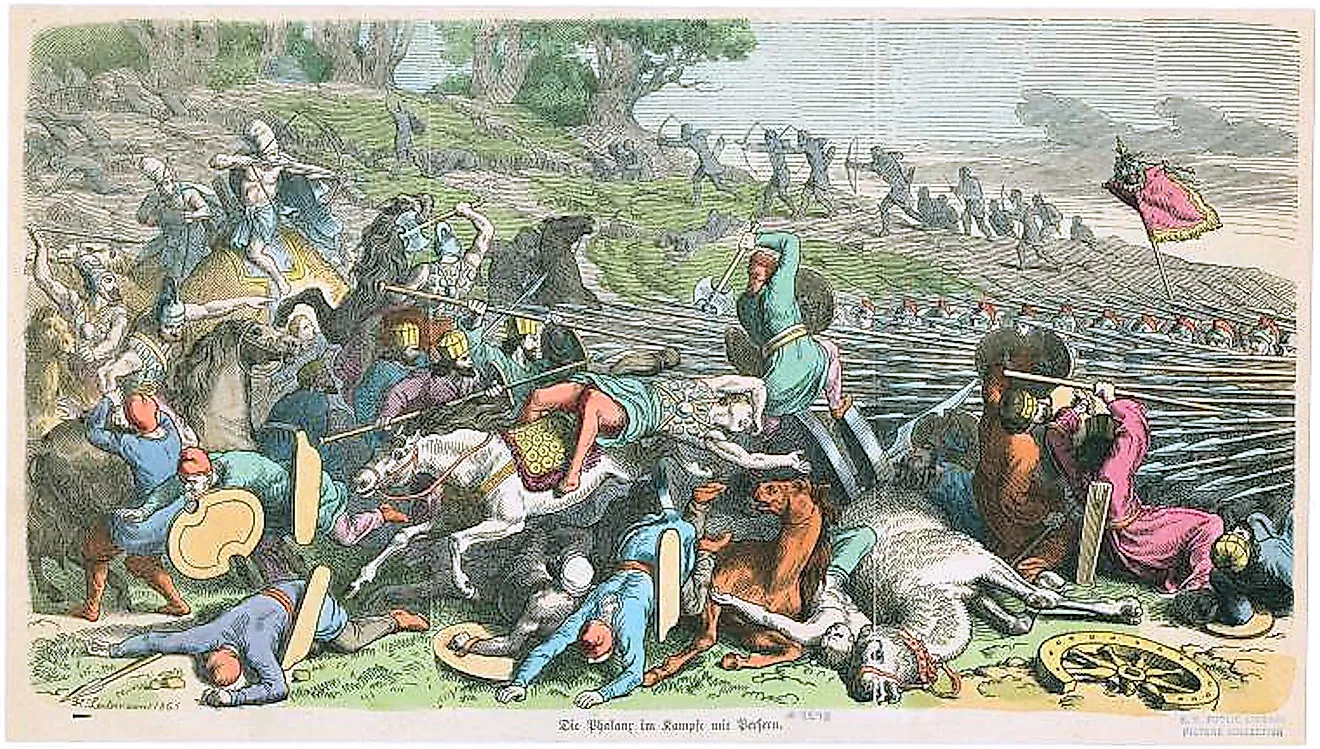
Modern archaeology places the inner city's wall circuit at about 12 miles, still formidable enough. Citizens entered through eight gates, most famously the Ishtar Gate, whose blue-glazed bricks were decorated with dragons, lions, and bulls. In 539 BCE, Cyrus the Great looked at this layered system, calculated that none of it mattered if the river was gone, and diverted the Euphrates upstream. His army marched through the dry riverbed and into the city without ever testing the walls.
Tyre

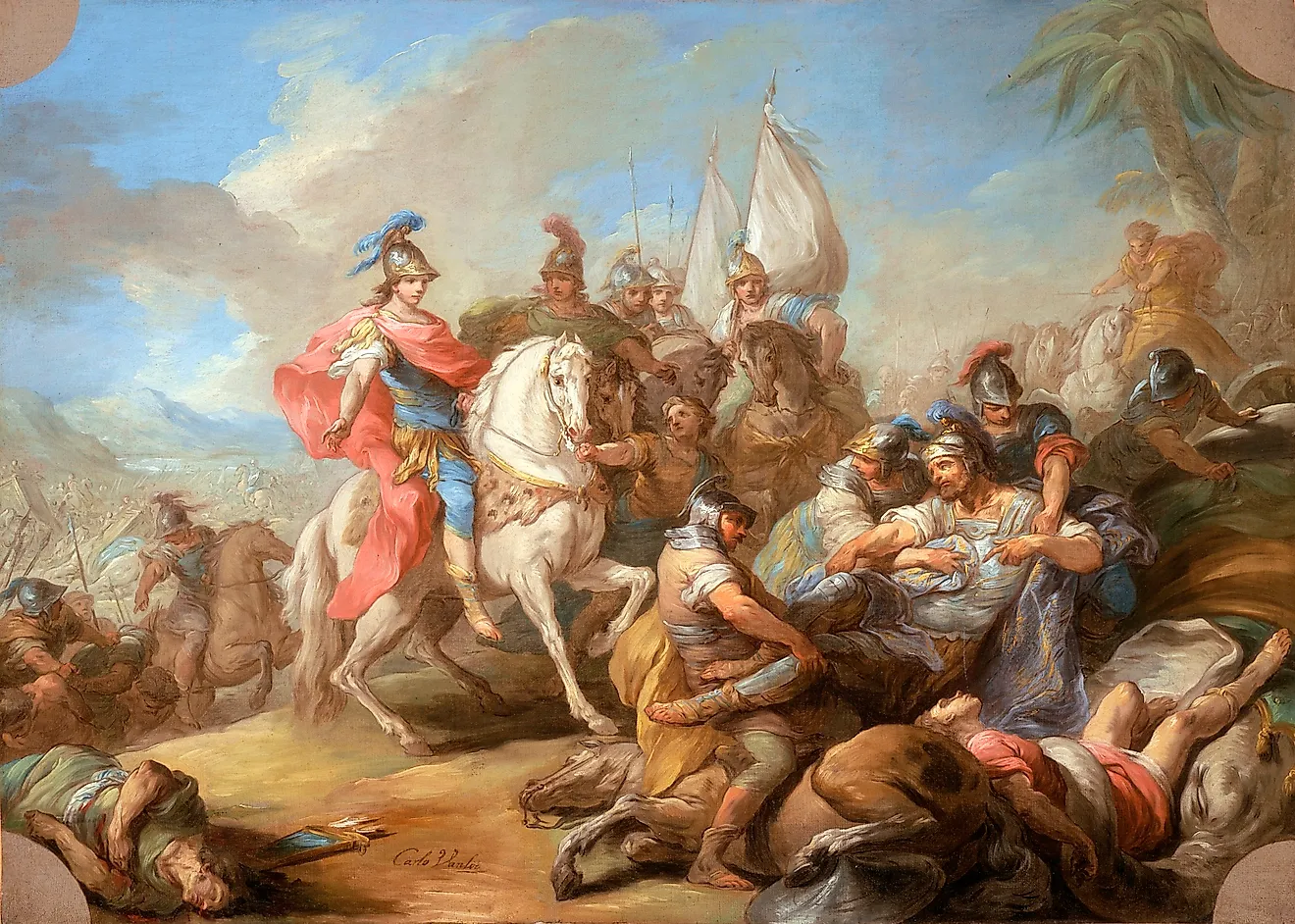
Nebuchadnezzar II besieged Tyre for 13 years and gave up. Alexander the Great spent seven months, built a causeway across the open sea, assembled a fleet from conquered cities, and still needed a breach in the southern wall before it fell.
Tyre stood on a rocky island off the southern coast of modern Lebanon, its stone walls rising 150 feet straight from the water. Because the fortifications met the sea directly, attackers had no shoreline to land on or position siege engines. The city had two deep harbors, north and south, allowing its navy to import supplies and launch naval raids during a siege, and mounted catapults along the walls kept enemy warships under constant bombardment.
When Nebuchadnezzar II invested the island from 585 to 573 BCE, he ultimately settled for a negotiated treaty rather than a breach. Alexander the Great arrived in 332 BCE after the Tyrians refused his demand to worship at the temple of Melqart. His response was to order the construction of a stone causeway half a mile long and 200 feet wide across open water.
The Tyrians responded with fire-ships, naval raids, and catapult fire to stall construction. Even when the stone pier reached the city, Alexander's battering rams failed against the 150-foot walls. He then assembled a massive allied fleet from the Phoenician cities he had already conquered and mounted siege towers directly onto ships. The southern wall was finally breached in July 332 BCE, seven months after the causeway project began.
Carthage

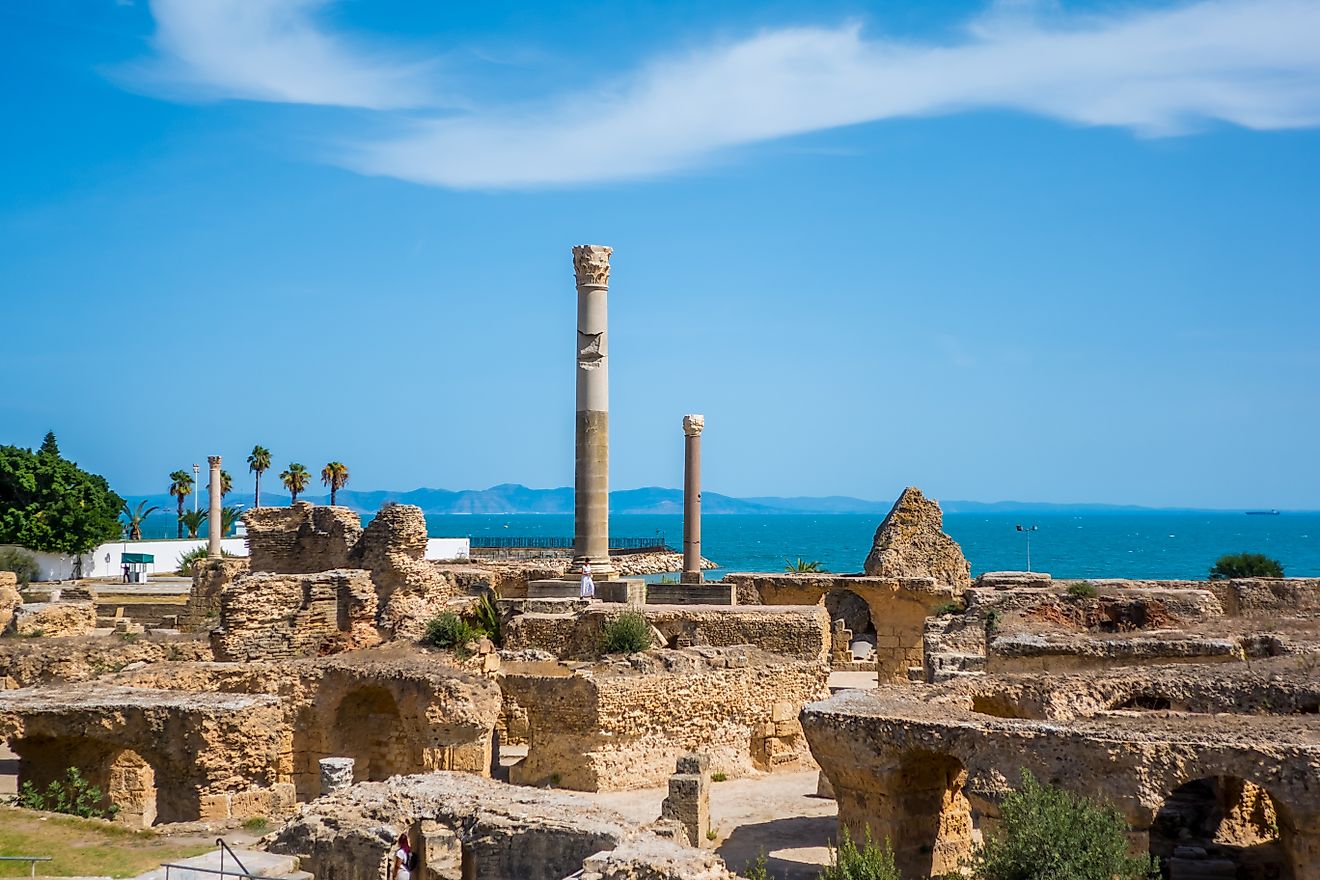
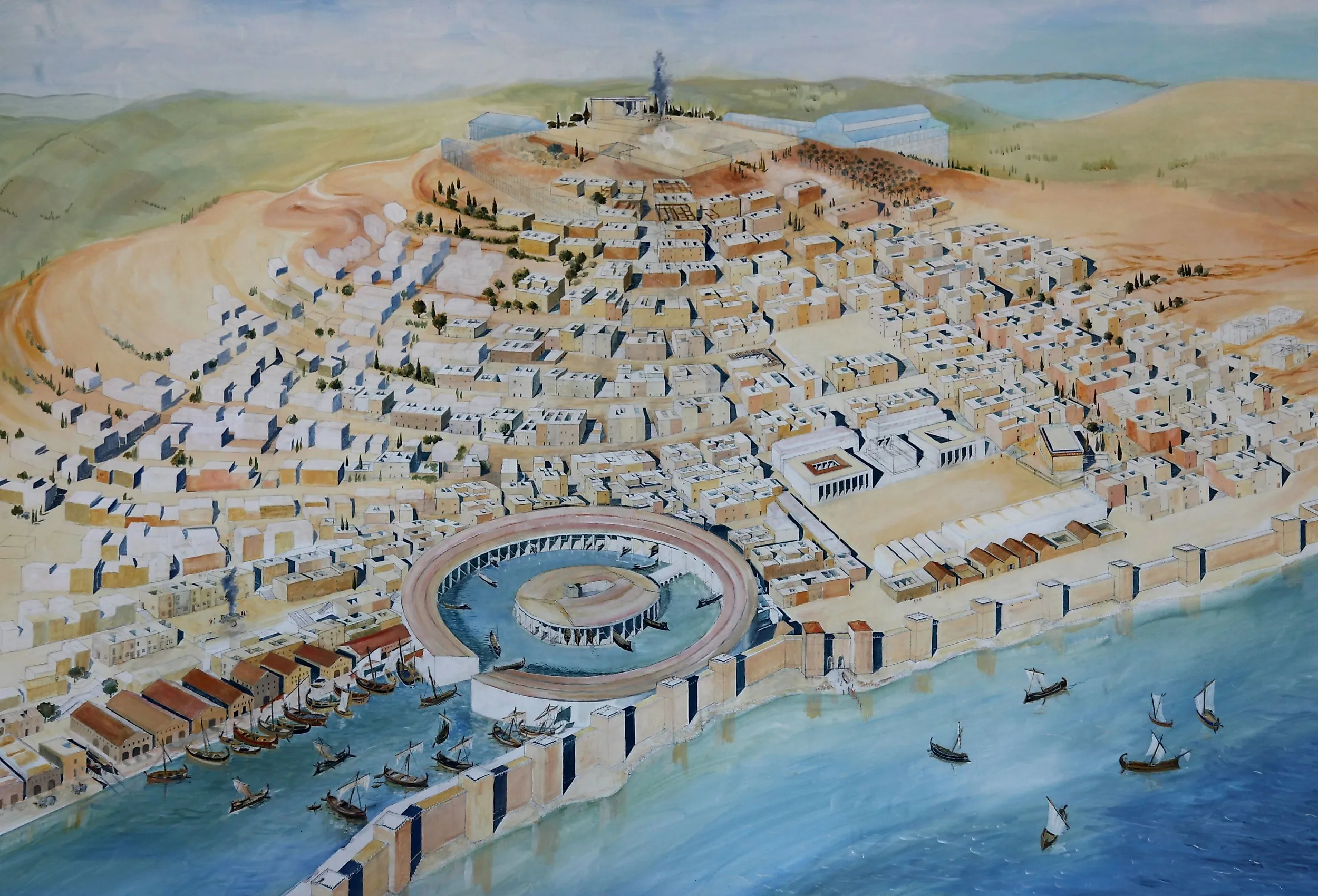
Panoramic view of ancient Carthage.
Rome sent its consuls expecting a quick surrender. Carthage held out for three years, manufactured catapult bowstrings from women's hair, and had to be taken street by street in seven days of fighting so brutal that the Senate had ordered the city permanently erased before the battle was over.
At its height Carthage covered a peninsula on the coast of modern Tunisia, protected by the Mediterranean Sea on three sides. The vulnerable landward side was guarded by triple walls stretching about 18 miles. Ancient sources describe them as 34 feet wide and 46 feet high, with stables for 4,000 horses, barracks for 20,000 soldiers, and space for 300 war elephants built directly into the fortifications.
The city also had the Cothon, a circular military harbor housing 220 warships in covered dockyards alongside a separate commercial harbor, ensuring it could resupply entirely by sea during any land blockade. During the Third Punic War (149-146 BCE), Rome sent consuls Marcius Censorinus and Manius Manilius expecting the city to fold after its citizens initially surrendered their weapons. Instead, Carthage built a new arsenal within weeks, crafting catapult bowstrings from women's hair when conventional materials ran out.
The city held for three years. It finally fell when Scipio Aemilianus cut off the harbor, completed the blockade, and led his troops through the city in seven days of brutal street-to-street fighting. The Roman Senate's standing order that Carthage must be destroyed, was carried out completely, erasing Rome's greatest rival from the map.
Athens

Sparta never tried to take Athens by assault. The Spartans understood that as long as the Athenians controlled the sea, the city could outlast any army camped outside its walls, so they spent summers burning the countryside instead and waited for attrition to do what force couldn't.
Between 461 and 457 BCE, Athens constructed the Long Walls. These were two parallel stone corridors stretching 3.7 miles that linked the urban core directly to the port of Piraeus. The logic was elegant. As long as the Athenian navy controlled the Mediterranean Sea, grain and materials moved freely into the city through the fortified corridor.
No army camped outside the walls could starve out a population with uninterrupted maritime supply lines. The infrastructure transformed Athens into the wealthiest and most powerful city in Greece during the 5th century BCE. During the Peloponnesian War (431-404 BCE), the Spartans recognized the implication and never tested the walls directly. They ravaged the surrounding countryside each summer, relying on disease and attrition to grind down the population inside.
Athens finally fell in 404 BCE, not from a breach of its fortifications but following a decisive naval defeat at Aegospotami that severed its grain supply from the Black Sea. Starved into submission, the city was forced by Sparta to tear down the Long Walls that were later rebuilt, and stood until the Roman general Sulla destroyed them in 86 BCE during the First Mithridatic War.
Masada

The Romans spent months building a ramp of earth and stone up the side of a desert plateau rather than attempt a direct assault on a fortress holding fewer than a thousand defenders.
Herod the Great built Masada between 37 and 31 BCE on a flat-topped plateau in the Judean Desert, overlooking the Dead Sea. The rock measured about 1,968 feet long and 984 feet wide, and the only practical approach was the narrow Snake Path from the east that exposed climbing attackers to defensive fire the entire way up.
Herod enclosed the entire rim with a 4,600-foot-long casemate wall, a double barrier measuring 13 feet wide that contained 70 rooms, 30 towers, and four gates. Inside, massive rock-cut cisterns capable of storing over eight million gallons of rainwater meant the stronghold could endure years of isolation without depending on external supply.
In 66 CE, a militant Jewish group called the Sicarii captured Masada from its Roman garrison. More Jewish survivors joined after the fall of Jerusalem in 70 CE. In 73 CE, Roman governor Lucius Flavius Silva arrived with the Tenth Legion and thousands of prisoners of war, looked at the cliffs, and concluded that building a massive assault ramp of earth and stone up the western slope was the more practical option.
According to Josephus, when the Romans finally breached the casemate wall in 73 CE, 960 of the 967 defenders had taken their own lives rather than face capture. Masada is a UNESCO World Heritage Site, recognized in part as a monument to Roman siege engineering.
Syracuse

Athens sent 134 triremes and 60,000 soldiers to take Syracuse and lost all of them. Rome tried 60 years later with the full weight of the Republic behind it, and it took two years and a traitor to finally get inside.
Syracuse proved its defensive logic during the Sicilian Expedition (415-413 BCE), when Athens launched the largest naval force in Greek history to seize the city. The Syracusans held their fortifications and entirely destroyed the invasion force, the most catastrophic defeat Athens ever suffered.
Between 402 and 397 BCE, Tyrant Dionysius I responded to military threats by expanding the city's defenses on a massive scale. He constructed the 17-mile-long Dionysian Walls to fully protect the Epipolae plateau. At the western tip of this network, 560 feet above the ground, stood the Euryalus Fortress, the largest surviving Greek stronghold.
This citadel had a wide moat, bastions, a drawbridge, and protected corridors to move troops under fire. Dionysius' engineers also invented the first reliable catapult during this period, building the fortress with elevated platforms specifically designed to maximize its range.
Decades later, Archimedes improved the defenses with advanced mechanical devices including war machines capable of sinking warships from the shore. When Rome besieged Syracuse in 214 BCE during the Second Punic War, these innovations held the Roman forces off for two full years. The city finally fell in 212 BCE, not because the Romans breached the 17-mile walls, but through internal treachery and a surprise entry during a city festival dedicated to the goddess Artemis.
Constantinople

Theodosian Walls of Constantinople. Editorial credit: Wikimedia Commons
The Theodosian Walls stood as the strongest fortifications of the ancient world. Emperor Theodosius II (408-450 CE) completed the landward defenses in 413 CE, creating a triple‑layered system that stretched 4 miles from the Sea of Marmara to the Golden Horn, with water guarding the city on three sides. Attackers first faced a ditch 65 feet wide and 22 feet deep.
Beyond the ditch rose two outer walls lined with towers, followed by a massive inner wall 16 feet thick and 39 feet tall. Then after, 96 towers stood about 230 feet apart, giving defenders a clear field of fire across the entire approach. In 447 CE, a violent earthquake toppled 57 of these towers at precisely the moment Attila the Hun was invading the Balkans.
Prefect Constantinus responded by recruiting 16,000 competing fans from the city’s chariot‑racing clubs, who rebuilt and reinforced the entire wall network in only 60 days. This rapid reconstruction ensured that Constantinople's defenses remained intact against threats in the 5th century.
Final Thoughts
None of these fortresses fell the way their attackers intended. Troy succumbed to deception. Babylon’s river defenses were bypassed. Tyre fell only after Alexander built a causeway across the sea. Athens survived behind its Long Walls until its navy failed. Before 500 AD, the pattern was clear: strong walls did not make conquest impossible, but they forced attackers to win through patience, engineering, starvation, betrayal, or surprise.