10 Wonders of the Medieval World
Here is the twist nobody mentions about the Seven Wonders of the Medieval World: half of them are not medieval, and the list itself did not exist in the Middle Ages. It was assembled by writers in the 1800s, long after the last knight hung up his armor, and it cheerfully mixes genuine medieval landmarks with far older marvels that medieval travelers could not stop talking about. Ranking wonders is itself an ancient habit. More than two thousand years ago, Greek writers like Diodorus Siculus were already cataloging the greatest structures on Earth, though only the Great Pyramid of Giza still stands from that original roster. What follows is the expanded medieval version: ten structures that have outlasted empires, earthquakes, and in a few cases their own builders. Some rose during the Middle Ages, which ran roughly from 500 to 1500 AD. Others were ancient even then.
Hagia Sophia - Istanbul, Turkey

For almost a thousand years, no larger church stood anywhere on Earth. Emperor Justinian I raised the Hagia Sophia in just five years, between 532 and 537 AD, after riots burned its predecessor to the ground, and his architects Isidore of Miletus and Anthemius of Tralles crowned it with a dome so wide that contemporaries swore it hung from heaven on a golden chain. Then the building began shape-shifting. Church, mosque, museum, and mosque again: it has answered to every one of those names and ushered Byzantine emperors, Ottoman sultans, and modern tourists through the same doors.
One legend has outlasted every regime. A single column deep in the interior stays mysteriously damp to the touch, and for centuries visitors have pressed their thumbs into its worn hole and prayed for healing. Miracle or just condensation, the line to touch it has never really gone away.
Stonehenge - Wiltshire, England

Stonehenge was already thousands of years old before anyone coined the word "medieval." Raised on Salisbury Plain across the Neolithic and Bronze Ages, roughly 5,000 years ago, its ring of massive standing stones has kept archaeologists arguing ever since. The outer sarsens are local sandstone, hauled from quarries a few miles off. The smaller inner bluestones are the real puzzle: they came from the hills of Wales, some 150 miles away, moved across prehistoric Britain by people with no wheels and no metal tools.
Nobody agrees on why it was built. A burial ground, a temple, an astronomical calculator for tracking solstices and eclipses: every theory has its champions. The best story, though, belongs to the Middle Ages that claimed Stonehenge as a wonder. Medieval chroniclers insisted the wizard Merlin had conjured the stones into place by magic, spiriting them over from Ireland for King Arthur's court.
Cairo Citadel - Cairo, Egypt

When Saladin needed to keep Crusaders out of Cairo, he went up. In the 1170s the Ayyubid sultan planted a fortress on a spur of the Muqattam hills, high enough to watch the whole city and the roads beyond, and walled it with the most advanced military engineering of the age. It worked. For some seven hundred years the Citadel remained the seat of Egypt's rulers, right up until the 19th century, when the government finally moved to a new palace across town.
The fortress never lost its pull. Three historic mosques rise inside the walls, the grandest being the alabaster Mosque of Muhammad Ali, its domes and needle-thin minarets visible from far across the city. Museums and towers fill out the rest, and the view from the ramparts still does exactly what Saladin built it to do: it lays out the entire city at a glance.
Kom el Shoqafa Catacombs - Alexandria, Egypt

Cut three levels deep into the rock beneath Alexandria, the Catacombs of Kom el Shoqafa are where three civilizations were buried together. They were carved in the 2nd century AD, when Egypt was a Roman province, so despite the pharaonic styling they never held a pharaoh. This was a communal necropolis for well-off Alexandrian families, and its carvings fuse Egyptian gods, Greek robes, and Roman detailing into something you find nowhere else.
The name means "mound of shards," and it is grimly literal. Mourners carried food and wine down to feast beside their dead, then smashed the clay dishes rather than risk carrying bad luck home, leaving centuries of broken pottery heaped near the entrance. The catacombs could hold around 300 bodies across their levels. The lowest one is lost today, flooded and off-limits, which only deepens the underworld hush of the place.
Great Wall of China - China

Forget the idea of a single wall. The Great Wall of China is dozens of walls, thrown up, torn down, and rebuilt by rival dynasties between the 7th century BC and the 1600s. Stitched together, they run more than 13,000 miles, the largest structure human beings have ever built. It ripples across northern China along ridgelines and rivers, with the best-preserved stretches, from the Ming dynasty, reaching between Liaoning in the east and the Gansu desert in the west.
Workers packed it out of stone, brick, timber, and rammed earth, then studded it with watchtowers and smoke-signal beacons so a warning could race along the line faster than any horseman. More than a third of it has since crumbled back into the landscape. What still stands, especially the Ming sections near Beijing, remains one of the few human works you can pick out from an airplane window.
Leaning Tower of Pisa - Pisa, Italy

The most famous mistake in architecture was never supposed to lean at all. Construction started in 1173, and by the time the bell tower reached its third story around 1178, it was already tilting, its foundation sinking into Pisa's soft, waterlogged soil. Then war with rival cities froze the project for nearly a century, an accidental rescue: the pause let the ground settle just enough to keep the half-built tower from toppling.
When work resumed, engineers tried to correct the tilt by building the upper floors taller on the sinking side, which only made it lean harder. The tower was finished in the 14th century, its bells added over the next few hundred years. By 1990 the lean had grown dangerous enough to close it entirely. A decade of engineering later, it reopened in 2001, straightened just enough to stand safely for another two hundred years.
Cluny Abbey - Cluny, France

In 910 AD, a duke gave away his hunting grounds and accidentally created a superpower. William I of Aquitaine handed the land to a band of Benedictine monks with one radical condition: the abbey would answer to no lord and no bishop, only to the Pope. That independence turned Cluny into the engine of a reform movement that swept medieval Europe.
The abbey was rebuilt twice, and the third version, begun in the 11th century, was the largest church in all of Christendom for some four hundred years, until St. Peter's in Rome finally outgrew it. Cluny commanded a network of roughly 10,000 monks, kept Europe's richest library, and glittered with gold and silver. Then it overreached and decayed, and during the French Revolution mobs tore most of it down as a symbol of excess. The surviving fragments still draw visitors today.
Ely Cathedral - Ely, Cambridgeshire, England

Rising out of the flat, watery Fens of eastern England, Ely Cathedral looks so much like a great ship run aground that locals have called it the "Ship of the Fens" for centuries. One of the longest cathedrals in the country, it began in 673 AD as an abbey founded by Saint Etheldreda, an Anglo-Saxon queen who walked away from two marriages to build it.
Vikings burned the place, but it was refounded in 970 and grew into one of England's wealthiest religious houses. Its showpiece is the Octagon: after the old central tower collapsed in 1322, medieval builders replaced it with a soaring eight-sided lantern of stone and timber, an engineering gamble so bold it is still studied today. The freestanding Lady Chapel and a museum of stained glass round out a visit.
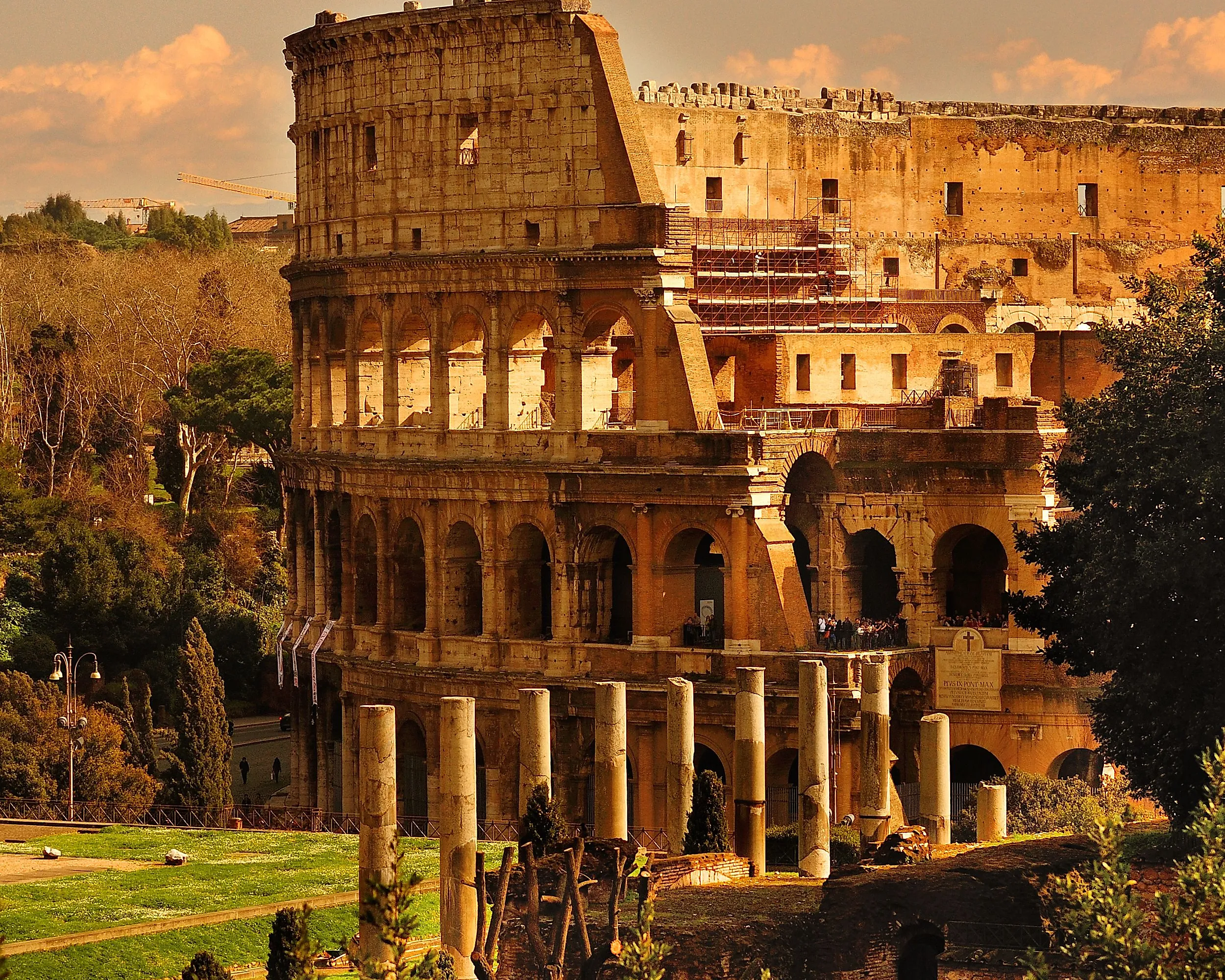
Colosseum - Rome, Italy

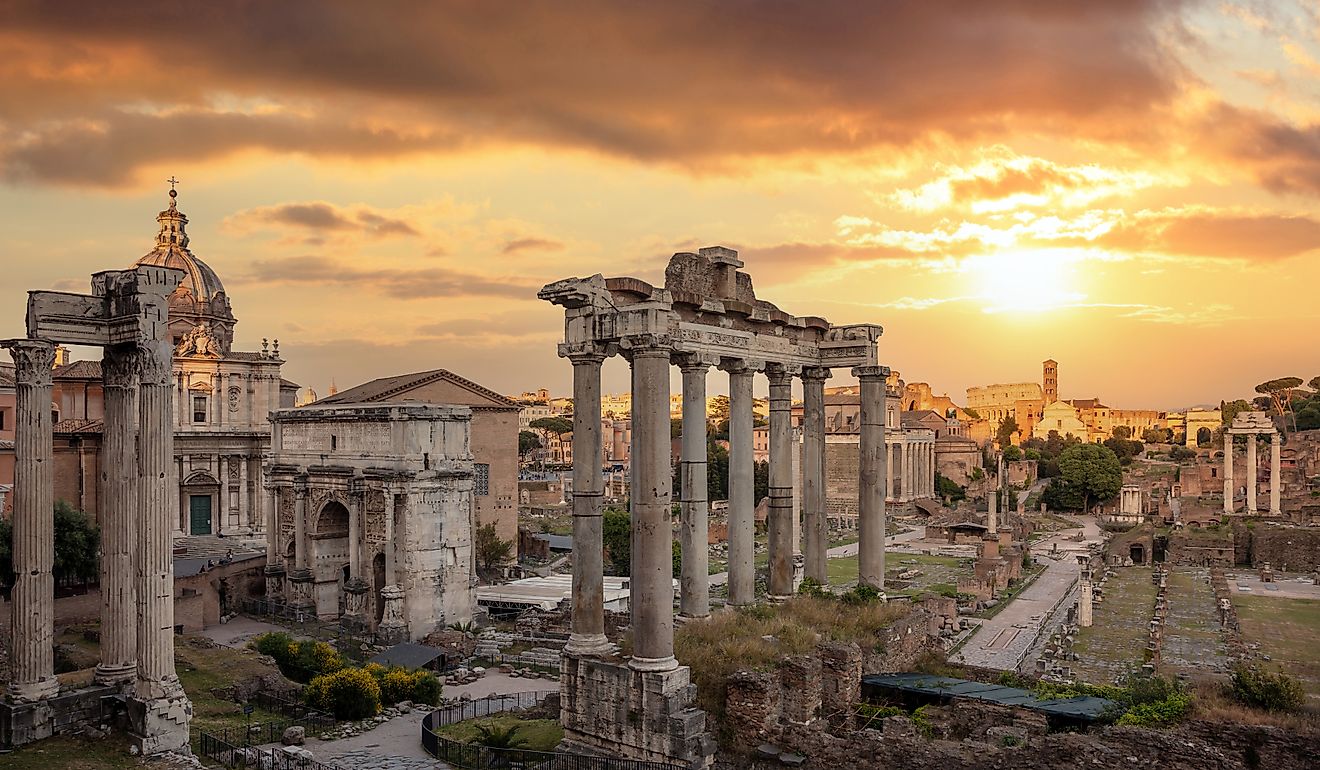
Emperor Vespasian had a public-relations problem and a shrewd solution. To win over Romans soured by Nero's tyranny, he drained the private lake of Nero's palace and, starting around 72 AD, built the people an amphitheater on top of it. The Colosseum rose as a freestanding mountain of stone and concrete, the largest arena in the Roman world, completed in roughly a decade.
It opened around 80 AD with a hundred straight days of gladiator fights and staged spectacles, and it could pack in some 50,000 roaring spectators. Rome used it for four centuries before tastes moved on. Earthquakes, scavengers, and time have since gnawed away about two-thirds of it, yet the ruin still anchors the city as the single most recognizable relic of the ancient world.
Porcelain Tower - Nanjing, China

The Ming dynasty once built a nine-story skyscraper sheathed entirely in gleaming white porcelain. Completed in 1431 as the centerpiece of the Bao'en Temple, the "Temple of Repaid Gratitude," the pagoda rose beside the Yangtze River in Nanjing, its porcelain-brick skin catching the sun by day and, by some accounts, glowing with lantern light after dark.
It did not survive the 19th century. A lightning strike knocked off its upper stories in 1801, and in the 1850s Taiping rebels, Christian revolutionaries who wanted no Buddhist tower standing on captured ground, leveled what remained. The story has a modern coda: in 2015 a steel-and-glass reconstruction opened on the original site, bankrolled by Wang Jianlin, then the richest man in China, alongside a new museum devoted to the tower it replaced.
Wonders That Outlived Their Makers
Notice what these ten share: almost none were built to be "wonders," and several were already ancient when medieval travelers folded them into the list. A Roman emperor's apology, a duke's hunting gift, a fortress against Crusaders, a tower nobody could keep upright, they earned their places by surviving the empires, faiths, and disasters that came for them. That is the real thread running through the medieval wonders. Not when they were built, but how stubbornly they refused to disappear.