Which State Has The Most State Parks?
Which state has the most state parks comes down to what you count as a "state park." If you are strictly counting state parks and not state forests, state game lands, wildlife management areas or state beaches, the numbers are different. For the purposes of this article we are looking at just state parks. Data within this article comes from the National Association of State Park Directors and individual state park bureaus and managing agencies. It reflects dedicated state park units managed under state park divisions. Let's check out the top 10 states containing the most state parks.
New York

New York has the highest number of state parks at 180, managed by the New York State Office of Parks, Recreation, and Historic Preservation, or OPRHP. This excludes the 6-million-acre Adirondack Park and the 700,000-acre Catskill Park forest preserve lands, as well as state historic sites, specialized marine parks, arboretums, stand-alone golf courses, gardens, strict athletic complexes, state forests, and state preserves.
Using these criteria, the largest state park in New York is Allegany State Park, in Cattaraugus County, western New York, with a total of 65,000 acres. It borders Pennsylvania's Allegheny National Forest. The second-largest New York state park is Harriman State Park in the Hudson Valley, measuring approximately 47,500 acres. The most popular state park in New York, per the OPRHP, based on attendance numbers, is Niagara Falls State Park, with about 8.9 million visitors in 2025. Established in 1885, this is also the oldest state park in the U.S.
California

California has the second-highest number of state parks of all of the United States, at 133. This does not include California's 1.5 million acres of state forests, more than one million acres of state wildlife areas, or its state historic parks, state beaches, and state natural reserves. The largest state park in California, restricting these other types of possible contenders, is Anza-Borrego Desert State Park, in San Diego, Imperial, and Riverside counties in Southern California. It totals over 600,000 acres, and is not just the largest state park in California, but also the largest in the contiguous U.S.
At about 87,000 acres in size, the second-largest park in the state, Henry W. Coe State Park, is the largest state park in northern California. The most visited state park is Sonoma Coast State Park, with 2.6 million visitors per year. This park in Sonoma County stretches for 17 miles along Highway 1.
Pennsylvania

Pennsylvania has 125 state parks, and comes in third, once conservation areas, environmental education centers, preserves, farm parks, and picnic areas are filtered out. This also excludes the state's 2.2 million acres of state forests and 1.5 million acres of state game lands. Pennsylvania's state parks are managed by the Pennsylvania Department of Conservation and Natural Resources Bureau of State Parks.
Pymatuning State Park in Crawford County, along the Ohio border, is Pennsylvania's largest state park, at 16,892 acres, if you count the 17,000-acre Pymatuning Reservoir adjoining it. It is also the second-most visited state park in Pennsylvania, receiving 3.5 million visitors each year. Measuring by just land area, Ohiopyle State Park in Fayette County is the largest state park in Pennsylvania, covering 20,500 acres. The most-visited state park in Pennsylvania is Presque Isle State Park on Lake Erie, with over four million visitors annually.
Connecticut

With 105 state parks, according to the Connecticut Department of Energy and Environmental Protection, or CT DEEP, Connecticut has the fourth-highest number of state parks in the country. This eliminates forests, recreational areas, campgrounds, and trails. Using this criteria, Connecticut's largest state park is Macedonia Brook State Park, in Kent, at 2,302 acres. The second-largest state park in Connecticut is West Rock Ridge State Park, in the Hamden/New Haven area, at 1,722 acres.
Connecticut's most-visited state park is Hammonasset Beach State Park, on Long Island Sound in Madison. This state park receives about 2 million visitors annually per CT DEEP. Sherwood Island State Park in Westport, near the New York metropolitan area, receives about a million visitors a year and is one of the most-visited parks in Connecticut. It is also the first state parkland acquired by the state, in 1914.
Texas

Per Texas Parks and Wildlife, the state has 82 state parks, not counting natural areas, lodges, and sites listed strictly as historic sites, though the count does include those listed as both state park and historic site. Big Bend Ranch State Park, at 311,000 acres, is the largest state park in Texas under these criteria. It is in West Texas along the Rio Grande.
The second-largest state park is the much smaller Palo Duro Canyon State Park, at approximately 28,000 acres. It is also the third-most visited park in the state, with 353,000 visitors in 2024, according to Texas Parks and Wildlife. The most-visited park in Texas that year was Garner State Park, near Uvalde. This state park received about 464,000 visitors in 2024.
Florida

After filtering out 32 historic sites, 28 preserves, and 11 trails, Florida has 81 state parks, per the Florida Department of Environmental Protection Division of Recreation and Parks. Florida's park service is one of the five largest and most diverse state park agencies in the country by total managed units, at 175. The largest state park is Fakahatchee Strand Preserve State Park, totaling 85,000 acres in Southwest Florida. Excluding state parks with "preserve" in the name, the largest state park in Florida is Myakka River State Park, at 37,000 acres, in Sarasota and Manatee Counties.
Using the criteria of just "state park" in the name, the most-visited state park in Florida is Honeymoon Island State Park, on the Gulf Coast, with about 1.7 million visitors in 2025. This statistic comes from Florida State Parks Foundation Park Impact Sheets.
Ohio

Ohio has 76 state parks, according to the Ohio Department of Natural Resources, or ODNR. They proudly note that all are open every day and always have free admission. The largest state park in Ohio is Salt Fork State Park, at 20,000 acres, including land and water, in southeastern Ohio's Guernsey County. West Branch State Park, with 5,300 acres of land and water in Portage County, is the state's second-largest state park.
Hocking Hills State Park in southeastern Ohio's Hocking County is the top-visited state park per ODNR. This park, which includes a visitor center, campgrounds, lodge, and 25 miles of trails, receives about 4 million visitors annually.
Minnesota

The Minnesota Department of Natural Resources reports that, when not counting recreation areas, the number of state parks they manage is 64. Its largest is St. Croix State Park, with 34,000 acres in Pine County, bordering Wisconsin along the St. Croix and Kettle Rivers. Itasca State Park, encompassing 32,000 acres, at the headwaters of the Mississippi River, is the second-largest state park and the oldest state park in Minnesota.
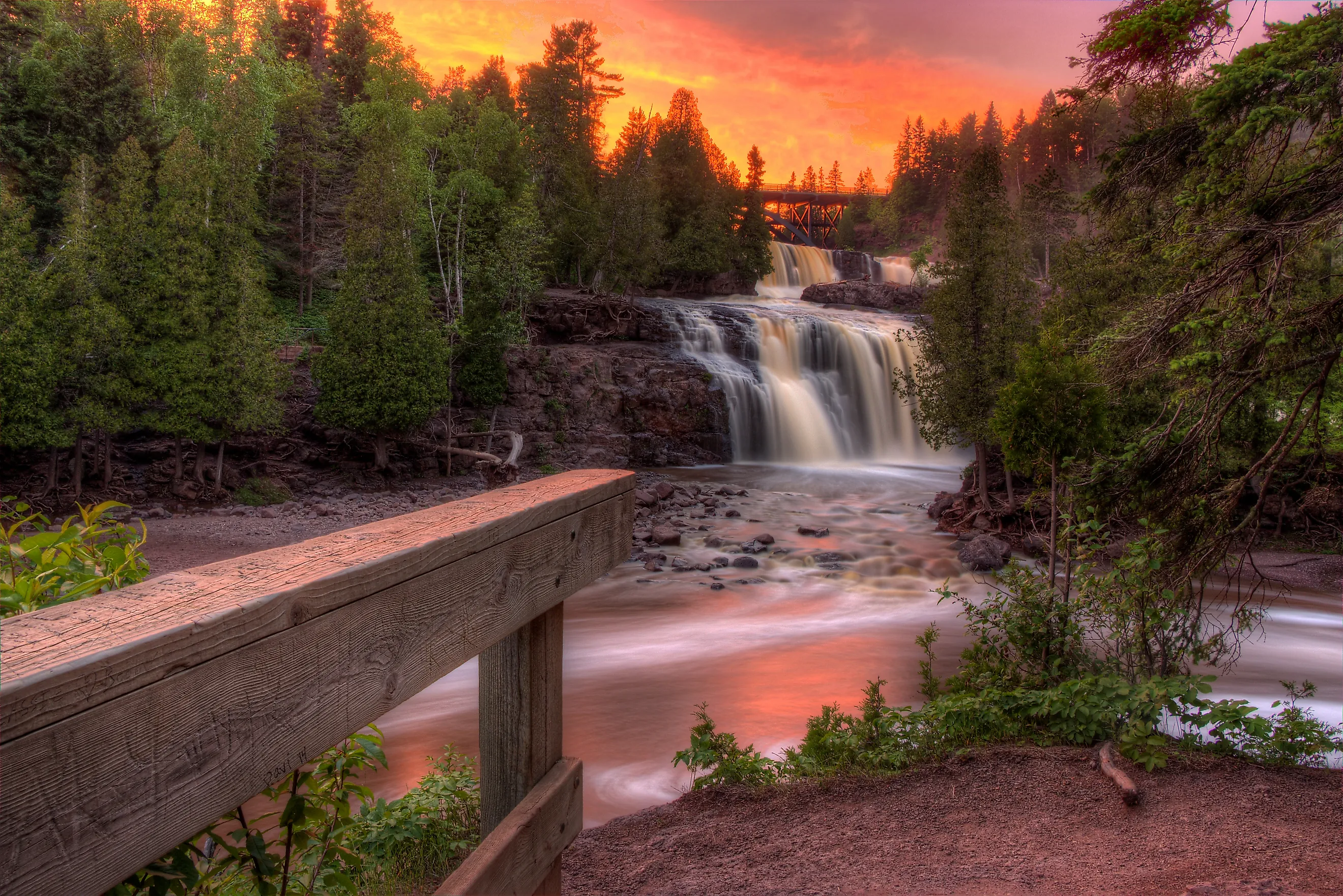
Gooseberry Falls State Park on Lake Superior's North Shore draws about 758,000 visitors annually, per the Minnesota DNR, making it the most-visited state park. Second is Split Rock Lighthouse State Park in Lake County, with about 560,000 visitors each year.
Missouri

When filtering out state historic sites and designated rail-trails, the Missouri Department of Natural Resources, Division of State Parks, notes that they manage 57 state parks. The largest is the Lake of the Ozarks State Park, at 17,600 acres, in central Missouri. Including 85 miles of natural lake shoreline, two public beaches, and more, it is also the second-visited state park, with 1.1 million visitors in 2025.
The second-largest state park in Missouri is Johnson's Shut-Ins State Park, at 8,500 acres in Reynolds County, featuring volcanic rock shut-ins along the Black River. It received 241,000 visitors in 2025, per Missouri State Parks. The most-visited state park is Bennett Spring State Park, with 1.3 million visitors in 2025.
Iowa

According to the Iowa Department of Natural Resources, after filtering out historic sites, campgrounds, trails, and recreation areas, there are 54 Iowa state parks. Its largest is Lake Macbride State Park, with 2,180 acres in Johnson County. Brushy Creek State Recreation Area is classified as the largest in the state, at 6,500 acres, but is not strictly a "state park."
The most-visited state park in Iowa, per the Iowa DNR, is Lake Manawa State Park in Council Bluffs, along the Missouri River. This park receives about 2.5 million visitors annually. Gull Point State Park, on West Okoboji Lake in Dickinson County, is the second-most visited, at 1.5 million visitors per year.
Treasured State Parks
While America's national parks often steal the spotlight, state parks are the true backbone of accessible outdoor recreation. You don't need a national park pass to experience exceptional outdoor landscapes. As this top ten list shows, state park systems across the country offer incredible biodiversity, rich history, and scenic escapes right in our own backyards. Next time you're planning a weekend getaway, look closer to home. Your state's next great adventure might be just down the road.