The US Beaches With The Most Alligators
Alligators are an unexpected sight on most of America's ocean beaches, but several stretches have well-documented encounters with these powerful reptiles. In popular coastal destinations like South Carolina's Huntington Beach State Park and Sanibel Island in Florida, alligators have been spotted crossing the sand, entering the surf, and even swimming near beachgoers. American alligators primarily inhabit freshwater environments, including rivers, lakes, and marshes, but they can tolerate saltwater for short periods. That allows them to move through coastal waters and occasionally appear along the shoreline. These six US beaches have recorded alligator sightings, with nearby wetlands providing habitat for these remarkable creatures.
Huntington Beach State Park, South Carolina

Huntington Beach State Park covers approximately 2,500 acres near Murrells Inlet, South Carolina, including three miles of sandy Atlantic shoreline. Its freshwater ponds and coastal marshes support an established alligator population, making the park a popular destination for wildlife watching. Alligators are frequently observed in Mullet Pond, where they bask along the banks or swim through the water. Visitors can also see them near the park's causeway, which passes through important wetland habitat. South Carolina State Parks offers seasonal guided programs focused on observing these animals and understanding their behavior.
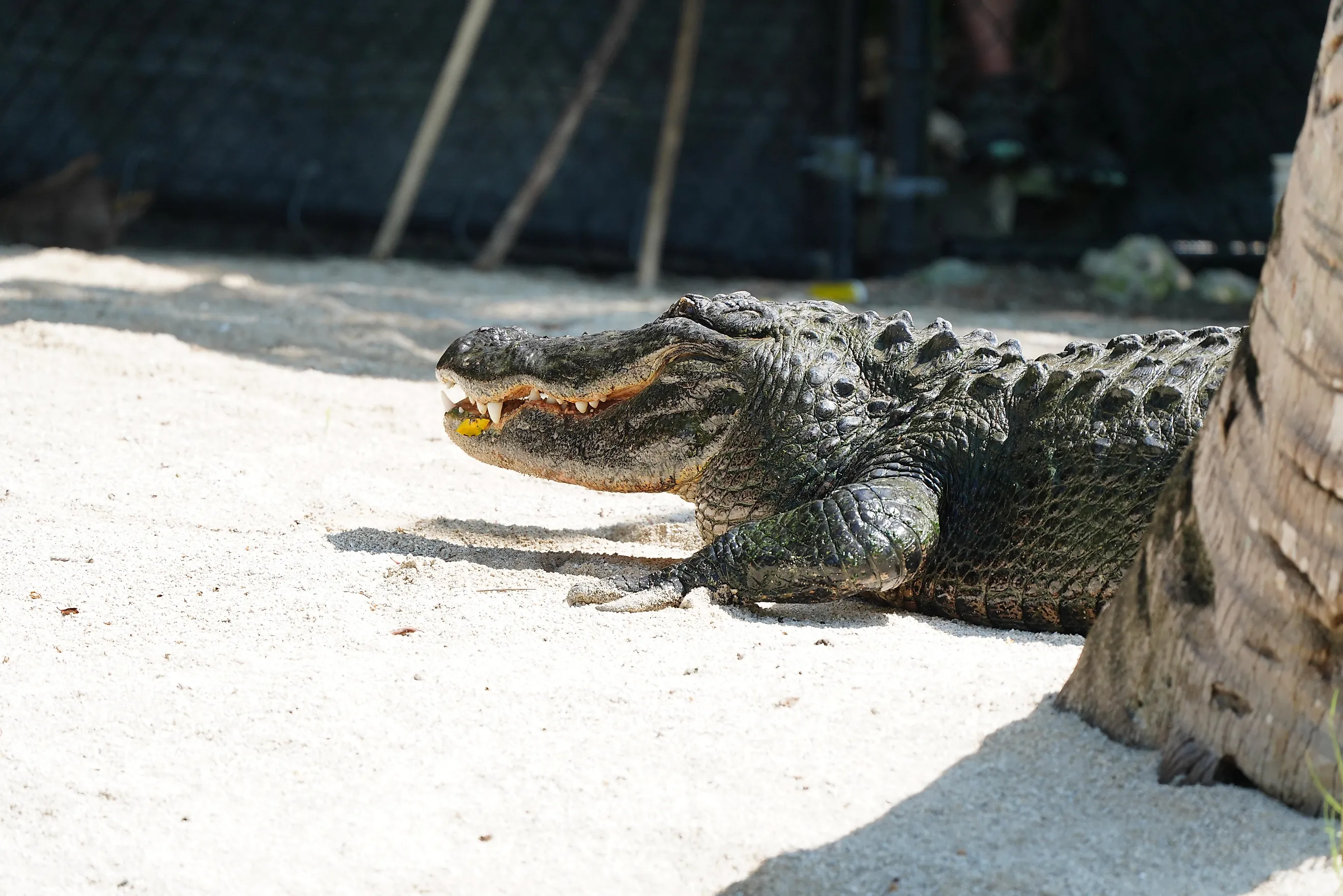
Alligators occasionally venture beyond the park's freshwater habitats and onto its ocean beach. In June 2025, visitors recorded an alligator walking along the sandy shoreline, providing a striking example of how these animals move through coastal environments. Another beach encounter was documented in June 2026. Although the reptiles spend most of their time in ponds and marshes, their movements can bring them into areas used by swimmers and beachcombers. The park's combination of accessible alligator habitat and documented shoreline sightings makes it a particularly relevant destination for this list.
Pensacola Beach, Florida

Pensacola Beach occupies part of Santa Rosa Island, a barrier island along Florida's northwestern Gulf Coast. Its white-sand shoreline faces the Gulf of Mexico, while Santa Rosa Sound separates the island from the mainland. Despite its coastal setting, the island also contains freshwater ponds that can support American alligators. These habitats help explain why the animals occasionally appear in an area better known for swimming and beach activities. The Footprints in the Sand Eco-Trail, a local environmental education initiative, lists alligators among the reptiles documented on the island.
According to the Eco-Trail's wildlife information, alligators have crossed Santa Rosa Sound to reach Pensacola Beach and have been observed walking along the beach and entering Gulf waters. Such encounters are rare, since the species depends primarily on freshwater habitats. Alligators arriving on the island may use its freshwater ponds before moving elsewhere. Their ability to travel through brackish or salty water helps explain how they reach barrier islands that might otherwise seem unlikely alligator habitat. Pensacola Beach offers a documented example of alligators moving between mainland waterways, island wetlands, and the Gulf shoreline.
Sunset Beach, North Carolina

Sunset Beach lies along the southern coast of North Carolina in Brunswick County, close to the South Carolina border. The barrier-island community is known for its broad sandy shoreline and access to Bird Island, a protected coastal preserve. Beyond the beachfront, the surrounding area contains ponds, creeks, and wetlands that provide suitable habitat for American alligators. These reptiles occur naturally in southeastern North Carolina, where warmer coastal conditions support populations near the northern portion of their established U.S. range. Although ocean beaches are not their usual habitat, alligators sometimes move through the coastal landscape and appear in unexpected places.
On June 19, 2025, beachgoers spotted an eight-foot alligator entering and exiting the Atlantic surf near 10th Street. The Sunset Beach Police Department responded, and a sergeant licensed through the North Carolina Wildlife Resources Commission safely captured the animal. It was subsequently relocated to a nearby pond. Another incident occurred on May 11, 2026, when officers responded to a large alligator near a roadway in the Sea Trail area. That animal measured 10 feet, 10 inches long and weighed approximately 400 pounds. Wildlife officers relocated it to a nearby lake.
Sea Rim State Park, Texas

Sea Rim State Park occupies a coastal area near Sabine Pass in southeastern Texas, where freshwater and brackish marshes meet the Gulf of Mexico. The park contains nearly two miles of Gulf shoreline and approximately 4,000 acres of marshland. Its wetland habitats support American alligators, which Texas Parks and Wildlife identifies as living within the park. Visitors exploring the Gambusia Nature Trail Boardwalk can observe the surrounding marsh environment, where alligators may be present. The park's location between expansive coastal wetlands and the Gulf creates opportunities for the reptiles to move between inland waters and the beachfront.
In March 2024, an alligator was filmed resting and feeding on the sandy Gulf shoreline at Sea Rim State Park. The encounter attracted attention because the animal was occupying a beach regularly used for fishing and recreation. Reports accompanying the video described the alligator feeding on a fish while visitors watched nearby. Although alligators generally prefer freshwater, individuals can enter coastal waters for limited periods and travel across beaches adjoining their wetland habitats. At Sea Rim, the close proximity of established alligator habitat to the Gulf shoreline makes such encounters possible. Visitors should observe the animals from a safe distance and avoid approaching them for photographs.
Fort Myers Beach, Florida

Fort Myers Beach sits on Estero Island along Florida's southwestern Gulf Coast. The community is surrounded by coastal waterways, including Estero Bay, where mangroves and wetlands provide habitat for numerous wildlife species. Florida is home to an estimated 1.3 million American alligators, according to the Florida Fish and Wildlife Conservation Commission, with most living in freshwater lakes, rivers, ponds, and marshes. Although alligators are not typical residents of Gulf beaches, the region's interconnected waterways occasionally bring them into coastal areas. Farther south, Lovers Key State Park features additional coastal wetland habitats where visitors can learn about the wildlife of this part of Florida.
On April 18, 2026, a family visiting Fort Myers Beach spotted an alligator swimming near the shoreline. Local news station WBBH reported the encounter the following day, documenting the reptile in waters normally associated with swimming and other beach activities. The sighting illustrated how alligators can temporarily enter the Gulf despite their preference for freshwater. Unlike American crocodiles, which possess specialized salt-excreting glands, alligators have limited tolerance for prolonged exposure to seawater. They may therefore travel through salty coastal environments without establishing permanent residence there. Fort Myers Beach provides a documented example of an alligator appearing directly in the waters of a popular Gulf Coast destination.
Sanibel Island, Florida

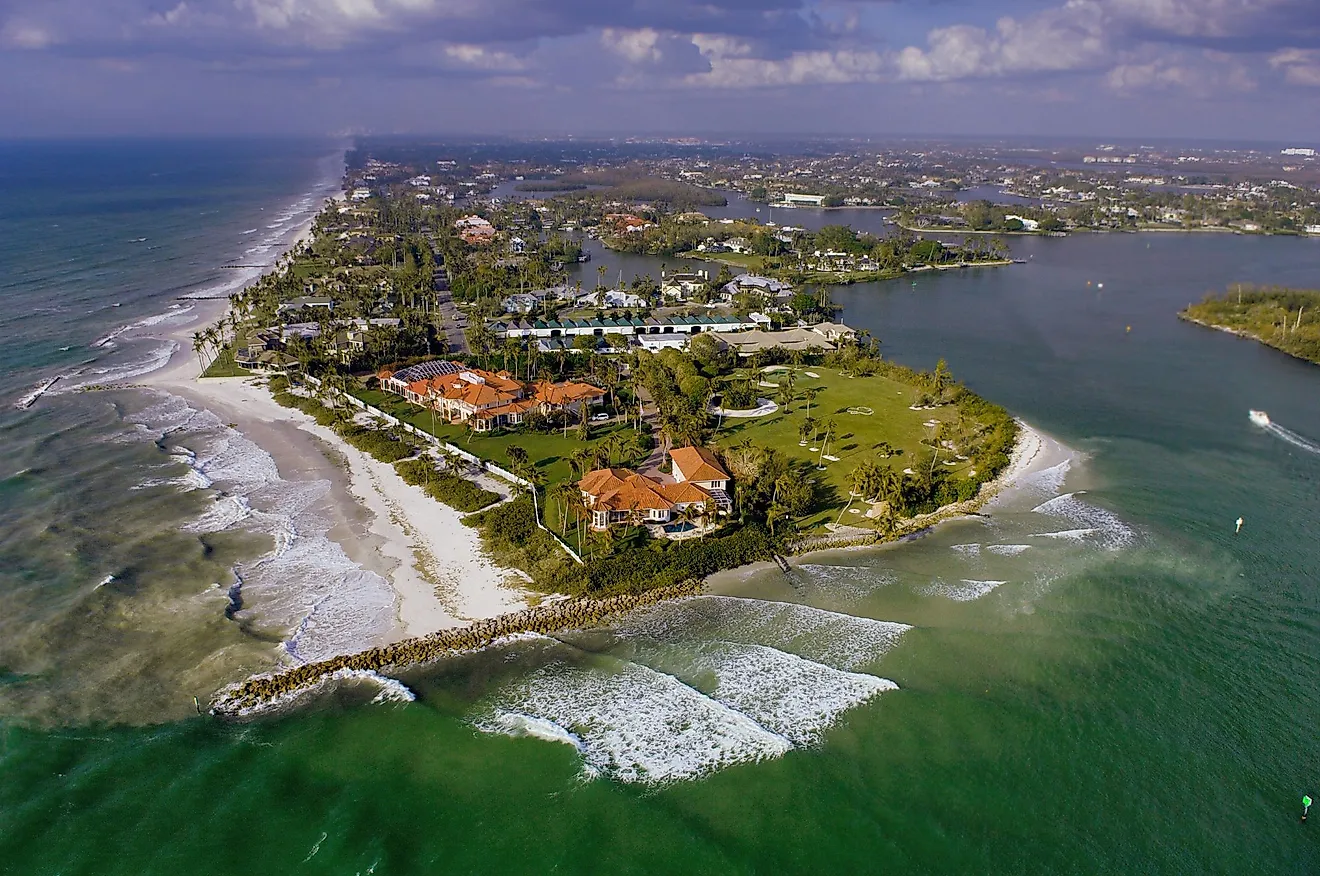
Sanibel Island lies off Florida's southwestern coast, west of Fort Myers, and combines Gulf beaches with extensive freshwater wetlands. According to the City of Sanibel, the island contains more than 2,200 acres of freshwater wetlands that provide habitat for a sizable population of American alligators. Many residential areas border lakes or protected conservation lands, bringing people into relatively close proximity to these animals. The J.N. "Ding" Darling National Wildlife Refuge protects important island habitats, and alligators can be observed in suitable freshwater areas throughout the refuge. The Bailey Tract, a separate refuge property with walking trails, also provides opportunities to explore the island's wetland environment.
Sanibel's alligators sometimes move beyond their usual freshwater habitats and enter coastal waters. On September 18, 2026, a five-foot alligator was filmed swimming offshore while beachgoers were in the nearby Gulf waters. The sighting received local news coverage several days later and highlighted that the island's alligators can appear outside the ponds and wetlands where they are typically seen. Their activity typically increases during warmer months, when rising temperatures support feeding, territorial movement, and reproduction. With an established alligator population occupying extensive freshwater habitats and a recently documented offshore encounter, Sanibel offers a clear connection between the species' typical environment and the island's popular beaches.
Alligators Along America's Coastlines
From the marshes surrounding Sea Rim State Park in Texas to the freshwater wetlands of Sanibel Island, alligators inhabit coastal environments close to popular ocean beaches. Their occasional appearances on the sand or in the surf demonstrate how easily these reptiles can move between connected habitats. Huntington Beach State Park, Sunset Beach, and the other destinations on this list have all recorded encounters along their shorelines. Anyone who sees an alligator should keep a safe distance, never feed it, and contact local wildlife authorities if the animal poses a danger. Safely observing these reptiles helps protect both beachgoers and the animals themselves.