Why Pluto Might Still Have A Liquid Ocean
Pluto is so cold that nitrogen and methane freeze into solid ice, yet scientists think a liquid ocean may still be hiding beneath its surface. Temperatures on the dwarf planet can plunge to around -364°F (-220 °C), creating a landscape where substances that drift through Earth's atmosphere become rock-hard. For decades, researchers assumed a world this small and this far from the Sun would have frozen solid billions of years ago.
New evidence suggests otherwise. Data from NASA's New Horizons mission and recent computer models point to a hidden ocean buried beneath miles of ice. The possibility has turned Pluto from a frozen relic at the edge of the solar system into one of its most puzzling worlds. The mystery is not simply that Pluto may have an ocean. The mystery is how that ocean has survived at all.
Pluto Should Have Frozen Long Ago

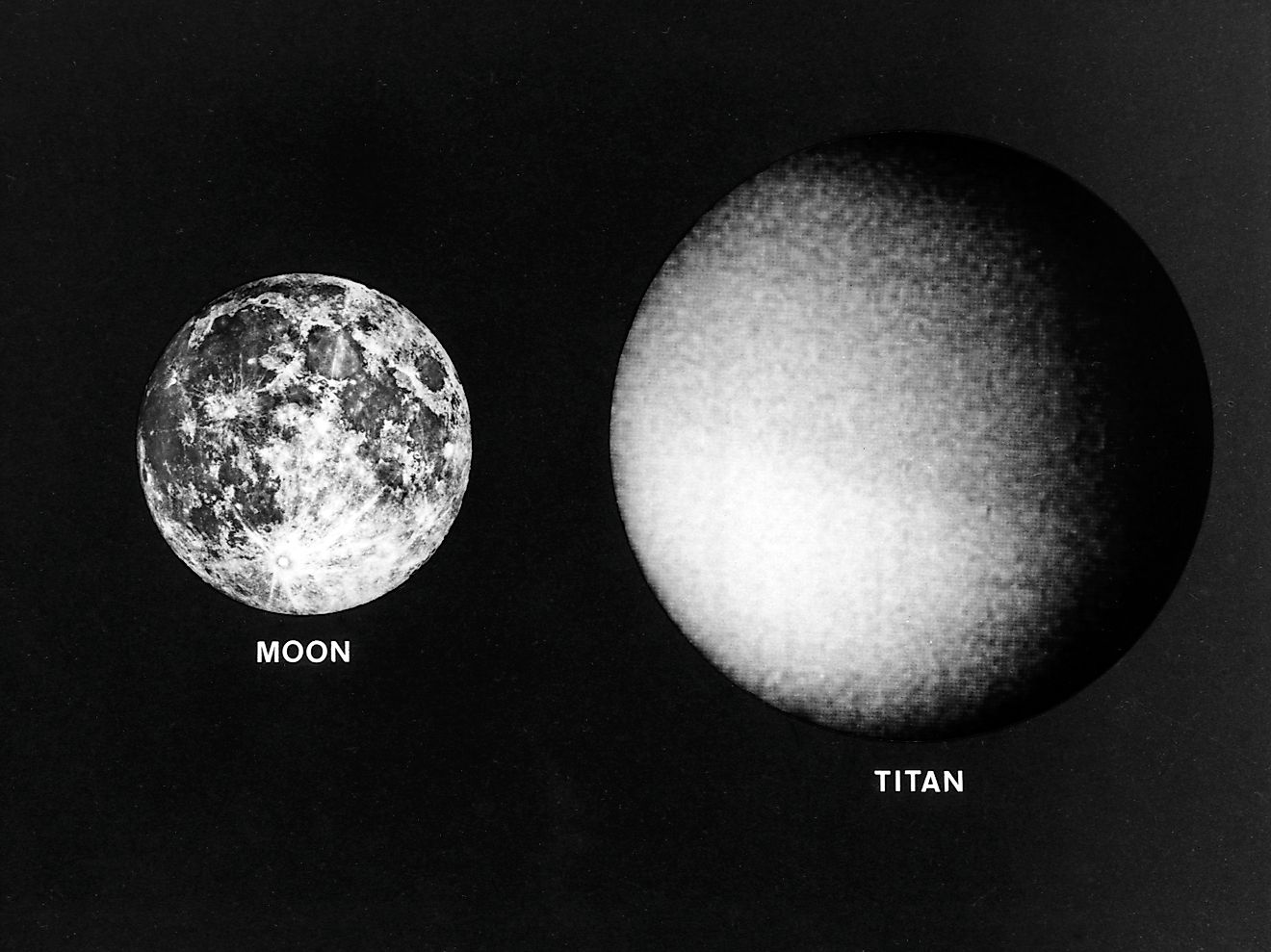
Pluto's possible ocean has created a major problem for scientists: by every conventional measure, it should no longer exist. Pluto spans just 1,477 miles (2,377 kilometers) across, making it smaller than Earth's Moon. Planetary bodies of that size typically lose their internal heat over time, much like a campfire that slowly fizzles out after the flames disappear. For decades, researchers assumed any liquid water inside Pluto had frozen solid billions of years ago.
The dwarf planet's distance from the Sun only deepens the mystery. Pluto orbits nearly 3.7 billion miles (5.9 billion kilometers) from the Sun on average, where sunlight is about 900 times weaker than it is here. Even at midday, the Sun would appear more like a brilliant point of light than the large glowing disk visible from Earth. Those extreme conditions transform Pluto's landscape. Water ice becomes so hard that it behaves more like bedrock than snow. Some of Pluto's mountains rise over 9,000 feet high and consist largely of that same frozen water.
Taken together, Pluto's small size, weak sunlight, and bitter cold should have left the world frozen from its surface to its core. Yet evidence suggests liquid water may still survive deep below that thick ice.
A Spacecraft Flyby Changed Everything

NASA's New Horizons mission absolutely changed scientists' understanding of Pluto when it flew past the dwarf planet in July 2015. The spacecraft spent nine years crossing the solar system before becoming the first mission to capture detailed images of Pluto's surface.
Those images revealed a world that appeared far more geologically complex than expected. New Horizons photographed mountain ranges made largely of water ice, broad plains covered in frozen nitrogen, and massive glaciers that showed signs of movement. Some regions appeared remarkably young by planetary standards, suggesting that Pluto had perhaps not remained completely inactive over the past 4.5 billion years.
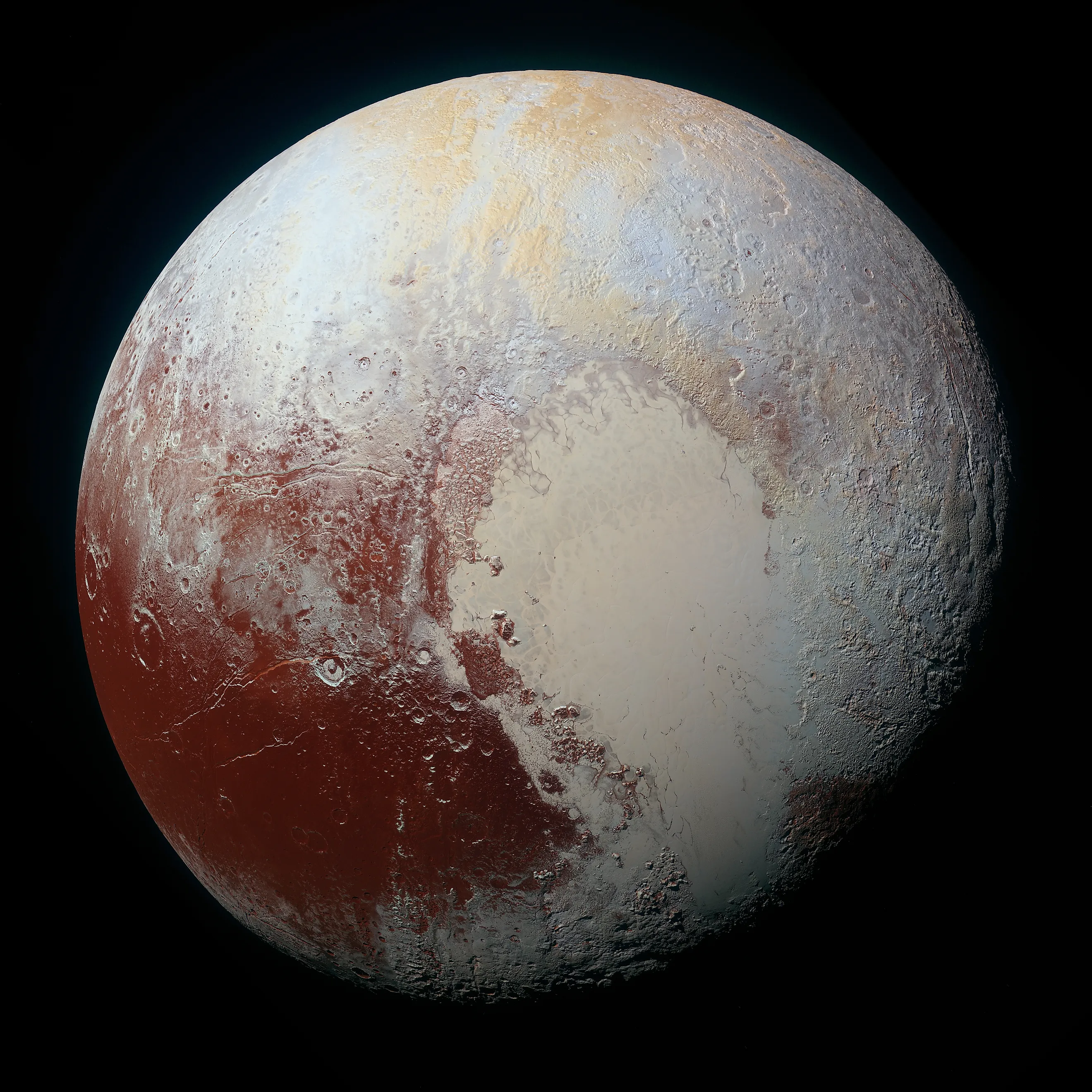
One area attracted particular attention. A bright formation within the heart-shaped western half of Pluto, known as Sputnik Planitia, dominated part of the surface. Scientists soon realized that this enormous basin might contain clues to what lies beneath the dwarf planet's icy crust. The shape of Sputnik Planitia, along with nearby fractures and other surface features, suggested that Pluto's interior could still be geologically active. Those clues would eventually help fuel the idea that a liquid ocean may survive deep below the frozen terrain.
Sputnik Planitia May Hold the Strongest Clues

Sputnik Planitia, located in the western half of Pluto's heart-shaped formation, plays an important role in the case for a hidden ocean. An ancient impact created this basin billions of years ago, leaving behind a depression that stretches roughly 750 miles (1,200 kilometers) across Pluto's surface.
Scientists have spent years studying the basin because its structure does not fully match expectations for a completely frozen world. Frozen nitrogen fills much of Sputnik Planitia, while the surrounding terrain contains fractures, ridges, and other signs that Pluto's crust has shifted over time. Those surface features suggest that forces beneath the crust continued to reshape the region long after the impact occurred. Researchers also found evidence that Pluto's outer shell expanded as the dwarf planet evolved. That finding presents a challenge for models that suggest Pluto froze solid billions of years ago. A fully frozen interior would not readily explain this pattern of expansion visible across the surface.
Sputnik Planitia also provides another important clue. The basin's position and shape indicate that material beneath it may be denser than expected, a condition that several studies have linked to the presence of a subsurface ocean. For many planetary scientists, this exact region is among the strongest evidence that liquid water still exists beneath Pluto's icy crust.
An Ocean Beneath Miles of Ice

Recent computer models suggest that Pluto's subsurface ocean lies beneath an ice shell that may be 25 to 50 miles (40 to 80 kilometers) thick. That frozen layer plays a big role in scientists' understanding of how liquid water could persist so far from the Sun.
The ice shell may do more than separate the ocean from the surface. Researchers believe it slows the loss of heat from Pluto's interior, helping to keep conditions that allow liquid water to remain deep beneath the crust. The chemical composition of the water may also lower its freezing point, making it less likely that the ocean has solidified completely. These factors support the possibility that Pluto still contains a long-lived ocean hidden beneath miles of ice.
Pluto’s Ocean May Be Extremely Salty

Recent research suggests that Pluto’s hidden ocean may contain far more salt than Earth’s oceans. Models based on data from NASA’s New Horizons mission indicate the ocean could be about 8% denser than Earth’s seawater, a salinity level approaching that of parts of Utah’s Great Salt Lake. That salt content may help explain why the ocean has not frozen solid. Salt lowers the freezing point of water, which is why road crews spread it on icy highways during winter. Scientists think the same basic process could be happening inside Pluto, but on a planetary scale.
This also points to a narrow range of conditions that best match Pluto’s surface features. If the ocean were much less dense, the ice shell above it would likely show many more fractures. If it were much denser, there would be fewer. The pattern of cracks observed across Pluto’s surface fits a specific combination of salinity and ice-shell thickness. That balance is one reason researchers consider the ocean hypothesis increasingly plausible. Pluto’s interior appears to occupy a very specific set of conditions that allow liquid water to survive beneath its frozen crust.
Volcanoes That Erupt Slush
Pluto's cryovolcanoes provide another clue that liquid water may still exist beneath its frozen surface. Unlike volcanoes on Earth, which erupt molten rock, cryovolcanoes release water, ice, and other frozen compounds. Several of Pluto's large dome-shaped mountains match the characteristics scientists expect from this type of activity. These formations suggest Pluto's interior has remained at least partially active rather than freezing solid over time. Researchers believe cryovolcanoes may transport material from deep below the surface, allowing it to spread across the dwarf planet's icy landscape.
A cryovolcano operates through a process that differs dramatically from traditional volcanism. Instead of lava flowing across the ground, slushy mixtures of water and ice erupt onto one of the coldest known surfaces in the solar system. The presence of these features points to an internal heat source that may still fuel geological activity within Pluto today.
The Mystery of Pluto's Long-Lived Ocean

Pluto's subsurface ocean has given scientists one of the most persistent puzzles in planetary science. Evidence increasingly suggests that liquid water exists beneath the dwarf planet's icy crust, yet researchers continue to debate how the ocean has avoided freezing over billions of years. Scientists believe several factors may work together to keep the ocean in a liquid state. Residual heat from Pluto's formation, heat generated by radioactive elements within its rocky interior, an insulating ice shell, and the ocean's high salt content could all help prevent widespread freezing. However, no single mechanism fully explains the ocean's apparent longevity.
Each new study has improved scientists' understanding of Pluto's interior while raising additional questions about its thermal history and geological evolution. Although many researchers now support the existence of a subsurface ocean, the process that has sustained it for such an immense span of time remains a major area of investigation.
The Ocean That Shouldn't Be There

Scientists have never observed Pluto's suspected ocean directly. A thick shell of ice continues to cover the dwarf planet, preventing direct observation of what lies beneath the surface. However, multiple lines of evidence continue to support the possibility of a hidden liquid layer.
Researchers point to large fractures across Pluto's icy crust, signs of past geological activity, and computer models that simulate the dwarf planet's internal structure. Together, these findings suggest that liquid water may still exist beneath Pluto's frozen exterior despite surface temperatures that rank among the coldest in the solar system. The prospect of a long-lived ocean has raised larger implications for planetary science. If Pluto has maintained liquid water for billions of years, scientists may need to reconsider where subsurface oceans can survive. Rather than being limited to a handful of larger worlds, liquid water could persist beneath the surfaces of many icy bodies in the outer solar system.
As researchers continue to study Pluto, the dwarf planet remains an important example of how active and complex distant worlds can be. Future discoveries may reveal that Pluto is only one of many icy objects concealing oceans beneath their frozen crusts.