Which Planet Has the Strongest Gravity?
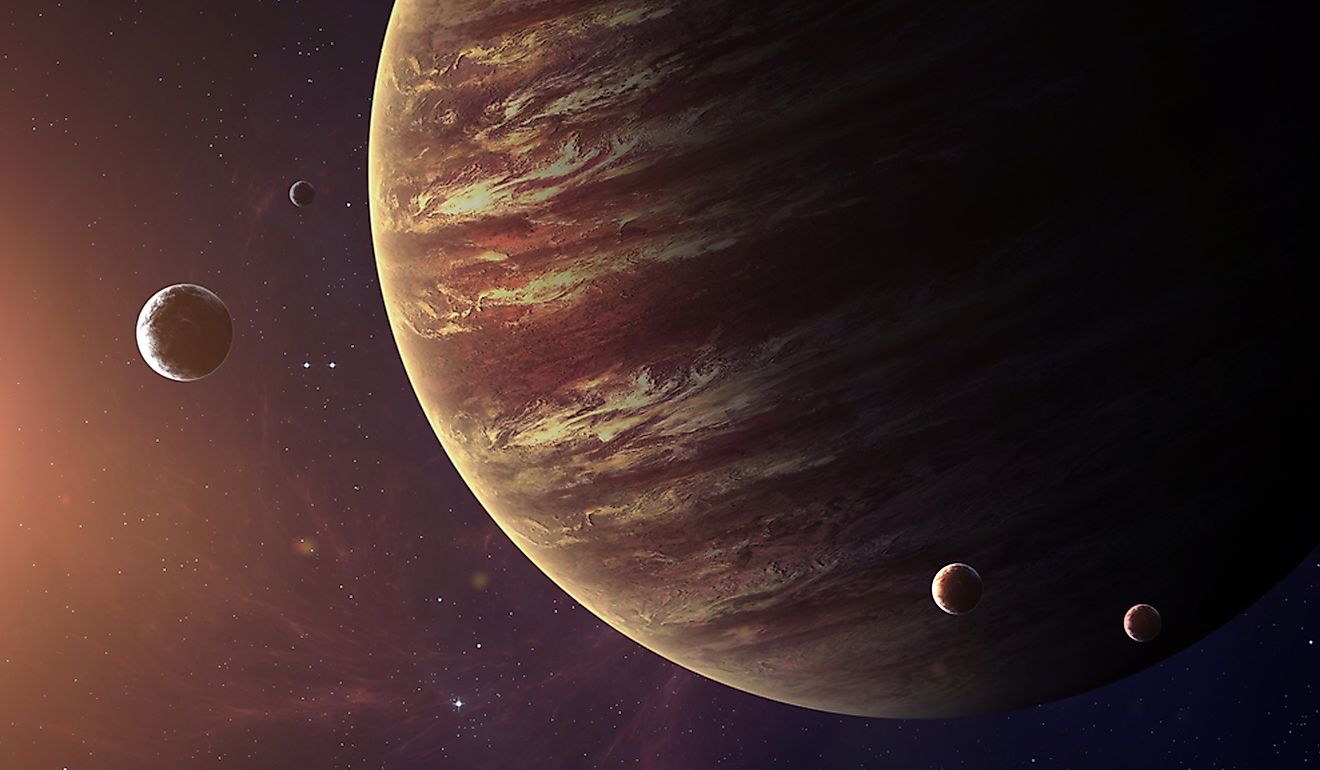
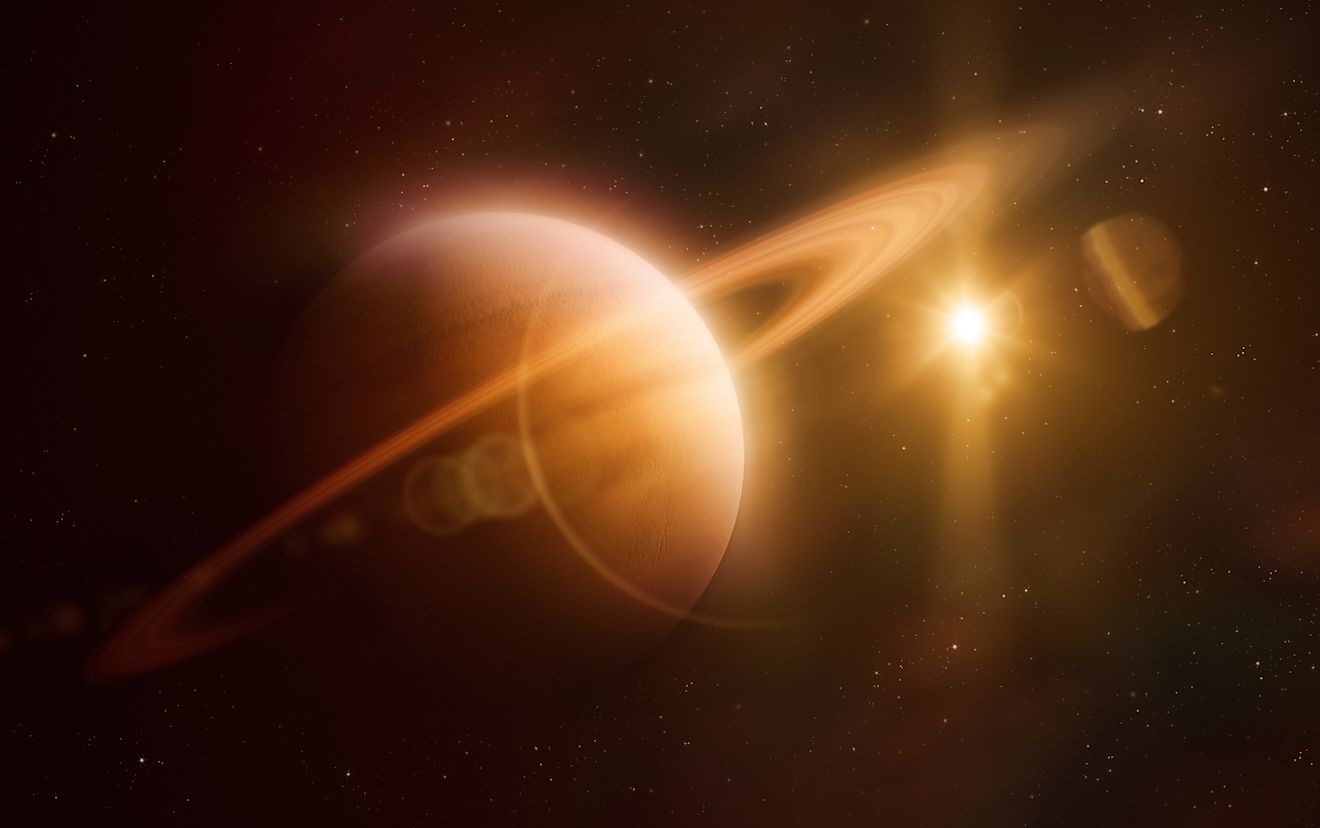
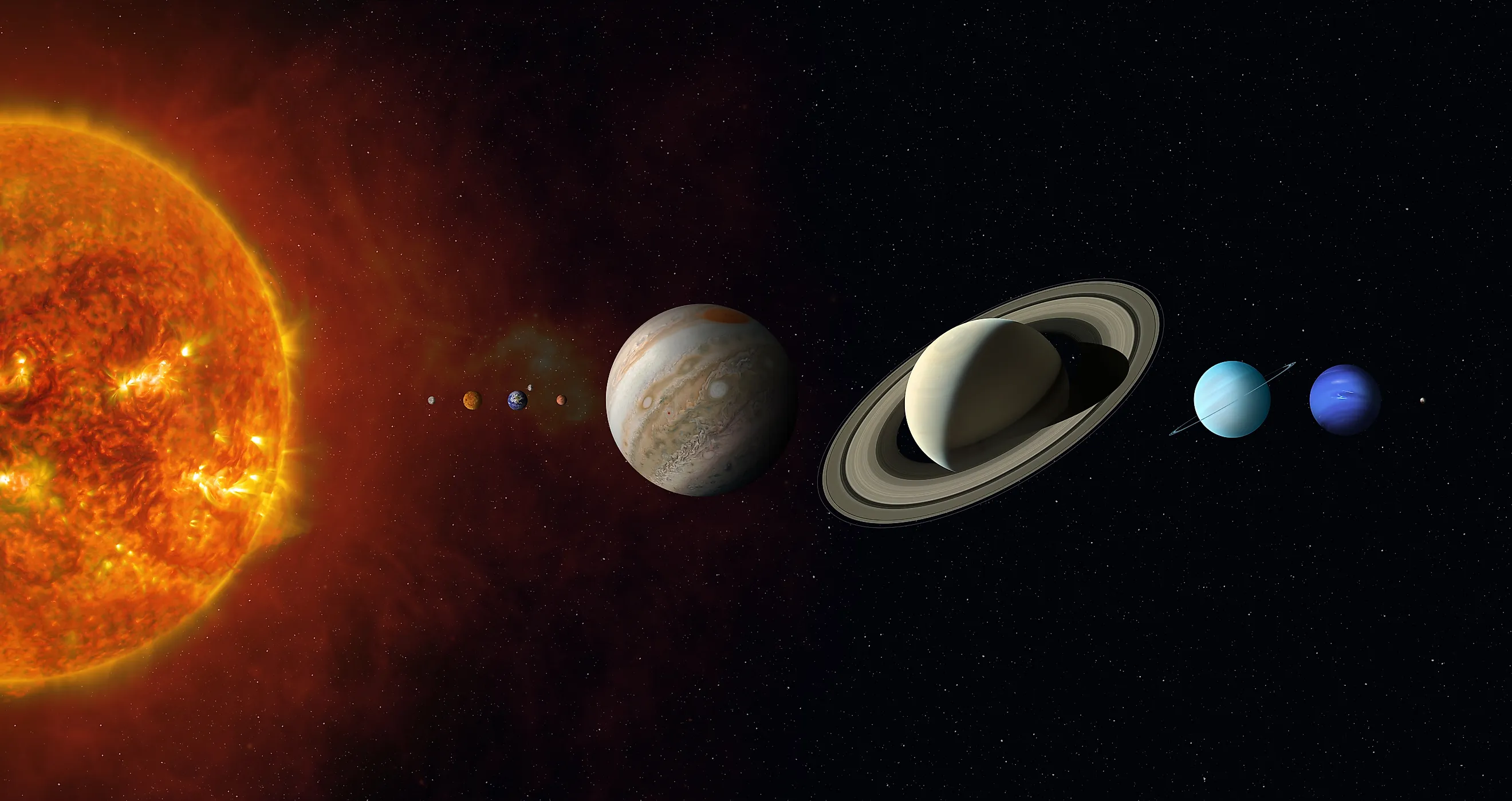
If Sir Isaac Newton weighed 100 pounds on Earth, he would have weighed about 240 pounds in Jupiter's upper atmosphere. Every step would require more than twice the effort. There would also be nowhere solid to stand, since Jupiter is a vast world of clouds, compressed hydrogen, and violent storms. With surface gravity roughly 2.4 times Earth's, Jupiter has the strongest gravity of any planet in the solar system.
That result may seem surprisingly modest for a planet that could hold more than 1,300 Earths by volume. Jupiter is about 318 times as massive as Earth, yet its enormous radius places its visible cloud tops far from its center. Because gravity depends on both mass and distance from the center of an object, Jupiter's great size prevents its cloud-top gravity from becoming hundreds of times stronger than Earth's.
What is Gravity?
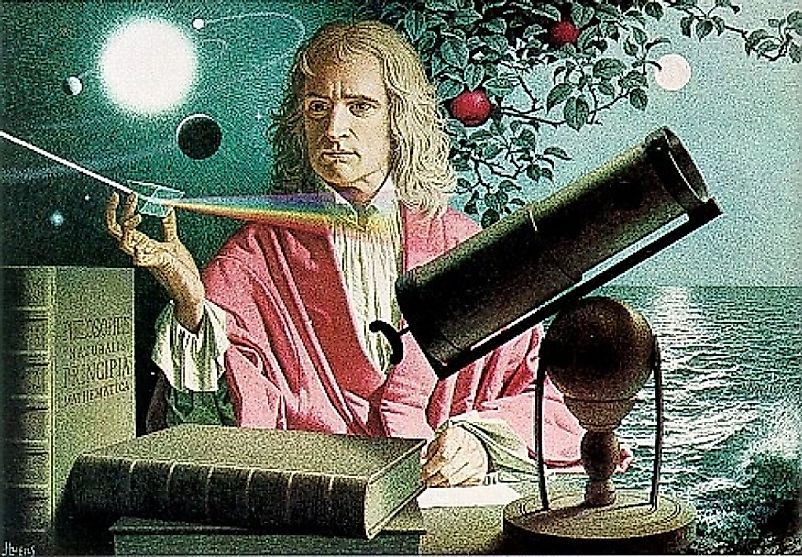
Gravity is the force of attraction between objects with mass. Near a planet, it pulls objects toward the planet's center. That is why we don't float off the ground when we jump. Gravity is also what keeps all the planets orbiting the Sun and is what keeps our Moon tidally locked to Earth. Every object with mass produces gravity. A more massive object generally exerts a stronger pull, but gravity also weakens rapidly with distance from the object's center.
Gravity on Jupiter

Jupiter is the largest planet in our solar system, created out of the dust and gases that were left over when the Sun formed about 4.6 billion years ago. The name Jupiter is a fitting one, sharing the same name as the King of the Roman Gods.
This gas giant has a radius of 43,440.7 miles (69,911 kilometers), and, if it were hollow, it could fit about 1,000 Earths inside of it. The gravity on Jupiter is so strong because of how large it is; the larger an object's mass is, the stronger its pull is. However, the surface gravity is only 2.4 times that of the surface gravity of Earth. So, if you weighed 100 pounds on Earth, you would weigh 240 pounds on Jupiter.
How can a planet 318 times as massive as Earth have gravity only 2.4 times as strong near its cloud tops? Distance is the key. Jupiter's visible clouds are nearly 11 times farther from the planet's center than Earth's surface is from Earth's center. Gravity weakens with distance, so Jupiter's enormous radius offsets much of the effect of its tremendous mass. Its average density is also only about one-quarter that of Earth.
Jupiter's Gravity and Its Moons

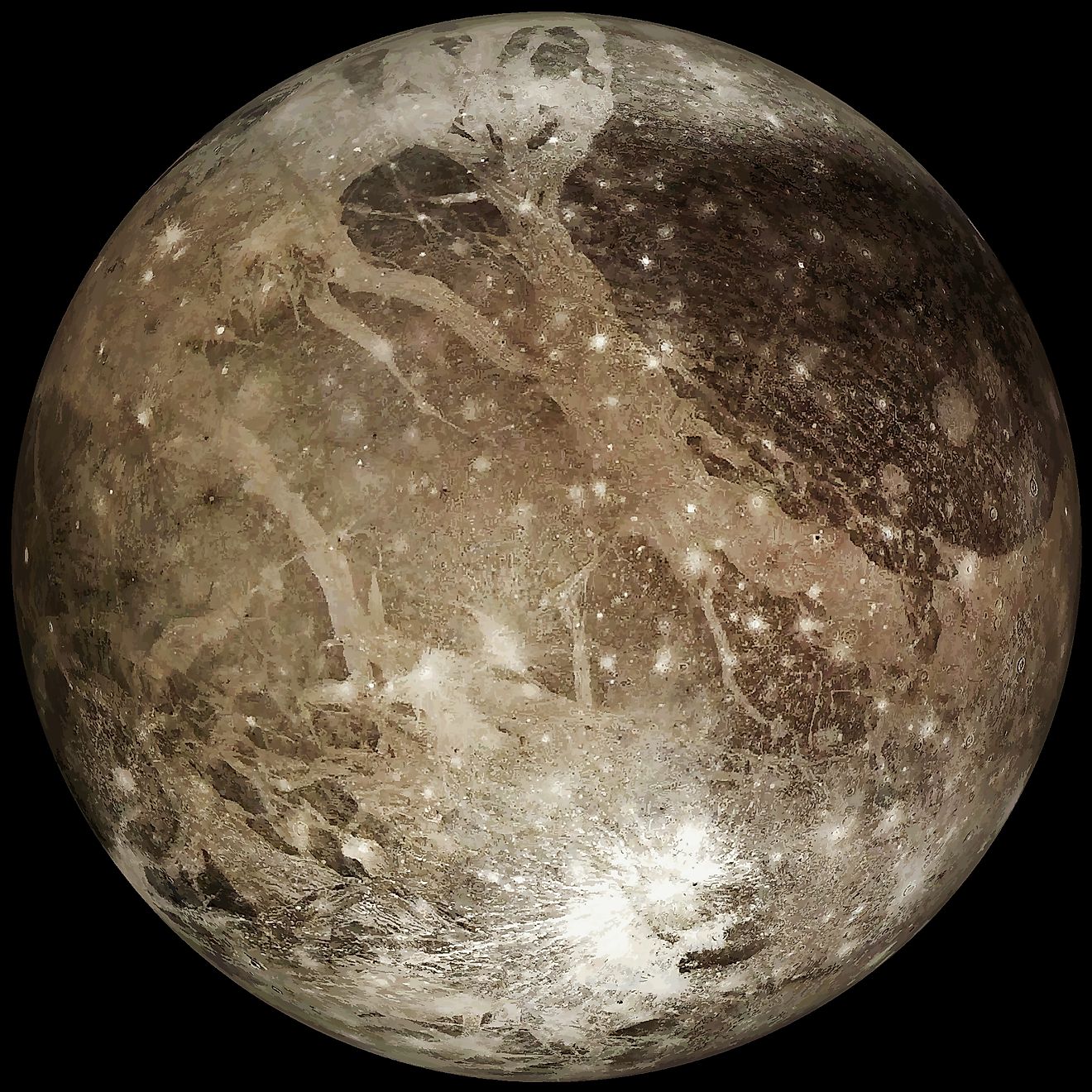
As of March 2026, the International Astronomical Union recognizes 101 moons orbiting Jupiter, and of those 101, four large moons draw the attention of many scientists. Those four are Io, Europa, Ganymede, and Callisto.
The icy moon Europa is greatly affected by the gravitational pull the planet has on it. It is believed that underneath its icy surface, Europa has a large ocean. Europa travels around Jupiter in a slightly elliptical orbit. As its distance from Jupiter changes, the planet's gravity repeatedly stretches and relaxes the moon. This tidal flexing generates frictional heat inside Europa and may help keep its buried saltwater ocean liquid beneath the frozen crust.
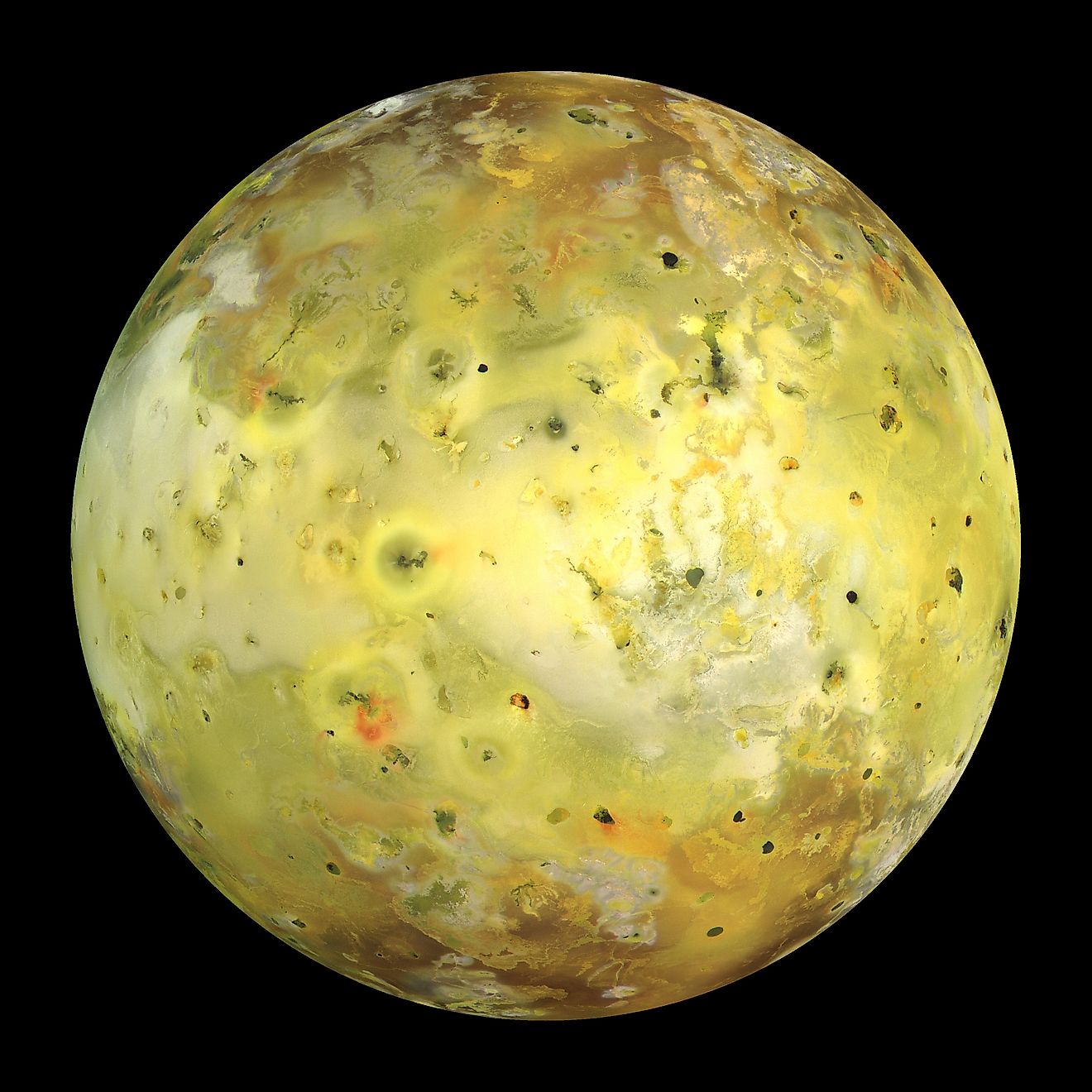
This pull of gravity also affects Io, another one of Jupiter's large moons. While Europa is known for its ocean, Io is known for its volcanic activity. Io's orbit is also slightly elliptical, causing Jupiter's gravity to stretch and squeeze the moon as it moves nearer and farther from the planet. The repeated flexing heats Io's interior and powers hundreds of volcanoes, making it the most volcanically active world known in the solar system.
Jupiter's Gravity Boosting Space Exploration

Jupiter's gravity can be used to humanity's benefit regarding space exploration. Ulysses was a spacecraft that was launched by both NASA and the ESA. Its mission was to survey the environment both above and below the poles of the Sun. Most planets and spacecraft travel near the same broad, flat plane around the Sun. Ulysses needed to escape that plane to fly over the Sun's poles, but its rocket could not make such a drastic turn by itself. In 1992, the spacecraft passed Jupiter, whose gravity sharply redirected its path. That maneuver gave scientists their first sustained views of the Sun's polar regions.
One of Jupiter's most consequential gravity assists was for the New Horizons spacecraft. New Horizons was launched on January 19, 2006, with the mission to explore Pluto and the Kuiper Belt. On February 28, 2007, it used Jupiter as a gravity assist to reach Pluto. Thanks to this assist, not only was the New Horizons spacecraft able to reach Pluto, but it was also able to get up close to Arrokoth, an object in the Kuiper Belt considered to be the most distant object ever explored during a close spacecraft flyby.
Jupiter may have the most gravity of any planet in our solar system, but what about a planet that is made of solid matter rather than gas?
Gravity on Earth

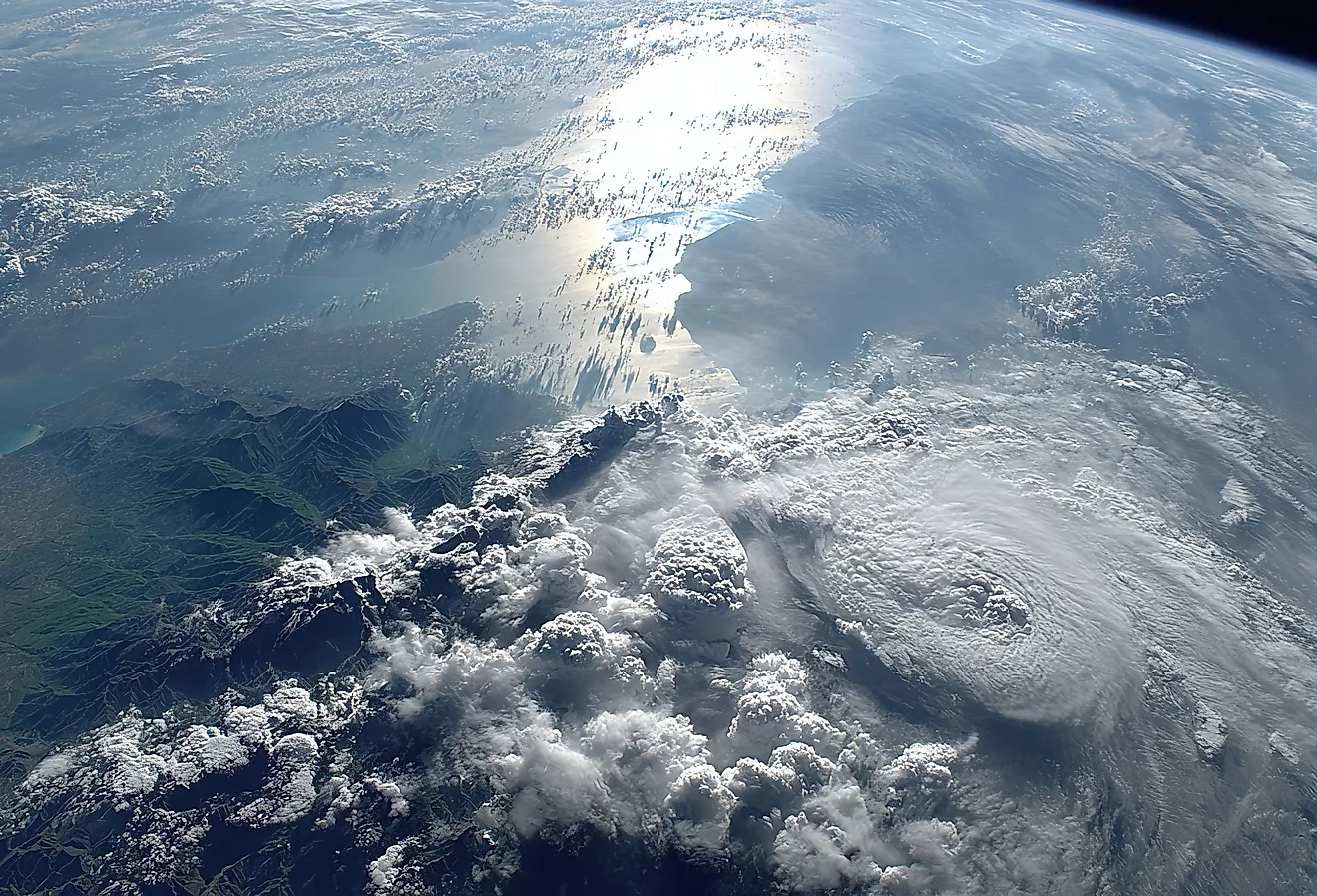
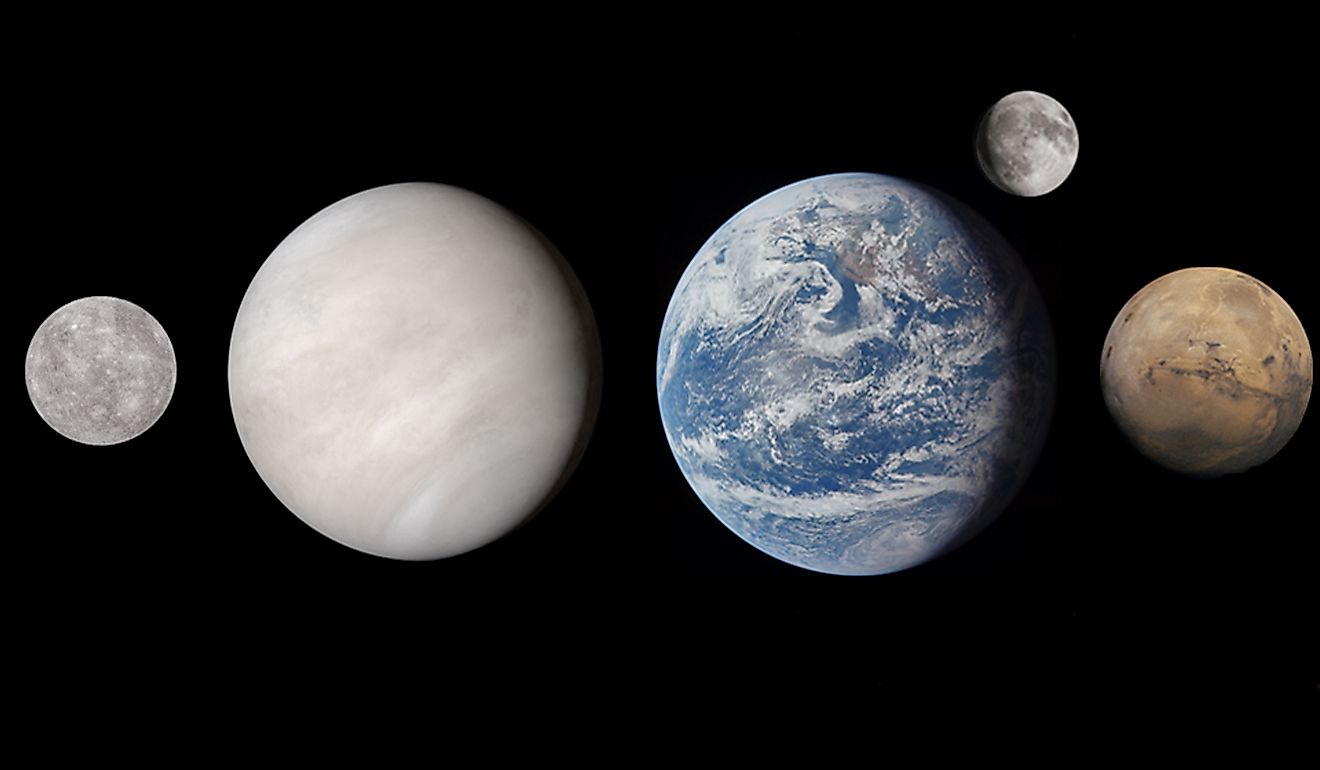
Among the four rocky planets in our solar system, Earth has the strongest surface gravity. Because Venus is almost as large as Earth, the gravity is very similar, being about 91% of the surface gravity on Earth. So if you weighed 100 pounds on Earth, you would weigh 91 pounds on Venus. Meanwhile, Mercury and Mars have almost identical surface gravities. If you weighed 100 pounds on Earth, you would weigh 38 pounds on Mars and Mercury alike!
Pluto is classified as a dwarf planet, significantly smaller than Earth at about 1,400 miles wide. With Pluto being so small, the gravity is also incredibly low. If you were to weigh 100 pounds on Earth, you would only weigh 6 pounds on Pluto. If you jumped while on Pluto, you would be able to jump about 15 times higher than you would have been able to on Earth.
While Earth and Jupiter have proven themselves to have great gravitational pull, neither can be considered the object in our solar system that has the greatest gravitational pull. That title would go to the Sun.
Gravity on the Sun

The Sun's gravity is what keeps our solar system together. Without it, the planets would be careening through space without the structure to keep everything in orbit. Not to mention that without the Sun, all life on Earth as we know it would cease to exist, so we should all be thankful that the Sun can provide us both life and the gravitational pull to keep us with all of our planetary neighbors.
The Sun is the brightest and largest object in our solar system and has a mass of almost 1.99 × 10³⁰ kilograms, which accounts for 99.8% of the mass in our solar system. The Sun is a sphere of superheated plasma, so there is no solid surface, but what scientists refer to as the surface of the Sun is 28 times stronger than the gravity on Earth. At the Sun's visible surface, a 100-pound person would theoretically weigh about 2,800 pounds. In reality, there is no solid ground, and the roughly 10,000°F photosphere would vaporize a human long before weight became relevant.
The Sun's gravitational influence may reach into the Oort Cloud, a hypothetical shell of icy bodies beginning thousands of times farther from the Sun than Earth. NASA estimates that the cloud could stretch from about 5,000 to 100,000 astronomical units, placing its outer regions as far as 1.6 light-years away. Scientists have never photographed the cloud directly, and its exact size and structure remain uncertain.
The Weight of the World
Humans can withstand several times Earth's gravity briefly under controlled conditions, especially when properly supported. Living permanently under such gravity would be a different challenge. Even Jupiter's 2.4 g would make standing, walking, and pumping blood to the brain exhausting, and scientists do not know whether a human body could remain healthy there for long. Beyond the Sun, astronomers have found massive worlds that may exceed even Jupiter's surface gravity, raising a harder question than which planet pulls the strongest: whether any human body could ever endure such a world.