Are There Volcanoes On Other Planets?
Volcanoes are not unique to Earth. Several other bodies in the Solar System show active volcanism today and many more carry the surface scars of past eruptions. A volcano is a rupture in a planetary crust through which molten rock and gases escape from a chamber below the surface. Volcanoes are typically classified as active, dormant, or extinct based on eruption history. Active volcanoes have erupted within roughly the past ten thousand years while extinct ones have lost their magma supply altogether. The bodies discussed below include Venus and Mars plus several outer-planet moons and the dwarf planet Pluto.
Venus

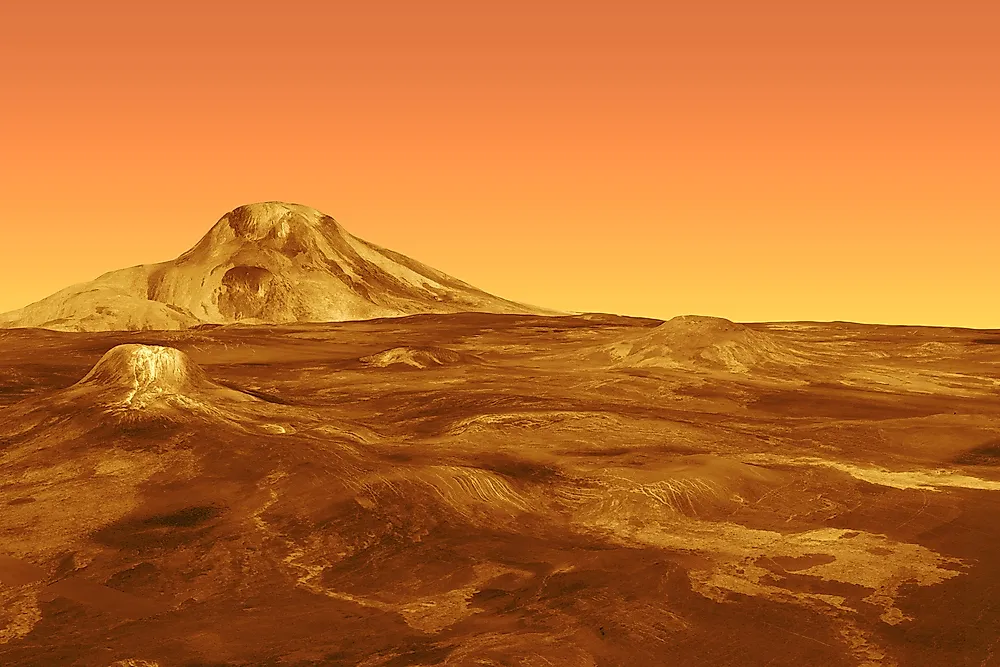
Venus has the highest number of volcanoes of any planet in the Solar System, with estimates ranging between 100,000 and 1,000,000 volcanic features. The surface, which is 90% basalt, shows extensive lava flows and a relatively young appearance, with widespread evidence that volcanism has continually reshaped the planet. Most volcanoes on Venus are shield volcanoes, though scalloped margin domes and pancake domes also occur. The largest is Maat Mons, an 8-kilometer-tall shield volcano near the equator. In 2023, researchers Robert Herrick and Scott Hensley reported direct evidence of recent volcanic activity at Maat Mons after comparing radar images taken by NASA's Magellan spacecraft in 1991. A separate 2020 study identified at least 37 likely active volcanoes on the planet's surface, making Venus one of the few bodies with confirmed contemporary volcanism.
Mars

Volcanic activity on Mars was first revealed by NASA's Mariner 9 orbiter in 1971 and 1972, the first spacecraft to map another planet from orbit. Mars contains the largest volcano in the Solar System, Olympus Mons, which rises about 22 kilometers above the surrounding plains. Other major shields include Arsia Mons, Pavonis Mons, and Ascraeus Mons, all part of the Tharsis volcanic province. These shield volcanoes share a structural resemblance to Hawaii's Mauna Loa, where fluid basaltic lava builds long, gently sloping flanks. Most of Mars's volcanism is thought to have wound down hundreds of millions of years ago, but minor lava flows dated to within the past few million years suggest the planet is not yet fully extinct.
Io (Moon of Jupiter)

Io, the innermost of Jupiter's four Galilean moons, is the most volcanically active body in the Solar System. The moon was discovered by Italian astronomer Galileo Galilei in 1610 and named after a priestess of Hera in Greek mythology. NASA's Voyager 1 spacecraft confirmed active volcanism on Io during its 1979 flyby, the first time volcanic eruptions had been observed beyond Earth. More than 400 active volcanoes have since been cataloged on the moon's surface. Io's most active volcano, Prometheus, has been erupting continuously for decades and releases sulfur dioxide that contributes to the moon's thin atmosphere. Volcanic plumes on Io can reach 500 kilometers above the surface, with the eruptions driven by intense tidal heating from Jupiter's gravity. The sulfur and sulfur dioxide ejected by these eruptions also feed Jupiter's plasma torus and extensive magnetosphere.
Enceladus (Moon of Saturn)

Saturn's small moon Enceladus reveals its volcanic activity through dramatic geyser-like jets at its south polar region. The Cassini spacecraft, in orbit around the Saturn system from 2004 to 2017, observed plumes of water vapor, ice particles, and organic compounds streaming from a series of fractures known as the tiger stripes. These cryovolcanic eruptions originate from a global subsurface ocean of liquid water that lies beneath Enceladus's icy crust. The plumes feed material into Saturn's E ring and provide direct evidence of ongoing hydrothermal activity inside the moon, which has made Enceladus a major target in the search for habitable environments beyond Earth.
Triton (Moon of Neptune)

Volcanic activity on Triton, Neptune's largest moon, was observed by Voyager 2 during its 1989 flyby. The probe captured images of geyser-like eruptions of nitrogen gas and dust that rose roughly 8 kilometers above the surface in long plumes. The eruptions are thought to be powered by solar heating of nitrogen ice just beneath the surface, an unusual mechanism distinct from internal magma-driven volcanism. Triton remains one of the most geologically active bodies discovered in the outer Solar System and continues to be regarded as a candidate for further investigation by future spacecraft.
Titan (Moon of Saturn)
![By NASA/JPL-Caltech/SSI/Kevin M. Gill - File:Titan - December 16 2011 (40047599334).jpg by [1], CC BY 2.0, https://commons.wikimedia.org/w/index.php?curid=125680346](https://www.worldatlas.com/r/w960-q80/upload/eb/62/1d/titan-in-true-color-by-kevin-m-gill-s3cdn.jpg)
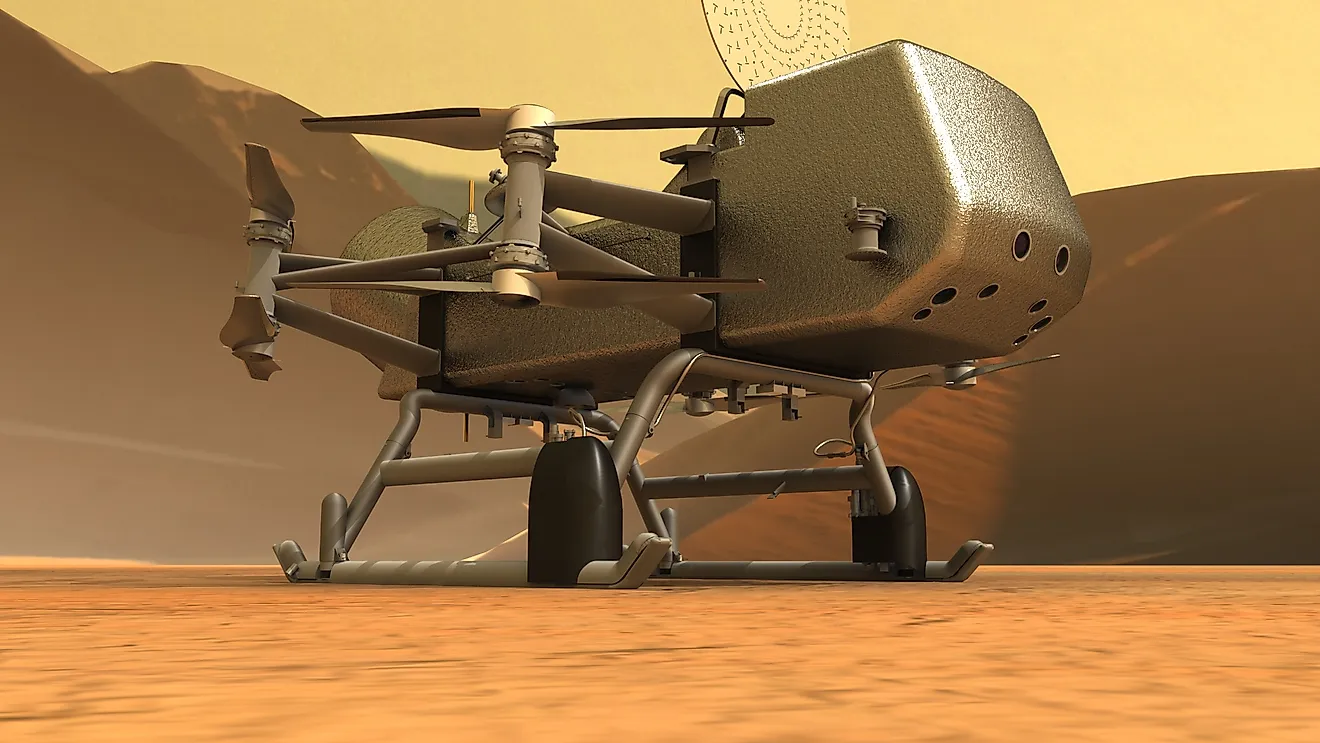
Saturn's largest moon, Titan, shows evidence of cryovolcanism rather than the silicate-based volcanism familiar from Earth. Data from the Cassini mission identified features such as Doom Mons and Sotra Patera that researchers interpret as cryovolcanic constructs. Cryovolcanoes erupt liquid or vapor water, ammonia, methane, and other volatiles in place of molten rock. Whether Titan's cryovolcanism is presently active or dormant remains debated, and the Dragonfly rotorcraft mission scheduled to arrive in the 2030s is expected to provide further answers.
Pluto

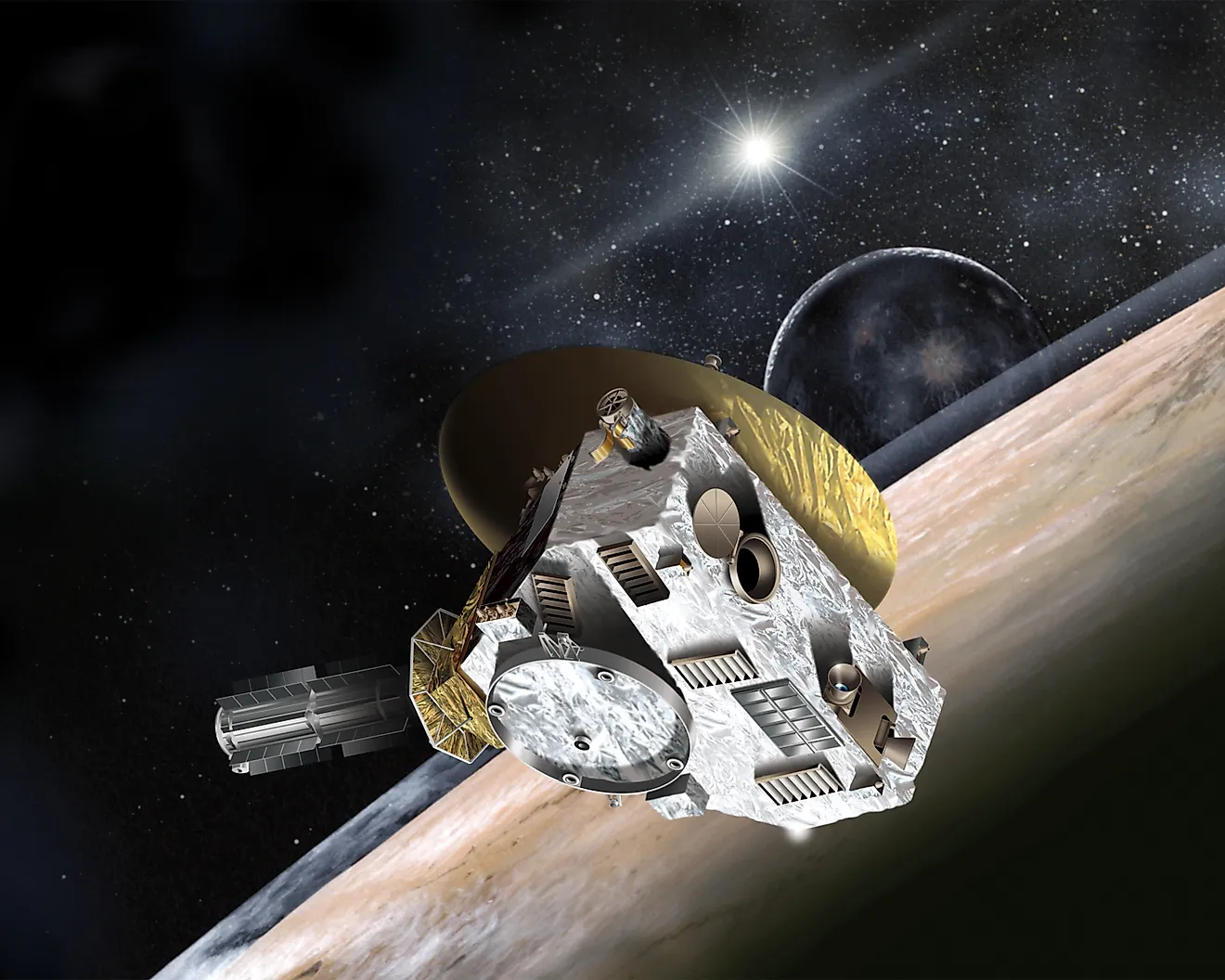
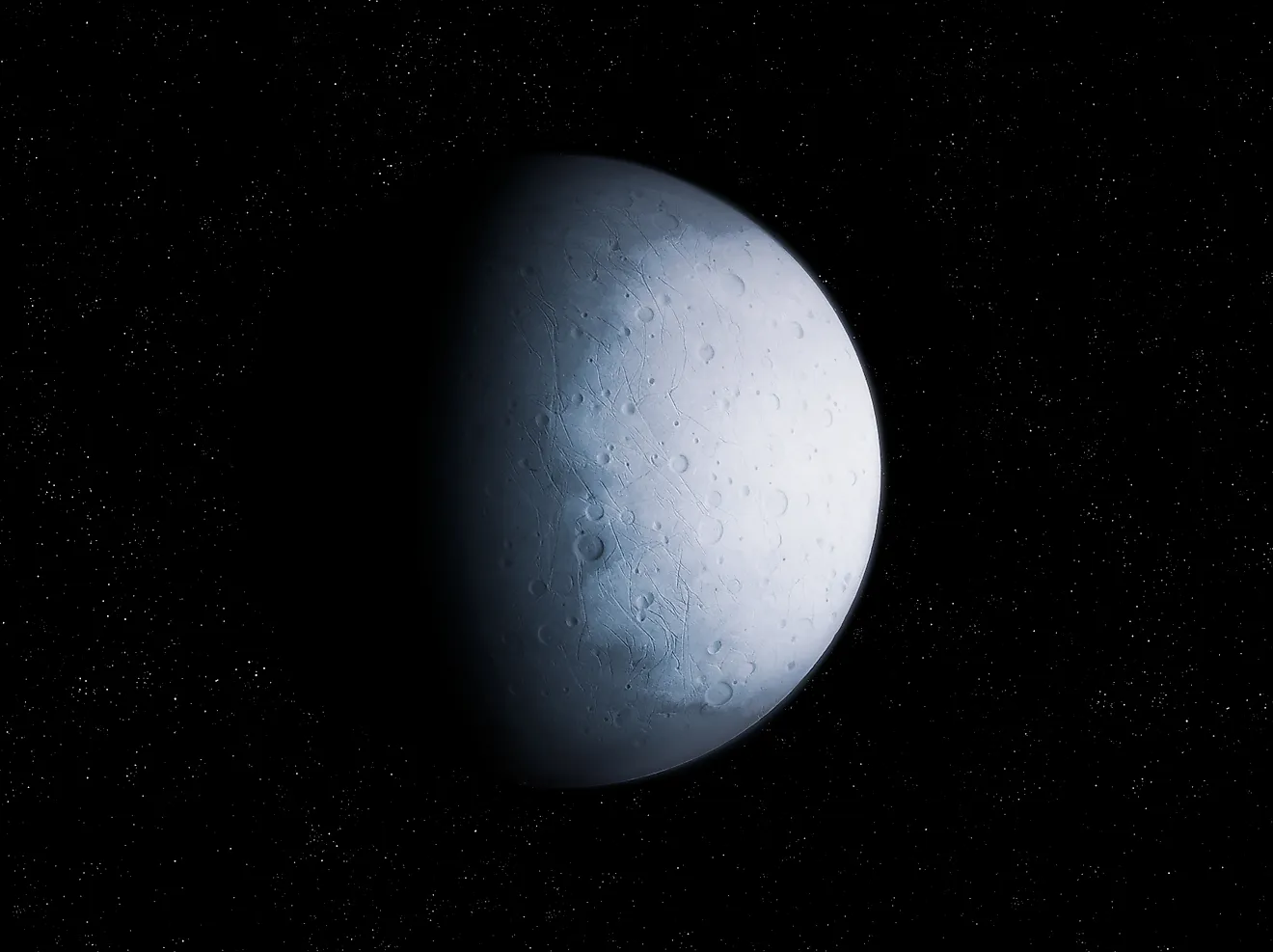
NASA's New Horizons spacecraft flew past Pluto in 2015 and identified two large mountains, Wright Mons and Piccard Mons, that researchers consider strong candidates for cryovolcanic origin. Each rises roughly 4 to 6 kilometers tall and shows a central depression resembling the calderas of terrestrial volcanoes. The relative lack of impact craters on the surrounding plains points to comparatively young surfaces, suggesting that cryovolcanism may have shaped Pluto's terrain in the geologically recent past. The discovery extended the working definition of volcanism to a body once thought to be a frozen, geologically dead world.
The Wider Picture of Solar System Volcanism
Earth is no longer the volcanic outlier it once seemed. Confirmed active or recently active volcanism now extends across Venus, Mars, Io, Enceladus, Triton, and possibly Titan and Pluto. Cryovolcanism, in particular, has expanded the working definition of a volcano well beyond molten rock, with water and ammonia mixtures taking the role of magma on the colder bodies of the outer Solar System. Continued missions to these worlds are likely to add still more bodies to the list.