Could Humans Live On Titan?
Titan is the one place beyond Earth that keeps tempting scientists to picture a human settlement. It has a thick sky and real weather and slow seasons. That resemblance is exactly what makes people imagine moving in. The closer look is where the dream runs into physics. The air carries no oxygen and the cold would kill an unprotected person in seconds. Even the rain and the seas are made of something no one could ever drink. Titan is the test case for whether humans can truly live somewhere this alien.
Titan's Atmosphere and Surface

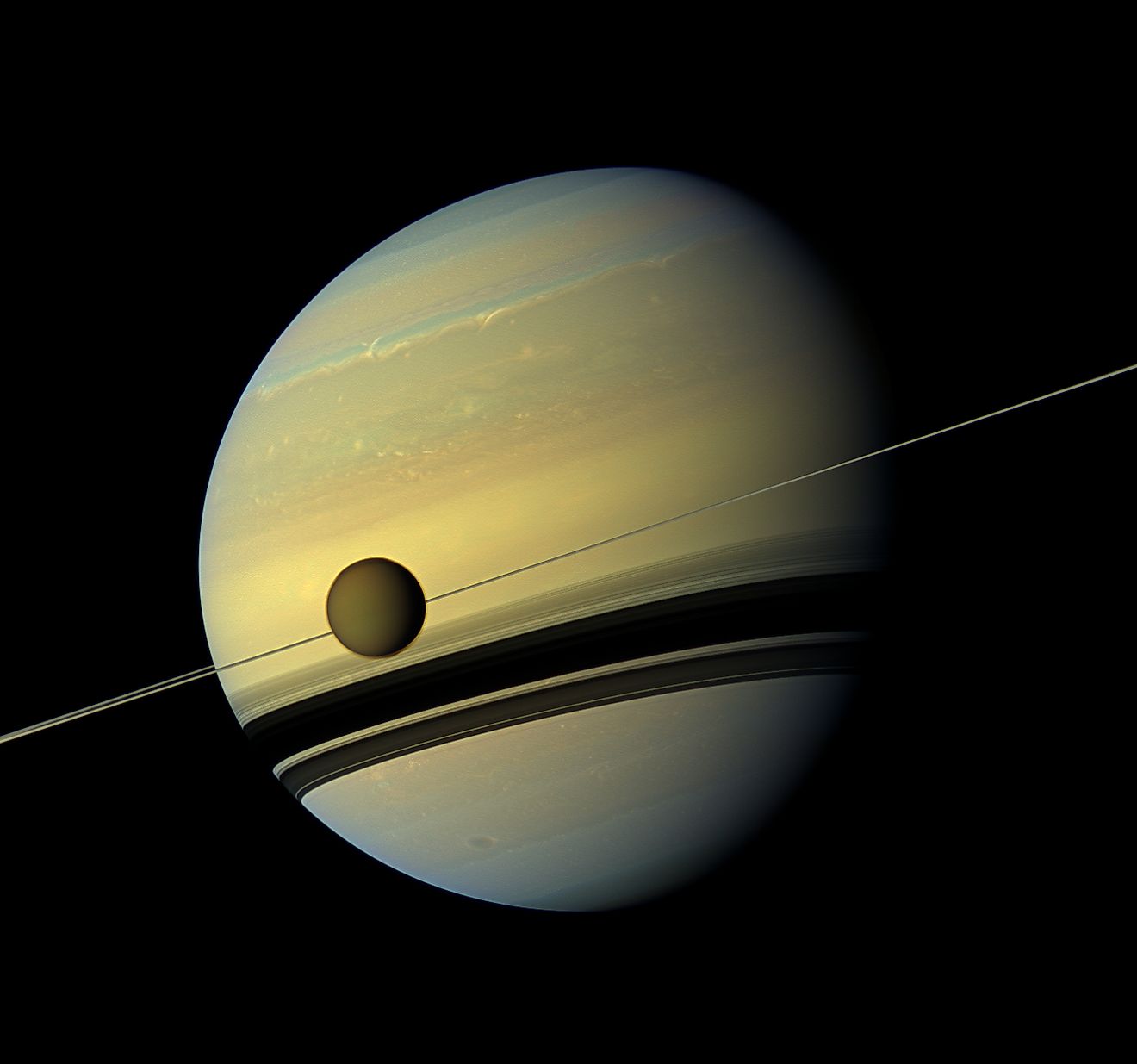
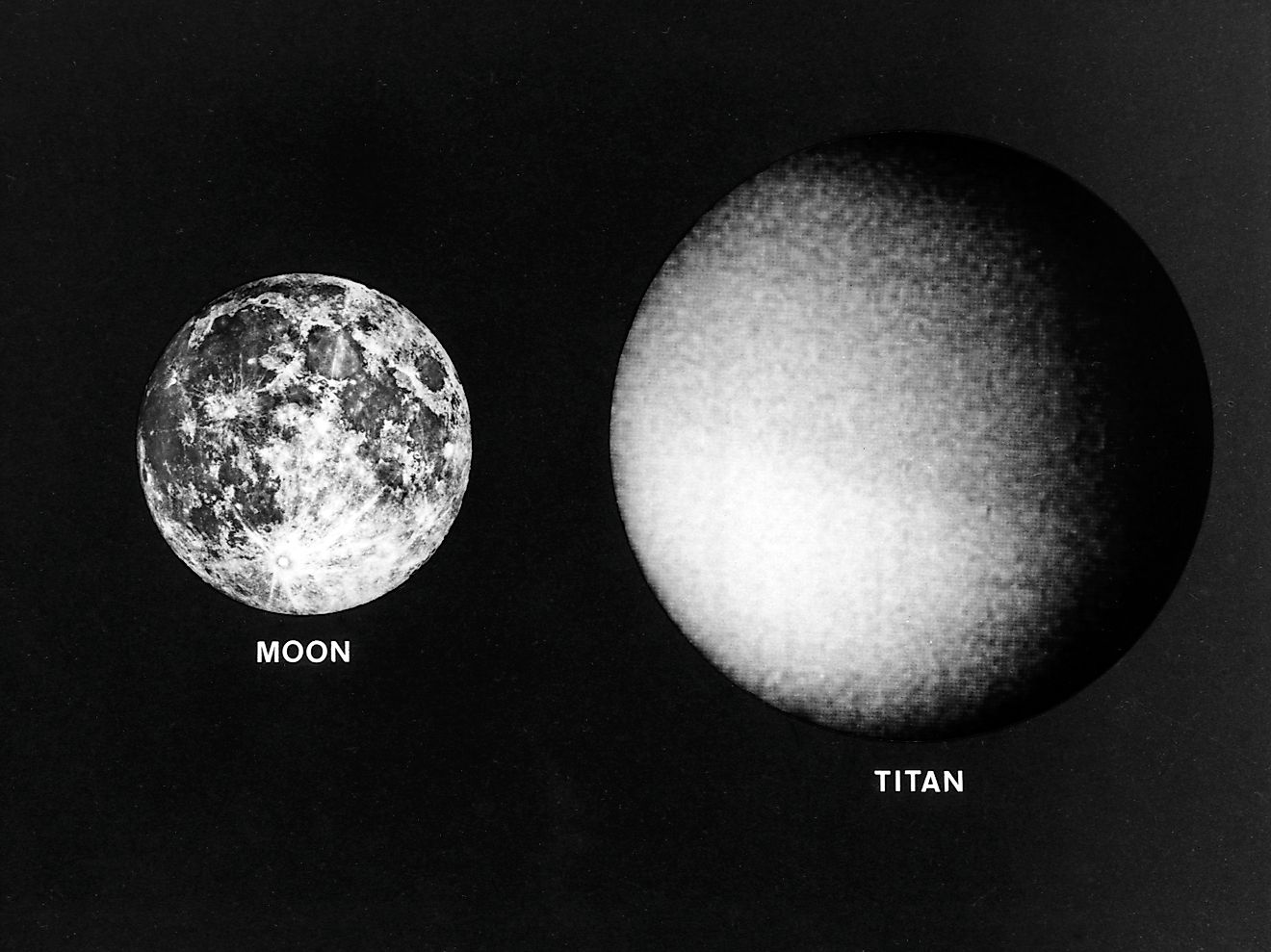
The atmosphere is what first drew scientists to Titan, the largest of Saturn's 274 confirmed moons. It is built mostly of nitrogen with a few percent methane, which puts it in the same broad family as the air on Earth. The methane is the puzzle. Sunlight breaks it apart over time, so something has to keep resupplying it, and the leading idea points to cryovolcanoes venting fresh methane from below. The whole envelope also shields the surface from deep-space radiation.
Titan's lower gravity lets that atmosphere stretch far higher than Earth's, reaching roughly ten times the altitude. The surface pressure runs about 50 percent higher than sea-level pressure on Earth, and the air near the ground is about four times as dense as what we breathe. Gravity itself is only around 14 percent of Earth's, so a person would weigh a fraction of their normal weight. Some scientists have noted that a human in a winged suit could, in principle, flap and glide through the heavy air. Sound would carry farther and register deeper. Rain would drift down at roughly a fifth of Earth's speed, and each drop would swell to about 1.5 times the size of the biggest raindrops here.

What makes the surface feel almost familiar is the sheer amount of liquid moving across it. Titan has clouds, rain, rivers, lakes, and seas, the only world besides Earth with standing liquid on its surface. The liquid is not water, though. It is mostly hydrocarbons such as methane and ethane. Deeper down, about 35 to 50 miles (55 to 80 kilometers) beneath the icy crust, scientists believe a global ocean of water mixed with salts and ammonia lies hidden. Dark dunes of hydrocarbon grains stretch across wide stretches of the surface between the lakes.
That surface would fascinate any visitor, but the liquids around them would be useless for drinking or growing food. Settlers would have to import their entire water and food supply. They would also have to keep that imported water from freezing solid in the cold.
Titan's Temperature

Cold is the factor that overshadows every other similarity to Earth. Titan averages about -290 degrees Fahrenheit (-179 degrees Celsius) at the surface. Part of the reason is distance: sunlight takes roughly 80 minutes to reach Titan, and the Sun looks about 100 times fainter there than it does from Earth. Researchers in Antarctica get by with insulated boots and heavy layers, but Titan is far colder than anything on our planet. The lowest temperature ever reliably recorded on Earth was -128.6 degrees Fahrenheit (-89.2 degrees Celsius) at Vostok Station in 1983, and Titan sits well below that.

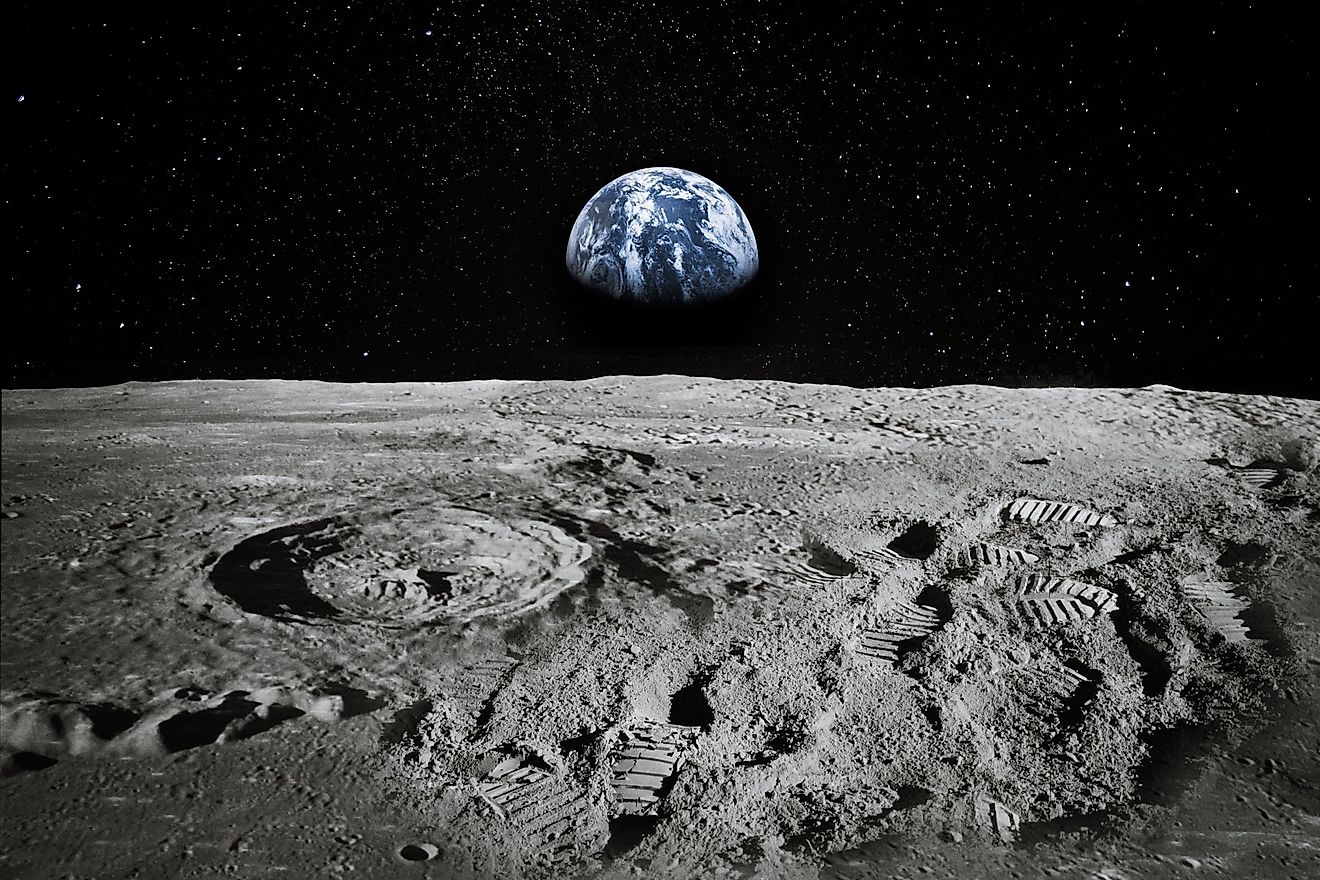
There is reason for cautious optimism, though. Astronauts have already walked on our own Moon, where shadowed craters plunge below -410 degrees Fahrenheit. The Apollo crews never worked in temperatures that extreme, and spacesuits of that era were rated to withstand roughly -250 degrees Fahrenheit (-156 degrees Celsius). That still falls short of Titan's average, so keeping people warm there would demand suits and habitats beyond anything built so far. Every step toward that goal depends on research, and scientists have spent decades gathering it.
Missions to Titan

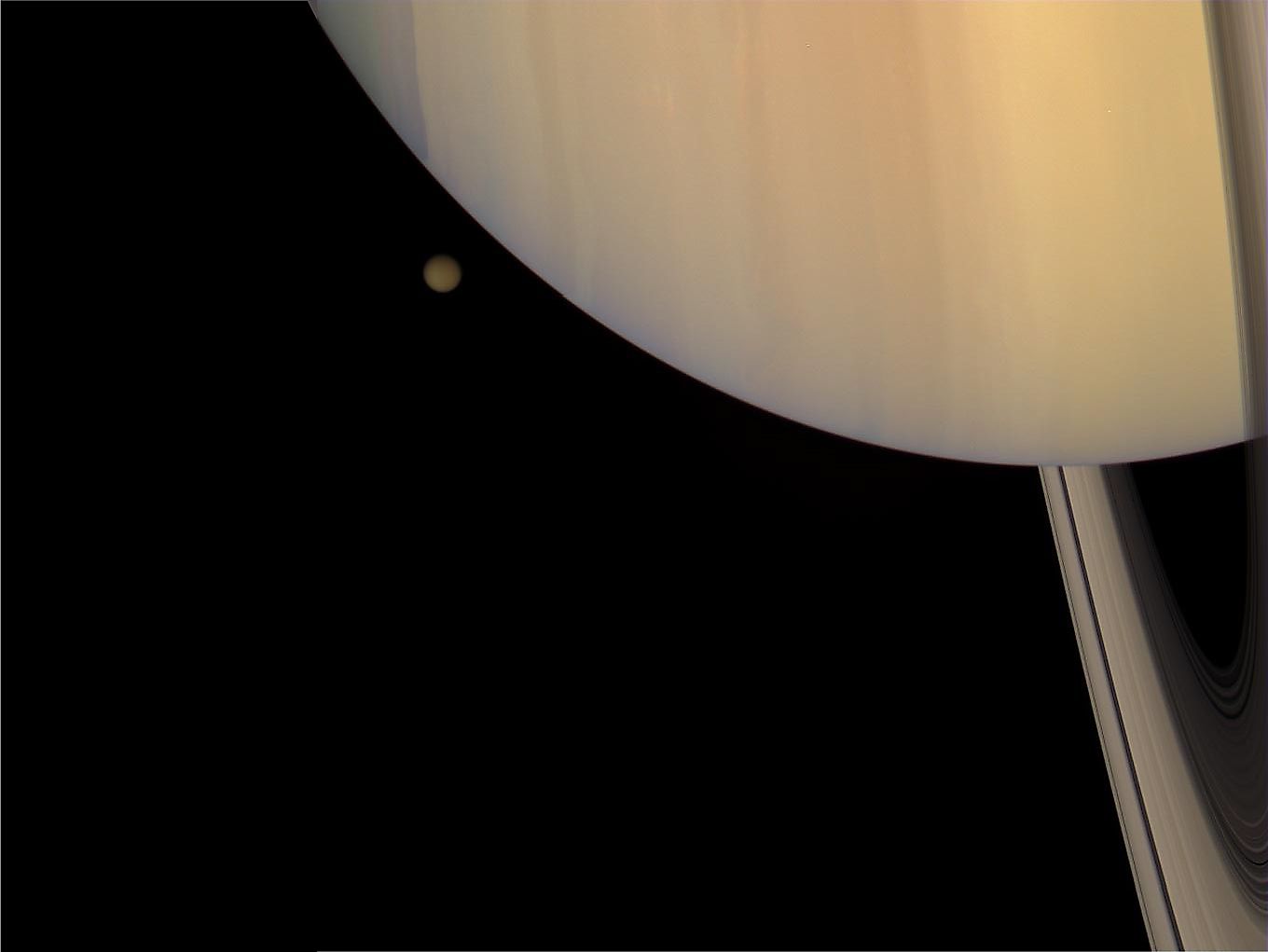
Dutch astronomer Christiaan Huygens first spotted Titan on March 25, 1655, while studying Saturn's rings. The moon went unnamed for nearly two centuries until John Herschel called it Titan in 1847. Real reconnaissance did not begin until 1979, when NASA sent Pioneer 11 flying through the Saturn system to study the moon. Even then, getting a clear look proved difficult.
The haze in Titan's atmosphere kept frustrating those early attempts. Pioneer 11 and both Voyager probes could not see through the thick orange smog. The Hubble Space Telescope managed a handful of images, but the Cassini-Huygens mission gave us almost everything we know today. Cassini dropped the Huygens lander through the atmosphere, and Huygens relayed data straight from the surface.

The next chapter belongs to Dragonfly, a nuclear-powered rotorcraft scheduled to launch in July 2028. Its job is to explore far more of Titan's surface than any lander could. The craft is projected to reach Titan in 2034 and then use its rotors to hop across the moon for about 3.3 years, sampling dunes, plains, and crater floors along the way.
Can Humans Live on Titan?
The honest answer is a muddled one. With enough technology and time, a human presence on Titan is not impossible. The harder question is whether anyone would actually want to endure life there.
Titan is tidally locked to Saturn, so the same face always points toward the planet as it orbits. The moon still tilts through seasons, but each one drags on for more than seven Earth years, and a single Titan year runs about 29 Earth years. Anyone living there would have to adjust to seasons that outlast a human career.
The cold alone would keep people sealed inside pressurized suits with their own oxygen supply whenever they went outside. Stepping out bare-faced to feel the sun on your skin would simply never be an option on Titan.
The Verdict for Now
So could humans live on Titan? Potentially, with breakthroughs in warmth, shelter, and supply that do not yet exist. For the moment Titan is less a destination than a proving ground, the closest laboratory we have for learning how to survive on a genuinely alien world. Whatever we learn there may eventually carry us to somewhere warmer and more welcoming.