Which Planet Has The Biggest Storm?
The fiercest hurricanes on Earth pack sustained winds near 200 miles per hour (321 kilometers per hour). The strongest ones stretch more than 1,000 miles (1,609 kilometers) across the ocean. Hurricane Katrina peaked as a Category 5 with winds of 175 miles per hour (281 kilometers per hour). Storms like these look monstrous from the ground here. Elsewhere in our solar system, they would barely register. One planet carries a single storm wide enough to swallow Earth twice over.
Jupiter

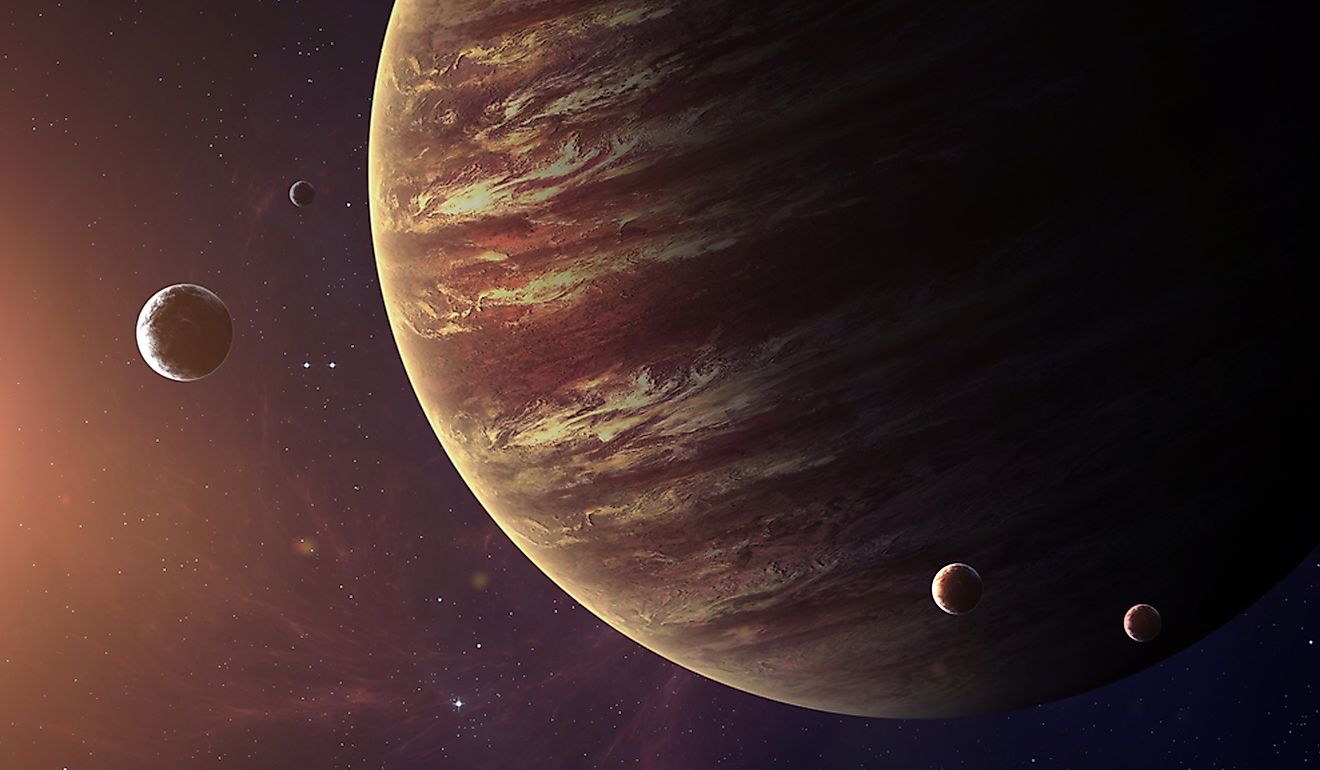
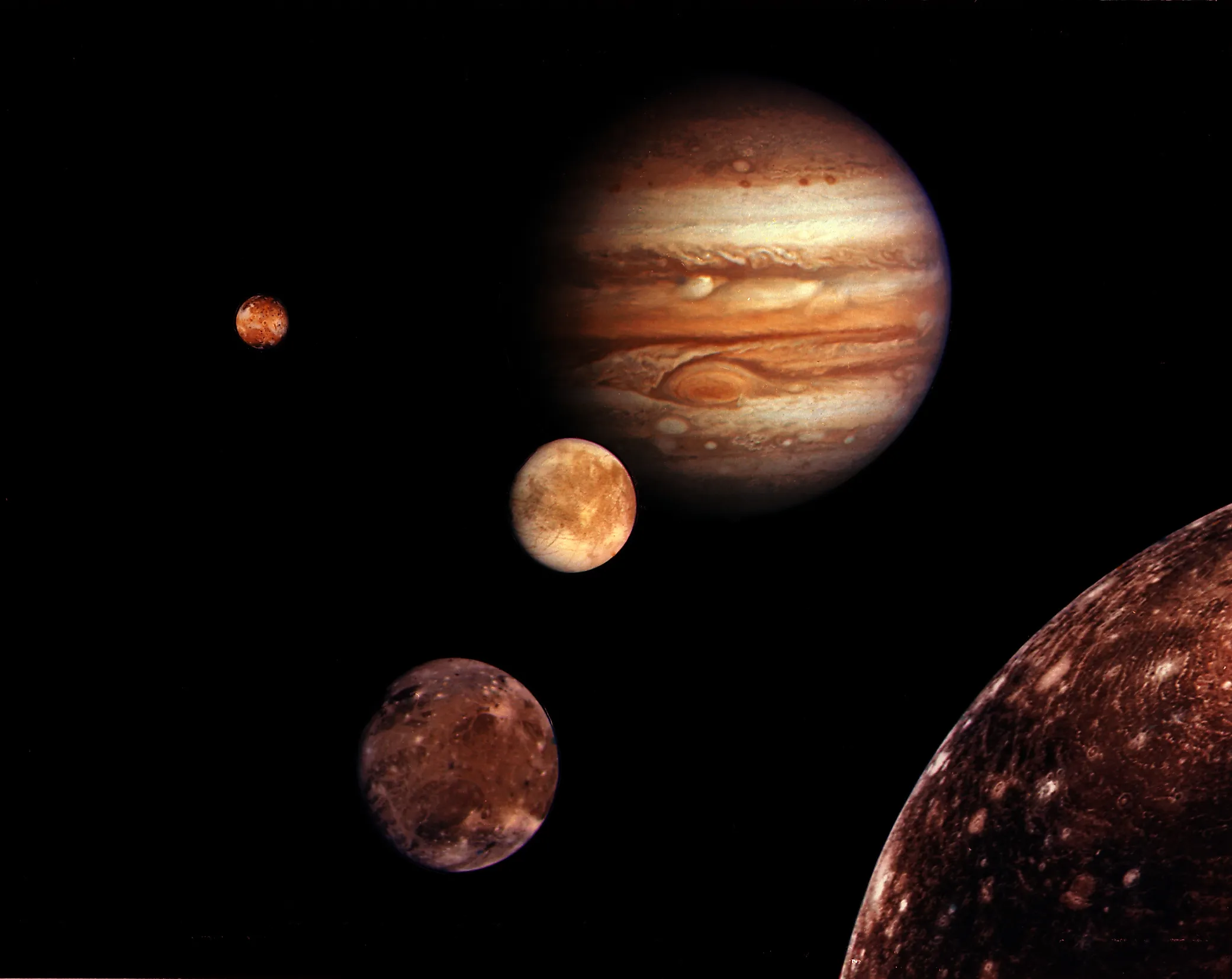
Jupiter is the largest and oldest planet in our solar system, having formed around 4.6 billion years ago. This gas giant is 11 times wider than Earth, and if it were hollow, it could fit 1,300 Earths inside. Not only is Jupiter the largest planet, but it also contains the largest storms in our solar system. Similar to how hurricanes are given names, a particular storm on Jupiter was also given a title. This massive storm is known as The Great Red Spot.
The Great Red Spot

The Great Red Spot was first observed by astronomer Robert Hooke in 1664 and again by Gian Domenico Cassini in 1665. Scientists have long thought the Great Red Spot may have persisted for more than 350 years, although recent research suggests today's storm could have formed more recently than the feature observed in the 17th century. It is a swirling, massive storm located in Jupiter's Southern Hemisphere. This enormous storm is about 17,000 miles (27,358 kilometers) long and 9,000 miles (14,484 kilometers) wide, which is twice the size of Earth. Not only is this storm large, but it is incredibly powerful, with winds peaking around 270 to 425 miles per hour (430 to 680 kilometers per hour). It is, however, important to mention that the storm has steadily shrunk over the past century; it continues to change in size and shape, though it remains considerably larger than Earth.
One hypothesis is that Jupiter's internal heat source may be providing the storm's energy. Another hypothesis is that hurricanes on Earth dissipate once they make landfall; however, since Jupiter is a gas giant with no "land" to cross, the storm persists. It has also been observed that smaller storms will merge with larger storms, so the Great Red Spot has consumed smaller storms in its path.
What is unique about the Great Red Spot is that it is considered "anti-cyclonic," meaning that it is considered a high-pressure system. This differs from hurricanes on Earth, which are low-pressure systems. As an anticyclone in Jupiter's Southern Hemisphere, the spot also rotates counterclockwise.
One of the most obvious ways the Great Red Spot differs from Earth's hurricanes is its color. The red coloration of the spot has varied over the years, and scientists believe this is due to different chemical compounds. However, they still don't understand why the color fluctuations occur.
The Great Red Spot's coloration is not the only mystery to scientists. There is much that scientists do not yet understand about this storm, but efforts are underway to learn more.
Galileo

The spacecraft Galileo was launched on October 18, 1989, and was in Jupiter's orbit on December 7, 1995. Galileo orbited Jupiter for about eight years, and its mission was to study Jupiter and its moons. While in orbit around the planet, Galileo captured photos of the Great Red Spot using a near-infrared filter. When Galileo took images of the Great Red Spot, it also observed three smaller storms farther south.
This was not the only information that Galileo sent back to scientists about the Great Red Spot. Data from Galileo revealed that thunderstorms beneath Jupiter's upper cloud cover supplied energy to the planet's large weather patterns, including the Great Red Spot.
Juno Probe

Launched on August 5, 2011, the Juno probe was sent into space to study Jupiter, similar to the Galileo spacecraft. It arrived at Jupiter in 2016 and has since been probing beneath the planet's clouds. The spacecraft also found networks of storms around Jupiter's poles that had not been seen before. These other storms have proven to be another point of intrigue for scientists.
Other Storms
![This Hubble image provides a detailed look at a unique cluster of three white, oval-shaped storms that lie southwest [below and to the left] of Jupiter's Great Red Spot [dark oval-shaped object near the picture's right edge].](https://www.worldatlas.com/r/w960-q80/upload/2f/34/52/a-jupiter-storm-1995-18-284-s3cdn.jpg)
A mystery scientists are working on is why the other storms on Jupiter, once they reach the poles, sometimes form a geometric arrangement rather than merging into a single storm. While some storms merge into a larger storm, these storms were observed to avoid each other. One leading explanation is that surrounding wind anticyclonic rings help keep neighboring storms separated, preventing them from merging despite their proximity.
While the mystery continues, some scientists believe that studying Jupiter's storms can help improve understanding of Earth's weather systems.
Giant Storms
While Jupiter has massive storms raging, there is still much to learn about the storms happening here on Earth. Perhaps by studying these giant storms on Jupiter, scientists will be able to unlock the mysteries of our own planet's weather patterns.