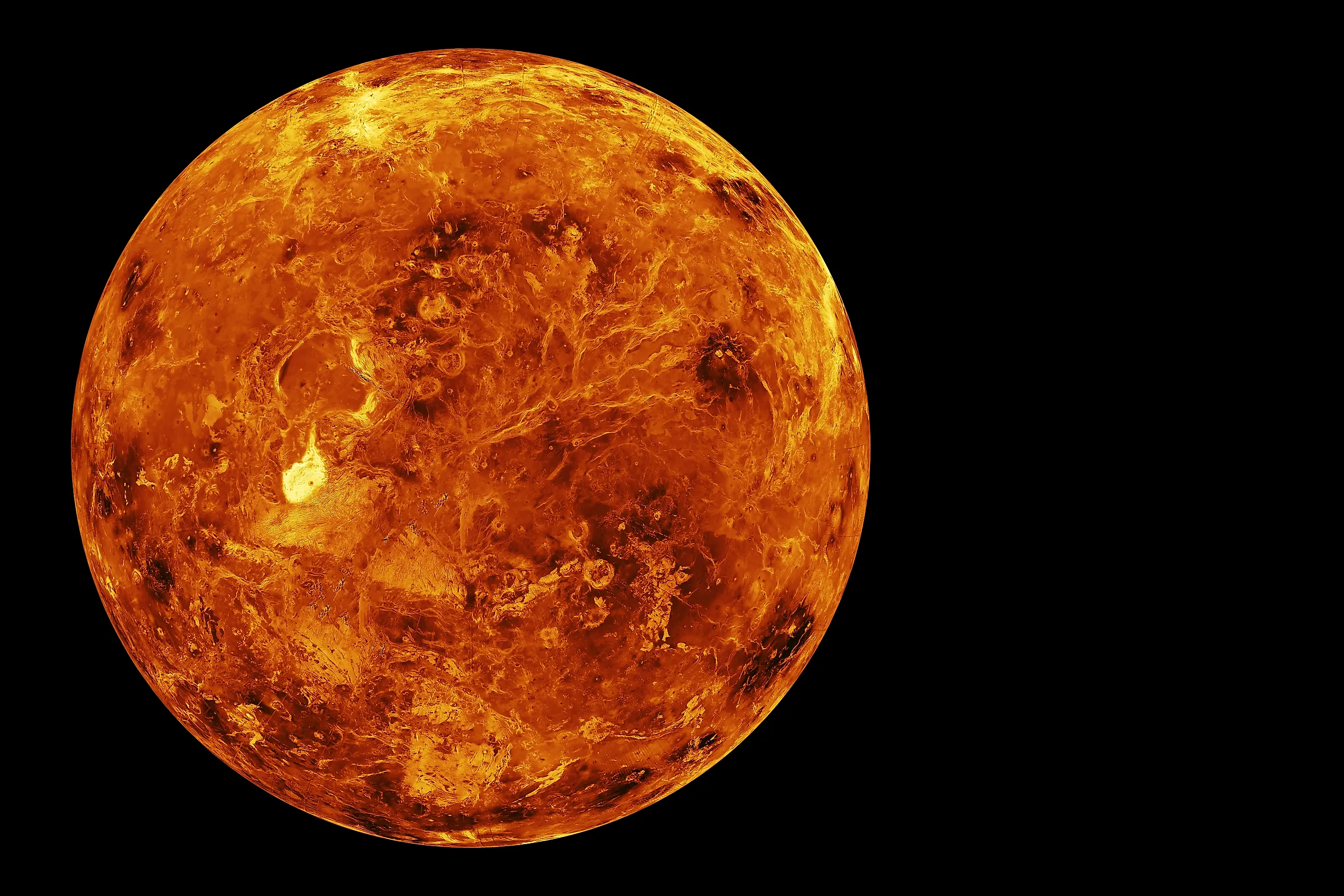
Which Planet Spins the Slowest?
Venus takes 243 Earth days to complete a single rotation, making it the slowest-spinning planet in the Solar System by an enormous margin. The next-slowest planet, Mercury, manages a rotation in 59 Earth days; Jupiter, at the fast end, gets all the way around in under ten hours. Venus is so slow that a single Venusian rotation takes longer than its trip around the Sun. The story of why involves a near-Earth twin gone catastrophically wrong, the most extreme atmospheric super-rotation in the Solar System, and an early-Solar-System event that planetary scientists still cannot fully explain.
Venus Holds the Record

One rotation on the axis of Venus takes 243.02 Earth days. Earth makes the same trip in 23 hours and 56 minutes. The next-slowest planet, Mercury, manages a rotation in 58.6 Earth days, more than four times faster than Venus. Even mighty Jupiter, eleven times Earth's diameter, spins so quickly that a single rotation takes only nine hours and 56 minutes; Jupiter's spin is fast enough that the planet is visibly flattened at the poles.
Venus's slow rotation is so extreme that it actually rotates more slowly than the wispy clouds floating above it. The upper-atmosphere clouds of Venus race around the planet in only four Earth days, a phenomenon called atmospheric super-rotation. Venus is the most extreme case of super-rotation in the Solar System, and it remains an open scientific question how a 92-bar atmosphere can race around a stationary planet without losing all of its momentum to surface friction.
A Day Longer Than a Year (Sort Of)
The headline factoid about Venus is that "a day on Venus lasts longer than a year." That is true, with an important asterisk. There are two kinds of "day" in planetary astronomy: the sidereal day (one rotation relative to the distant stars) and the solar day (one full sunrise-to-sunrise cycle). Venus's sidereal day is 243 Earth days. Its year, the time it takes to orbit the Sun, is 224.7 Earth days. So yes, the sidereal day is longer than the year.
But because Venus rotates backward relative to its orbit, the solar day (the more intuitive notion of "a day") actually clocks in at about 117 Earth days. That is much shorter than the sidereal day, and it means a Venusian living on the surface would experience sunrise roughly twice per Venus year. Both sunrises would still last weeks, of course, since the planet is grinding around its axis at about 4 miles per hour at the equator (compared with Earth's roughly 1,038 miles per hour).
Venus Spins Backward

Every other planet in the Solar System rotates counterclockwise when viewed from above the north pole, the same direction the planets all orbit the Sun. Venus rotates clockwise: it is in retrograde. If you stood on the surface of Venus (impossible, but stay with this) and watched the sky, the Sun would rise in the west, drift slowly eastward across the sky over roughly two Earth months, and set in the east. There is no other place in the Solar System where the Sun behaves this way.
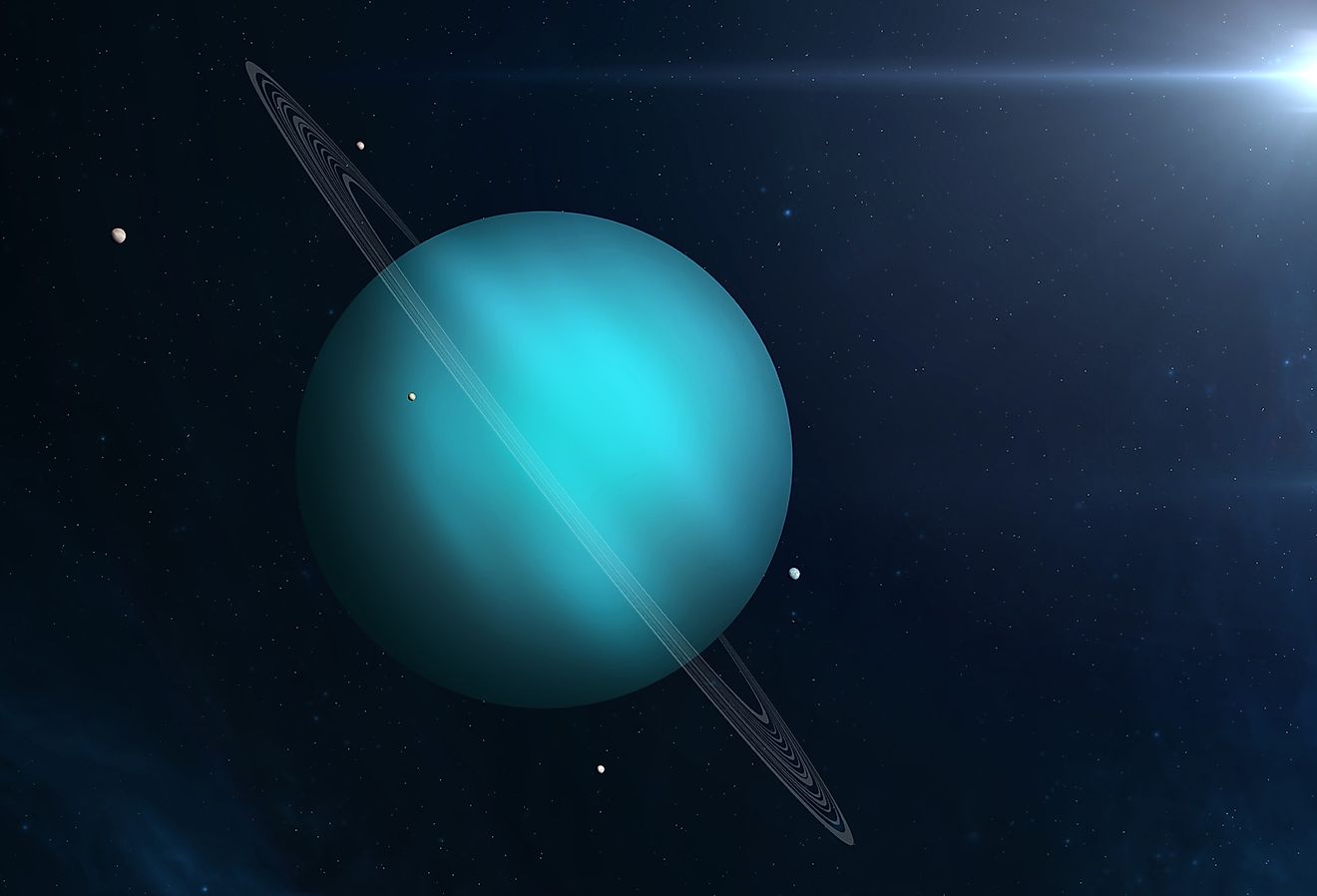
Uranus also has an unusual rotational orientation, but it is unusual in a different way: Uranus is tilted 98 degrees, essentially lying on its side relative to its orbit. Its rotation is technically retrograde because of this tilt, but the planet still spins quickly, completing one rotation in about 17 hours. Only Venus is both slow and backward. The Russian scientist Mikhail Lomonosov was the first to discover Venus's atmosphere (in 1761), but its retrograde direction was not confirmed until the 1960s, when radar measurements finally pierced the planet's permanent cloud cover.
How Did Venus End Up Spinning This Way?
Two main theories compete to explain the bizarre rotation. The first is a giant-impact theory: at some point in the early Solar System, a large body slammed into Venus and either reversed its rotation or knocked it upside down (so that the planet is still rotating counterclockwise relative to its original axis, but the entire axis has flipped). Several variants of this theory exist, and the math works out for plausible impactor sizes, but there is no direct evidence yet to confirm it.
The second theory blames the atmosphere. Venus's atmosphere is about 92 times more massive per square metre than Earth's, and the Sun's gravity pulls hard on this dense gas envelope. Over billions of years, atmospheric tides combined with friction between the atmosphere, the planet's mantle, and its core could have gradually slowed and reversed the rotation. This theory has gained ground in the 21st century with the help of detailed climate models that include both tidal and core-mantle effects. The two theories are not mutually exclusive: Venus might have been knocked off its original spin by an impact and then had the rotation slowed further by atmospheric tidal drag.
How Venus Compares to Other Planets

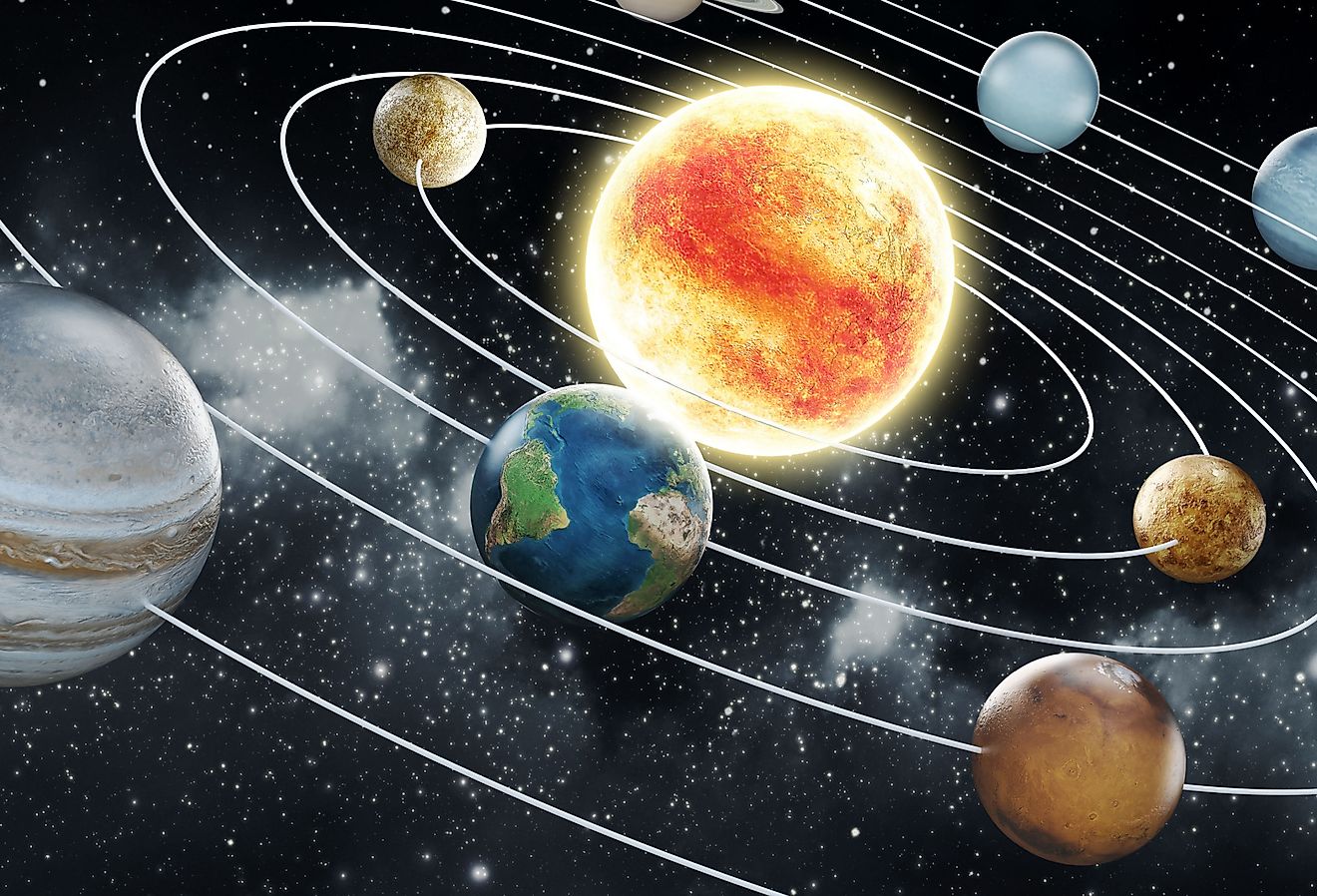
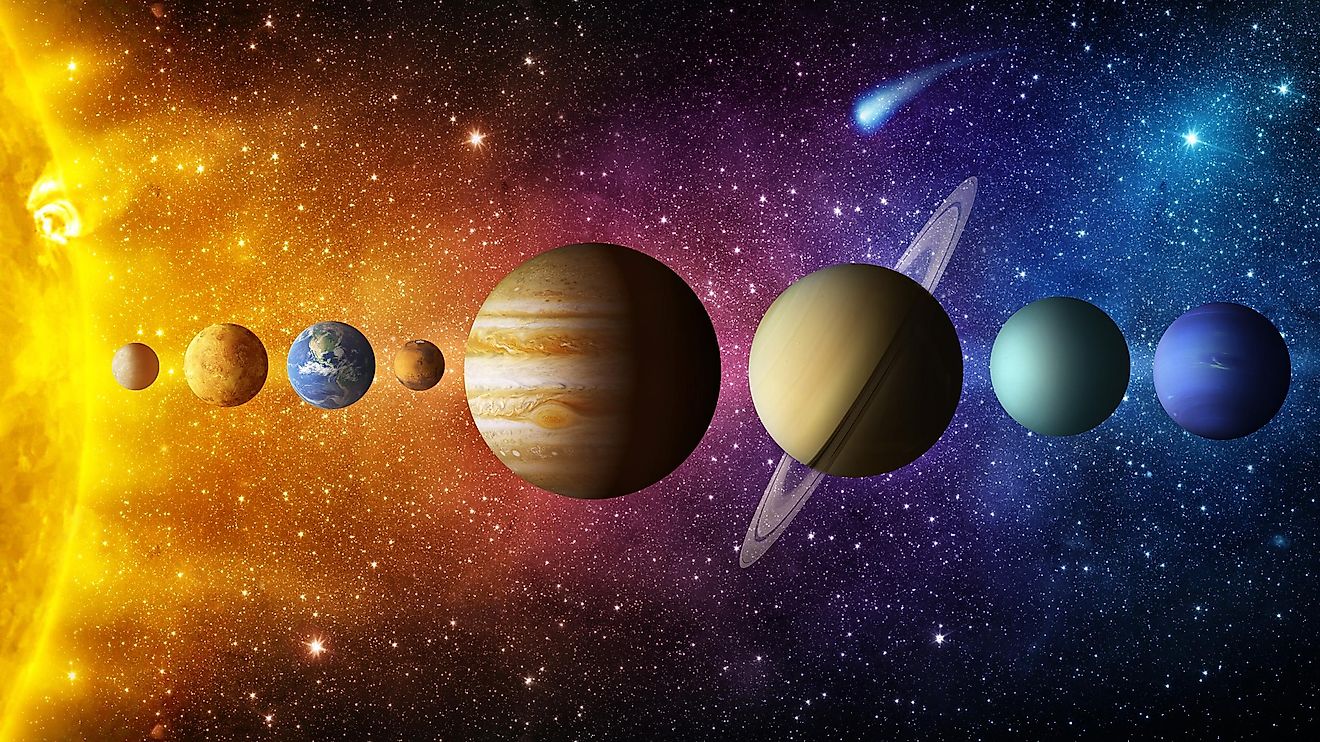
The spread between the fastest and slowest planets in the Solar System is enormous. The gas giants spin fastest, mostly because they kept much of the angular momentum from their formation; the rocky inner planets lost much more of theirs to interactions with the Sun and to impacts. The full ranking, fastest to slowest, runs as follows.
- Jupiter: 9 hours, 56 minutes
- Saturn: 10 hours, 33 minutes (revised from earlier estimates after Cassini data)
- Neptune: 16 hours, 6 minutes
- Uranus: 17 hours, 14 minutes
- Earth: 23 hours, 56 minutes
- Mars: 24 hours, 37 minutes
- Mercury: 58.6 Earth days
- Venus: 243 Earth days
Venus's rotation is more than four times slower than Mercury's. The difference between Venus and Jupiter is even more dramatic: a single Venus rotation lasts longer than 587 Jupiter rotations. The other major outlier on this list is Mercury, which is tidally influenced by the Sun in a complicated 3:2 spin-orbit resonance (it completes three rotations every two orbits). Mercury's slow rotation has a clear gravitational explanation; Venus's slow rotation does not.
What a Day on Venus Would Actually Look Like

The surface conditions on Venus are bad enough that "a day" is largely a theoretical concept. Surface temperatures average about 867 degrees Fahrenheit (464 degrees Celsius), hot enough to melt lead, tin, and zinc, and roughly 800 degrees warmer than Mercury despite Venus being much farther from the Sun. The cause is a runaway greenhouse effect powered by an atmosphere that is 96.5 percent carbon dioxide.
The atmospheric pressure at the surface is 92 bar, roughly the same pressure a deep-sea diver would experience 900 metres (about 3,000 feet) below the ocean surface on Earth. The clouds are sulfuric acid. Daylight, when the slow rotation puts a given location facing the Sun, lasts about 58 to 59 Earth days at a time. Nighttime lasts the same. The Soviet Union actually sent landers down through this atmosphere between 1970 and 1982, in the Venera program. Venera 7 (1970) was the first probe to soft-land on another planet and transmit data from the surface, surviving 23 minutes. Venera 13 (1982) holds the record at 127 minutes before its electronics were overwhelmed by the heat and pressure. No spacecraft has landed on Venus since.
Venus Is Still Surprising Us
Venus's rotation rate may even be slowing further. Comparisons of radar data from the early 1990s and from 2014-2015 by the European Space Agency's Venus Express mission suggested the planet's rotation had slowed by about 6.5 minutes over the intervening 16 years, though more recent measurements have produced different numbers and the issue remains unresolved. The atmosphere itself does most of the work pushing energy around the planet, so small changes in its circulation can produce measurable shifts in the planet below.
Galileo Galilei was the first person to observe Venus through a telescope, in late 1610 and early 1611, and he found that Venus exhibits a complete cycle of phases (crescent, half, full) like the Moon. This was decisive evidence against the geocentric model of the Solar System, since the observed phases only made sense if Venus orbits the Sun rather than the Earth. Four centuries later, Venus is still the most poorly understood of the Solar System's rocky planets. NASA's VERITAS and DAVINCI missions, plus the European Space Agency's EnVision orbiter, are all scheduled to launch in the late 2020s and early 2030s. Each is designed in part to tell us, finally, why the planet next door is so different from our own, and so very, very slow on its own axis.