How Long Could You Survive in Space?
A person who ended up in outer space without any protection would probably lose consciousness in as little as 10 to 15 seconds, and death would follow without rapid repressurization. The only thing standing between an astronaut and this lethal environment is a spacesuit, a wearable life-support system often described as a personal spacecraft. In a functioning ISS spacesuit, survival would generally be limited to about six to eight hours, with roughly 30 minutes of emergency oxygen available after certain failures. Specialized survival suits can support astronauts for several days inside a spacecraft, but they cannot provide that endurance independently in open space. But even these remarkable technologies have limits. So, if an astronaut became stranded in space, it's worth wondering how long they would survive, and it's not for as long as you might think. Astronauts are on somewhat of a timer.
What Happens Without a Spacesuit?

The most immediate danger in space is not freezing or radiation. It is oxygen deprivation caused by the absence of breathable air and atmospheric pressure. Without protection, a person would probably remain conscious for only 10 to 15 seconds before the brain exhausted the oxygen already circulating in the blood.
The body would not explode, but exposed moisture on the eyes and tongue would begin to vaporize. Low pressure would also cause body tissues to swell, a process known as ebullism. The skin and circulatory system would prevent the body from bursting, but the person would quickly become incapacitated.
Brief vacuum exposure may be survivable if repressurization happens almost immediately. Longer exposure would lead to severe oxygen deprivation, organ damage, and death. There is no single confirmed time at which death becomes inevitable because the outcome would depend on the duration of exposure and how quickly pressure and oxygen are restored.
Temperature would not be the first lethal factor. Space has no surrounding air to conduct heat away from the body, so a person would not instantly freeze. Radiation and micrometeoroids would also pose serious risks, but hypoxia and decompression would become life-threatening first.
How Long Can a Spacesuit Keep You Alive?
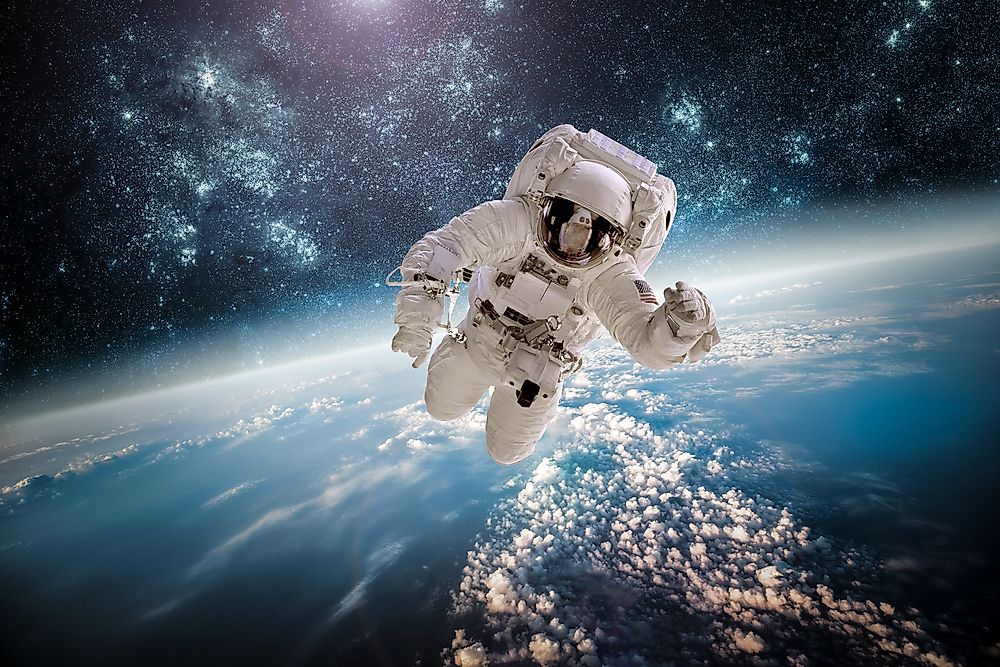
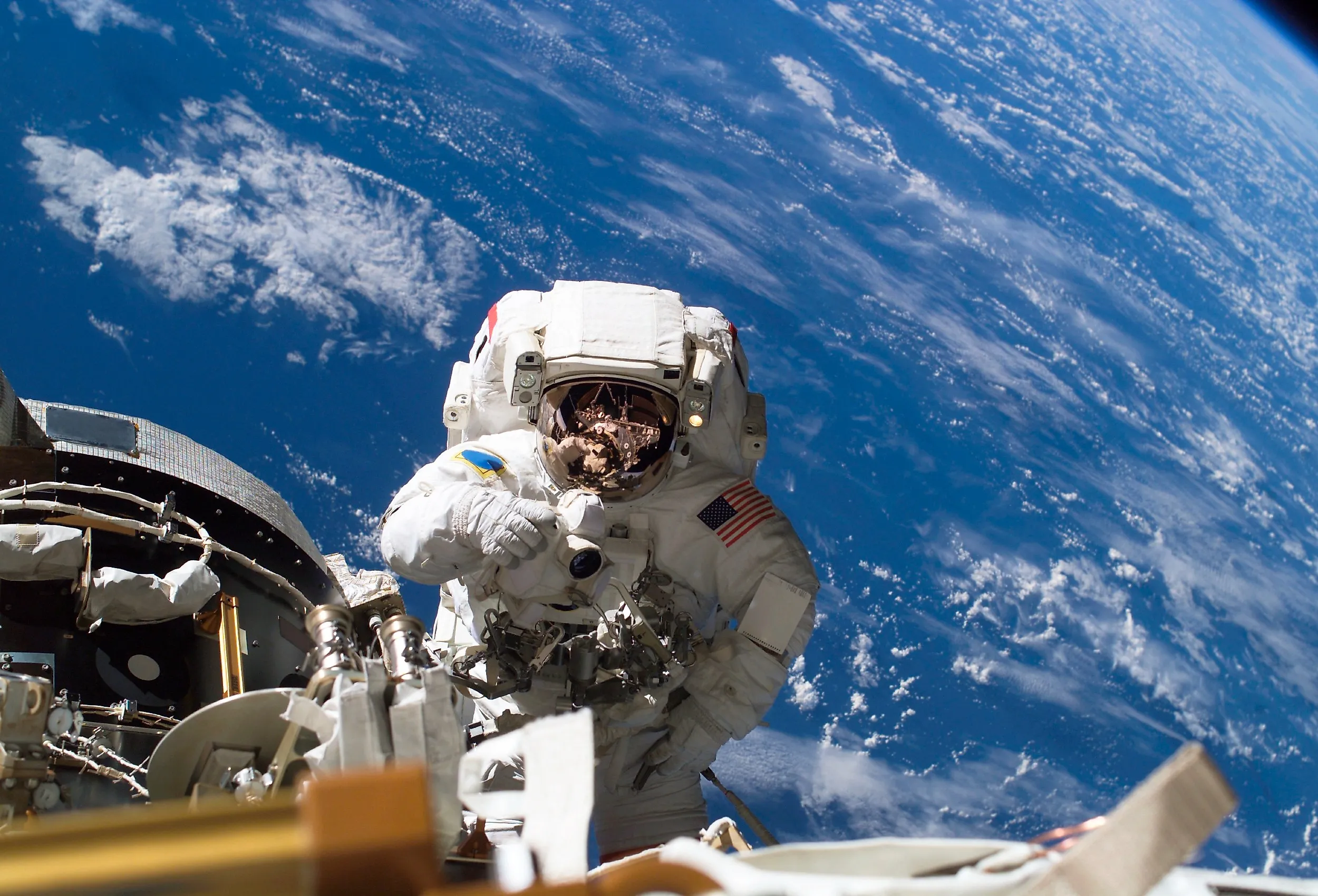
Instead of functioning like ordinary clothing, spacesuits create a miniature Earth around the astronaut by supplying breathable air, maintaining pressure, regulating temperature, and shielding against small debris.
A spacesuit’s bulk comes largely from the pressure garment, life-support hardware, thermal layers, and protective materials required to keep its wearer alive. Inside the suit, oxygen is continuously supplied while carbon dioxide is removed before it reaches dangerous levels. Multiple pressurized layers keep the astronaut's body functioning normally, while specialized insulation protects against the blistering heat of sunlight and the freezing darkness of space.
Beneath the pressure suit is a liquid cooling garment filled with narrow tubes that circulate chilled water across the astronaut's body. Without this cooling system, body heat generated during physical work would quickly build to dangerous levels. The backpack attached to the suit houses the life-support equipment, including oxygen tanks, batteries, communications equipment, and air purification systems. Together, these components transform the suit into a fully self-contained survival system.
Despite its advanced engineering, a spacesuit cannot keep someone alive indefinitely. The first major limitation is oxygen. Every breath gradually depletes the suit's finite supply, and the harder an astronaut works, the faster that supply disappears. Repairing equipment, climbing handrails, or carrying heavy tools requires considerably more oxygen than remaining still.
Spacewalks outside the International Space Station typically last about six to eight hours, although the record EVA (Extravehicular Activity) lasted 8 hours and 56 minutes. Engineers calculate oxygen requirements before astronauts even leave the airlock, ensuring enough reserves remain for unexpected delays.
What Limits a Spacesuit’s Survival Time?

Fortunately, spacesuits also carry an emergency backup called the Secondary Oxygen Pack. If suit pressure falls below its emergency threshold, the Secondary Oxygen Pack can provide about 30 minutes of oxygen purge flow while the astronaut returns to the airlock. That half hour is not intended for continuing work. It is simply enough time to reach the safety of the spacecraft.
A functioning ISS EVA suit is designed to support roughly an eight-hour spacewalk, with an emergency oxygen system rated for about 30 minutes, but a stranded astronaut’s actual survival time would depend on workload and which suit systems remained operational.
Running out of oxygen is only part of the problem. Every exhaled breath also releases carbon dioxide. If this gas accumulates inside the helmet, it quickly becomes toxic. Even while oxygen remains available, rising carbon dioxide levels can trigger headaches, dizziness, poor judgment, unconsciousness, and eventually death.
To prevent this, spacesuits continuously circulate air through chemical filters known as carbon dioxide scrubbers. These filters trap the unwanted gas and keep the breathing atmosphere safe. However, the filters eventually become saturated. Once they reach capacity, they can no longer remove carbon dioxide effectively. This means that even an unlimited oxygen supply would not guarantee survival. Without functioning scrubbers, the astronaut would slowly suffocate from the air they are breathing back in.
Many people imagine astronauts freezing in space, but overheating is often the greater concern. Every movement inside a pressurized suit requires effort. Even bending an elbow feels like pushing against an inflated balloon. As astronauts work, their muscles generate large amounts of heat. Because there is no atmosphere in space to carry heat away, that warmth remains trapped unless actively removed.
The cooling garment circulates water around the body and transfers excess heat to the suit’s thermal-control system, which, in the traditional Shuttle and ISS EMU, rejects heat primarily through a water sublimator. All of this depends on electrical power. Eventually, the batteries run low. If electrical power fails, cooling, communications, environmental monitoring, and other critical systems begin shutting down. Regardless of how much oxygen remains, the astronaut would soon face life-threatening temperature stress.
Could You Survive for Days in a Suit?

Even if every system continued to function perfectly, the human body would eventually reach its limits. A spacesuit weighs hundreds of pounds on Earth, although its weight is less noticeable in microgravity. More challenging is the internal pressure, which constantly resists movement. Simple tasks like gripping tools, turning bolts, or climbing along the outside of a spacecraft require tremendous physical effort.
As fatigue increases, astronauts breathe faster, consume oxygen more rapidly, and produce more carbon dioxide. The harder they work, the faster their life-support resources disappear. For this reason, space agencies carefully schedule every activity during a spacewalk. Even the longest EVAs push both the astronaut and the equipment close to their operational limits.
Standard EVA suits are built for hours, not days. However, other suits are designed for emergency situations inside spacecraft. NASA's Orion Crew Survival System, developed for Artemis missions, can help astronauts survive for up to six days if a spacecraft loses cabin pressure. Unlike spacewalk suits, these systems work alongside the spacecraft's life-support equipment and include connections for drinking water and nutrition while remaining fully sealed.

Even then, survival presents new challenges. Humans still need food, hydration, rest, and ways to manage waste. Remaining sealed inside a restrictive suit for multiple days would also become mentally exhausting. Limited mobility, isolation, and continuous discomfort would gradually wear down even highly trained astronauts.
How Location Changes the Danger

The surrounding environment creates additional dangers depending on where the astronaut is. Across much of the Moon, daylight and darkness each last about two Earth weeks, producing severe temperature changes, although lighting near the poles varies with terrain. Fine lunar dust clings to spacesuits like powdered glass, wearing down seals and damaging moving parts.
Mars presents a different set of problems. Although it has a thin atmosphere, it is composed mostly of carbon dioxide and offers little protection from harmful radiation. Martian dust storms can persist for weeks and threaten equipment through dust accumulation, reduced solar power, abrasion, and interference with mechanical or electrical systems.
Then there is radiation itself. Unlike astronauts inside a spacecraft, someone wearing only a spacesuit has very little shielding from energetic particles arriving from the Sun and deep space. Extended time outside a spacecraft would increase cumulative radiation exposure, while a major solar-particle event could create a much more immediate health emergency because a spacesuit offers little shielding. No portable suit can fully protect against that invisible danger.
Why a Spacesuit Can Only Buy a Few Hours
Modern spacesuits represent some of the most sophisticated survival systems ever built. They allow astronauts to step into an environment that would otherwise kill a person in a few minutes. Yet they remain temporary lifeboats rather than permanent homes.
A standard EVA suit provides about six to eight hours of primary life support, plus roughly 30 minutes of emergency oxygen. Those limits are set not only by oxygen availability but also by carbon dioxide removal, battery power, temperature regulation, and the astronaut's physical endurance. Inside Orion, the integrated spacecraft and Crew Survival System are intended to sustain suited astronauts for up to six days after a cabin-pressure or air-contamination emergency; the suit could not provide that endurance independently in open space.
The remarkable achievement is not that humans can survive indefinitely in space, as of course they cannot. The real triumph is that modern engineering has made it possible for people to leave the safety of a spacecraft, work in one of the most violent environments known, and return home alive. Every successful spacewalk is a reminder that beyond the thin walls of a spacesuit lies an environment that remains fundamentally hostile to human life.