What's the Fastest Thing in the Universe?
Even the fastest bullets, fighter jets, and rockets move so slowly beside light that their motion would seem almost frozen by comparison. In a vacuum, light travels about 186,000 miles per second, fast enough to circle Earth more than seven times in a single second. It is the universe's fundamental local speed limit for matter, but the cosmos is packed with objects that claw terrifyingly close to that boundary without ever quite touching it.
The Speed Limit Of Reality

The fastest thing in the universe is light, or more precisely, anything that can travel at the speed of light in a vacuum. That includes photons, the quantum particles of light, and gravitational waves, ripples in spacetime produced by events such as merging black holes or neutron stars.
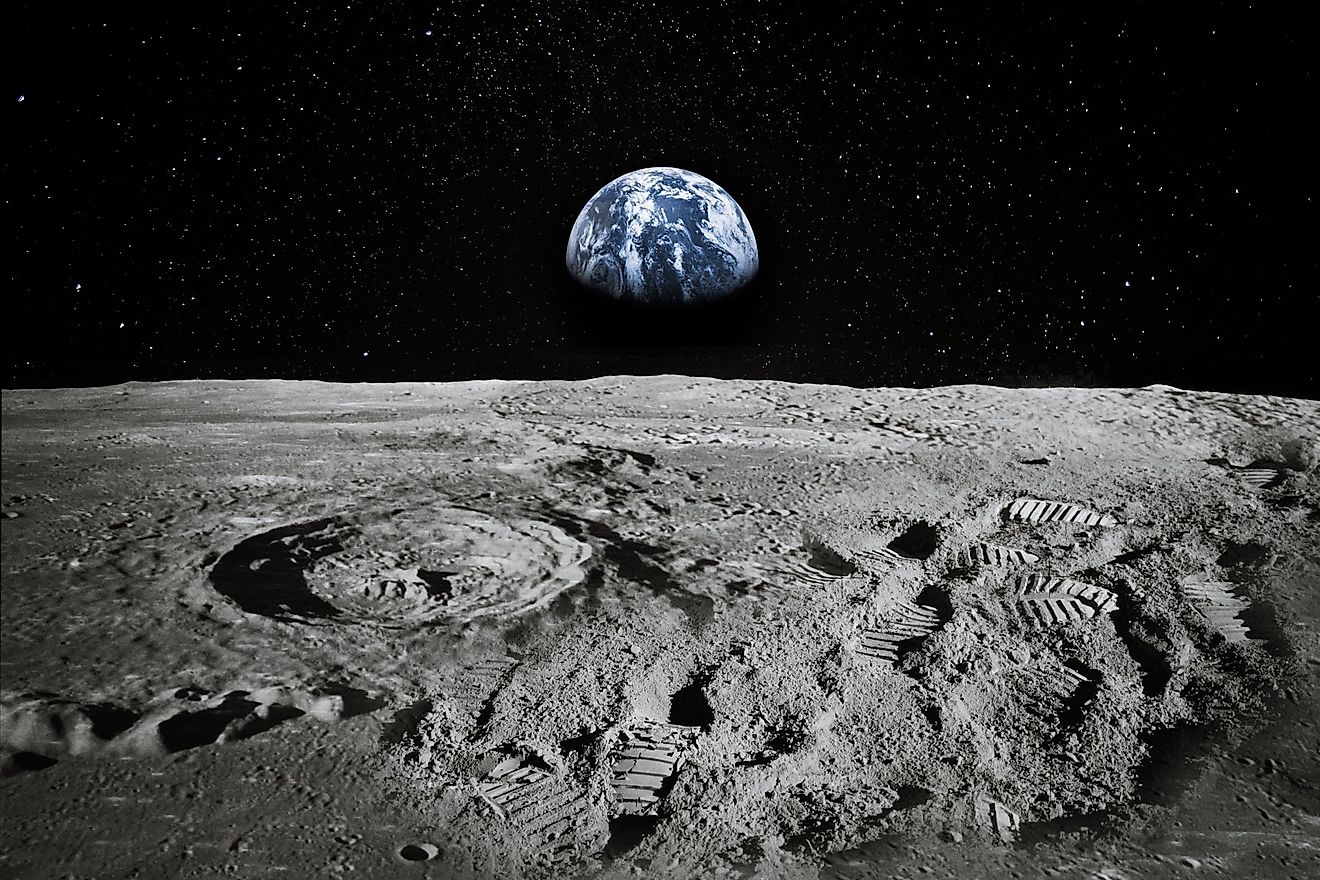
For humans, that speed is almost impossible to picture. Sunlight takes only about eight minutes to reach Earth, even though the Sun sits roughly 93 million miles away. A beam of light could race from New York to Los Angeles more than 70 times in one second. A spacecraft moving that fast could reach the Moon in roughly 1.3 seconds.
The problem is that no spacecraft, astronaut, asteroid, planet, or star can travel faster than light, or even reach light speed. For an object with mass, the energy and momentum required to accelerate it increase without bound as its speed approaches the speed of light, which prevents it from ever reaching that limit. In simple terms, the universe lets matter approach the boundary but never cross it.
The Fastest Thing Humans Have Ever Built

Human engineering is nowhere near light speed, but one spacecraft has pushed farther than anything else built on Earth. During its record solar approach on December 24, 2024, NASA's Parker Solar Probe reached about 430,000 miles per hour, the highest speed ever recorded for a human-made object.
The probe's speed sounds impossible until it is placed beside light. At that velocity, Parker Solar Probe could fly from New York to Tokyo in less than a minute. Yet light could make that same trip more than 20 times in a single second.
Even so, the probe's survival is astonishing. It passes close enough to the Sun to move through the corona, the blistering outer atmosphere where plasma can reach millions of degrees. Without its heat shield, Parker Solar Probe could not survive long enough to study that environment. The spacecraft used repeated Venus gravity assists to tighten its orbit, allowing it to fall closer to the Sun and reach its highest speeds near each perihelion.
It is humanity's fastest machine, but compared to the universe's true speed limit, it is still crawling.
The Oh-My-God Particle

In 1991, scientists detected a single particle smashing into Earth's atmosphere with so much energy that they gave it an unforgettable nickname: the Oh-My-God particle.
This particle was not a pebble, a meteor, or a visible object. It was a tiny cosmic ray, likely a subatomic particle, moving so close to light speed that the difference becomes almost absurd. Its kinetic energy was comparable to that of a baseball thrown at highway speed, yet all of it was carried by a single subatomic particle or atomic nucleus.
What made it extraordinary was the sheer amount of energy packed into one particle. A baseball carries its energy across something a person can hold in one hand. The Oh-My-God particle carried a similar amount in what was likely a single proton or atomic nucleus, an object trillions of times smaller than the ball.
Scientists still do not know exactly what launched it or where it came from. Leading candidates for the most extreme cosmic rays include active galactic nuclei, starburst galaxies, and other powerful extragalactic events, but their exact sources remain unresolved.
Dead Stars That Spin Hundreds Of Times Per Second

Not everything fast travels in a straight line. Some of the universe's most extreme speeds come from rotation.
A neutron star can form when the core of a massive dying star collapses into an object only about 12 to 20 miles across. This stellar remnant can hold more mass than the Sun in a sphere roughly the size of a midsize city. A teaspoon of neutron star matter would weigh millions of tons on Earth.
Among the fastest known neutron stars, PSR J1748-2446ad rotates 716 times every second. Objects like this are known as pulsars, spinning neutron stars that sweep beams of radiation into space. That means this dead star completes more than 42,000 rotations every minute. A kitchen blender sounds violent at a few hundred rotations per second, but 42,000 revolutions per minute is an extraordinary rate for an object heavier than the Sun.
If a person could somehow stand near its equator, they would not survive long enough to understand what happened. Depending on the star's radius, its equator may move at roughly 20% to 25% of light speed, while its immense gravity and radiation would make survival near the surface impossible. NASA once described the force of a marshmallow falling onto a neutron star as comparable to an atomic bomb.
Neutron stars are not only fast. They are fast under impossible pressure.
Black Hole Jets Move Like Cosmic Blowtorches

Black holes are famous for swallowing matter, but some of them also launch material outward at terrifying speeds.
Around feeding supermassive black holes, gas and dust spiral into a blazing disk. Magnetic fields twist through that chaos and can fire narrow jets of particles into space. In some systems, particles and plasma within these jets travel at more than 99% of the speed of light.
Black hole jets are not small streams. At sufficiently close range, radiation from a powerful relativistic jet could severely damage a planet's atmosphere and surface, though the outcome would depend on the jet's energy, duration, and distance.
An active galaxy is classified as a blazar when one of its relativistic jets points close to Earth's line of sight. From our point of view, it looks brighter and more violent because we are staring almost straight down the barrel of one of the universe's largest particle cannons.
The Loophole: Space Itself Can Stretch Faster Than Light

There is one strange exception to the speed limit, but it does not mean a spaceship can outrun a beam of light.
Nothing with mass can move through space faster than light. However, space itself can expand in a way that makes very distant galaxies recede from us faster than light. The galaxies are not locally flying through space at illegal speeds. Instead, the space between them and us is stretching.
A good comparison is raisin bread rising in an oven. The raisins are not crawling through the dough, but as the dough expands, the distance between the raisins grows. In the universe, galaxies behave a little like those raisins, carried apart as space expands.
Because space expanded while the light was traveling, the observable universe is now roughly 93 billion light-years across, even though the universe is only about 13.8 billion years old. Light has a speed limit, but the fabric of space has been stretching throughout the entire journey.
The loophole creates a haunting consequence. Some sufficiently distant galaxies now lie beyond our cosmological event horizon: light they emitted long ago may still reach us, but signals they send now or in the future never will.
The Universe's Fastest Reality
So, what is the fastest thing in the universe? The clean answer is light, along with other massless phenomena such as gravitational waves. They move at the cosmic speed limit of about 186,000 miles per second.
But the more unsettling answer is that the universe is full of things straining to get as close as possible. Cosmic rays slam into Earth's atmosphere at nearly the speed of light. Neutron stars spin hundreds of times per second. Feeding black holes launch narrow relativistic jets that can extend far beyond their host galaxies. Human spacecraft skim the Sun at record speeds while enduring heat, radiation, and plasma conditions that would destroy an unprotected vehicle.
The speed of light remains unreachable for matter, but that limit does not make the universe feel slow. It makes the universe feel more violent. The fastest material objects and particles can approach the relativistic limit ever more closely, and yet none of them can ever reach or cross it.