The US Springs That Pump More Water Than Some Rivers
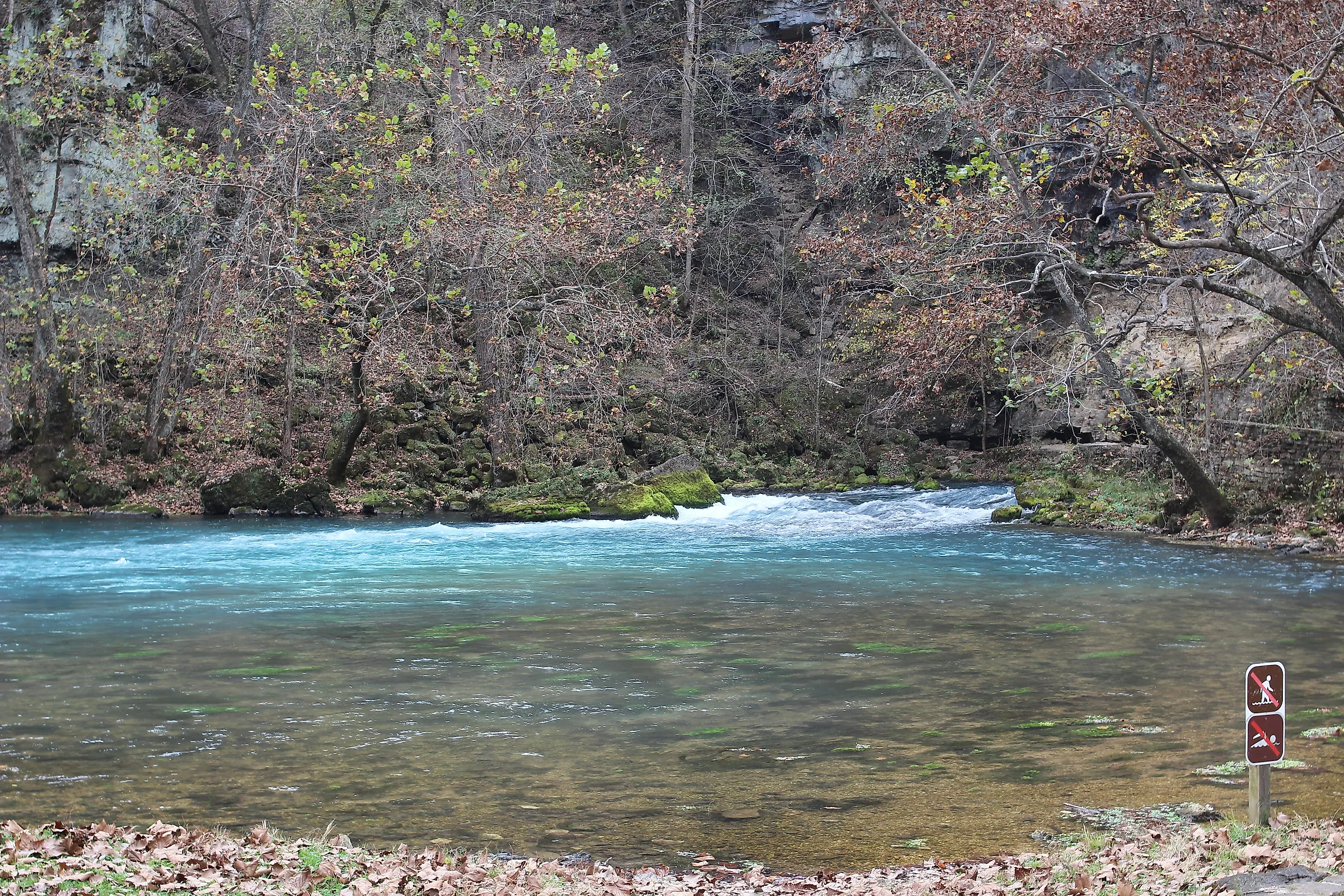
Big Spring in southeastern Missouri pushes an average of 286 million gallons out of the base of a limestone bluff every day. The National Park Service describes that volume as enough to fill a football stadium daily. Silver Springs in Florida does roughly twice as much, at around 550 million gallons, and Comal Springs in Texas moves about eight million gallons an hour. The framing in the headline is generous to the rivers, because these springs do not merely rival them. In several cases the spring is the entire river, and the water is already at full volume the moment it reaches daylight.
Here are the springs that produce river-scale flow, and the geology that lets them do it.
What First Magnitude Actually Means
Hydrologists classify springs by discharge, and the top tier has a specific threshold.
A first-magnitude spring produces at least 100 cubic feet per second, which works out to roughly 65 million gallons a day. The National Park Service uses that figure directly when describing the Ozark springs.
Once you have that number, the comparison in the title becomes measurable. A spring flowing 100 cubic feet per second is putting out more water than a great many named American rivers manage at average flow, and the springs below are all several times past the threshold.
Big Spring, Missouri

The strongest single-outlet spring in the country by most accounting, and the National Park Service names it alongside two rivals for the title of largest: Idaho's Snake River Spring Complex and Florida's Silver Spring.
The average is 286 million gallons a day, about 878 acre-feet, emerging at a constant 58 degrees Fahrenheit and carrying more than 70 tons of dissolved minerals out of the karst with it every day. The exact figure resists precise measurement because backwater from the Current River interferes with the gauge.
It went unfound by settlers until 1913, despite local Native accounts of a spring that roars and an unsuccessful search in 1803. Terrain that rough will hide 286 million gallons a day.
Silver Springs, Florida

Around 550 million gallons a day, which makes it one of the largest artesian spring formations on the planet.
What it produces is the Silver River, and this is the clearest illustration of the article's point. The river does not gather its water from a watershed. It arrives whole, at spring temperature, at the head of its own channel.
The clarity made it a film location, with Tarzan's Secret Treasure and Creature from the Black Lagoon both shot there, and the glass-bottom boats that still run predate most of Florida's tourism industry.
Wakulla Springs, Florida

One of the largest and deepest freshwater springs in the world, and the one where the published numbers disagree most.
Estimates of its discharge run from around 200 million gallons a day to 400 million depending on the source and the year, which reflects genuine variability rather than sloppy reporting. Spring flow tracks aquifer pressure, and aquifer pressure tracks rainfall and pumping.
The vent is 350 feet deep and it is the mouth of something remarkable. Wakulla Cave is the longest underwater cave system in the United States and the sixth largest in the world, with nearly 32 miles of surveyed passage mapped by the Woodville Karst Plain Project.
The spring forms the Wakulla River, which runs nine miles before joining the St. Marks and reaching Apalachee Bay five miles later. Mastodon bones have come out of the spring basin.
The Snake River Spring Complex, Idaho
The third contender for largest in the country, and structurally the odd one out.
Rather than a single vent, this is a series of springs discharging from the canyon walls along the Snake River in southern Idaho, fed by the Snake River Plain Aquifer. Water that sank into porous volcanic rock upstream travels underground and reappears as waterfalls coming out of a cliff face.
Taken together the complex moves enormous volumes, which is how it competes with Big Spring and Silver Springs while having no single opening to photograph.
Comal Springs, Texas

The largest group of artesian springs in Texas, discharging an average of eight million gallons an hour into the Comal River. That works out to roughly 192 million gallons a day.
The Comal is one of the shortest rivers in the country, running only a couple of miles from the springs to its confluence with the Guadalupe, and it is entirely spring-fed. Its whole existence is Comal Springs with a name attached.
It sits inside Landa Park in New Braunfels, which means one of the highest-volume spring groups in the United States is also a municipal swimming and tubing destination.
Giant Springs, Montana

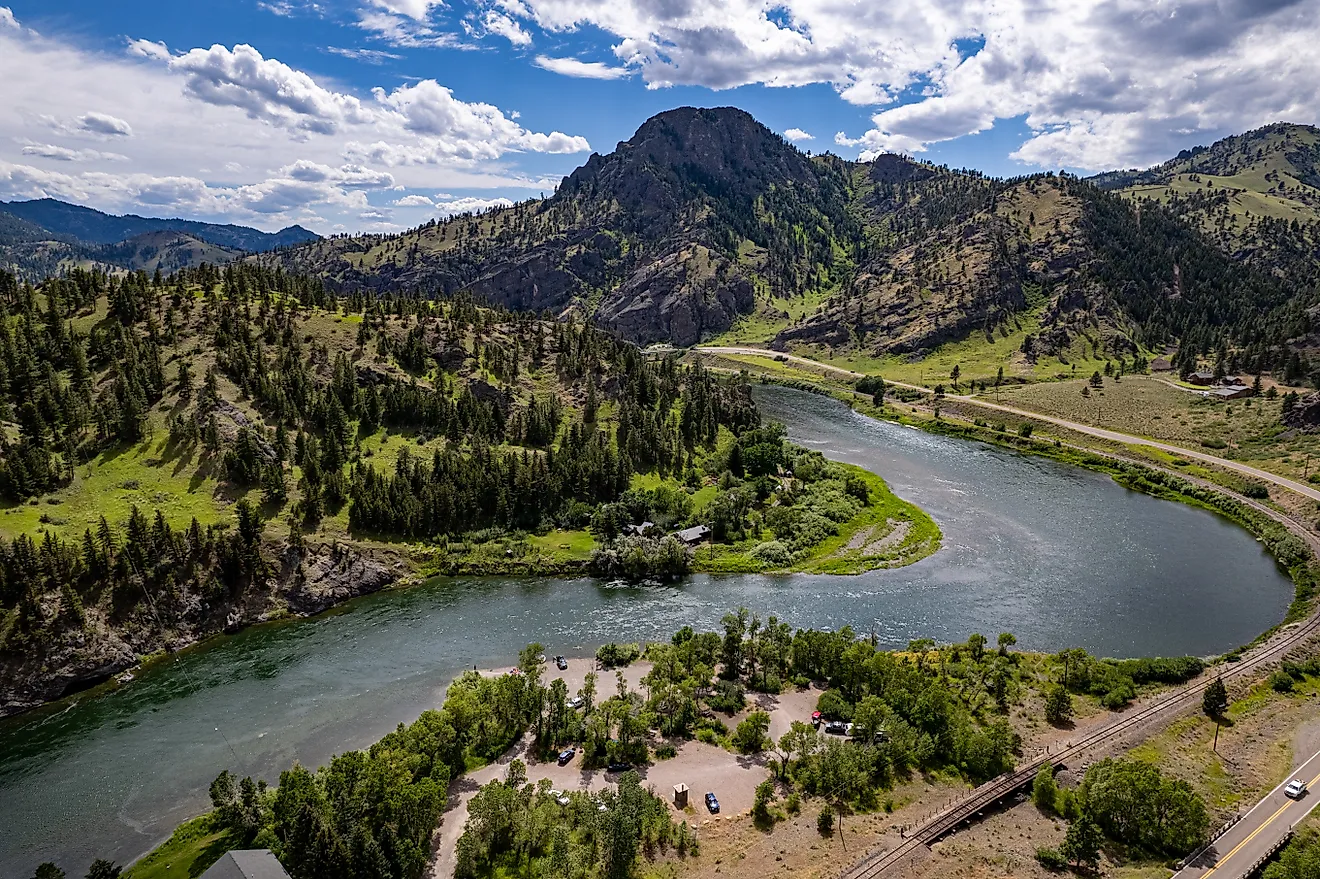
Along the Lewis and Clark National Historic Trail near Great Falls, Montana, and counted among the largest freshwater springs in the country.
Giant Springs makes the most literal version of this article's argument. The water it produces forms the Roe River, which for years was listed in Guinness World Records as the shortest river on Earth at around 200 feet before the category was retired amid an argument with Oregon's D River.
A spring that generates a complete named river roughly the length of a city block is about as close as hydrology gets to a punchline.
Why Florida Has So Many

Florida holds the greatest concentration of large springs anywhere on Earth, and the reason is entirely geological.
The state sits on the Floridan Aquifer, a vast limestone formation that stores and moves water through solution channels. Rain is mildly acidic, limestone dissolves in mildly acidic water, and over millions of years that produces a subsurface plumbing network of conduits and caves rather than the slow seepage you get through sand or clay.
A USGS fact sheet documented 27 first-magnitude springs in Florida alone. Add second-magnitude and smaller and the count runs to hundreds.
The same karst process explains Missouri's Ozark springs and the Texas Hill Country groups. Big water needs big holes in the rock.
The Water Is Older Than It Looks

The constant temperature is the tell. Big Spring runs 58 degrees year-round, and Florida springs hold around 72, regardless of season.
That is because the water has been underground long enough to equilibrate with the rock rather than the air. Some of it fell as rain years or decades earlier and has been moving through limestone ever since, which is why a spring run stays swimmable in January and feels cold in August.
It also means the volume is not really about today's weather. It reflects the aquifer's stored pressure, accumulated over a long recharge history, which is what allows a spring to deliver river-scale flow through a drought.
Most Of Them Are Declining

The honest ending, because the historical numbers are usually better than the current ones.
Spring discharge depends on aquifer head, and aquifer head drops when withdrawal outpaces recharge. Groundwater pumping for agriculture, municipal supply and bottling, combined with paving over recharge areas, has measurably reduced flow at a number of Florida's first-magnitude springs, and nitrate enrichment from fertilizer and septic systems has changed the water chemistry enough to shift several from clear to algae-choked.
Wakulla's wide reported range is partly a story about the same thing. When a figure spans 200 to 400 million gallons a day, some of that is seasonal and some of it is trend.
The Comparison Worth Keeping

A river is an accumulation. It starts small, gathers tributaries, and grows toward its mouth, which is why the interesting part of a river is usually its lower end.
A first-magnitude spring inverts that completely. It is at maximum volume at the exact point it appears, and it only ever gets diluted from there. The Silver, the Wakulla, the Comal and the Roe are all rivers that are biggest in their first hundred feet.
Which is the actual answer to the headline. These springs do not out-pump rivers. They are rivers, arriving all at once, out of a hole in the rock.