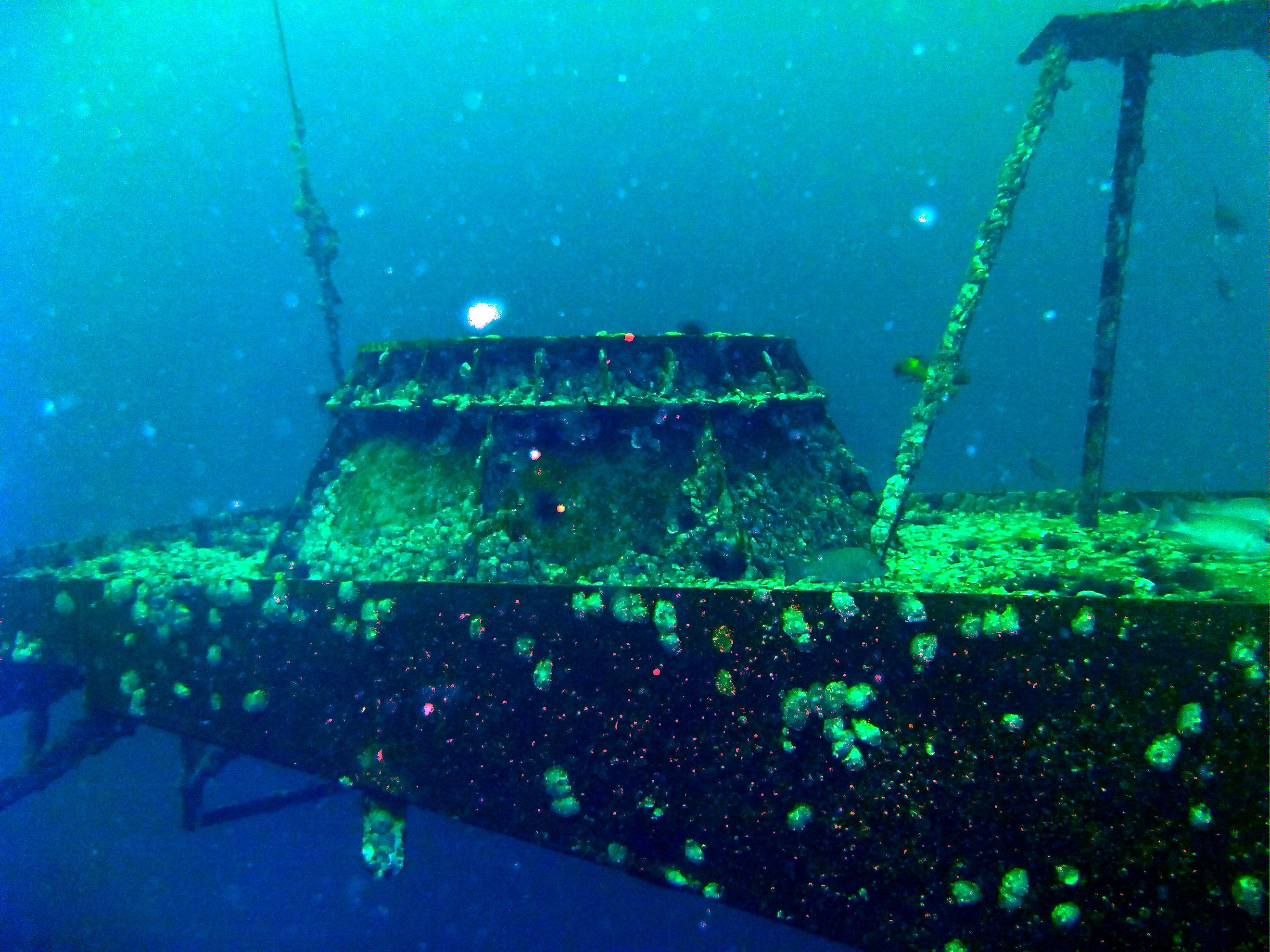
The Largest Shipwreck In US Waters
The largest shipwreck in American waters was no accident. In 2006 the U.S. Navy flooded a 911-foot aircraft carrier on purpose and let it settle upright on the floor of the Gulf of Mexico off Pensacola, Florida. The ship was the USS Oriskany, whose crews had fought the Korean and Vietnam wars and lost 44 men to a fire aboard in 1966, and the Navy reefed it rather than send it to a scrapyard. No vessel has been deliberately sunk at a greater size, which leaves the Oriskany the biggest artificial reef in American waters. An entire aircraft carrier now sits within reach of local dive boats, its flight deck resting well over a hundred feet down, where pilots once landed jets at sea.
A Sunken Carrier More Than 900 Feet Long

Oriskany's 911-foot length is slightly greater than three football playing fields placed end to end, excluding the end zones. During its Navy career, the carrier could accommodate as many as 80 aircraft. The broad flight deck and the hangar beneath it gave crews space to operate and maintain those planes at sea. Above the deck rises the island, the tower that housed the bridge and flight-control spaces.
The carrier served in the Korean and Vietnam wars before being decommissioned in September 1976. Its wartime history included a devastating fire in 1966 that killed 44 men. Preservation efforts failed, and a contractor that bought the vessel for scrapping went out of business. The Navy recovered the ship and eventually offered it to Florida for reefing in 2004.
The Navy Sank It In Just 37 Minutes

On May 17, 2006, demolition charges began the controlled flooding that sent Oriskany beneath the surface in about 37 minutes. It settled upright approximately 22.5 nautical miles southeast of Pensacola Pass. The chosen site was 212 feet deep. Engineers had to leave sufficient water above the wreck for passing vessels, even if the carrier landed on its side. The required clearance was 55 feet. Adding the carrier's 157-foot width established the 212-foot site depth.
Preparing the carrier took considerably longer than sinking it. Workers removed or reduced potentially harmful materials, but some solid materials containing PCBs remained aboard. These industrial chemicals had been used in electrical equipment and insulation. EPA approval in February 2006 allowed the project to proceed with those materials present. Approval also required monitoring fish at the reef to assess whether they remained safe for people to eat.
The Flight Deck Is Too Deep For An Ordinary Dive

The island rises well above the flight deck. Florida's published site information places its upper structure at roughly 80 feet below the surface, with the flight deck around 145 to 150 feet down.
The flight deck is beyond normal recreational depth limits. Florida's wildlife agency advises divers to obtain appropriate training and experience for the site's depth and offshore conditions. It also recommends staying out of the ship entirely because of interior hazards and uncertain structural damage.
Storms and shifting sediment have changed how the carrier sits, while seawater gradually corrodes its steel. Those changes can alter the depths and condition of structures divers once visited. Florida recommends checking with local dive operators for current conditions before planning a trip.
Fish Occupied The Wreck Almost Immediately

Much of the surrounding seafloor is sand, with relatively little natural reef. The carrier's hull and steelwork form an enormous hard surface, with sheltered spaces where marine animals gather. Kerry Freeland of Pensacola's Dive Pros watched the carrier go down and was among the first to dive it. He has described the wreck quickly developing its own ecosystem, with resident groupers and amberjack settling around the structure.
Animals that move through open water also reach the site. Divers have reported whale sharks and manta rays over the wreck. Groupers hold to the structure itself, while the larger visitors range around its exposed upper decks. Marine growth covers the steel, though the bridge windows and platforms remain identifiable.
A Longer Wreck Is About To Take The Record
Oriskany's artificial-reef record may soon pass to another ship off the Florida Panhandle. As of October 19, 2026, the 990-foot SS United States remains afloat, with deployment planned for the second week of November. Its intended site lies about 22 nautical miles southwest of Destin-Fort Walton Beach. The liner's two funnels have already been removed and saved for a planned museum on land. Plans call for a bottom depth of approximately 180 feet, with the upper deck around 55 feet below the surface. That would put parts of the longer liner shallower than Oriskany's tower. The Oriskany is a clear example of why those elevations matter: a ship can sit within reach of divers while much of its structure stays beyond recreational depths.