The National Parks With Hot Springs You Can Actually Soak In
Hot springs naturally occur within the protected boundaries of several of the US's 63 national parks, but for most visitors, these geothermal features are strictly visual wonders of scalding geysers and thermal pools kept behind boardwalks to ensure safety and preservation. While the majority of these protected landscapes preserve hot springs as fragile ecosystems, a distinct few maintain zones where visitors can actually safely soak in the naturally warm water. This exception relies on a convergence of geology and the park's preservation framework. The water must be safe for contact, and the park's regulations must explicitly allow bathing at the site. Four national parks contain areas where soaking has been permitted, including developed bathhouses, wild river-mixed pools, and remote backcountry springs, though access to some can change with Park Service closures.
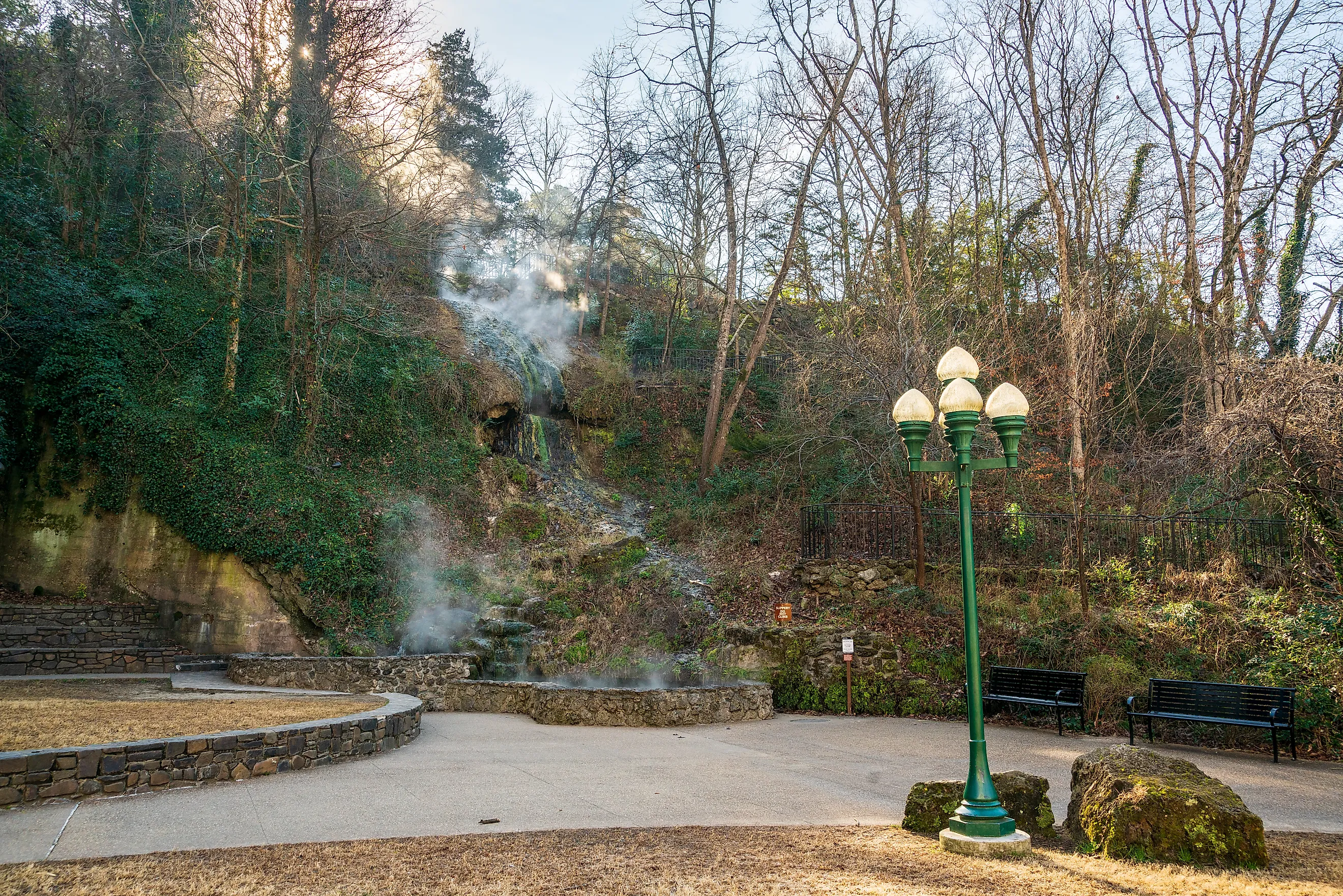
Hot Springs National Park, Arkansas

Rainwater percolating deep into the fractured rock of the Ouachita Mountains emerges here as 47 distinct springs, heated by the earth's natural geothermal gradient rather than volcanic magma. This non-volcanic origin produces odorless, tasteless water rich in calcium and magnesium, flowing at a rate of 700,000 gallons daily from Hot Springs Mountain at an average temperature of 143 degrees Fahrenheit.
The park's legislation uniquely designates these waters for public health and bathing, a mandate that supports the historic row of bathhouses lining Central Avenue. Unlike the wild soaks found elsewhere, immersion here occurs primarily through authorized commercial operators like the Buckstaff Bathhouse, which has operated continuously since 1912, and the Quapaw Bathhouse, both of which pipe and cool the thermal water into tubs for soaking. The average temperature of the cooled thermal water in the bathhouse sits between 98 to 104 degrees Fahrenheit.
The Fordyce Bathhouse, now the visitor center, preserves the early 20th-century plumbing and fixtures that once served thousands seeking curative remedies, though it no longer offers bathing services. While visitors can fill jugs at the North and South Display Fountains, direct soaking in these historic structures is prohibited to preserve the architectural integrity of the row. The park's compact 5,500-acre footprint concentrates the hot spring access, drawing over two million annual visitors.
Big Bend National Park, Texas

Scalding water emerging from a limestone fissure mixes directly with the cool currents of the Rio Grande at Langford Hot Springs. The spring discharges at 105 degrees Fahrenheit into a stone pool constructed in the early 20th century.
To reach the springs, visitors take the flat, one-mile round-trip Hot Springs Historic Trail from the historic resort parking area, a route that passes the stabilized ruins of an early 20th-century village that once included a post office and hotel.
The pool itself lacks facilities or changing rooms, and the water temperature fluctuates unpredictably with the flow rate of the spring and the volume of the river. Slippery limestone rocks surround the basin, posing a fall hazard that is exacerbated when the water level rises during heavy rains. Soakers sit within the stone pool open to the sky, framed by the sheer limestone cliffs of the canyon wall and the scrubby desert vegetation of the river floodplain.
Death Valley National Park, California

In the remote western corner of Death Valley, the Saline Valley Warm Springs offer a remote soaking experience. Three concrete-lined pools, primarily constructed and upgraded by volunteers between the 1960s and 1980s, are fed by a natural spring that emerges at approximately 115 degrees Fahrenheit. The three pools range in temperature between 98 to 112 degrees Fahrenheit. For prolonged soaking above five minutes, visitors should stay within the pools that do not exceed 104 degrees Fahrenheit.
Accessing this site requires a strenuous journey. Visitors must navigate about 35 miles of rough, unpaved dirt roads from the nearest paved highway, a drive that demands high-clearance vehicles and careful navigation through sand and washboard terrain. There are no facilities, water sources, or ranger stations at the springs, and the site is managed as a backcountry zone where visitors must pack out all waste. Make sure to bring plenty of water to this remote desert location.
The surrounding landscape is a stark expanse of salt flats and granite mountains, offering a silence broken only by the wind and the occasional sound of other bathers. Whether soaking is permitted here depends on the site's current status, which the National Park Service can restrict or close, so visitors must verify conditions before counting on a soak. The remote location and harsh environment also demand self-sufficiency, with summer temperatures often exceeding 110 degrees Fahrenheit in the hottest place on Earth.
Olympic National Park, Washington

Olympic National Park presents a dual thermal experience, with the developed, fee-based Sol Duc Hot Springs Resort and the wild, free Olympic Hot Springs deep in the backcountry. The Sol Duc Hot Springs Resort operates under a concession contract, piping mineral water from three springs into three mineral pools, ranging from 99 to 104 degrees Fahrenheit, and one freshwater pool cooled to around 85 degrees Fahrenheit. This facility offers access via a 14-mile drive up the Sol Duc River Road, providing changing rooms, lockers, and a snack bar within a dense temperate rainforest setting.
In stark contrast, the wild Olympic Hot Springs in the upper Elwha River valley offer an undeveloped alternative where no infrastructure exists. Accessing these natural seeps now requires a long backcountry hike from the Elwha area, since flooding destroyed the access road and left visitors to traverse the closed roadbed before joining the trail. The exact distance has shifted with repeated closures and repairs, so the current route should be confirmed with the park before setting out. Here, water temperatures can reach 100 degrees Fahrenheit in natural depressions formed by logs and rocks arranged by previous visitors. These makeshift dams are ephemeral, often washed away by high river flows or spring snowmelt, requiring each new group to reconstruct them.
Soaking in the National Parks' Hot Springs
These four national parks demonstrate that public soaking in thermal waters is a rare opportunity within the 63-park system, granted only where specific geological conditions and park management allow. The experience varies from the developed, temperature-controlled baths of Arkansas to the wild, river-mixed currents of Big Bend and the remote pools of Death Valley and Olympic.
Each site requires visitors to navigate specific access protocols, from short walks to outback drives, and to adhere to strict safety guidelines regarding water temperature and wildlife. The availability of some of these soaking areas is not guaranteed. Seasonal closures, flood damage, and road conditions can restrict access at any time.
Visitors should check the official National Park Service website for current conditions before planning a trip, as the delicate balance that allows these thermal features to be enjoyed by the public can shift with the natural dynamics of the landscape.