5 Of The Most Snake Infested Rivers In Florida
Most people’s minds will jump to the Everglades at the mention of bodies of water in Florida; however, the state has around 25,949 miles of rivers coursing through it. Florida’s waterways support a wide array of animals, including American Alligators hiding in the swamps, Manatees cruising along the Crystal River, and snakes, of which Florida has 46 native species. Pair Florida’s tropical and subtropical climate with its snakes, and you have the five most snake-infested rivers in Florida.
Saint Johns River

Saint Johns River is the longest river in Florida at 300 miles. It originates in the swamps of Brevard County in the east-central region of the state and flows north, parallel to the coast, until it turns and empties into the Atlantic Ocean 15 miles east of Jacksonville. The Saint Johns River supports a diverse ecosystem and is home to several species of venomous and nonvenomous snakes.
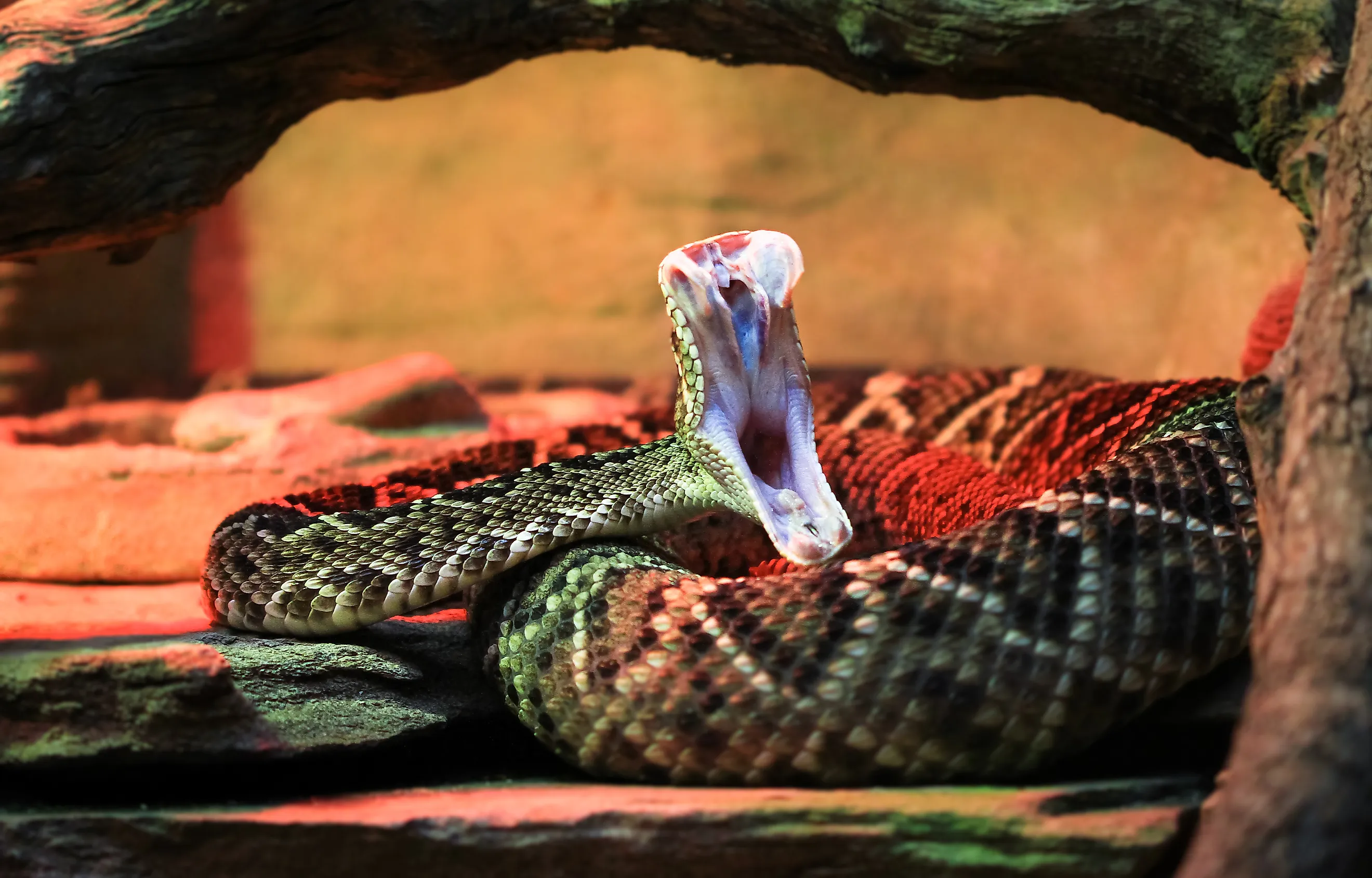
The Florida Cottonmouth (Agkistrodon conanti) or Water Moccasin inhabits almost every wetland and waterway, such as rivers, lakes, ponds, marshes, swamps, sloughs, reservoirs, canals, and roadside ditches. If provoked or threatened, these snakes may coil up and open their mouths to expose the white flesh lining their mouths, from which their name originates.
The Banded Watersnake (Nerodia fasciata fasciata) is a nonvenomous species of snake that is often mistaken for a Cottonmouth and subsequently killed because of that. While Cottonmouths are present in Florida, they are not as abundant as the several species of Watersnake. Watersnakes are active during both day and night and can be found basking on logs or rocks adjacent to bodies of water, or hunting for amphibians and fish in shallow edges of water.
Suwannee River

Although the Suwannee River originates in Georgia, all but 35 miles of its 250-mile-long course are in Florida. It flows southwest across northern Florida before emptying into the Gulf of Mexico at Suwannee Sound. Throughout its course, the river is lined with cedar, oak, and cypress trees, as well as different species of gardenias, orchids, and ixias, making it an ideal habitat for snakes.
The Florida Watersnake (Nerodia fasciata pictiventris) is found throughout the state, but specifically south and east of the Suwannee River. Typical of Watersnakes, the Florida Watersnake primarily lives in aquatic and semi-aquatic habitats, feeding on amphibians and fish. If captured, they are likely to bite and release a foul-smelling odor from an opening at the base of their tail.
Apalachicola River

The Apalachicola River is the largest river in Florida by volume rather than length. It originates from the confluence of the Chattahoochee and Flint Rivers at the state line between Alabama, Florida, Georgia, and flows for 106 miles before it empties into Apalachicola Bay on the Gulf of Mexico. The Apalachicola River basin is one of the last river basins in North America that has managed to retain its biological diversity, which includes plants, mammals, birds, fish, amphibians, and reptiles.
The Apalachicola Kingsnake (Lampropeltis meansi) occupies eastern Apalachicola lowlands on the western side of the Apalachicola River. This species is often found in wetlands, but may also inhabit flatwoods, cypress stands, wet prairies, and bogs. It is believed that this species has evolved a lighter colouration that gives them an advantage on sandy coasts as they avoid detection from predators and overheating on hot white sands.
Peace River

The Peace River flows for over 100 miles between Lake Hancock and Charlotte Harbor. As its name suggests, it is a slow-moving river. The banks of the river are characterized by quiet woodlands and lush greenery. The area is generally shaded due to the moss-covered branches of the large cypress trees.
Eastern Diamondback Rattlesnakes (Crotalus adamanteus) have been recorded in the upper reaches of the Peace River. These snakes predominantly live in longleaf pine savannahs and pine flatwoods; however, they are also very capable swimmers that are found on most barrier islands around Florida. These snakes possess venom, which they will use to immobilize prey. If threatened, they could pose a risk both to people and pets, as a bite from these snakes requires medical treatment.
Withlacoochee River

The Withlacoochee River flows generally from south to north before reaching the Gulf of Mexico. It originates from Green Swamp in central Florida and flows for 141 miles before emptying into the Gulf of Mexico. Its drainage basin covers 1,170 square miles, which provides habitat for up to 500 species of vertebrates, including the Eastern Indigo Snake (Drymarchon couperi).
The Eastern Indigo Snake is a large nonvenomous snake attaining lengths of up to eight feet, and is capable of eating small alligators. They primarily live in flatwoods, forests, and areas around cypress swamps, which are characteristic of the Withlacoochee River. Despite its large size, it poses no risk to people, and, like most snakes, will choose to retreat rather than engage in conflict if approached.
Understanding Florida’s Snake-Rich Waterways
Snakes play an integral role in Florida’s ecosystem by managing rodent populations that may carry diseases to humans, as well as being important prey themselves for birds, mammals, alligators, and even other snakes like the Eastern Indigo Snake, which eats venomous snakes. When recreating in or near Florida’s rivers, you are more likely to encounter harmless nonvenomous snakes rather than venomous snakes.