10 Best Natural Wonders To Visit In The Pacific Northwest This Year
The Pacific Northwest of the US contains extreme natural diversity. Snowy volcanoes rise beyond Portland and Seattle while the Columbia River races toward Astoria and the Pacific. Mount Hood, Mount Adams, Mount Rainier, and Mount St. Helens dominate the skyline and open miles of alpine terrain. Farther west, the Hoh Rain Forest and La Push beaches cover the Olympic Peninsula in moss, driftwood, and salt spray. Visitors can seek solitude in the Deschutes National Forest or stay near Mount Rainier and Cannon Beach. These natural wonders reveal the Pacific Northwest at its wildest.
Mount Hood
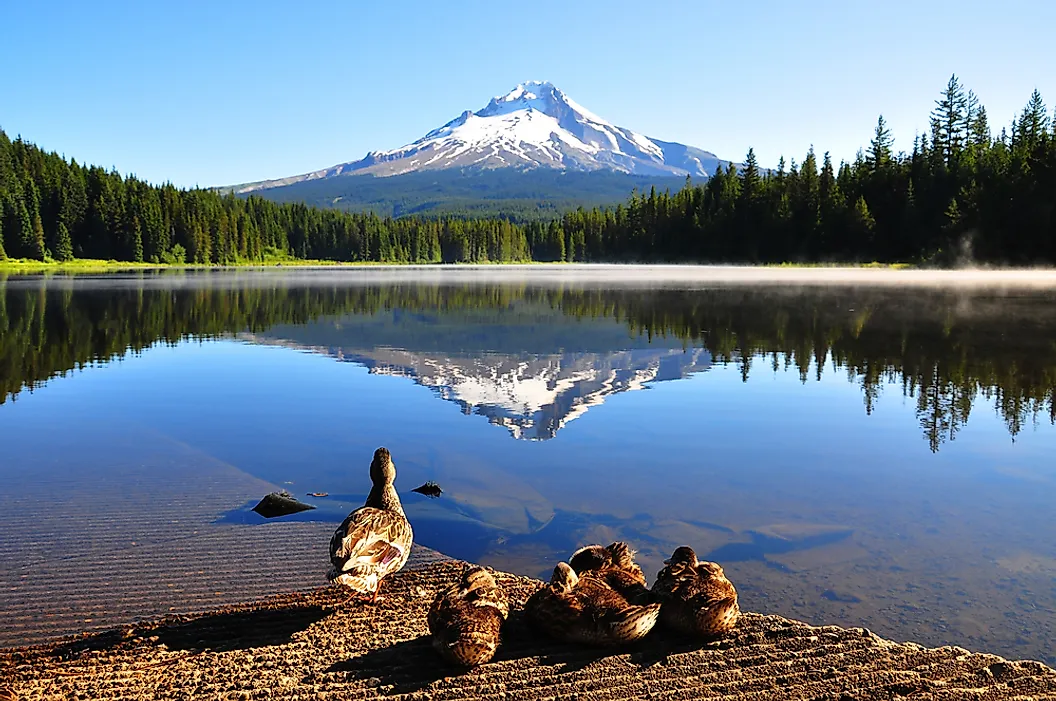
Conical Mount Hood, often seen with its snow-covered peak, towers above the metropolitan landscape of Portland, Oregon, as part of the volcanic section of the Pacific Northwest's Cascade Range. Mount Hood serves as a recreational base, particularly good for skiing in wintertime at Timberline, Snow Bunny, or another designated ski facility, or for walking amongst the vivid colors of the wildflower meadows in spring and summer. At 11,240 feet, Mount Hood is Oregon's highest peak and provides valuable water, scenery, and recreation that support agriculture and tourism in nearby communities.
Mount Adams

Mount Adams rises 12,276 feet and is Washington's largest active volcano, with an estimated present-day volume of about 50 cubic miles. The mountain is placed in a fairly remote location, known as Mount Adams Wilderness, as part of the Gifford Pinchot National Forest. In warmer months, bask in the beauty of Mount Adams' subalpine meadows or backcountry ski down the sides of the mountain when chillier temperatures and snowpack arrive. The standard South Climb follows Trail No. 183 before continuing beyond the trail's end as a primitive alpine route; the roughly 12-mile round trip gains about 6,700 feet and requires a climbing pass above 7,000 feet from May through September. The eastern half of Mount Adams lies within the Yakama Nation Reservation and is generally closed to the public except for a few designated recreation areas, so visitors must confirm current access rules before camping or fishing.
Mount Rainier

Mount Rainier can be seen from the waters of Puget Sound, the Washington state capital, Olympia, and Washington's largest city, Seattle. This active volcano is the highest of the entire Cascade Range at an impressive 14,410 feet, which goes to show why it can be seen from so many locations in Washington. For lighter crowds, NPS recommends weekdays and early mornings or late afternoons; many subalpine wildflowers appear by mid-July, with impressive displays often developing around early August. Be sure to check out the lush and green Carbon River Valley temperate rainforest, too. And, if you are lucky, see one of the elusive bears here that tend to make the rounds with social media posts, but keep a safe distance of at least 300 feet!
Mount St. Helens
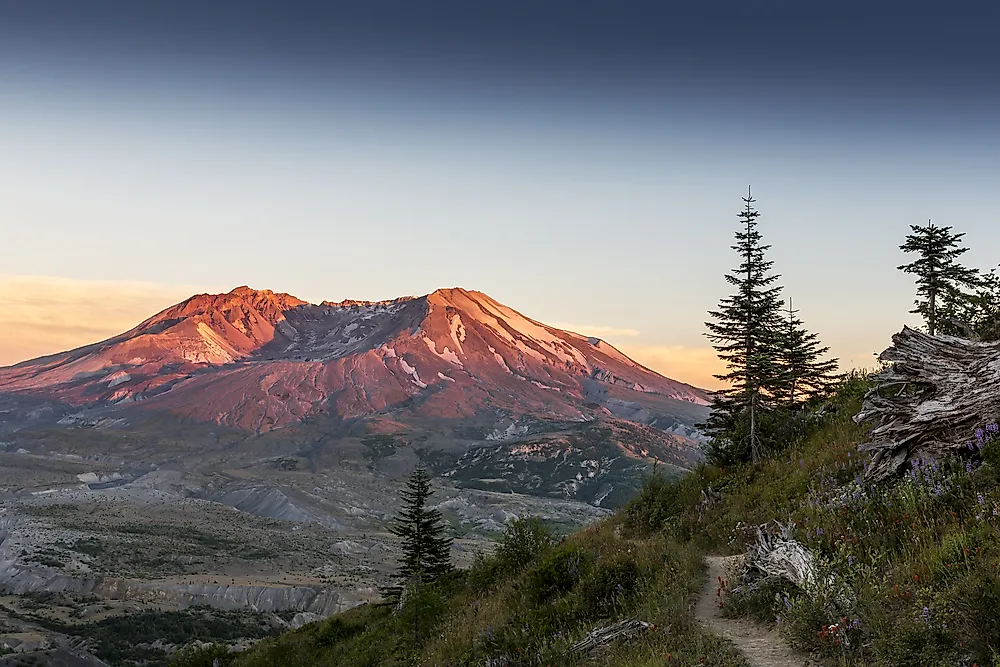
On May 18, 1980, an earthquake triggered a debris avalanche that removed the volcano's northern flank and summit; the eruption lowered the peak by about 1,300 feet and left a north-facing horseshoe-shaped crater. If you want fewer crowds and do not mind the colder temperature, fall is the best time to take a trip to Mount St. Helens. But if you want to enjoy the bright rainbow of floral beauties, well, then go in spring or summer, although it will likely be much busier, with everybody else taking advantage of the scenery. One highlight is Ape Cave, a 2.5-mile lava tube with distinct lower and upper routes; visitors need a timed vehicle ticket during operating hours, a parking pass, and reliable lighting.
Hoh Rainforest, Olympic National Park

Indulge in the silence and damp green environment at Olympic National Park's Hoh Rainforest in Washington, where the Hoh River snakes through a dense temperate rainforest, engulfed by ferns, mushrooms, and moss-covered trees and fallen logs. Make the 6.4-mile round-trip trek from the Hoh Rainforest Visitor Center to One Square Inch, marked by a small red stone. One Square Inch is the symbolic site of an independent soundscape-conservation project launched in 2005, not an official NPS designation or a verified current ranking of the country's quietest places. Do not forget to layer up and bring your raincoat and a pair of sturdy boots, as it gets rather wet here. The Hoh Rain Forest Campground operates year-round, but campsite availability and reservation requirements vary by season and should be checked before arrival.
Deschutes National Forest

Three Sisters Wilderness, Mount Washington Wilderness, Mount Jefferson Wilderness, Diamond Peak Wilderness, and Newberry National Volcanic Monument. This offers massive potential for hiking, camping, fishing, and exploring some of the best of Oregon's rugged backcountry off-grid. Mount Bachelor is a year-round mountain resort on Deschutes National Forest land about 22 miles southwest of Bend, a high-desert city east of the Cascade crest. What an incredible opportunity lies here for some downtime amongst the flora and fauna of the Pacific Northwest's forests, meadows, glacial lakes, lava fields, wildflowers, and more. And not to mention that a portion of the 2,650 miles of the Pacific Crest National Scenic Trail runs through the Deschutes National Forest, too. This is truly a remarkable place for doing whatever you may fancy in the great outdoors.
Columbia River

The Columbia River rises in British Columbia and receives the Snake River in southeastern Washington before forming much of the Washington-Oregon border, taking in the Willamette near Portland, and reaching the Pacific near Astoria. The Columbia Basin supports salmon and steelhead migrations, though dams, habitat loss, pollution, and irrigation have contributed to major declines and prompted extensive fish-passage and restoration work. Today, the water also helps with flood control and irrigation, and its sparkling blue waters make it all the more photogenic.
Willamette River

The Willamette River is a major Columbia River tributary that flows 187 miles through Oregon's most populous valley, including Eugene, Salem, and Portland. The main stem begins at the confluence of the Coast and Middle Forks near Eugene and enters the Columbia northwest of downtown Portland; its basin is Oregon's largest entirely within the state, and its average discharge ranks 13th among rivers in the contiguous United States. The Willamette flows north because its headwaters are higher than its mouth; rivers follow descending terrain under gravity regardless of compass direction. This river is a prime recreation spot for all sorts of activities, ranging from stand-up paddleboarding to fly fishing to tubing when the unpredictable Pacific Northwest weather is in your favor.
La Push Beaches (First, Second, Third)

On Washington's western coast, the La Push Beaches were given a tourism boost by the Twilight saga films, but outside the popular franchise, the La Push Beaches are actually three separate beaches combined into one. First Beach is at La Push on the Quileute Reservation, while Second and Third are separate beaches reached by trails that enter Olympic National Park. These beaches make up a fantastically gloomy coastline with heaps of driftwood and chances to surf and kayak out on the often grey waters of the Pacific Ocean out here on the Olympic Peninsula. Take a photo of yourself standing on one of the beige-colored beaches to commemorate your trip here, Twilight fan or not. The sand here is often quite damp because of the high humidity in the air, especially during wetter, rainier seasons. If you do not like the cold, try going at a warmer time of year.
Cannon Beach

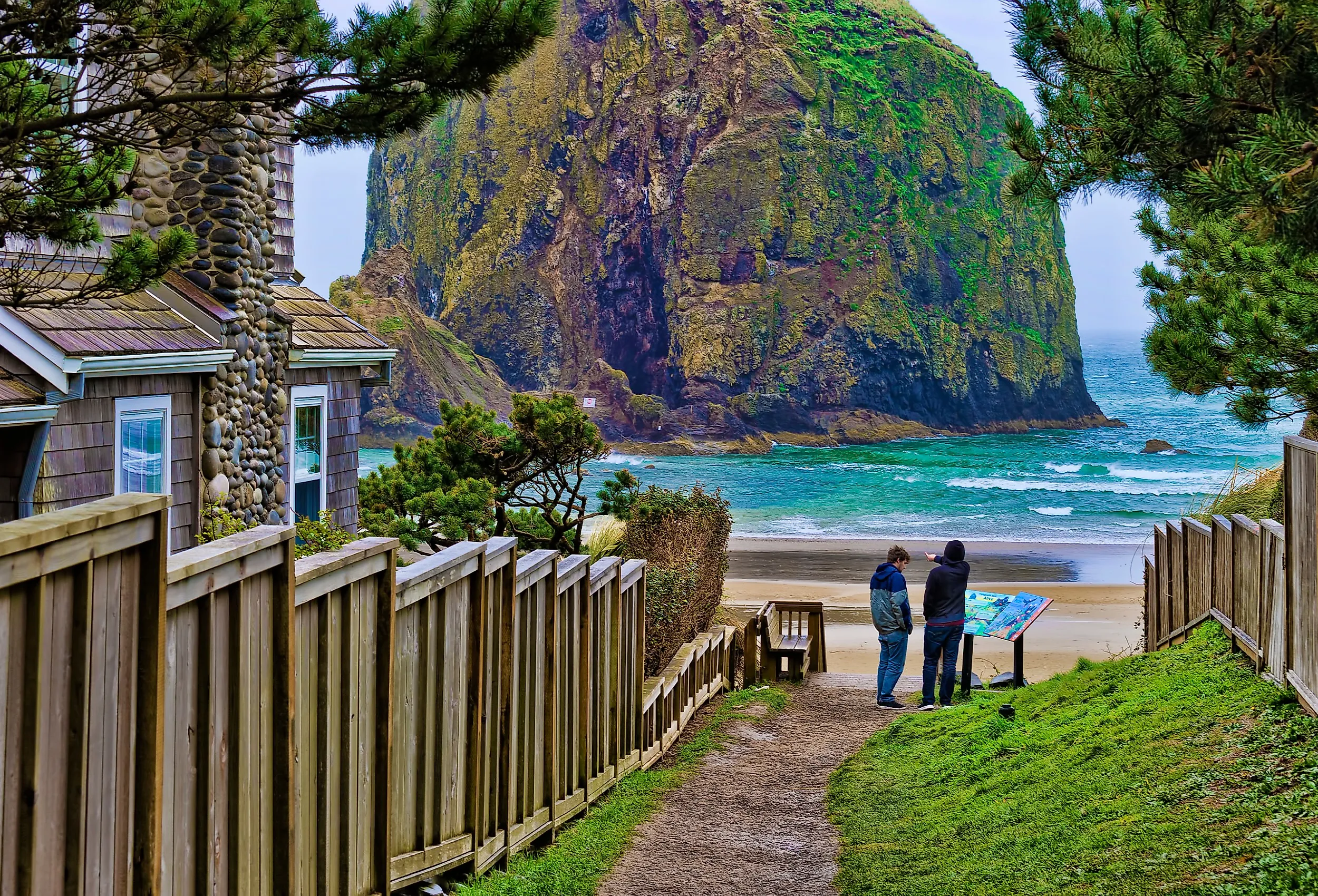
A classic staple of the Pacific Northwest, Cannon Beach is a small community on the western coast of Oregon, looking out into the expanse of the Pacific Ocean. Haystack Rock may be the all-seeing eye of Cannon Beach, as the standout landmark most people gravitate to when they arrive, sometimes adorned with tufted puffins from April to July. That is also when the weather will not be as gloomy, although there is no guarantee it will be dry in this part of the US at all times. And the low tides are a wonderful way to check out some of the cool marine life that thrives in this ecosystem. Camp at one of the nearby campgrounds, go for walks on the sand, dine at one of the town's upscale seafood restaurants, and blend into the calming shoreline of Cannon Beach.
Play in the Pacific Northwest
With rainforests, waterfalls, mountains, coastal shorelines, and more, let the Pacific Northwest be one giant playground for your outdoorsy adventures on, say, Mount Adams or the Deschutes National Forest. Or, use it as a chance to recline and sit back in places like Cannon Beach or while tubing on the Willamette River when temperatures go up. Maybe even go to several of the aforementioned natural wonders in one trip and optimize your time here before you have to wave goodbye to the Cascade Range. Fall brings golden foliage to many parts of the region, though timing varies with elevation and weather.