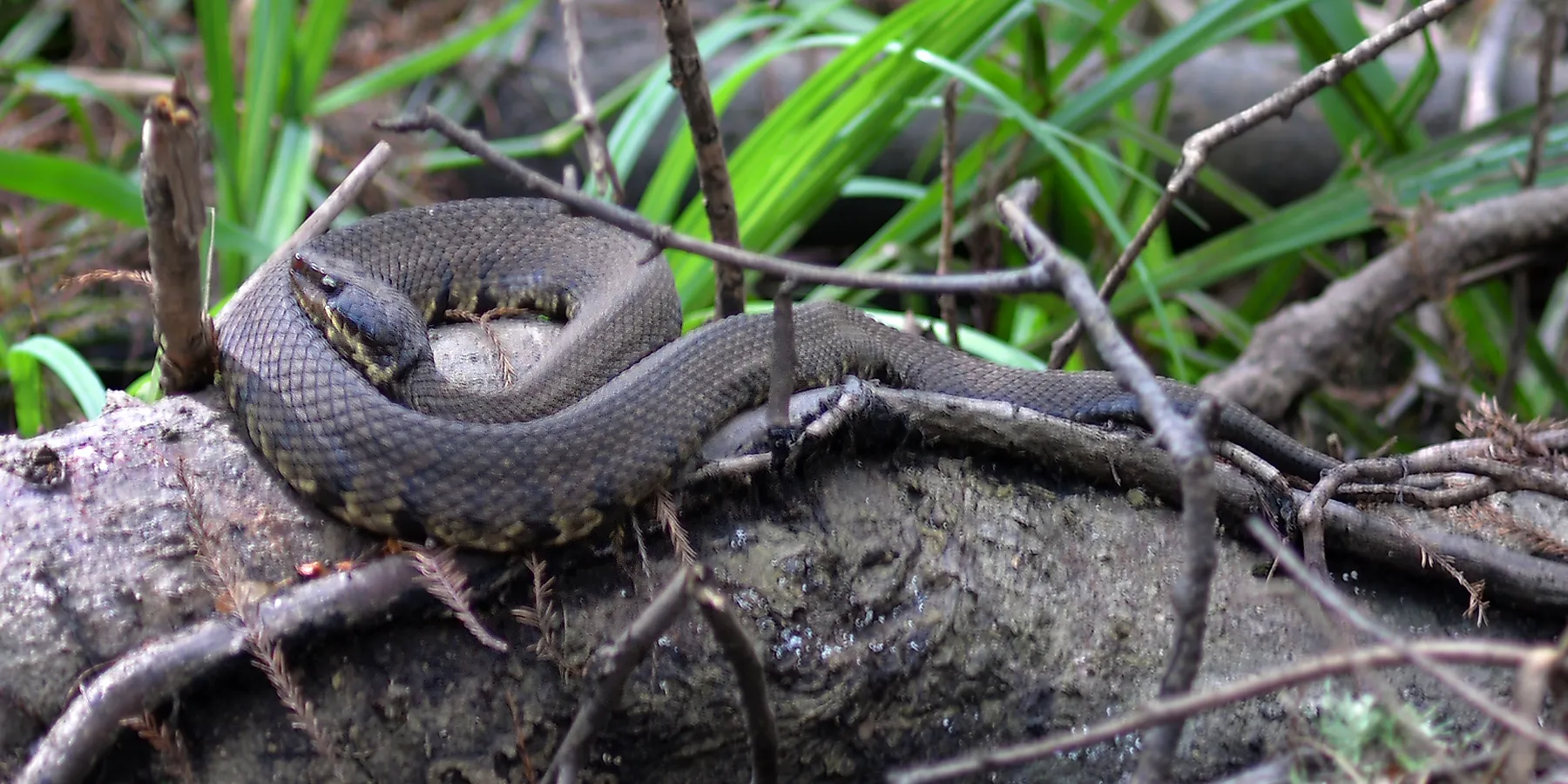
Why Water Moccasins Den In Muskrat Houses
A muskrat house is a mound of cattail, sedge and mud piled above the waterline of a marsh, with chambers inside that sit dry while the water around them freezes. The muskrat builds it, lines it and leaves an underwater entrance. For a snake that cannot dig, needs to get below the frost line, and must stay near water all winter, it is close to purpose-built. Cottonmouths are among the species that take advantage, and they are not the most enthusiastic tenants.
The Official List Says Mammal Burrows

State wildlife agencies describe cottonmouth winter shelter in consistent and slightly vague terms.
North Carolina's wildlife profile lists common hibernacula as rocky wooded hillsides, crayfish burrows, rotting stumps and mammal burrows. Other sources add tortoise burrows to the list.
Mammal burrows in a marsh means muskrat. The agencies do not name the species because the snake does not care which mammal dug the hole.
Muskrats Build Two Different Things

The distinction matters because snakes use both and they are not the same structure.
In open marsh a muskrat builds a lodge, heaping vegetation into a dome above the water with living chambers inside. Along a firm bank it digs instead, running tunnels into the earth with entrances below the waterline.
A lodge sits in the water. A bank den sits in the ground. Both give a snake a frost-free void it could never have excavated itself.
The Entrance Is Underwater

The design feature that makes a muskrat house work for muskrats also works for a semiaquatic snake.
Entrances are submerged, so the chamber above stays sealed off from freezing air. A muskrat swims in under the ice all winter. So, on a mild day, can a cottonmouth.
For the most aquatic venomous snake in North America, a shelter reached by swimming is not an obstacle. It is a convenience.
It Solves The Water Problem

Brumating snakes do not eat but they do need to drink, and dehydration kills them in dry dens.
A muskrat structure sits in or beside standing water by definition. The humidity inside stays high and water is immediately available.
That is the same advantage a crayfish burrow offers, which is why crayfish burrows dominate the published hibernacula lists for wetland snakes. A muskrat house provides it at a larger scale.
Other Species Use Them Openly

Where cottonmouth records say mammal burrows, other species have muskrat structures named explicitly.
Western massasaugas are recorded sheltering under rocks, logs, bark, brush piles, muskrat houses and crayfish burrows. Eastern ribbon snakes hibernate in ant mounds, mole tunnels, crayfish burrows, muskrat lodges and bank burrows.
A muskrat burrow can shelter a northern watersnake through a Connecticut winter. The structure is a recognized snake hibernaculum across several families.
Massasaugas Bask On The Roof
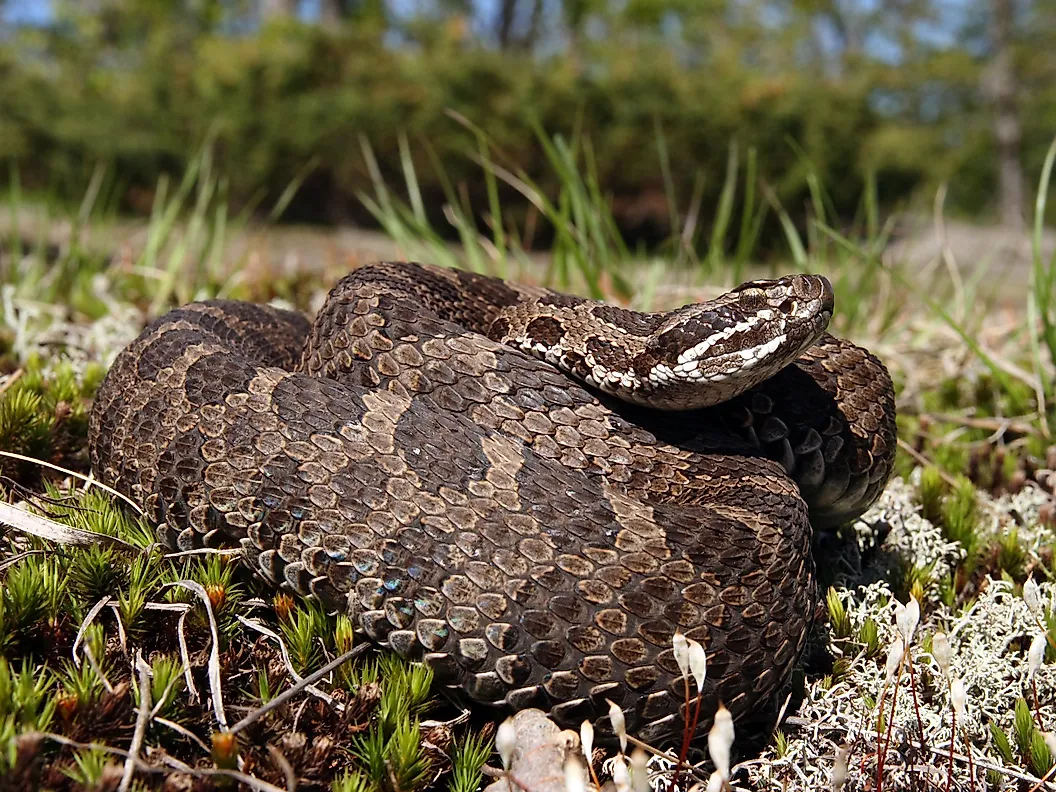
There is a second use for the same structure that has nothing to do with shelter.
Michigan's natural features inventory records massasaugas spending much of spring basking on elevated sites including sedge and grass hummocks, muskrat and beaver lodges, dikes and embankments.
A lodge is the only dry high ground in a flooded marsh. It is a den underneath and a sun deck on top.
Flooding Is The Risk

The same water that makes these sites attractive can also kill the occupants.
Research on snake hibernacula notes that snakes may drown if a hibernaculum floods, and that when water rises from storms they either dive and hold their breath or climb higher toward the surface, risking freezing instead.
A muskrat house keeps its chambers above the normal waterline. An abnormal one removes that margin.
The Marsh Has Nothing Else

The reason these structures matter so much is the absence of alternatives.
Open marsh has no rock outcrops, no talus and no deep root systems. What it has is crayfish chimneys, muskrat lodges, muskrat bank dens and the occasional rotting stump.
A snake that cannot dig in a landscape with no natural cavities is entirely dependent on what other animals have built.
Southern Winters Change The Calculation

Cottonmouths occupy a range where a den is less of an absolute requirement than it is further north.
In the southern parts of the range, hibernation may be short or omitted altogether. Near the southern tip of Florida the species may remain active year-round.
So a Louisiana cottonmouth uses a muskrat structure as a refuge for cold snaps rather than as a five-month sealed chamber. The northern end of the range is where it becomes essential.
Lose The Muskrats, Lose The Dens

The dependence runs one way and it has a conservation consequence.
Muskrat populations fluctuate heavily with water levels, disease and trapping. When they decline, the lodges and bank dens collapse and are not replaced.
Nothing else in a marsh builds a frost-free chamber above the waterline. The snakes do not have a fallback, which is the same vulnerability that makes crayfish burrows so important to massasaugas.
The Short Answer

Cottonmouths den in muskrat structures because a marsh offers almost nothing else that reaches below the frost line, and a snake that cannot dig has to inherit its shelter. Agency hibernacula lists put it under mammal burrows alongside crayfish burrows and rotting stumps.
The appeal is the combination: a dry chamber, an underwater entrance, high humidity, drinking water on hand and dry high ground on the roof for basking. Massasaugas and ribbon snakes use the same structures openly enough to be named in the literature. The cottonmouth just has better access, because it is the one that was going to swim in anyway.