Where Alligators And Rattlesnakes Overlap
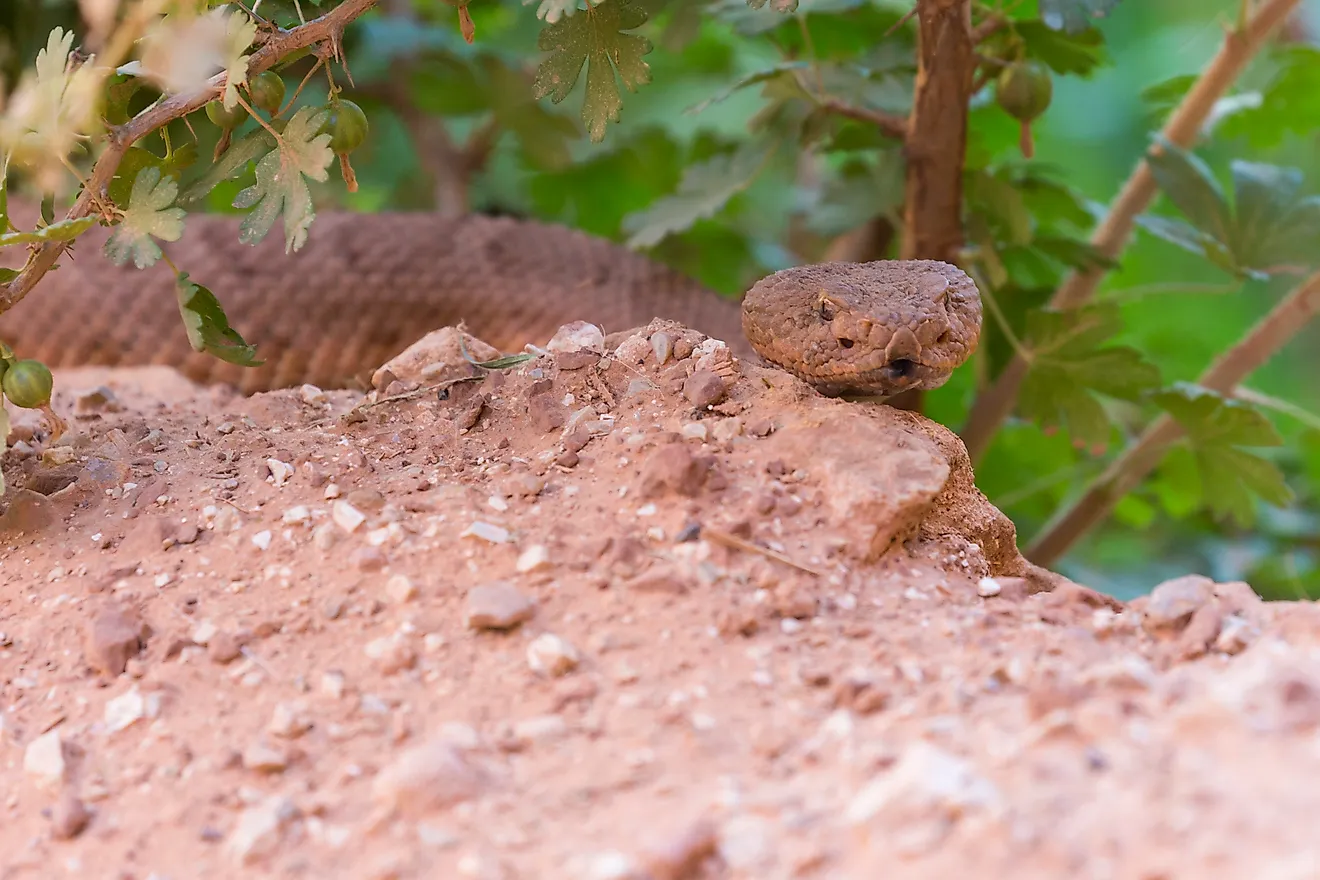
The eastern diamondback rattlesnake and the American alligator share a map so closely that Georgia's wildlife agency describes the snake's range in terms that could be lifted into an alligator distribution document: southeastern North Carolina west to extreme eastern Louisiana, across the coastal plain. Both animals occupy that band, both depend on fire-maintained longleaf pine country, and both are regularly found in the same square mile. One of them occasionally eats the other.
The Ranges Are Almost Identical

Both animals occupy the southeastern coastal plain and very little outside it.
The eastern diamondback runs from southeastern North Carolina through South Carolina, Georgia, Florida, Alabama and Mississippi to extreme eastern Louisiana. The American alligator occupies essentially the same states, extending further west into Texas and further up the Mississippi drainage.
In Georgia both are confined mainly to the Coastal Plain south of the Fall Line. The overlap is not a narrow contact zone. It is most of each animal's range.
They Want Different Ground Within It

Sharing a range is not the same as sharing habitat, and here the separation is about water.
Alligators are freshwater animals, occupying swamps, marshes, rivers, lakes and ponds. Eastern diamondbacks are closely associated with longleaf pine ecosystems including pine flatwoods, sandhills, scrub and coastal dunes, preferring well-drained ground.
One wants standing water, the other wants dry sand. They meet where the two abut, which in the coastal plain is everywhere.
Diamondbacks Swim Perfectly Well

The dry-ground preference does not keep this snake out of the water.
Eastern diamondbacks are capable swimmers and have been recorded crossing stretches of open salt water between barrier islands and the mainland. A snake moving between sandhill ridges may cross a slough to do it.
Which means encounters are not confined to the margins. The snake enters the alligator's medium voluntarily.
The Gopher Tortoise Connects Them

One animal's engineering brings both species to the same patch of ground.
Eastern diamondbacks are commonly found in association with gopher tortoises and use their burrows as refuge, with Florida's wildlife commission listing the snake among priority gopher tortoise commensals.
Alligators dig their own refuges instead, excavating gator holes that hold water through drought. Both species are shaping the same landscape by occupying or creating holes in it.
Alligators Eat Snakes

The relationship is not symmetrical, and size settles it.
Alligators are opportunistic predators taking fish, turtles, birds, mammals and snakes. A large alligator is entirely capable of eating an eastern diamondback, and documented cases exist.
The reverse does not happen. A rattlesnake can kill a hatchling alligator in principle, but an adult alligator is armoured, far too large to swallow and in no danger from the venom at that size.
Venom Does Not Trouble Them Much

The size difference changes what a bite means.
An eastern diamondback delivers the largest venom yield of any North American snake, enough to kill a person. Against an animal that can exceed 13 feet and 1,000 pounds, the dose is proportionally tiny.
Thick hide and scutes also make a successful strike difficult. The snake's defense is built for mammals and birds rather than armoured reptiles.
Both Declined, Then One Recovered

The two species have had opposite experiences over the last sixty years.
The American alligator was on the brink when it received federal protection in 1967 and now numbers roughly five million across the southeast, recovering in about three decades.
The eastern diamondback has gone the other way, with severe declines from habitat loss, road mortality, fire suppression and deliberate killing. Loss of longleaf pine is described as particularly detrimental.
Only One Is Protected

The legal positions reflect that divergence rather than current need.
The alligator is federally listed as threatened due to similarity of appearance to protect crocodiles, with managed harvests in several states and a large farming industry.
The eastern diamondback carries no federal listing at all. Rattlesnake roundups still operate in parts of its range, which is a notable asymmetry for two animals living on the same ground.
Water Levels Govern Both

Hydrology sets where the boundary between them falls in any given season.
In wet years standing water pushes further into the flatwoods and the alligator's usable area expands. In drought the water retreats to gator holes and permanent sloughs, and dry ground opens up for the snake.
The two ranges breathe in and out against each other annually rather than sitting on a fixed line.
Other Rattlesnakes Overlap Too

The diamondback is the headline pairing but it is not the only one.
Canebrake rattlesnakes, the lowland form of the timber rattlesnake, occupy the same coastal plain and use swamp margins in a way upland timber rattlers never do. Pygmy rattlesnakes are abundant across Florida wetlands.
Western diamondbacks and alligators share ground in east Texas and Louisiana, where the alligator's western range meets the rattlesnake's eastern one.
The Short Answer

Alligators and eastern diamondback rattlesnakes overlap across the entire southeastern coastal plain from the Carolinas to eastern Louisiana, with canebrakes, pygmy rattlesnakes and western diamondbacks adding further contact in Florida and Texas. The overlap is most of each species' range rather than a boundary between them.
Within it they divide by water. The alligator takes the swamps and sloughs, the diamondback the sandhills and flatwoods, and they meet wherever the two touch. The encounter is one-sided when it happens, because one of them weighs a thousand pounds and the other is lunch.