9 Best Attractions To Visit In The Pacific Northwest
The Pacific Northwest, with its snow-capped volcanoes rising above emerald forests, waterfalls tumbling past sun-baked lava fields, and a plethora of unique historic sites, joins Washington, Oregon, Idaho, and even some of northern California into a delightful destination for an adventure. Across Seattle's skyline landmarks and Idaho's wild backcountry, this region shares a love of the outdoors and a storied past to preserve alongside it. This list rounds up nine of the most famous natural, historical, and commercial attractions across the PNW. These attractions can make this corner of the United States road trip worth the mileage, so fuel up the tank, pack a rain jacket just in case, and get ready to explore what we think are the most iconic stops in the area.
Mount Rainier National Park, Washington
No landmark defines the Washington skyline quite like Mount Rainier, a 14,410-foot stratovolcano that towers over the Puget Sound region on clear days. President William McKinley signed the bill creating Mount Rainier National Park all the way back in 1899, making it one of the oldest national parks in the country, too.

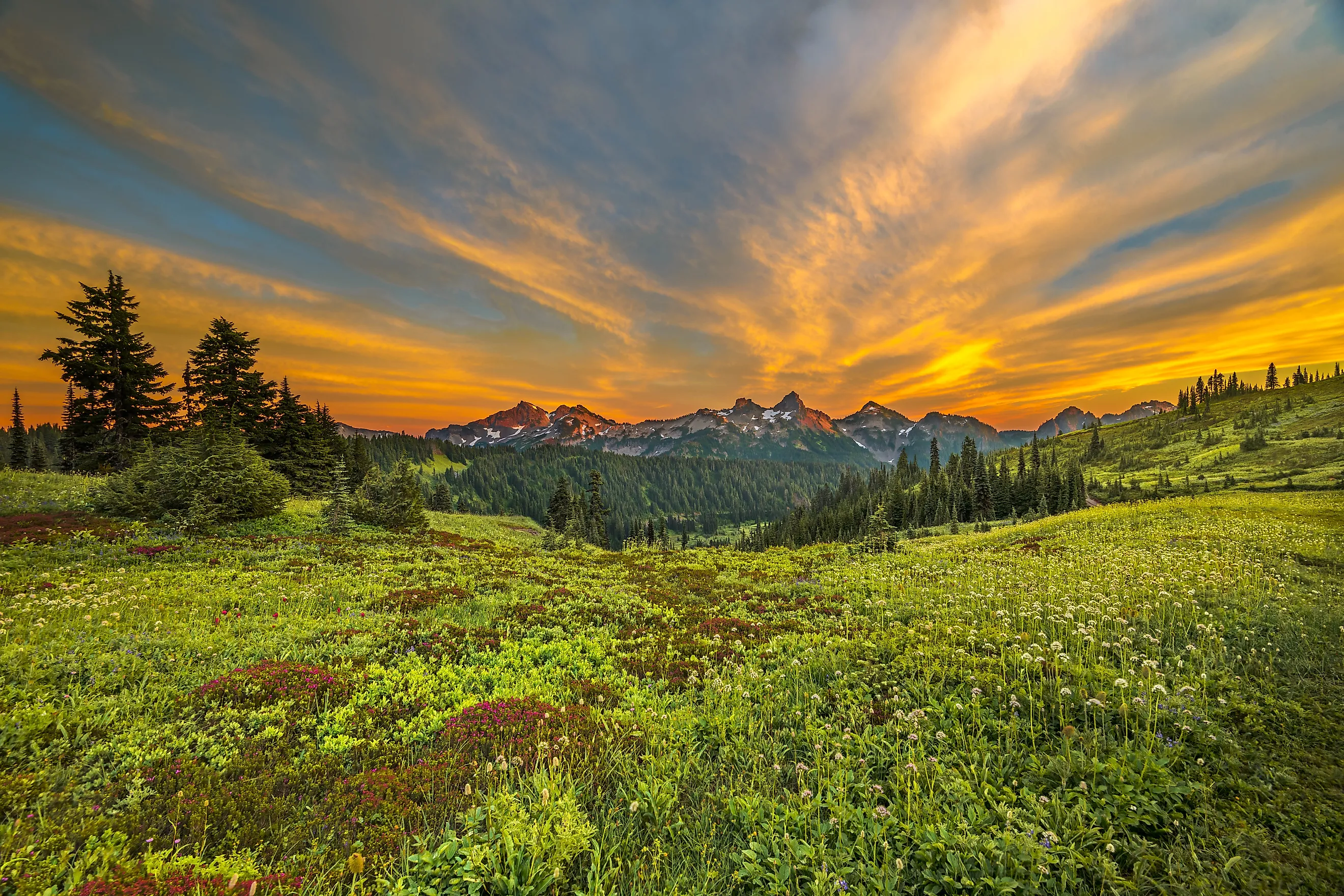
Today, the park protects a little over 236,380 acres of old-growth forest, subalpine wildflower meadows, and more glaciers than any other peak in the contiguous United States. Visitors looking for a broader sense of the state's best attractions often start here before fanning out to the Columbia River valley or the coast (if you're headed west on your trip).
Paradise and Sunrise, the park's two most visited areas, offer some of the most photographed wildflower displays in the country each summer, when these colorful plants carpet the meadows beneath the mountain's glaciers. Hikers can tackle a number of short interpretive trails to experience this or commit to the multi-day Wonderland Trail, which circles the entire volcano.
Because the mountain is an active, if quiet, volcano, the National Park Service monitors it closely. Rangers post daily updates on trail and road conditions, worth checking before a visit.
Space Needle, Washington

Built for the 1962 World's Fair, the Space Needle has been Seattle's most recognizable silhouette for over six decades. The 605-foot tower's final elevator was installed just one day before the fair opened. Officially called the Century 21 Exposition, it debuted to well over 2 million visitors, and its futuristic design captures the optimism of that era.
An observation deck near the top offers sweeping views of the city, Elliott Bay, and on clear days, Mount Rainier itself, tying together two of the region's best-known icons in a single glance. Travelers building out a broader visit to the city can pair it with other stops covered in this guide to Seattle.
The Space Needle sits within Seattle Center, the same campus built for the World's Fair, which today also hosts the Pacific Science Center and the Museum of Pop Culture. Because it remains one of the most photographed structures in the Pacific Northwest, the surrounding plaza can get crowded during peak tourist season, so early morning or evening visits tend to offer a calmer experience and the best lighting for photos.
Pike Place Market, Washington

A few miles from the Space Needle, Pike Place Market has been a fixture of downtown Seattle since it was established by city ordinance in 1907. Farmers and fishermen alike set up stalls to sell directly to the public and cut out the middlemen of the era, and the market has operated continuously ever since, making it one of the oldest public markets in the country.
The original Main Arcade opened later that same year and still anchors the market today, its aisles packed with produce stands and the original Pike Place Fish Market, famous for tossing salmon across the counter for onlookers.
The market is also a launching point for exploring the rest of downtown, including nearby waterfront attractions along Elliott Bay. It also narrowly escaped demolition in the 1960s when a proposed redevelopment plan was defeated by community activists, a fight that helped establish the market as a protected historic district in 1971.
Crater Lake National Park, Oregon
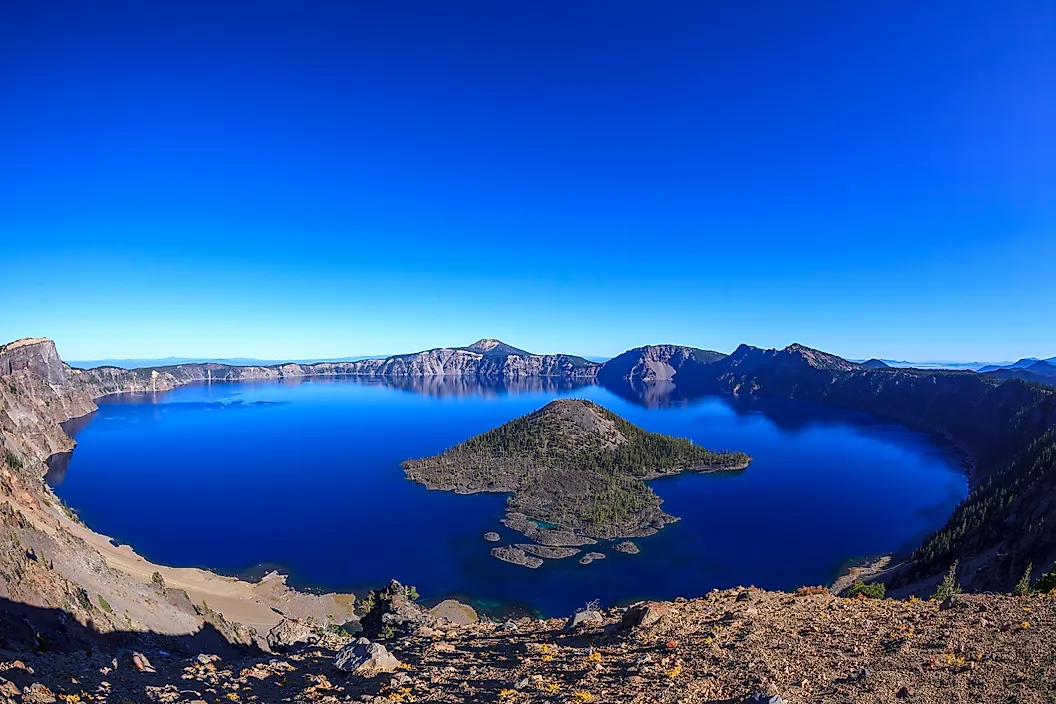
Oregon's only national park is the site of a single, very striking feature: a lake so deep and so blue that photographs rarely do it justice. Crater Lake was formed roughly 7,700 years ago when the volcano Mount Mazama erupted violently and then collapsed in on itself, leaving behind a caldera that slowly filled with rain and snowmelt. At 1,943 feet deep, it is actually the deepest lake in the United States, and because no rivers feed into it, the water is exceptionally clear, giving it its signature sapphire color.
Because of its natural significance, President Theodore Roosevelt established Crater Lake National Park in 1902, even decades before the science behind the lake's depth was fully understood.
Today, the 33-mile Rim Drive circles the caldera and offers dozens of pullouts for photos. For those wanting to get into the water, a boat tour to Wizard Island, a cinder cone that rises from the lake itself, operates during the summer season. Note that snow can also linger at the rim well into July, so travelers should check conditions before planning a visit outside the peak months.
Multnomah Falls, Oregon

Just off the Historic Columbia River Highway, Multnomah Falls drops a combined 620 feet in two tiers, making it the tallest waterfall in Oregon and one of the tallest waterfalls that flow year-round in the country. A short paved trail leads to the Benson Bridge, a stone footbridge built in 1914 that spans the gap between the upper and lower falls and remains one of the most photographed spots in the entire Columbia River Gorge. With that, the falls draw roughly two million visitors annually, making the spot easily one of the most recognizable and visited natural attractions in the Pacific Northwest.
The waterfall sits within reach of several other Gorge landmarks as well, with travelers often combining it with a stop or two at other nearby overlooks, or one of the scenic small towns along the Columbia River Gorge.
Although parking at the falls does fill quickly on weekends and during summer, and Oregon has introduced a timed-use permit system during peak season, so checking current entry requirements ahead of a visit is recommended.
Vista House at Crown Point, Oregon

Perched 733 feet above the Columbia River, Vista House has watched over the Columbia River Gorge since it was completed in 1918, with architect Edgar M. Lazarus designing the octagonal building in a visually gripping Art Nouveau style. The house was built both as a rest stop for early automobile travelers on the Historic Columbia River Highway and as a memorial to Oregon's pioneers. Inside, a small museum and gift shop occupy the ground floor beneath a stained-glass dome, while the surrounding overlook delivers one of the most photographed views in and around the Gorge.
Crown Point itself is a basalt promontory formed by ancient lava flows, the same geologic forces responsible for shaping much of the Columbia River valley below.
Although the historic highway leading to it is popular with cyclists as well as drivers, the building sits at an exposed high point, meaning wind gusts can be strong. Visitors should watch for both when pulling into the small parking area.
Shoshone Falls, Idaho

Nicknamed the "Niagara of the West," Shoshone Falls plunges 212 feet over a horseshoe-shaped rim on the Snake River, actually making it significantly higher than the Niagara Falls itself (at around 167 feet).
This cascade sits just a few miles from downtown Twin Falls, and a nice city-run park along the canyon rim offers overlooks and picnic areas, as well as a swimming area below the falls during summer months. Keep in mind that flow varies significantly by season and by upstream irrigation demands, so this waterway is typically at its most dramatic during spring runoff.
The surrounding Snake River Canyon, carved by the same catastrophic Ice Age floods that shaped much of the region, adds extra scale and wonder to the location, with some canyon walls rising hundreds of feet on either side.
Craters of the Moon National Monument and Preserve, Idaho

Few landscapes in the country stand out from the rest of the Pacific Northwest like Craters of the Moon, a sprawling field of hardened lava, cinder cones, and volcanic caves in south-central Idaho. President Calvin Coolidge proclaimed the site a national monument in 1924 to preserve what he aptly called its "weird and scenic landscape, peculiar to itself," with later expansions growing the protected area to 750,000 acres.
The lava flows here are roughly 2,000 to 15,000 years old, and the terrain is considered close enough to the lunar surface that NASA astronauts trained here in preparation for Apollo missions. A seven-mile loop drive connects the monument's main features, including short trails into lava tube caves and short scrambles up cinder cones for panoramic views of the surrounding Snake River Plain.
Because the black rock absorbs heat, summer visits can be uncomfortably hot, and cave visits require a free permit due to a bat disease that rangers monitor closely. Knowing that, fall and spring are usually the best times to arrive.
Sun Valley Resort, Idaho

Long before it became a celebrity ski retreat, Sun Valley Resort made history simply by existing. When it opened in the winter of 1936 in the Rocky Mountains of Idaho, it became America's first destination ski resort, purpose-built by the Union Pacific Railroad to draw wealthy travelers west.
That same year, engineers at the resort also installed the world's first chairlift on nearby Proctor Mountain. Given all these innovations, the resort quickly became a favorite of the country's elite, including Hollywood stars and writers, like Ernest Hemingway, who wrote much of "For Whom the Bell Tolls" while staying at the Sun Valley Lodge.
Today the resort still centers around that same, storied lodge, along with the slopes of Bald Mountain, and its high-altitude setting in the Sawtooth foothills draws skiers in winter and hikers, cyclists, and golfers the rest of the year. Its history is deeply tied to the small towns of the surrounding valley, several of which appear in this list of Idaho's most bucket-list-worthy small towns. Modern visitors can still tour the lodge's public spaces and see photos documenting its early celebrity guests in the lobby.
Visit these PNW Locales for an Unforgettable Trip
Whether it is the volcanic summit of Mount Rainier or the lava fields of Craters of the Moon, these nine stops show just how much variety Washington, Oregon, and Idaho pack into one corner of the country. Whether the draw is a deep blue caldera lake, a century-old public market, or the site of the world's first chairlift, the Pacific Northwest rewards travelers willing to cover some ground. Plan a route that links a few of these landmarks together, and the region's natural drama and offbeat history will do the rest.