Why Lake Michigan Is The Deadliest Great Lake
The Great Lakes Surf Rescue Project has tracked more than 1,400 drownings across the five Great Lakes since 2010, and close to half of them happened in one lake. Lake Michigan is not the largest of the five by surface area, it is not the warmest, and it is not the southernmost. It leads anyway, and by a wide enough margin that in some years it records more drownings than the other four combined. The reasons come down to the shape of the basin, the direction of the wind and the number of people on the beach. And the single most useful fact about all of it is that roughly two thirds of these drownings have nothing to do with exotic currents at all.
The Numbers

Over the last fifteen years more than 640 people have drowned in Lake Michigan, which is higher than the figure for Superior, Huron, Erie or Ontario. In 2025, the Surf Rescue Project counted 81 drownings across the Great Lakes through November, of which 36 were in Lake Michigan.
The current statistics are just as lopsided. Lake Michigan has recorded more than 250 cases of swimmers caught in rip currents since 2002, double the combined total for the other four lakes, and the National Weather Service states that it sees more fatalities connected to dangerous nearshore currents and rapidly breaking waves than any other Great Lake.
Two Thirds Are Not Current Deaths
This is the statistic that should reframe the whole subject, and it comes from the organization that does the counting. Dave Benjamin, founder of the Great Lakes Surf Rescue Project, puts roughly a third of Great Lakes drownings down to dangerous currents. The other two thirds involve people getting into water over their heads and not knowing how to survive it.
That matters because the coverage of Lake Michigan tends to focus on rip currents, which are dramatic, invisible and frightening. The larger category is far more ordinary: somebody wading out further than they meant to, in water colder and deeper than it looked, without the swimming ability to get back. That is a solvable problem in a way that the lake's geography is not.
The Shape Of The Basin
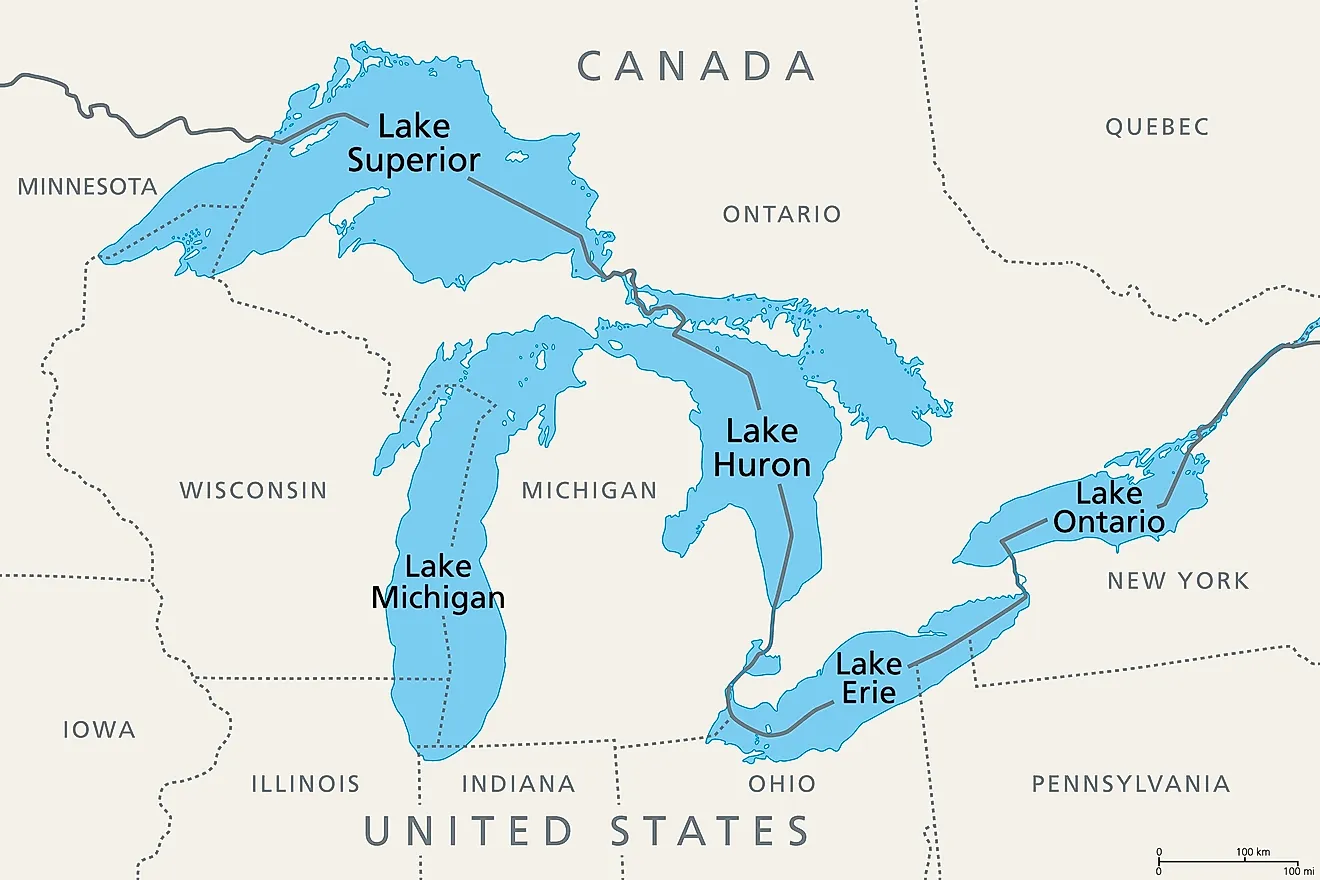
Lake Michigan runs roughly 307 miles north to south and 118 miles across at its widest, and that orientation is the root of its reputation.
The prevailing winds across the region come from the west. On a lake aligned north to south, those winds get a long uninterrupted fetch to build waves before the water reaches the far side, and they push that energy directly onto the eastern shore. The National Weather Service describes that shore as particularly hazardous precisely because the prevailing wind direction produces favorable conditions for current development.
That is why west Michigan's coastline sees more current-related incidents, rescues and fatalities than anywhere else on the Great Lakes. The geography concentrates the hazard on one side of one lake.
And The South End Gets The Worst Of It

Within Lake Michigan the incidents cluster further still. Nearly half of the lake's drownings happen at the southern end, where the basin narrows and the shoreline curves around through Indiana and into Illinois.
That end of the lake is also where the people are. The Chicago metropolitan area sits directly on it, Indiana Dunes draws enormous summer crowds, and the beaches along that curve are among the most heavily used freshwater beaches in the country.
Hazard and crowd in the same place produces incidents. Either one on its own would not.
The Piers Are The Specific Problem

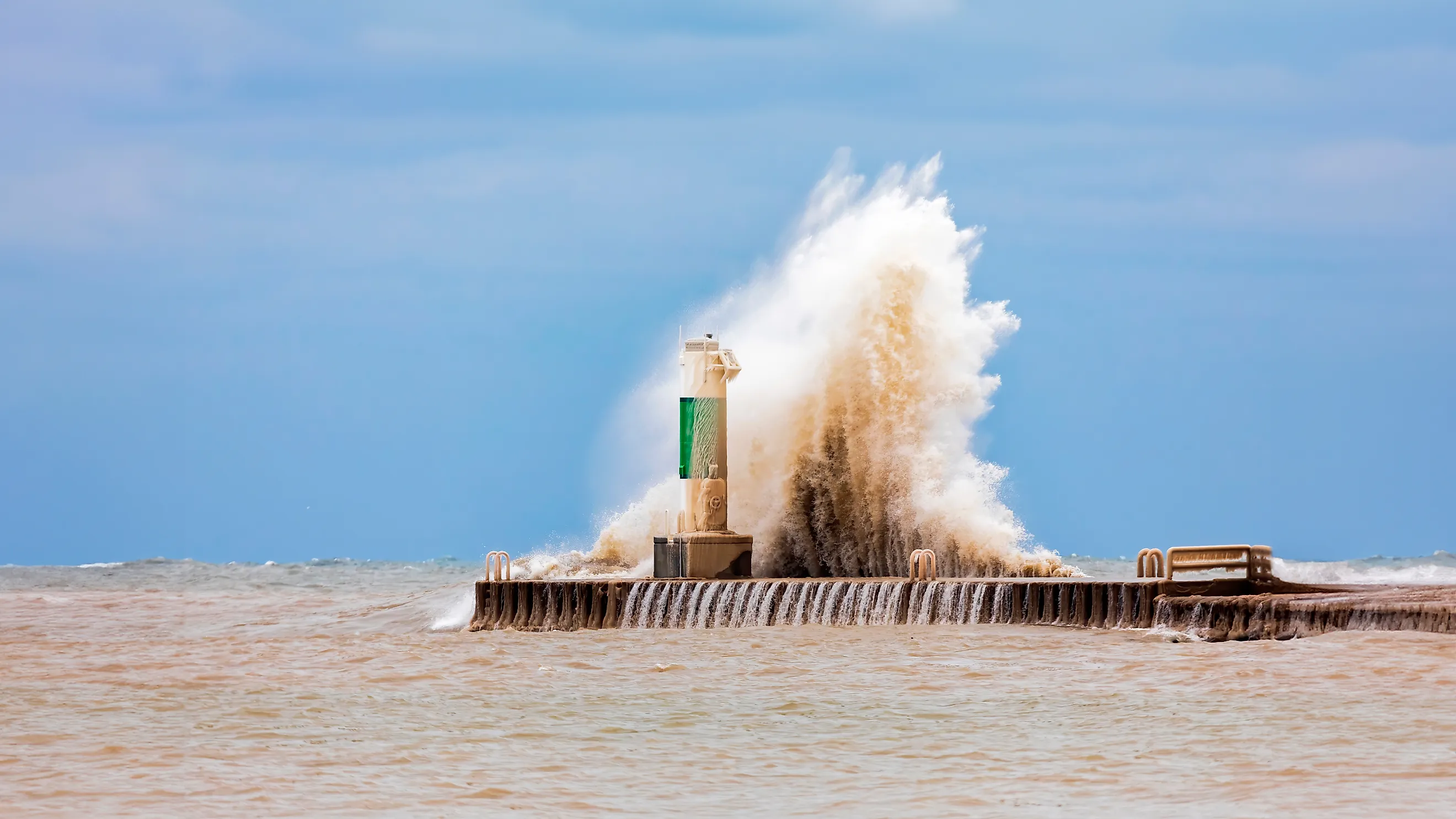
Across the Great Lakes, the National Weather Service reports that a majority of current-related incidents happen near piers and breakwalls, and Lake Michigan's eastern shore is lined with them.
Grand Haven, South Haven, Frankfort and a long list of other harbor towns have concrete or steel structures running out into the lake, and each one alters the flow of water near shore. Waves push water toward the beach, that water has to escape sideways, and when it reaches a pier it runs straight out along the structure into deeper water.
Those piers are also the most attractive places on the beach. They are walkable, they lead somewhere, and the water beside them looks calmer than the surf.
Rip Currents Are Faster Than You Can Swim
Rip currents alone account for nearly half of current-related incidents across the Great Lakes, and the physics is worth understanding because it dictates what you should actually do.
These currents can move at two to four feet per second, which is faster than an Olympic swimmer can sprint. Trying to swim directly back against one is therefore a losing proposition for anybody, regardless of fitness.
Crucially, a rip current does not pull you under. It carries you away from shore, and what actually kills people is exhaustion and panic from fighting it. That distinction is the whole basis of modern water safety advice.
Flip, Float And Follow

The Surf Rescue Project built a survival technique around that fact, and it is three words long for a reason. Flip onto your back. Float to keep your head above water, conserve energy and let the panic subside. Follow the safest path out of the water, which usually means moving parallel to shore until you are clear of the current before swimming in.
It works across rip currents, longshore currents and structural currents alike, and it works because it inverts the instinct. The natural reaction is to swim hard for the beach, which is exactly the thing that drowns people.
Most Beaches Have Nobody Watching
One factor behind these numbers is institutional rather than physical, and it is the one that could actually be changed. A large share of Lake Michigan's beaches have no lifeguards. These are municipal and state beaches spread along hundreds of miles of shoreline, many of them small, and staffing them all is expensive. The result is that the most heavily used freshwater coastline in the country is largely unsupervised.
Where lifeguards are present, rescues happen that would otherwise have been fatalities. The Weather Service counts an average of roughly 12 current-related deaths and 23 rescues a year across the Great Lakes, and those 23 are the difference professional supervision and bystander intervention make.
Keeping The Risk In Proportion

Something like 30 to 40 people drown in Lake Michigan in a typical year, against tens of millions of visits to its beaches. That is a real toll and it is also a very small rate, and both of those things are true at once.
The hazard is also predictable in a way most outdoor risks are not. The Weather Service issues beach hazard statements in advance, publishes surf zone forecasts, and maintains a Great Lakes beach hazards page with wave height, water temperature and current data. Flags fly at the busier beaches. Almost every bad day is forecast before it happens.
What Actually Reduces The Risk
The advice that follows from the statistics is unglamorous and short. Check the flags and the forecast before going in, and stay out on red flag days. Keep away from piers and breakwalls, which concentrate the hazard. Swim where there is a lifeguard if you can. Do not overestimate swimming ability in cold open water, since two thirds of these deaths are people who simply could not get back. And if you are caught in a current, flip onto your back, float, and work out the safest way in rather than fighting it.
Lake Michigan is the deadliest Great Lake because it is shaped to generate currents, oriented to catch the wind, lined with structures that focus the water and surrounded by more people than any other Great Lakes shoreline. None of that makes it unsafe to swim in. It makes it a lake worth checking the forecast for.