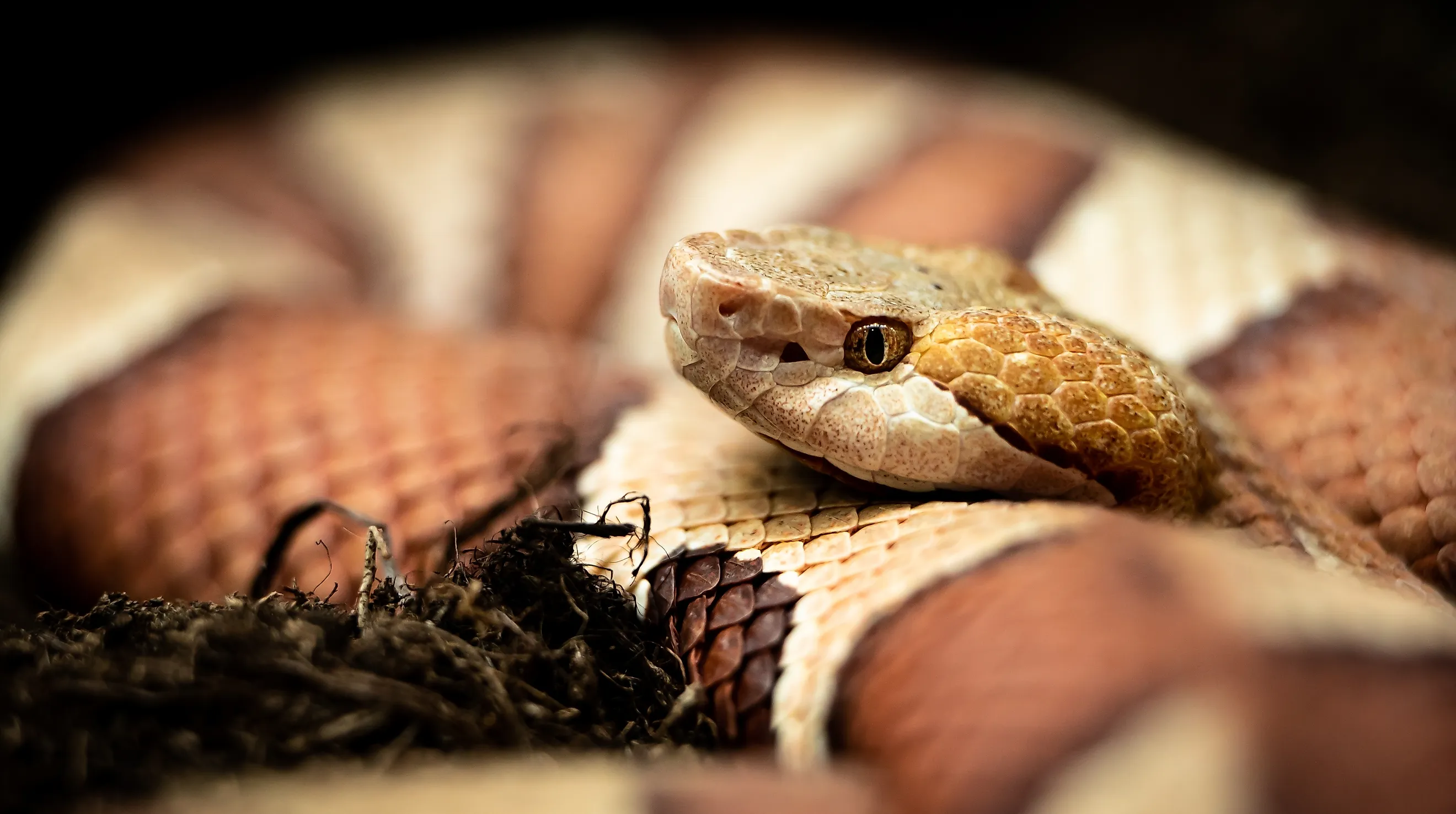
The National Forests With The Most Copperheads
Camp at Koomer Ridge Campground in Kentucky's Daniel Boone National Forest on a warm night, and you might share the clearing with copperheads that come back to the same patch of ground all the time. You probably won't see them. A copperhead in the leaf litter looks like leaf litter, which is how one ends up inches from a hiker's boot with nobody the wiser.
That camouflage is what links all ten national forests here. In each one, copperheads have shelter within reach of a meal, and visitors have a snake they could walk right over without ever knowing it was there.
Ouachita National Forest, Arkansas and Oklahoma

Ouachita National Forest is copperhead country at ground level. Its wooded ridges run across western Arkansas and southeastern Oklahoma, with oak leaves collecting around stone ledges and fallen pine. The view from the Talimena Scenic Byway is broad, but the copperhead's useful world is only a few inches high.
That is where the snake can wait without looking like a snake at all. A copperhead pressed beside a log can disappear into the same leaves that make the forest floor look harmless. Rat snakes move through these woods as active climbers and hunters. Timber rattlesnakes use suitable rocky habitat. Copperheads fit the lower layer, where stillness does most of the work.
Angelina National Forest, Texas

Angelina National Forest sits in the Piney Woods of East Texas, where the shade can hold moisture long after the day turns hot. Pine shapes much of the canopy, but copperheads are using the lower forest: the needles, the damp drains, and the brush where a trail begins to dip toward water.
That border between dry woods and wetter ground is important. Cottonmouths are more tied to water, while copperheads can work the edge nearby. They do not need a swamp to thrive. They need enough cover to stay hidden and enough small prey moving through it. In Angelina, those conditions sit close together across much of the forest.
Conecuh National Forest, Alabama

Conecuh National Forest looks, at first, like a longleaf pine story. The taller trees pull attention upward, but copperheads are working closer to the sand. Open pine ground can thicken quickly near brush, hardwood shade, or a downed tree left at the edge of a burn.
That shifting ground helps explain why the snake has done well here. Fire keeps parts of the forest open, but it also brings fresh growth and prey back into the same spaces. Eastern kingsnakes have long been part of Conecuh's reptile story. Rattlesnakes also belong to this southern Alabama landscape. Copperheads are less showy than either, using the margins where a shaded log or leaf line gives them enough cover to wait.
William B. Bankhead National Forest, Alabama

Bankhead has a rougher feel than many people expect from Alabama. Sandstone bluffs rise above dark hollows, and old road edges cut through heavy woods. Waterfalls get the photographs, but copperheads are more interested in the broken ground around them.
A slope littered with leaves is not empty space to this snake. It is cover. Fallen wood matters too, especially where storms or beetle damage have opened the canopy just enough to change the forest floor. Timber rattlesnakes live in the region, but copperheads are built for the lower, messier spaces a hiker may step past without giving them a second look.
Daniel Boone National Forest, Kentucky

Daniel Boone National Forest gives this article its clearest copperhead scene. At Koomer Ridge Campground, the snakes move into a small clearing after dark when cicadas emerge. Some tagged copperheads have returned to that same opening across multiple summers.
The setting explains the habit. The clearing brings food within reach, while the surrounding forest keeps shelter close. A camper may see gravel and scattered trees. A copperhead is using a seasonal feeding site set inside Appalachian woodland.
Beyond Koomer Ridge, the forest has rock shelters and narrow valleys that suit several snakes. Black rat snakes are familiar in these woods, and timber rattlesnakes share parts of the same mountain landscape. The copperhead stands out because it can use a human campground without needing the place to feel remote.
George Washington National Forest, Virginia

George Washington National Forest runs through Virginia mountain ground where copperheads have long had what they need. Rocky hillsides hold warmth, and the hardwood forest drops a deep cover of leaves each year. Together, those conditions let the snake shelter and hide in the same place.
A copperhead does not need a dramatic den to go unnoticed here. A ledge beside a trail can work. So can the leafed-over base of a dry slope. Black rat snakes are common in this part of Virginia, while timber rattlesnakes belong to the higher, rockier parts of the mountain snake community. Copperheads use a quieter layer of the same forest.
Cherokee National Forest, Tennessee

Cherokee National Forest follows eastern Tennessee's mountains, where the Forest Service notes copperheads among the venomous snakes most often observed. The habitat fits them neatly. Ridges fall into coves, and rocky ground often sits close to shaded drainages.
The risk is not that copperheads hunt people. It is that they disappear so well in places people step or reach. Timber rattlesnakes also live in the forest, and many harmless woodland snakes move through the same cover. Copperheads stand out because their best defense is also what makes them hardest to notice: a body pattern that matches the forest floor.
Mark Twain National Forest, Missouri

Mark Twain National Forest is spread across the Missouri Ozarks, so its copperhead country appears in separate blocks. Devils Backbone Wilderness is one of the clearer examples. The Forest Service names copperheads there along with timber rattlesnakes, which fits the ridge-and-hollow landscape.
Ozark rock warms quickly, but shaded hollows stay close. Copperheads can use both without crossing much exposed ground. Missouri identifies the eastern copperhead as the state's most common venomous snake, and the Ozark portions of Mark Twain show why. The forest gives the species rough woodland with cover near feeding spots. To a hiker, that can look like nothing more than a leafed-over slope.
Ozark National Forest, Arkansas

Ozark National Forest is steep, stony, and cut by clear creeks. On the Sylamore Ranger District, the Forest Service says copperheads may be found almost anywhere during their active season. That is a useful warning because the snake is not limited to one obvious kind of place.
Cottonmouths stay more closely tied to wet areas on the district. Copperheads range more broadly across the forest floor. They may turn up near a creek, but they can also use upland woods or a rocky trail edge. That flexibility is part of their success in the Ozarks. The landscape gives them many small shelters, and the leaf cover gives them time to remain unseen.
Shawnee National Forest, Illinois

Shawnee National Forest has one of the most visible snake movement corridors in the country. At Pine Hills-LaRue Swamp, the road closes seasonally so reptiles can move between limestone bluffs and the wetland below. Copperheads are among the snakes using that route.
The setting works because dry refuge and wetter feeding ground sit close together. Cottonmouths belong more strongly to the swamp side. Copperheads can use the bluff base and the leafed-over slope above it. Shawnee's copperhead story is not a hidden population deep in the woods. It is a working passage through the forest, close enough for visitors to see why the closure exists.
Copperheads become common where the forest floor gives them cover before it gives them attention. That is the thread running through these places. The snake can use an Arkansas creek valley, a Kentucky campground clearing, or an Illinois bluff road because each offers shelter within reach of food. Other snakes may be larger or more visible, but copperheads succeed in the overlooked layer underfoot. Their danger is quiet for the same reason their habitat works. They do not need to chase or display. They only need enough stillness to be mistaken for the ground.