What Lies Beneath The Deepest Part Of The Ocean
Challenger Deep, the deepest known point in the ocean, plunges nearly 36,000 feet below sea level. Mount Everest could vanish inside it with more than a mile of water above its summit. This chasm lies within the Mariana Trench in the western Pacific. At the bottom, layers of sediment cover a tectonic boundary where one plate dives beneath another. Microbes and scavenging amphipods survive crushing pressure in this cold, lightless realm.
The Ocean Bottom Is Almost Seven Miles Down

The Mariana Trench is created where two enormous pieces of Earth's outer shell meet. The Pacific Plate moves beneath the Philippine Sea Plate in a process known as subduction. As the Pacific Plate bends downward, it forms the long depression that contains Challenger Deep. The dimensions are difficult to picture. Challenger Deep is roughly three times deeper than the average ocean depth of 12,080 feet. Sunlight disappears long before a descending vehicle gets anywhere close to the bottom, leaving miles of cold water in permanent darkness.
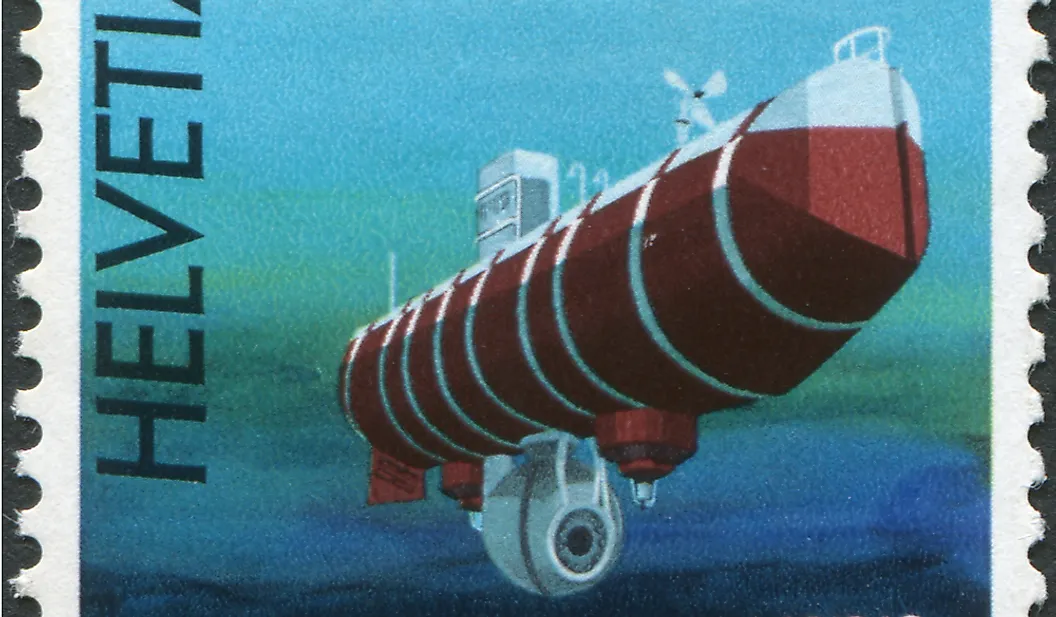
Pressure becomes the greater problem. Near Challenger Deep, it reaches roughly 1,100 times normal atmospheric pressure. A person could never survive there without a heavily engineered pressure vessel. Even scientific equipment has to be specially designed so its housings, electronics, and seals do not fail during the descent. In 1960, U.S. Navy Lieutenant Don Walsh and Swiss oceanographer Jacques Piccard reached the bottom aboard the bathyscaphe Trieste. What they encountered was surprisingly plain. Piccard described a light-colored layer of fine ooze across the bottom.
A Layer Of Mud Covers The Bottom
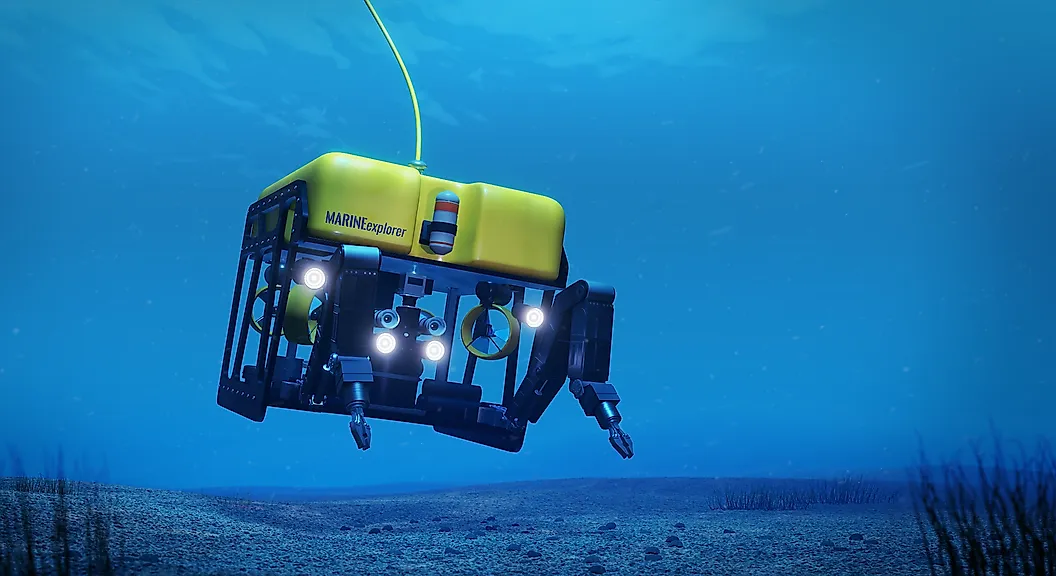
The floor of Challenger Deep is covered by sediment accumulated from material falling and moving through the ocean. Tiny particles drift downward from the water above. Organic material produced closer to the surface eventually sinks toward the trench, while dust, volcanic material, and particles eroded from surrounding rock also contribute to the sediment. Recent research has found that Challenger Deep sediments include material derived from Asian dust, volcanic sources, and rocks associated with the Pacific Plate.
The shape of the trench helps concentrate some of this material. Challenger Deep resembles a gigantic funnel in the seafloor, and organic matter can accumulate along its deepest axis. Scientists have found unexpectedly high microbial activity in these sediments, including greater biological oxygen consumption than at a comparison site about 6,000 meters deep. Samples have revealed complex communities of bacteria and archaea living within the sediment despite the darkness, cold, and extraordinary pressure. Some research has even found microbial communities at Challenger Deep that differ from those living farther up its slopes.
Beneath The Mud Is The Pacific Plate

Under the sediment lies oceanic crust belonging to the Pacific Plate. Oceanic crust is dominated by dense volcanic rock, particularly basalt, with other rock layers below it. At the Mariana Trench, this crust is traveling toward the edge of the Philippine Sea Plate and bending downward into Earth. The descending slab eventually carries material deep into the mantle, recycling part of the ocean floor back into the planet.
The deepest point in the ocean is essentially a crease in an enormous moving plate. Recent seismic research has revealed faulting in the crust beneath Challenger Deep and evidence that part of the upper mantle has been altered by reactions between rock and water. Scientists are still refining exactly why this particular section becomes so extraordinarily deep. A 2026 study found that the Pacific Plate bends unusually tightly near Challenger Deep. The researchers concluded that the extreme curvature and weakening of the plate help create its exceptional depth.
There Are No Fish At The Very Bottom

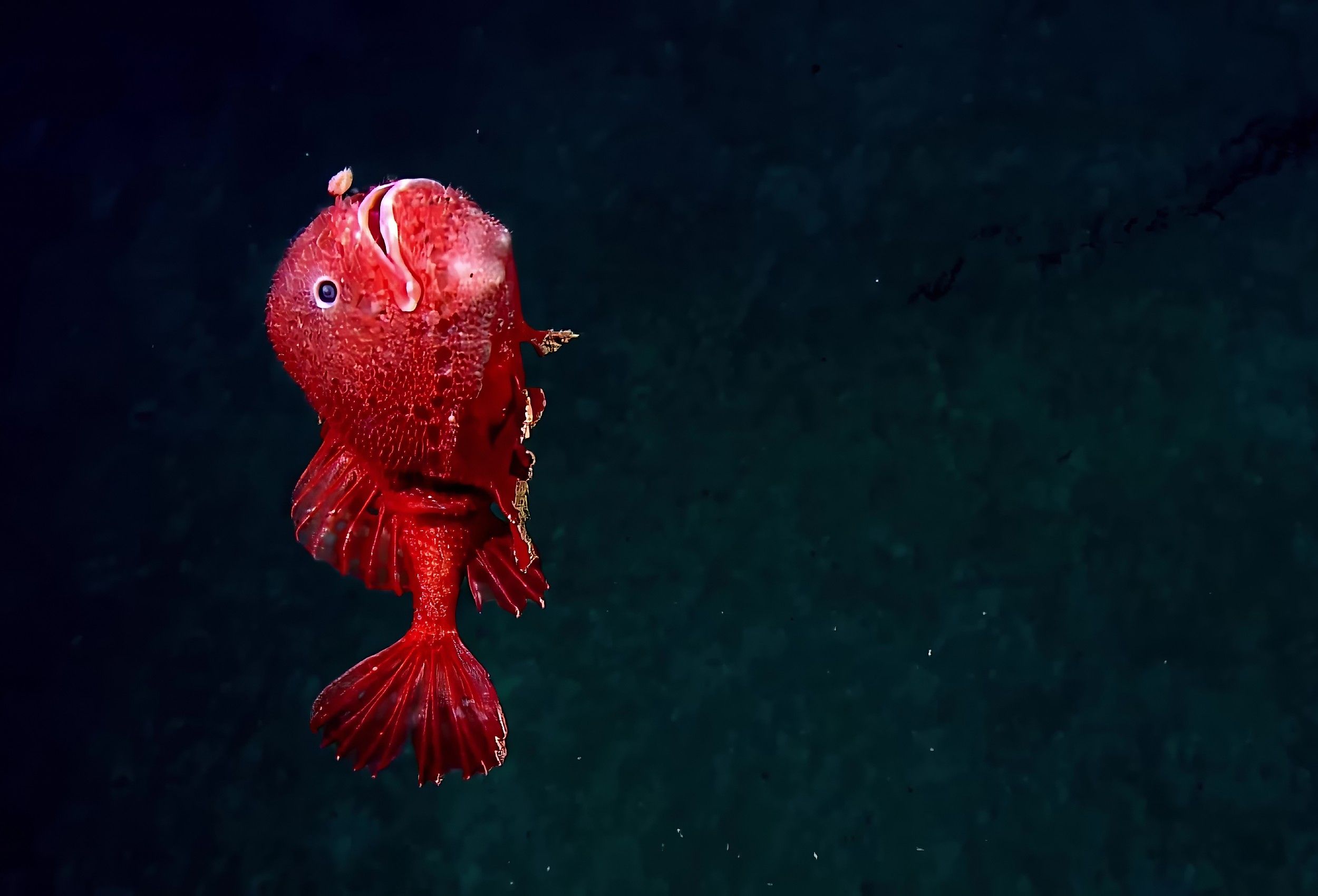
Fish can survive astonishingly deep, but they appear to hit a biological limit well above the bottom. The current record for a fish observed alive is a snailfish filmed at 8,336 meters (27,349 feet) in the Izu-Ogasawara Trench near Japan in 2022. NOAA notes that research suggests pressures below roughly 8,200 to 8,400 meters may be too great for fish physiology. Challenger Deep continues another 1.6 miles below that apparent limit.
That means no confirmed fish is swimming around at 35,876 feet. Life does continue, however. Invertebrates can reach farther down than fish, while microbes live even within Challenger Deep's bottom sediments. Scientists studying sediment from the trench have found thriving microbial communities performing chemical processes in conditions that would be lethal to humans. Researchers have even found unusually large populations of bacteria capable of breaking down hydrocarbons in water below 10,400 meters. Why these organisms become so abundant near the bottom remains an active area of study.
Even A Plastic Bag Reached The Trench
Humans reached Challenger Deep in 1960. Some of our garbage apparently arrived even earlier than many modern deep-sea research vehicles. Researchers examining decades of deep-ocean photographs identified a plastic bag on the Mariana Trench seafloor at 10,898 meters, or about 35,755 feet. It was recorded in 1998 and remains one of the most extreme examples of plastic pollution reaching Earth's deepest environments.
That depth is only about 120 feet shallower than NOAA's standardized depth for the deepest point of Challenger Deep. The discovery is especially striking because the location is more than 1,000 kilometers from a major continental landmass. Plastic that begins its life at Earth's surface can eventually arrive almost seven miles beneath it.
The Mariana Trench Is More Than Challenger Deep

The broader Mariana region contains stranger environments still. Farther north are submarine volcanoes, hydrothermal systems, and places where fluids rise through cracks in the seafloor. Some hydrothermal vents can release water hotter than 400°C (750°F). The enormous surrounding pressure keeps that water from boiling in the way it would at Earth's surface.
The Mariana region even contains places where nearly pure liquid carbon dioxide emerges from the seafloor and an undersea volcano containing a pool of molten sulfur. NOAA notes that the only other known place with comparable molten sulfur is Io, one of Jupiter's moons. Those features are part of the larger Mariana system, however, and should not be presented as if hydrothermal vents sit directly on the bottom of Challenger Deep.
Most Of The Ocean Floor Is Still Poorly Known

There is a strange contrast between knowing the depth of Challenger Deep with remarkable precision and knowing comparatively little about huge portions of the rest of the seafloor. As of April 2026, 28.7% of the world's ocean floor had been mapped to modern standards through the international Seabed 2030 effort. That is a substantial increase from previous years, but it still leaves more than 70% without comparable high-resolution mapping. NOAA estimates that humans have visually observed less than 0.001% of the deep-ocean seafloor. An area roughly the size of Rhode Island represents the portion we have actually seen. That leaves an enormous amount of terrain where undiscovered organisms, geological structures, and other surprises could remain.
What Really Lies Beneath Challenger Deep?
First comes nearly seven miles of seawater. At the bottom sits fine sediment filled with microorganisms and organic material carried into the trench. Beneath the sediment is hard oceanic crust. Beneath that is the upper mantle and the enormous Pacific Plate curving downward beneath the Philippine Sea Plate. Eventually, that sinking plate disappears deep into Earth's interior. Challenger Deep is the deepest known point in the ocean. Its sediment-covered floor lies along a tectonic boundary where the Pacific Plate descends beneath the Mariana Plate. Even under immense pressure and perpetual darkness, this remote environment supports microbial life and scavenging animals.