The Largest Old-Growth Forest Left In America
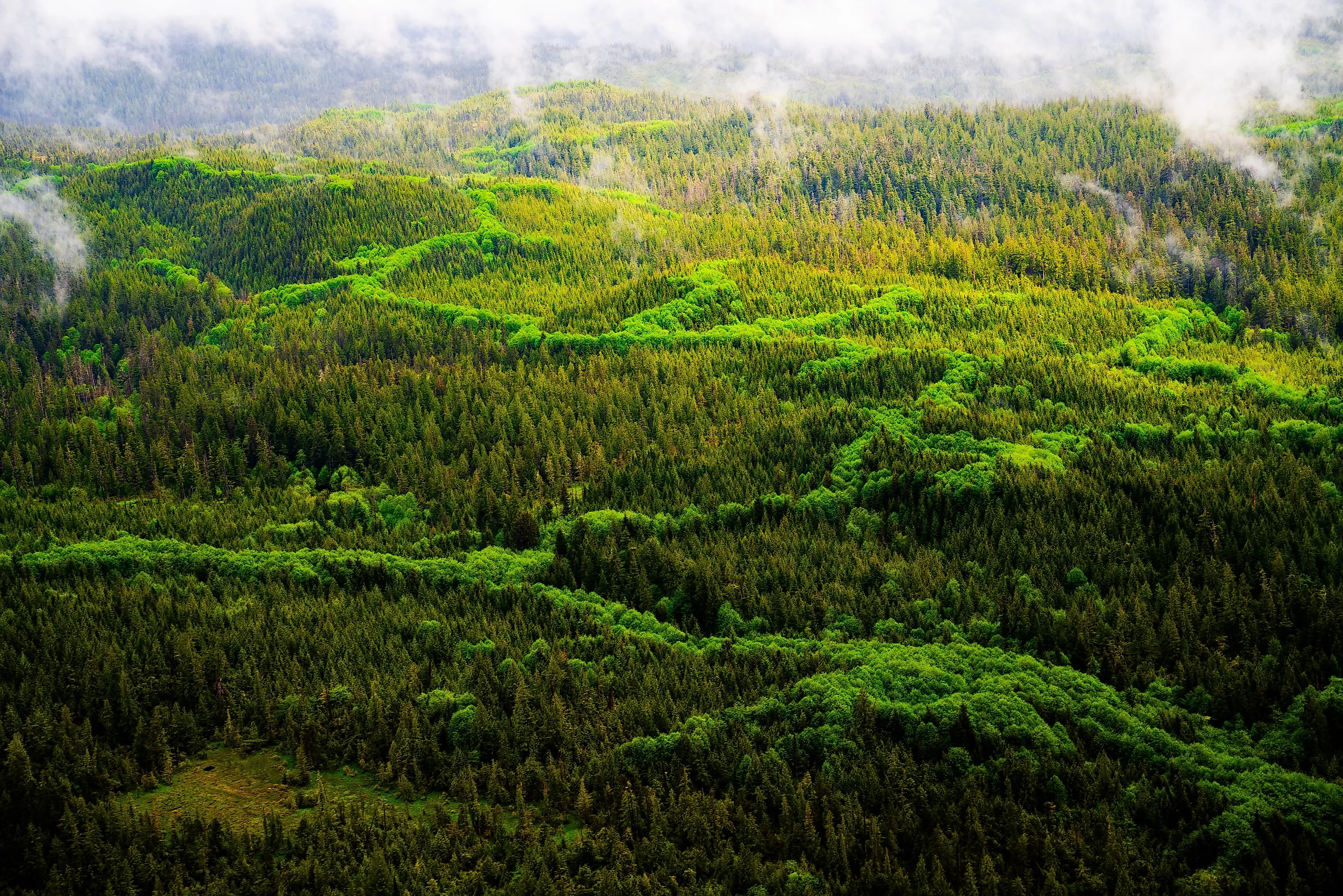
Ask people to picture America's greatest forest and they reach for redwoods, or the Smoky Mountains, or a stand of New England maples in October. Almost nobody names the real answer, because the largest stretch of ancient forest left in the country is a soggy, moss-drowned rainforest at the top of Alaska that most Americans will never see. It is called the Tongass, and it is not just big. It is the largest national forest in the United States and the largest tract of old-growth temperate rainforest left in the country, with close to five million acres of trees that have been standing since before Columbus sailed. Here is what makes it the last of its kind.
Yes, Alaska Has a Rainforest

The word rainforest brings the Amazon to mind, not a state better known for glaciers. The trick is that a rainforest only has to be wet, not warm. The Tongass gets soaked with something like 110 inches of rain a year, which is more than enough to grow one. It sprawls across roughly 16.7 million acres of Southeast Alaska, covering about 80 percent of the panhandle and stringing along some 500 miles of the Alexander Archipelago. That makes it larger than ten US states, or about the size of West Virginia, which is a lot of ground for a place with almost no roads.
Trees Older Than the Country

The giants here are Sitka spruce, western hemlock, and red and yellow cedar, and the oldest of them have been alive for more than 800 years. That is what old-growth actually means. Not just tall trees, but a forest that has gone centuries without being flattened, long enough to build a tangled structure of massive trunks, fallen logs, and gaps that a replanted timber stand simply cannot fake. All that living and dead wood packs in more biomass per acre than a tropical jungle does. Close to five million acres of the Tongass still qualify, which is the largest such expanse in the country and one of the largest left anywhere on Earth.
The Salmon Run the Whole Place

If the trees are the frame, the salmon are the engine. All five species of Pacific salmon spawn in the forest's thousands of miles of streams, and when they die after spawning, they hand the forest a gift. Their bodies carry nutrients gathered out in the ocean, and those nutrients end up in the soil and even in the growth rings of the trees. In between, they feed a remarkable amount of wildlife. The Tongass holds some of the highest densities of brown bears anywhere, along with black bears, Sitka black-tailed deer, the rare Alexander Archipelago wolf, and the largest gathering of bald eagles on the planet. Pull the salmon out and the entire system unravels, which is why people here call it a salmon forest as often as a rainforest.
It Quietly Runs a Carbon Vault

The Tongass does a job for the whole planet that never shows up on a trail map. Old-growth forests lock away enormous amounts of carbon, far more than a young replanted stand, and the Tongass stores more of it than any other national forest in the country. By some estimates it holds around a fifth of all the carbon banked across the entire national forest system. That is the practical case behind the poetry: an intact old-growth forest this size is one of the most effective carbon sponges the country has, and it took several centuries to build.
Whose Forest Is It?

Long before it was a national forest, this was home. The Tongass is the traditional territory of the Tlingit, Haida, and Tsimshian peoples, and it still is. Around 70,000 people live in and around the forest today, including 19 federally recognized tribes, and many of them depend on it directly. The salmon are not only ecology here, they are groceries and livelihoods, with the forest's streams supplying a large share of the region's commercial catch. That mix of subsistence, culture, and industry is part of why decisions about the Tongass get argued over so fiercely.
A Forest That Keeps Changing Hands on Paper

For a place so remote, the Tongass has spent decades at the center of a national fight over what a forest is for. Since the 1950s, more than a million acres have been clearcut, and roughly half of the biggest old-growth trees were cut in the last century, though close to 90 percent of the forest's historic old-growth still stands. The tug-of-war now runs through a single regulation, the 2001 Roadless Rule, which shielded about 9 million acres of the Tongass from new roads and logging. Those protections were removed in 2020, restored in 2023, and as of 2025 the federal government began moving to undo them again, with a decision expected in late 2026. In other words, the map of what is protected may look different by the time you read this, which is worth keeping in mind whenever you see a headline about it.
The Last of Its Kind

Most of America's original old-growth is long gone, cut down over a couple of centuries until only fragments remained in the Lower 48. The Tongass is the great exception, a forest big enough and remote enough that it survived largely intact into an age that finally understands what that is worth. Whether it stays that way is still being decided. For now, it remains the largest piece of ancient forest the country has left, quietly doing what it has done for a thousand years.