The Difference Between A Hurricane, A Typhoon, And A Cyclone
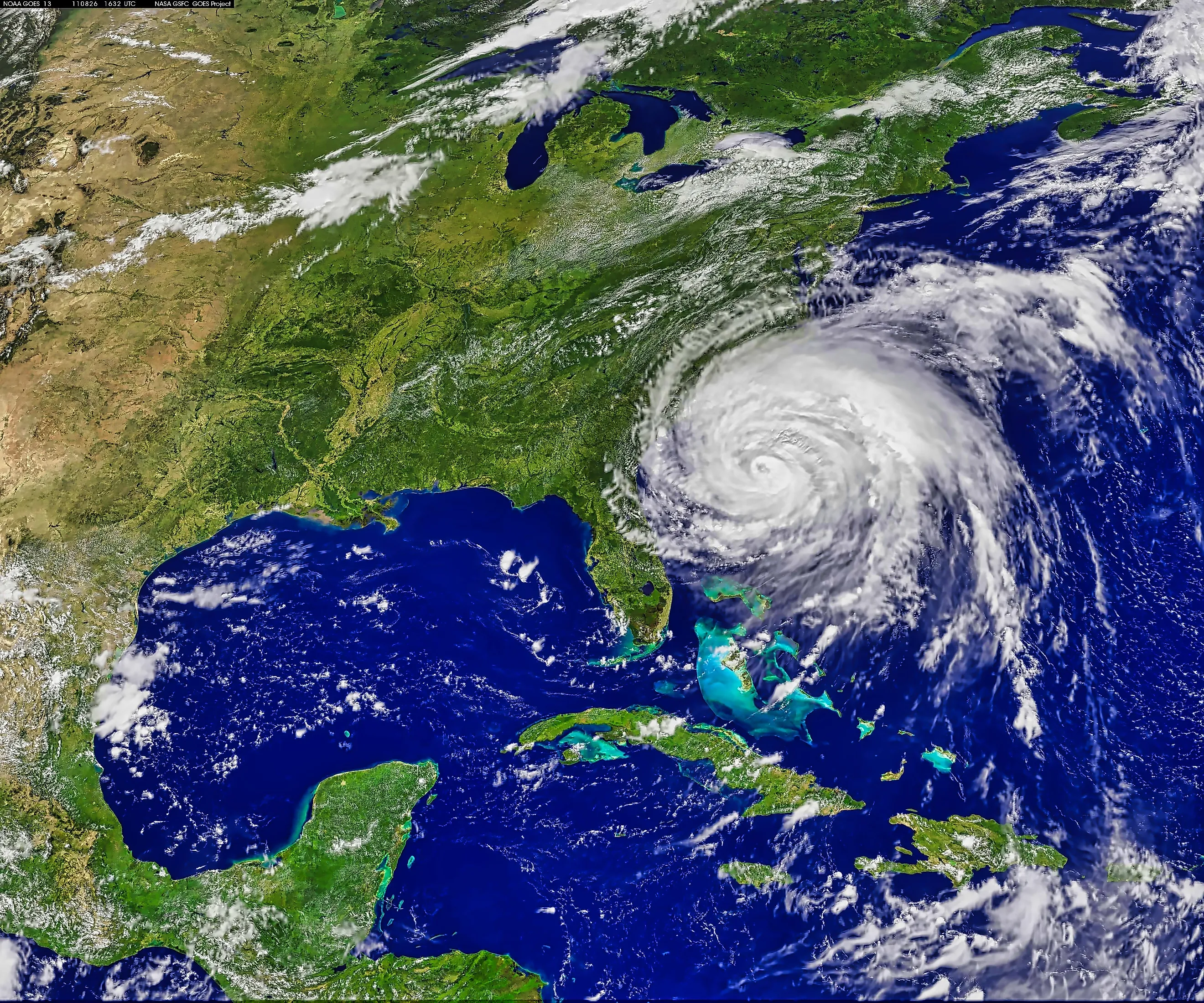
There is no difference. A hurricane, a typhoon and a cyclone are the same weather system under three names, and which name it gets depends entirely on which patch of ocean it happens to be sitting in. The scientific term for all of them is tropical cyclone. A storm with 120 mph winds is a hurricane in the Atlantic, a typhoon in the Philippine Sea and a severe tropical cyclone off Australia, with nothing about the storm itself changing. The naming boundary that proves it best is the International Date Line, where a storm can cross a line on a chart and be renamed mid-ocean.
The Map Decides The Word

The boundaries are specific lines of longitude rather than vague regions, which is what makes this a matter of geography rather than meteorology. A hurricane is a tropical cyclone in the North Atlantic or the North Pacific east of the International Date Line. A typhoon is the same storm in the northwest Pacific, between the date line and 100 degrees east. A cyclone is the same storm again in the Indian Ocean or the South Pacific.
Each region has its own agency doing the naming. The US National Hurricane Center handles the Atlantic and the eastern Pacific out to 140 degrees west, the Central Pacific Hurricane Center covers from there to the date line, and the Japan Meteorological Agency takes over on the other side.
The Threshold Is The Same Everywhere

Whatever you call it, the bar for promotion from storm to hurricane, typhoon or severe cyclone is identical.
Maximum sustained winds have to reach 74 miles per hour, which is 64 knots or 119 kilometers per hour. Below that the system is a tropical storm, from 39 to 73 mph, and below that a tropical depression.
Storms get a name once they reach tropical storm strength at 39 mph, which is why named systems appear in the news long before anything reaches hurricane intensity.
Crossing The Date Line Changes The Name
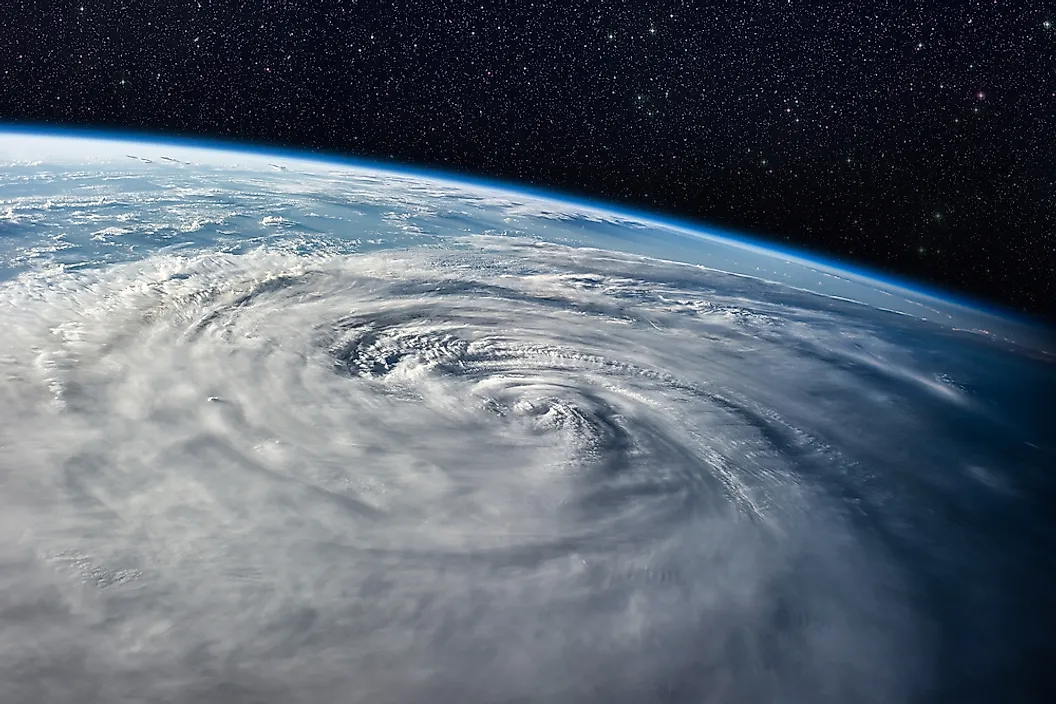
This is the detail that settles any argument about whether these are different phenomena. A hurricane tracking west across the central Pacific that crosses the International Date Line stops being a hurricane and becomes a typhoon. The storm does not change. The responsible agency changes, and so does the vocabulary.
A system moving between regions is also typically renamed from the next name on the receiving basin's list, so a storm can finish its life with a different name from the one it started with.
Rotation Depends On Hemisphere
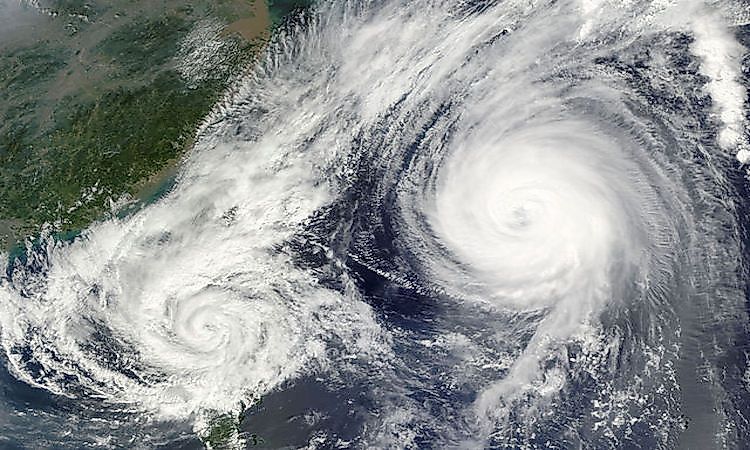
One genuine physical difference does exist between storms in different places, and it has nothing to do with the name. Tropical cyclones in the Northern Hemisphere rotate counterclockwise. In the Southern Hemisphere they rotate clockwise. The cause is the Coriolis effect, the deflection produced by the Earth's rotation, which acts in opposite directions either side of the equator.
That same effect is why tropical cyclones cannot form within a few degrees of the equator at all. There is not enough deflection there to start the rotation.
The Scales Are Not Interchangeable

Here is the part most explainers skip, and it matters whenever anybody compares storms across basins. The Saffir-Simpson scale, the familiar one running from Category 1 to Category 5, is intended for the Atlantic and the North Pacific east of the date line. Japan's meteorological agency uses its own intensity bands for typhoons. Australia uses a five-category severe tropical cyclone scale that also runs 1 to 5 and is defined entirely differently.
So an Australian Category 5 and an Atlantic Category 5 are not the same measurement wearing the same label. They are different scales that happen to share a numbering system.
Even The Stopwatch Differs
Underneath the scales sits a more fundamental inconsistency, which is how long the wind gets measured for. Saffir-Simpson uses maximum sustained winds averaged over one minute at a height of 10 meters. The Australian scale uses a 10-minute average alongside three-second gusts. The regional center in New Delhi uses a three-minute averaging period. Japan uses ten minutes.
This is not a technicality. A one-minute average will always read higher than a ten-minute average for the same storm, because the shorter window captures the peak. Comparing a Saffir-Simpson number directly against an Australian or Japanese one overstates the Atlantic storm every time.
The Indian Ocean Uses Different Words Entirely
The three-name framing is itself a simplification, because the North Indian Ocean runs a vocabulary that does not map onto any of it. Systems there are classified through a ladder of terms including cyclonic storm, severe cyclonic storm, very severe cyclonic storm and super cyclonic storm. A storm that would be called a Category 3 hurricane in Miami gets a phrase rather than a number in the Bay of Bengal.
So the honest version is that there are more than three names, and the popular trio simply covers the basins English-language media reports on most.
Where The Records Sit
Because the measurement methods differ, the records are worth reading with the method attached. The fastest one-minute sustained wind on record belongs to Hurricane Patricia in the northeast Pacific in 2015, at 215 mph. The fastest wind gust ever measured came from Tropical Cyclone Olivia off Australia in 1996, at 253 mph. Hurricane Allen holds the Atlantic one-minute record at 190 mph, set in 1980.
Two of those three are gusts or different basins, which is precisely the point about not comparing numbers casually.
The Busiest Basin Is Not The Atlantic
American coverage can give the impression that the Atlantic is where the serious weather happens. It is not.
The northwest Pacific is the most active tropical cyclone basin on Earth, generating more storms and more intense storms than anywhere else, which is why typhoon is arguably the word that should be most familiar rather than hurricane.
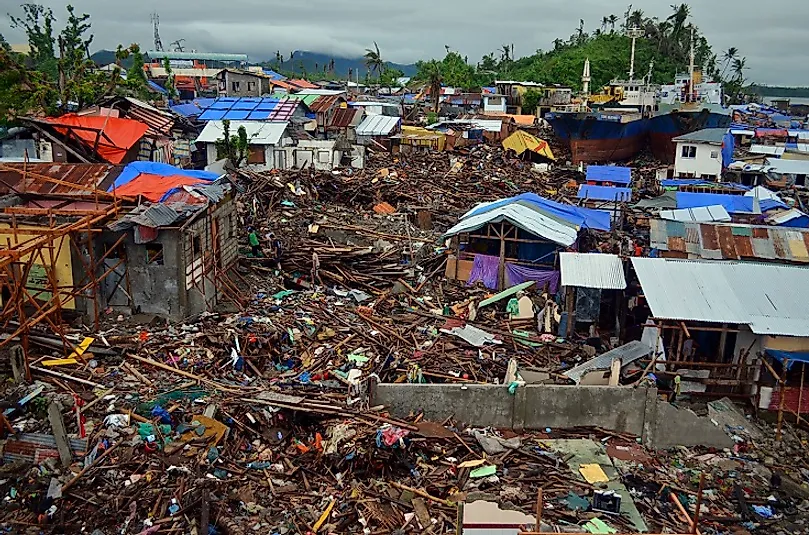
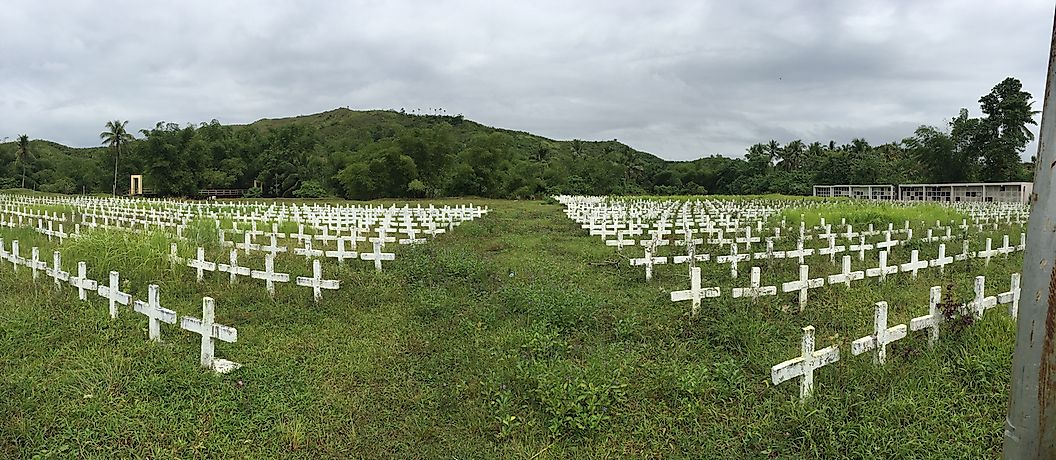
The Philippines alone is struck by more tropical cyclones annually than almost any other country, and Typhoon Haiyan in 2013 remains among the most destructive landfalls ever recorded.
The Short Version

All three words describe a tropical cyclone with sustained winds of at least 74 mph. Hurricane covers the North Atlantic and the North Pacific east of the date line, typhoon covers the northwest Pacific, and cyclone covers the Indian Ocean and South Pacific, with the North Indian Ocean using its own set of terms again.
The only real differences are which direction the storm spins, which depends on hemisphere, and which scale and averaging period the local agency uses to rate it. Everything else is a question of address.