The 10 Tallest Mountains In North America
North America's highest peaks are concentrated in its three biggest countries, the United States, Canada, and Mexico. Alaska and Yukon contain most of the continent's tallest examples, with the Alaska Range reaching incredible elevations above 20,000 feet (6,096 meters). To the surprise of some, Mexico also contributes several, mostly in the form of massive stratovolcanoes, including the third-highest summit on this list. With that in mind, the various ranges across this vast continent can differ considerably in geology, climate, and accessibility, ranging from active volcanoes to remote, heavily glaciated peaks. Denali leads the pack at 20,310 feet (6,190 m), while the remaining summits present their own geographical distinctions as well as interesting mountaineering histories.
Denali - Alaska, United States - 20,310 Feet

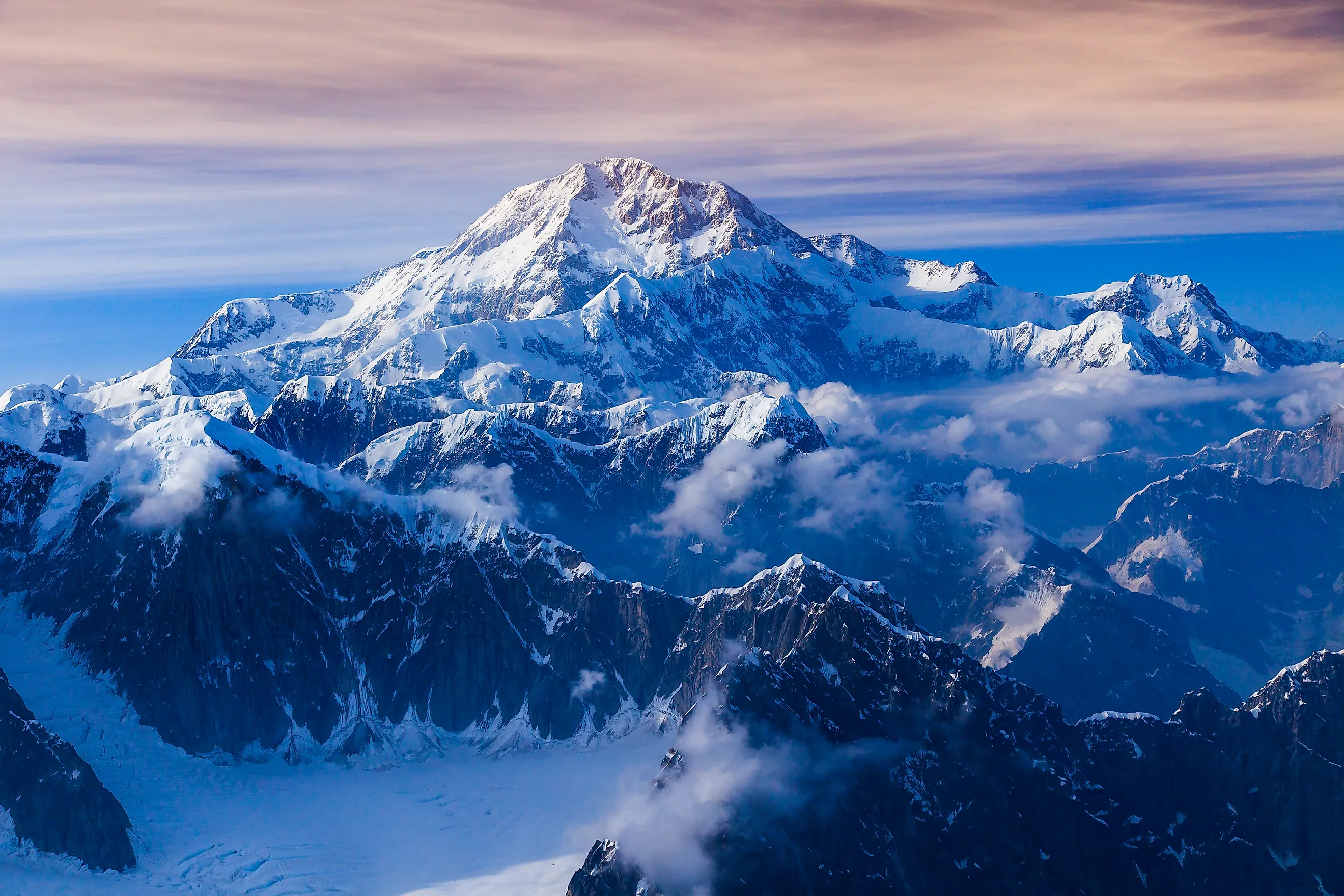
Denali (also known as Mount McKinley) reigns as North America's tallest mountain, reaching 20,310 feet (6,190 m) in the Alaska Range. This gargantuan peak stands within Denali National Park and Preserve, approximately 130 miles (209 km) northwest of Anchorage. Aside from its sheer height from sea level to top, it is quite prominent, too, towering more than 18,000 feet (5,486 meters) above the surrounding lowlands, a truly extraordinary vertical relief anywhere in the world.
Denali has two principal summits, with the higher South Summit first reached on June 7, 1913, by Walter Harper, Harry Karstens, Hudson Stuck, and Robert Tatum. Still today, climbers face severe cold, powerful winds, and unpredictable storms even during the summer climbing season. The mountain's slopes also notably contain vast glaciers, including the long, heavily crevassed Kahiltna Glacier, which serves as a principal approach for expeditions.
Mount Logan - Yukon, Canada - 19,551 Feet

Mount Logan is Canada's tallest mountain and the second-highest peak in North America, standing at 19,551 feet (5,959 m). It lies within Kluane National Park and Reserve in southwestern Yukon, close to the Alaskan border, and was named after Sir William Edmond Logan, founder of the Geological Survey of Canada. Unlike Denali's sharply defined summit, Mount Logan features a much broader summit plateau.
Its remote position and extreme weather also make climbing exceptionally difficult. Part of the Saint Elias Mountains, Mount Logan is an enormous massif with multiple summits, huge icefields, and some of North America's largest glaciers. With all those factors combined, the first successful ascent followed an arduous expedition lasting more than two months on June 23, 1925.
Pico de Orizaba - Veracruz/Puebla, Mexico - 18,491 Feet

Pico de Orizaba, also known as "Citlaltépetl," is the tallest mountain in Mexico and the third-highest peak in all of North America, hitting 18,491 feet (5,636 m) at its top. This dormant stratovolcano stands on the border between Veracruz and Puebla, forming part of the Trans-Mexican Volcanic Belt. Its last recorded eruption occurred in the 19th century, although activity could very well resume some time in the future.
Pico de Orizaba has a prominent summit crater measuring approximately 1,050 feet (320 meters) across. The mountain also supports the Gran Glaciar Norte, a shrinking ice formation on its northern slopes. With that, climbers typically approach the summit from the Piedra Grande mountain hut, following routes across volcanic rock, snow, and ice. On clear days, this high-reaching summit can offer views toward the Gulf of Mexico (Gulf of America).
Mount Saint Elias - Alaska/Yukon, United States/Canada - 18,008 Feet

The fourth-highest mountain in North America, Mount Saint Elias reaches 18,008 feet (5,489 m) along the Alaska-Yukon border. It also belongs to the Saint Elias Mountains and straddles Wrangell-St. Elias National Park and Preserve and Kluane National Park and Reserve.
Situated only about 11 miles (18 km) from the shores of the Pacific Ocean, this mountain has an extraordinary elevation gain over a short horizontal distance. Its especially steep slopes descend toward enormous glaciers as well, including the Malaspina Glacier to the southwest.
Heavy snowfall, extensive glaciation, and difficult terrain make Mount Saint Elias a real challenge to conquer. The first successful ascent occurred on July 31, 1897, when an expedition led by Italian mountaineer Luigi Amedeo, Duke of the Abruzzi, arrived at the summit.
Popocatépetl - Puebla/Morelos/State of Mexico, Mexico - 17,800 Feet

Popocatépetl is Mexico's second-highest peak, with a commonly cited elevation of around 17,800 feet (5,425 m). Another stratovolcano, this one is considered active and stands approximately 45 miles (72 km) southeast of Mexico City, within the Trans-Mexican Volcanic Belt.
Its name comes from the Nahuatl language (spoken by the Aztecs) and translates aptly to "Smoking Mountain," reflecting its long history of volcanic events. After decades of relative dormancy, Popocatépetl resumed eruptive activity in 1994 and has remained active since, with the volcano now regularly releasing steam, volcanic gases, and ash, occasionally affecting nearby communities.
Because of the continuing eruption risk, climbing to the summit is prohibited. However, the surrounding Izta-Popo Zoquiapan National Park contains pine forests, high-altitude grasslands, and other scenic, wild landscapes worth exploring.
Mount Foraker - Alaska, United States - 17,400 Feet

Mount Foraker juts up 17,400 feet (5,304 m) in the central Alaska Range. Situated within Denali National Park and Preserve, it stands approximately 14 miles (23 km) southwest of Denali, the tallest peak on the continent as mentioned before.
This mountain similarly has two major summits as well, separated by a high, snow-covered ridge. The northern slopes of Foraker notably feed the Foraker Glacier, while the Kahiltna Glacier runs along its eastern side.
Despite standing below Denali, Mount Foraker presents considerable mountaineering difficulties, including remarkably sheer slopes, dangerous crevasses, and frequent storms. It was named in 1899 after Joseph B. Foraker, a U.S. senator from Ohio, and its first successful ascent occurred in August 1934, when an expedition led by Charles Houston reached both summits.
Mount Lucania - Yukon, Canada - 17,190 Feet

Mount Lucania tops out at around 17,190 feet (5,240 m) within the Saint Elias Mountains of Yukon. Situated within Kluane National Park and Reserve, it stands approximately 30 miles (48 km) north of Mount Logan.
Its isolated position, numerous glaciers, and regularly severe weather make it difficult to climb. In 1937, American mountaineers Bradford Washburn and Robert Bates completed the first successful ascent, but when their aircraft could not return to retrieve them, the pair faced an intense journey of more than 150 miles (241 km) through the wilderness. With that precedent, Mount Lucania remains rarely climbed, with relatively few successful expeditions recorded since.
Iztaccíhuatl - State of Mexico/Puebla, Mexico - 17,159 Feet

Translated as the "White Lady," Iztaccíhuatl takes its name from a Nahuatl word referencing its historically snow-covered peaks, whose four summits represent the feet, knees, chest, and head of a sleeping woman. "El Pecho" marks the tallest point, with this dormant volcano reaching 17,159 feet (5,230 m) and making it Mexico's third-highest and North America's eighth-highest mountain.
Iztaccíhuatl lies within Izta-Popo Zoquiapan National Park, southeast of Mexico City, directly north of the active Popocatépetl volcano. Popular climbing routes begin at La Joya, where hikers ascend through alpine grasslands before reaching rocky ridges, and although its glaciers have retreated considerably, snow and ice can still complicate summit attempts.
King Peak - Yukon, Canada - 16,972 Feet

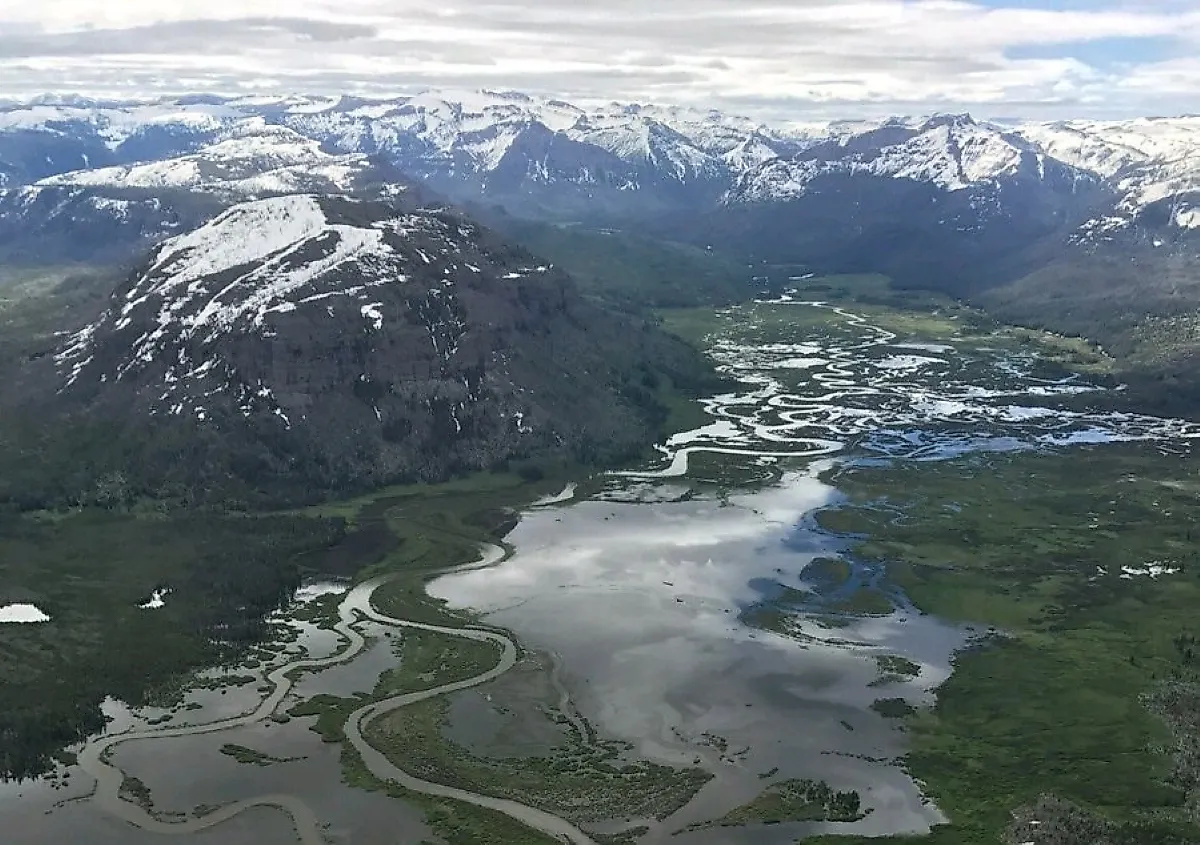
Aerial view of King Peak in Yukon. By Jack French - CC BY 2.0
Standing just west of Mount Logan, King Peak is frequently overshadowed by Canada's highest mountain despite reaching an immense 16,972 feet (5,173 m). Still, it ranks ninth in North America and fourth in Canada, forming part of the heavily glaciated Saint Elias Mountains within Kluane National Park and Reserve. In fact, King Peak is considered a satellite summit of Mount Logan, although its prominence of approximately 3,455 feet (1,053 meters) distinguishes it as its own named mountain.
The first successful ascent was completed on June 6, 1952, by Keith Hart and Elton Thayer. Few climbers attempt King Peak these days, largely because reaching its remote slopes involves considerable logistical challenges. As usual for this region, deep snow, crevassed glaciers, and severe weather often complicate expeditions.
Mount Steele - Yukon, Canada - 16,644 Feet

Yet another record setter in the Saint Elias Mountains, Mount Steele is connected to nearby Mount Lucania by a high, glacier-covered ridge. It has a traditionally reported elevation of 16,644 feet (5,073 m) (although some studies note it as being slightly lower) and was named after Sam Steele, a prominent North-West Mounted Police officer who served during the Klondike Gold Rush.
In August 1935, an expedition led by American explorer Walter Wood completed its first ascent while conducting aerial surveys of the region. Mount Steele also experienced a massive landslide in October 2015, when approximately 45 million or more metric tons of rock, snow, and ice collapsed onto surrounding glaciers.
Further Explore These Impressive Peaks
Most of these mountains remain difficult to reach for a number of obvious reasons, with extreme weather, tough-to-pass glaciers, and high, oxygen-deprived elevations limiting climbing expeditions even for seasoned experts. While Mexico's volcanic peaks are relatively close to major population centers, those in Alaska and Yukon often require lengthy journeys through remote wilderness as well. Regardless, they represent some of the continent's most demanding, yet picturesque, mountaineering destinations and geological features, all of which are worth seeing even if it's just from a viewpoint near the base.