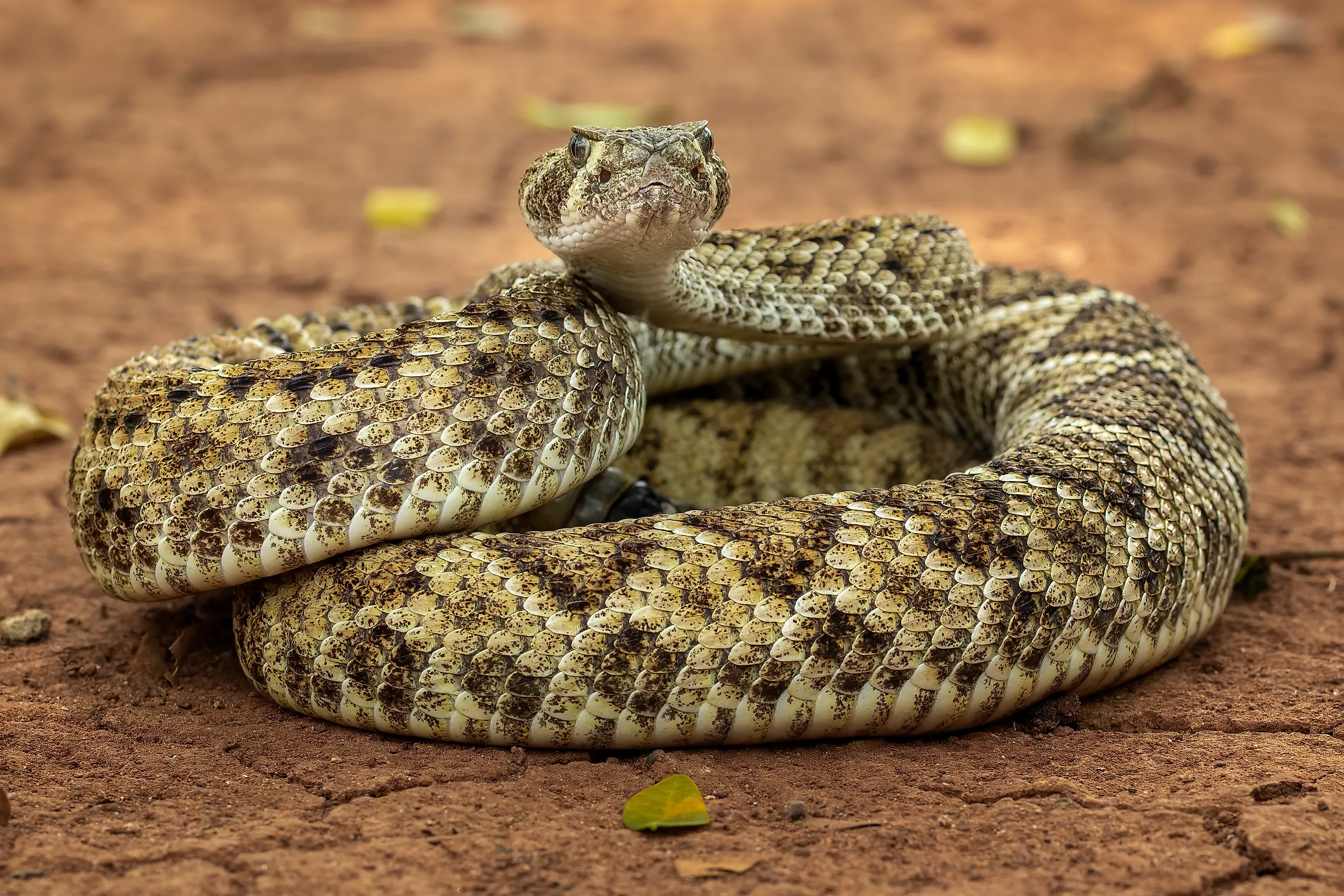
The American Mountains With The Most Western Diamondbacks
Nobody counts western diamondbacks, which is probably for the best, but the snakes count mountains. The western diamondback rattlesnake (Crotalus atrox) is a creature of hot desert flats that cannot survive winter in the open, so every fall, across the most rattlesnake-dense corner of the country, the species pours out of the lowlands and into the rocky feet of the nearest range to den. That dependency writes the map: the American mountains with the most diamondbacks are the desert ranges where sun-baked rock meets rodent-rich flats, from the saguaro bajadas of Arizona to the granite domes of Oklahoma. Here is where the continent's most dangerous rattlesnake keeps its real estate.
Why A Desert Snake Needs A Mountain

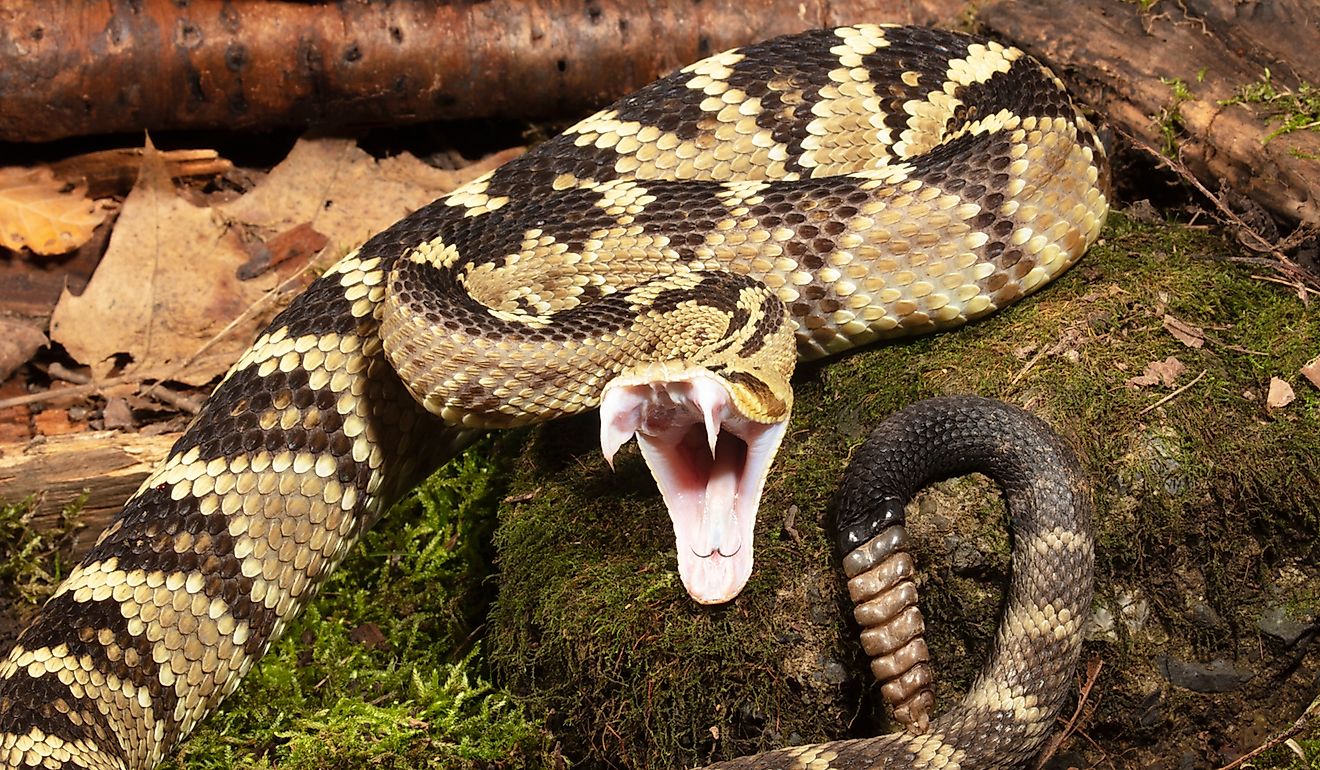
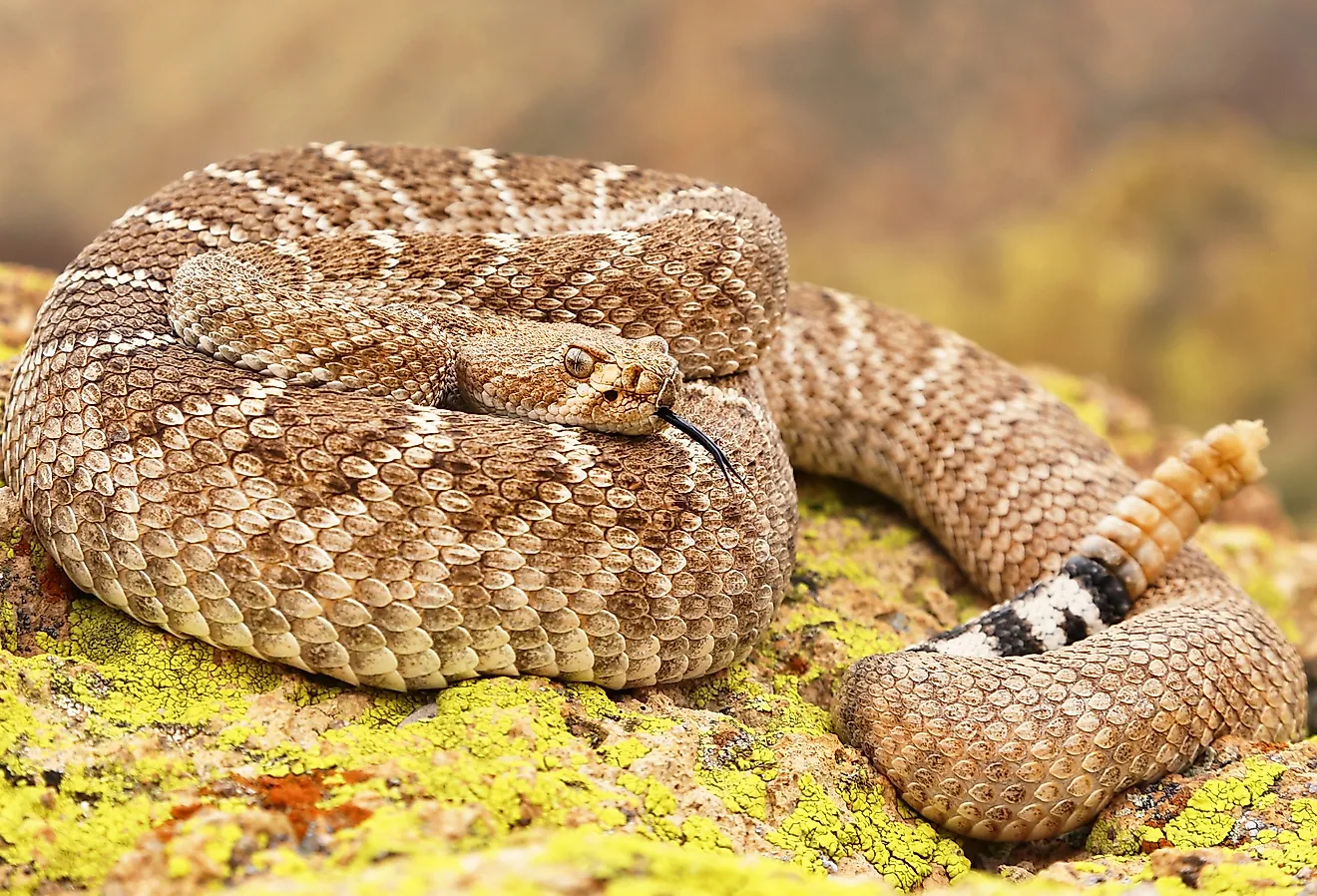
The western diamondback is the Southwest's heavyweight, a thick-bodied ambush hunter commonly 3 to 5 feet long with a chalk-and-black "coontail" above the rattle, and it is responsible for more medically significant snakebites in the United States than any other species, alongside its eastern cousin. But for all its menace on the flats, atrox has a vulnerability: it is a poor digger and cannot endure freezing nights above ground. Its answer is the den, a deep crevice in fractured, south-facing rock where dozens of snakes overwinter together and return year after year, sometimes for generations.

Fractured, sun-facing rock stacked above rodent-filled desert is the definition of a desert mountain range's lower slopes, which is why the diamondback capital of any region is the base of its mountains: den sites upstairs, hunting grounds downstairs, and a spring commute measured in yards. The snake stays mostly below about 6,500 feet, so the high peaks go to other rattlers; the foothills, canyons, and bajadas belong to atrox, along with everything brave enough to hunt it, roadrunners included.
Superstition Mountains, Arizona

The Superstitions check every box on the diamondback's wish list: a volcanic wall of fissured rock rising straight out of saguaro and palo verde flats, at the hot edge of the Sonoran Desert, with Lost Dutchman State Park and the Peralta trailheads delivering a steady supply of warm boulders and warmer rodents. The range's legendary gold has never been found; its rattlesnakes are located daily.
Sitting on the eastern rim of the Phoenix metro area, the Superstitions also lead the country in another statistic that follows diamondback density: human encounters. Arizona's snake-removal services run busiest where the subdivisions meet this range's bajada, and spring hikers on the Siphon Draw or Hieroglyphic trails learn to read the trail edges before their boots do.
Santa Catalina Mountains, Arizona

Tucson's home range may host more diamondbacks per square mile of foothill than anywhere in America. The Santa Catalinas are a Madrean sky island, snow-capped at 9,000 feet, but their lower story, the saguaro-studded slopes of Sabino Canyon and the Catalina foothills between roughly 2,500 and 4,500 feet, sits squarely in the diamondback's thermal sweet spot, a maze of rock shelves, packrat middens, and desert washes.
Sabino Canyon's paved tram road is one of the most reliable places in the country to see a wild atrox doing absolutely nothing dangerous, stretched across warm asphalt on a spring evening. The Catalinas prove the article's whole premise in one view: a single range running saguaro to spruce, with the diamondbacks holding the ground floor.
Chisos Mountains, Texas

In Big Bend National Park, the Chisos rise like a green island from one of the hottest stretches of the Chihuahuan Desert, and the division of labor among the park's rattlesnakes is textbook: the cool, wooded heights belong to blacktail and rock rattlers, while the western diamondback rules the desert floor and the rocky skirts below, the ocotillo flats, the River Road country, and every canyon mouth where the mountain meets the heat.

Big Bend's scale is what earns the Chisos their ranking: an 800,000-acre park with a healthy rodent base, no development pressure, and night roads warm enough to draw snakes out for passing headlights. Park naturalists log diamondbacks as a signature lowland species, and summer visitors who walk after dark with a flashlight understand why the advice is given twice.
Guadalupe Mountains, Texas

Texas's highest range is also one of its snakiest at the baseboards. The Guadalupes vault from Chihuahuan Desert salt flats to the 8,751-foot summit of Guadalupe Peak, and the transition zone does the work: the western escarpment's limestone rubble, the alluvial fans spilling toward the salt basin, and the lower reaches of the canyons stack den rock directly above open hunting country.
The payoff for hikers is a range with two faunas: diamondbacks and their desert neighbors patrol the trailhead elevations, while the high conifer bowls above belong to mule deer and mountain rattlers. The famous climb to the Texas rooftop starts, like most things in this article, by walking carefully through the first thousand feet.
Organ Mountains, New Mexico

The Organs' granite needles above Las Cruces look alpine and live desert: the range's granite spires stand on classic Chihuahuan bajada, and the boulder fields at their base, around Dripping Springs, Soledad Canyon, and the Sierra Vista Trail, offer diamondbacks a full inventory of south-facing crevice real estate within striking distance of mesquite flats.
Protected since 2014 inside Organ Mountains-Desert Peaks National Monument, the range keeps its lower slopes wild while a university city grows at its feet, the same mountain-edge arrangement that concentrates both snakes and sightings everywhere in this article. In the Organs, the rule of thumb is elevation itself: below the needles, assume the coontail is home.
Wichita Mountains, Oklahoma

The diamondback's empire runs out of desert long before it runs out of snakes. The Wichitas, a half-billion-year-old scatter of granite domes in southwestern Oklahoma, anchor the species' northeastern stronghold, where fractured pink rock heats up over mixed-grass prairie crawling with rodents and rabbits. The Wichita Mountains Wildlife Refuge protects 59,000 acres of it, and its boulder fields shelter some of the most storied diamondback den country anywhere.
This is the landscape that made southwestern Oklahoma synonymous with rattlesnakes, and the refuge offers the safest version of the spectacle: watch the rock edges on a warm April afternoon near Mount Scott or the Narrows, and the granite will eventually move. Bison, longhorns, prairie dogs, and diamondbacks, all on one refuge, is about as Oklahoma as a food web gets.
Read The Rocks
The pattern holds across the whole Southwest and into Oklahoma: wherever fractured, sun-facing rock stands over hot, rodent-rich flats, the western diamondback concentrates, and the mountains on this list simply offer the most of that arrangement. For hikers, the same map is a safety briefing in reverse: the first thousand vertical feet of any desert range, in the warm months, at dawn and dusk, is diamondback territory, so give the buzz its distance and the trail edge your eyes. The snake wants the encounter even less than you do; it just refuses to leave a neighborhood this good.