The 10 Tallest Mountains In Alaska
The 10 tallest mountains in Alaska are also the highest peaks in the United States, led by Denali at more than 20,000 feet above sea level. They are spread across three ranges: the Alaska Range, the Saint Elias Mountains, and the Wrangell Mountains. Some rise near the Pacific coastline, while others stand in remote wilderness far from major settlements. Their stories include hard-won first ascents, extreme weather, volcanic activity, and extensive glaciers.
Denali - 20,310 Feet

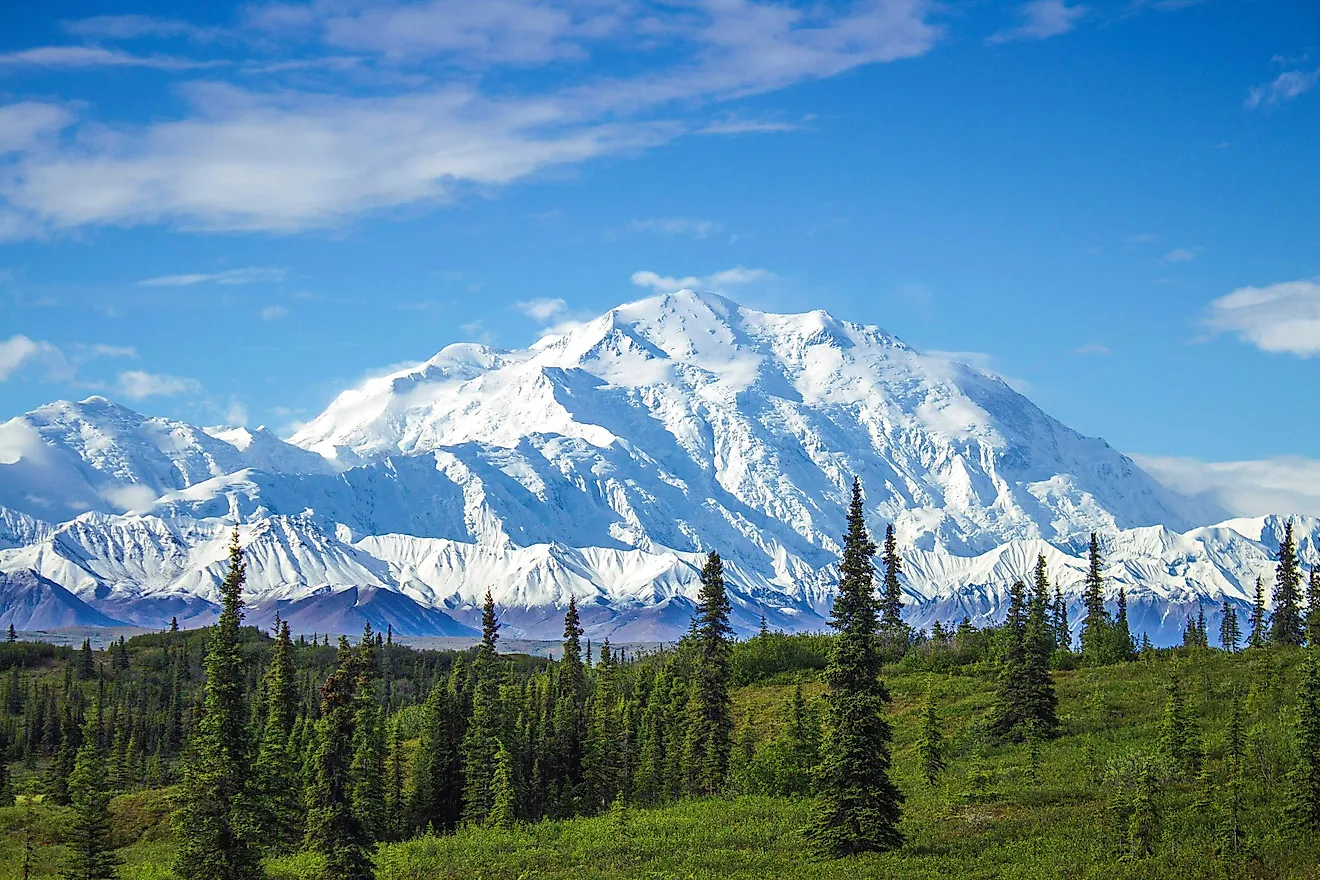
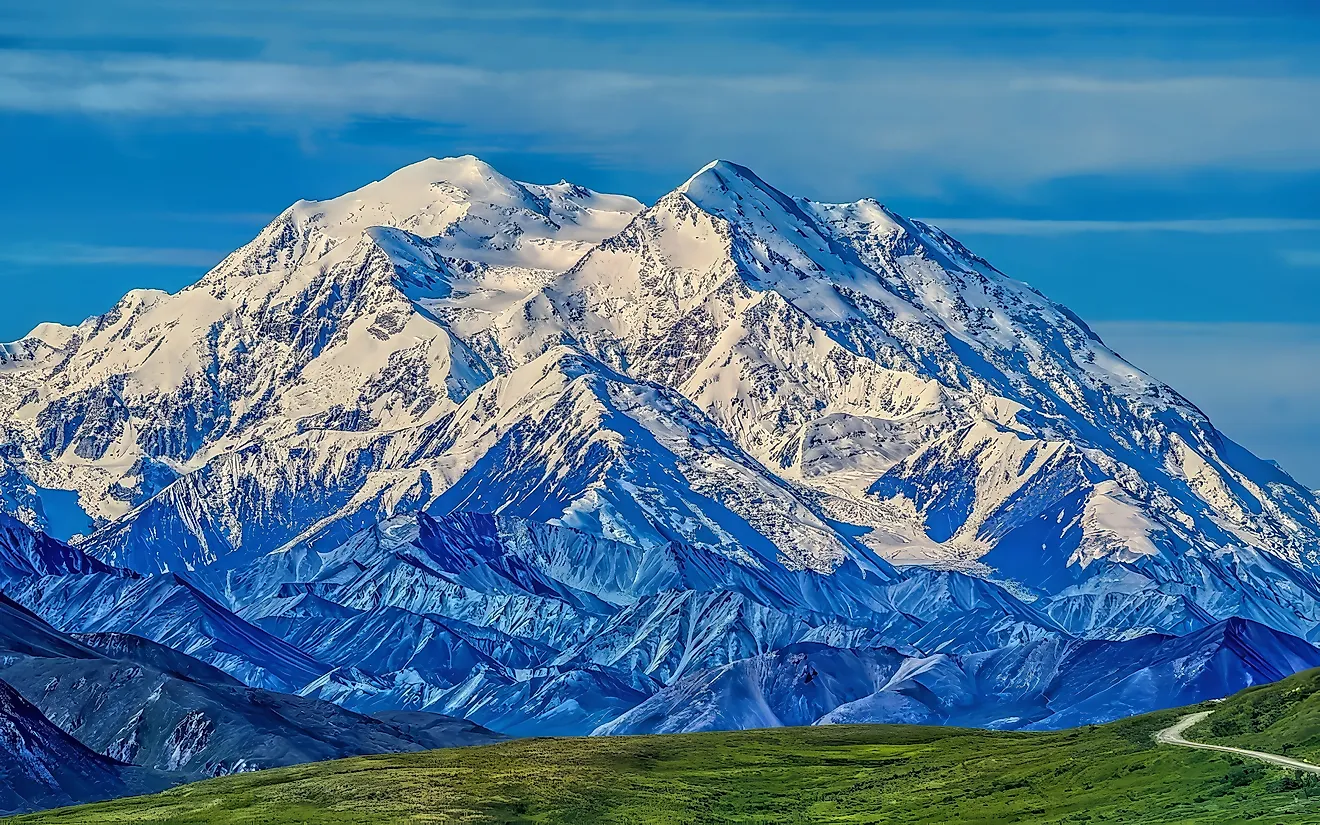
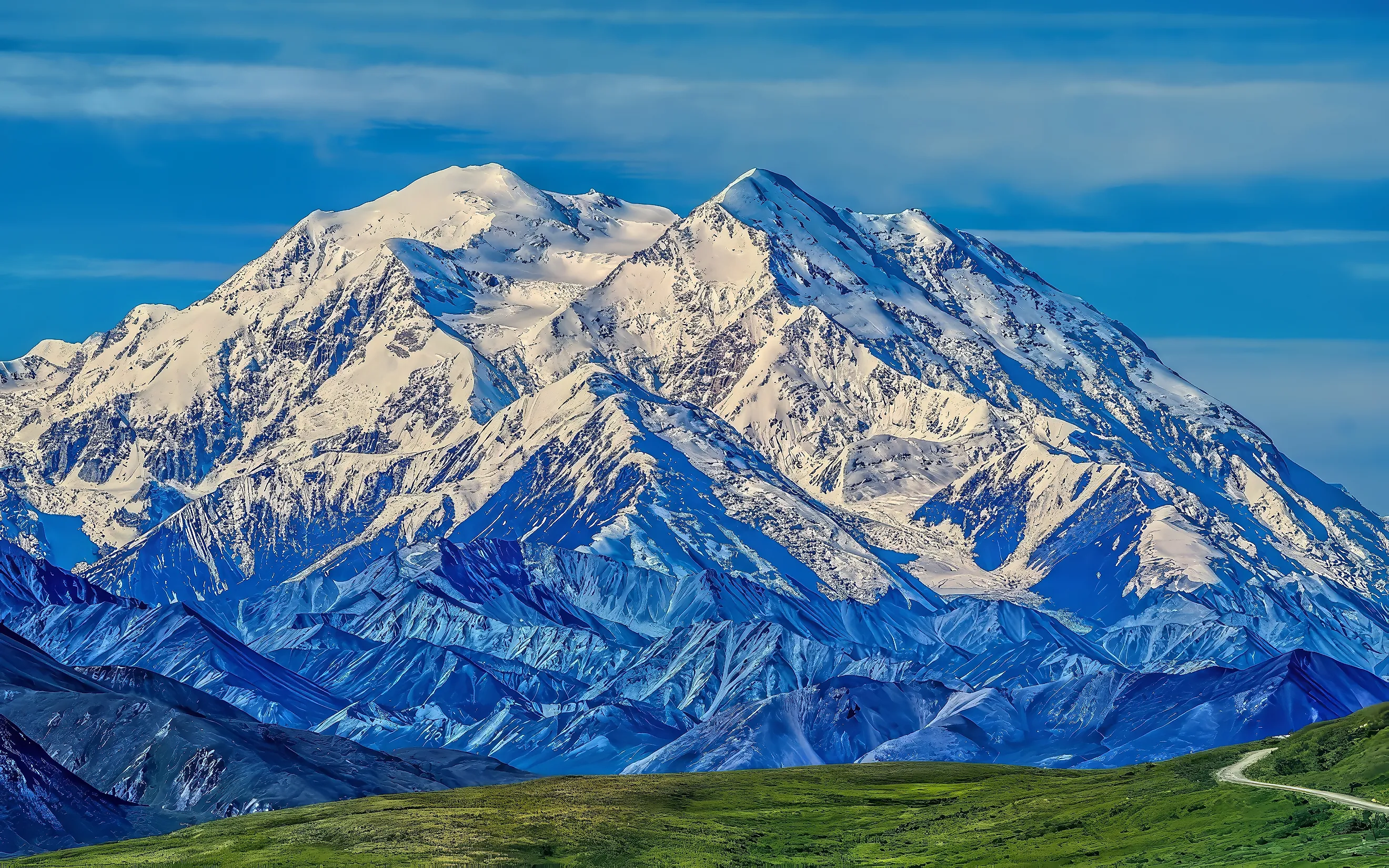
Denali is the highest mountain in North America, rising 20,310 feet above sea level in south-central Alaska. Its name comes from the Koyukon Athabascan language and is commonly translated as "the tall one." Denali's vertical rise from the surrounding lowlands makes it one of the most imposing massifs on the planet, and its northern latitude makes climbing it especially brutal. Temperatures fall far below freezing, powerful winds and sudden storms endanger even experienced mountaineers, and the summit's atmospheric pressure is particularly low for its elevation.
The mountain lies within Denali National Park and Preserve. The federal government officially renamed it Denali in 2015, restoring its Indigenous name after decades as Mount McKinley, then restored the name Mount McKinley for official federal use in January 2025. Denali remains the widely used name, and the national park retains it.
Mount Saint Elias - 18,009 Feet

Mount Saint Elias is the second-highest mountain in Alaska. Rising to 18,009 feet on the Alaska-Yukon border, it climbs from the coastal lowlands near the Gulf of Alaska, giving it one of the most dramatic vertical rises of any major coastal mountain in North America. The peak stands on the international boundary between Wrangell-St. Elias National Park and Preserve in Alaska and Kluane National Park and Reserve in Canada.
Its English name is believed to derive from Cape Saint Elias, which was named during Vitus Bering's 1741 expedition and is associated with the feast day of Saint Elias. The mountain's remoteness, glaciers, and unpredictable weather made it an extraordinary challenge for early explorers. The first successful ascent came in 1897, when an expedition led by Italian mountaineer Luigi Amedeo, Duke of the Abruzzi, crossed difficult glacial terrain to reach the summit.
Mount Foraker - 17,400 Feet

Mount Foraker lies approximately 14 miles southwest of Denali in the Alaska Range and is the third-highest major mountain in Alaska. Its Indigenous name, Sultana, is commonly translated as "the woman" and is sometimes interpreted as "Denali's wife." Steep ridges and extensive glaciers surround the mountain, and its profile is a familiar sight within Denali National Park and Preserve, particularly from the Kahiltna Glacier climbing region.
Foraker has two principal summits, the higher South Peak and the North Peak. Both were first climbed in August 1934 by an expedition that included American mountaineer Charles Houston and British climber T. Graham Brown, who reached the two summits in separate climbing efforts under difficult alpine conditions.
Mount Bona - 16,550 Feet

Mount Bona reaches 16,550 feet in Alaska's Saint Elias Mountains. Unlike many of the region's high peaks, which owe their elevation primarily to tectonic uplift, Bona is a stratovolcano, and its summit and upper slopes are buried beneath extensive glaciers. It is one of the highest volcanoes in North America. Bona belongs to a volcanic complex with nearby Mount Churchill, which produced major prehistoric ash deposits found across parts of Alaska and northwestern Canada.
Luigi Amedeo, Duke of the Abruzzi, named the mountain in 1897 after observing it during his expedition to Mount Saint Elias, choosing the name of a racing yacht he had once owned. Its remote location, heavily glaciated slopes, and severe weather make it a challenging destination for mountaineers.
Mount Blackburn - 16,390 Feet

At 16,390 feet, Mount Blackburn is the fifth-highest major mountain in Alaska and the highest peak in the Wrangell Mountains. It is a heavily glaciated ancient shield volcano whose broad structure has been modified by ice and erosion, and glaciers and snowfields now conceal much of its volcanic terrain. The mountain has no known historical eruptions. It lies within Wrangell-St. Elias National Park and Preserve, the largest national park in the United States. Its remote position and complex topography make climbing it a serious undertaking. The first recorded ascent of its East Peak took place in 1912, but the higher main summit was not reached until 1958, by an expedition that included Bruce Gilbert and Dick Wahlstrom.
Mount Sanford - 16,237 Feet

Mount Sanford rises to 16,237 feet and is the sixth-highest major mountain in Alaska. It is a massive shield volcano built through successive eruptions, and its broad profile contrasts with the steep ridges of many nonvolcanic peaks in the state. Although it has no known historical eruptions, its geology reflects the volcanic processes that built much of the Wrangell Mountains. Snow and ice blanket its slopes, with glaciers descending from the upper mountain into the surrounding valleys. Compared with Denali, Sanford receives relatively few climbing expeditions because of its isolation and difficult access. Its first recorded ascent took place in 1938, when mountaineers Terris Moore and Bradford Washburn reached the summit.
Mount Fairweather - 15,325 Feet

Mount Fairweather received its English name in 1778, when British explorer Captain James Cook encountered unusually favorable weather while sailing along the coast. The name is misleading. Rising close to the Pacific coastline, the mountain is exposed to powerful storms, heavy snowfall, and strong winds, and conditions can deteriorate rapidly near its 15,325-foot summit. Its enormous vertical relief makes it visible from considerable distances on clear days.
Located on the border between Alaska and British Columbia, Mount Fairweather stands within Glacier Bay National Park and Preserve on the American side. Allen Carpe and Terris Moore made the first successful ascent in 1931, after earlier expeditions had been defeated by difficult weather and terrain.
Mount Hubbard - 14,951 Feet

Mount Hubbard rises to 14,951 feet along the Alaska-Yukon border in the Saint Elias Mountains, near Wrangell-St. Elias National Park and Preserve in Alaska and Kluane National Park and Reserve in Canada. Its rugged summit and steep ridges give way to extensive glaciers that extend into the surrounding valleys.
American geologist and explorer Israel Russell named the mountain in 1890 in honor of Gardiner Greene Hubbard, the first president of the National Geographic Society. Russell's expeditions contributed important geographical and geological information about the mountains of southeastern Alaska. An expedition led by Walter Wood made the first ascent in 1951, and the mountain's isolation and heavily glaciated terrain still make its summit a demanding objective.
Mount Bear - 14,831 Feet

Mount Bear rises to 14,831 feet in eastern Alaska, near the Canadian border. It is the ninth-highest major mountain in the state and one of the less familiar summits of the Saint Elias Mountains. Its remote position and difficult access mean it receives little attention compared with Denali, and its climbing history is less widely documented than those of Alaska's more famous summits.
The mountain lies within the wilderness of Wrangell-St. Elias National Park and Preserve, where large glaciers descend between high ridges and icefields spread across much of the terrain. Its glaciated slopes and surrounding mountain passes make travel difficult. Although it stands among the highest mountains in the United States, it remains obscure outside mountaineering and geographical circles.
Mount Hunter - 14,573 Feet

Mount Hunter rises to 14,573 feet in the Alaska Range, just southwest of Denali, and is considered one of Alaska's most technically demanding mountains to climb. Steep faces, narrow ridges, and complex ice formations define the peak, and some of its most difficult routes require advanced ice-climbing skills. The first ascent came in 1954, when Fred Beckey, Heinrich Harrer, and Henry Meybohm reached the summit, establishing Hunter as an important objective for mountaineers seeking difficult routes in the Alaska Range. The Dena'ina name for Mount Hunter is Begguya, commonly translated as "Denali's child." Standing near Denali and Mount Foraker, it is part of a close cluster of high mountains within Denali National Park and Preserve.
At the Top in Alaska
Alaska's 10 highest major mountains reflect a wide range of geology. Mount Saint Elias rises above the coastal lowlands, while Mount Hunter offers some of the Alaska Range's most demanding climbing. Volcanoes such as Blackburn and Bona contrast with Denali's tectonically uplifted massif. Across the Alaska Range and the Saint Elias and Wrangell Mountains, these peaks stand higher than any major mountain in the other 49 states and remain among North America's most formidable mountaineering destinations.