The Year The Colorado Filled The Salton Sea By Accident
The Salton Sea is unlike any other reservoir made by humans: it was an accident.
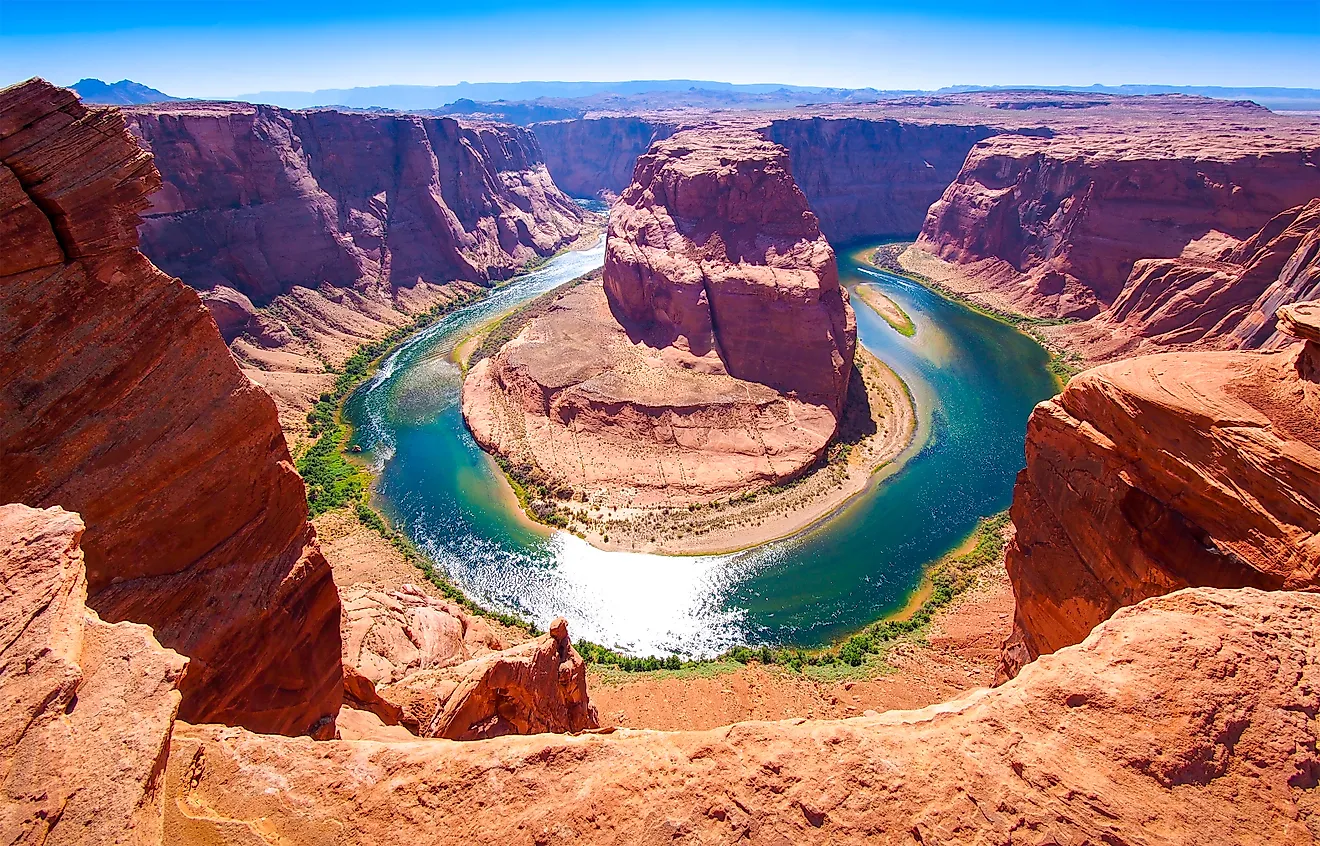
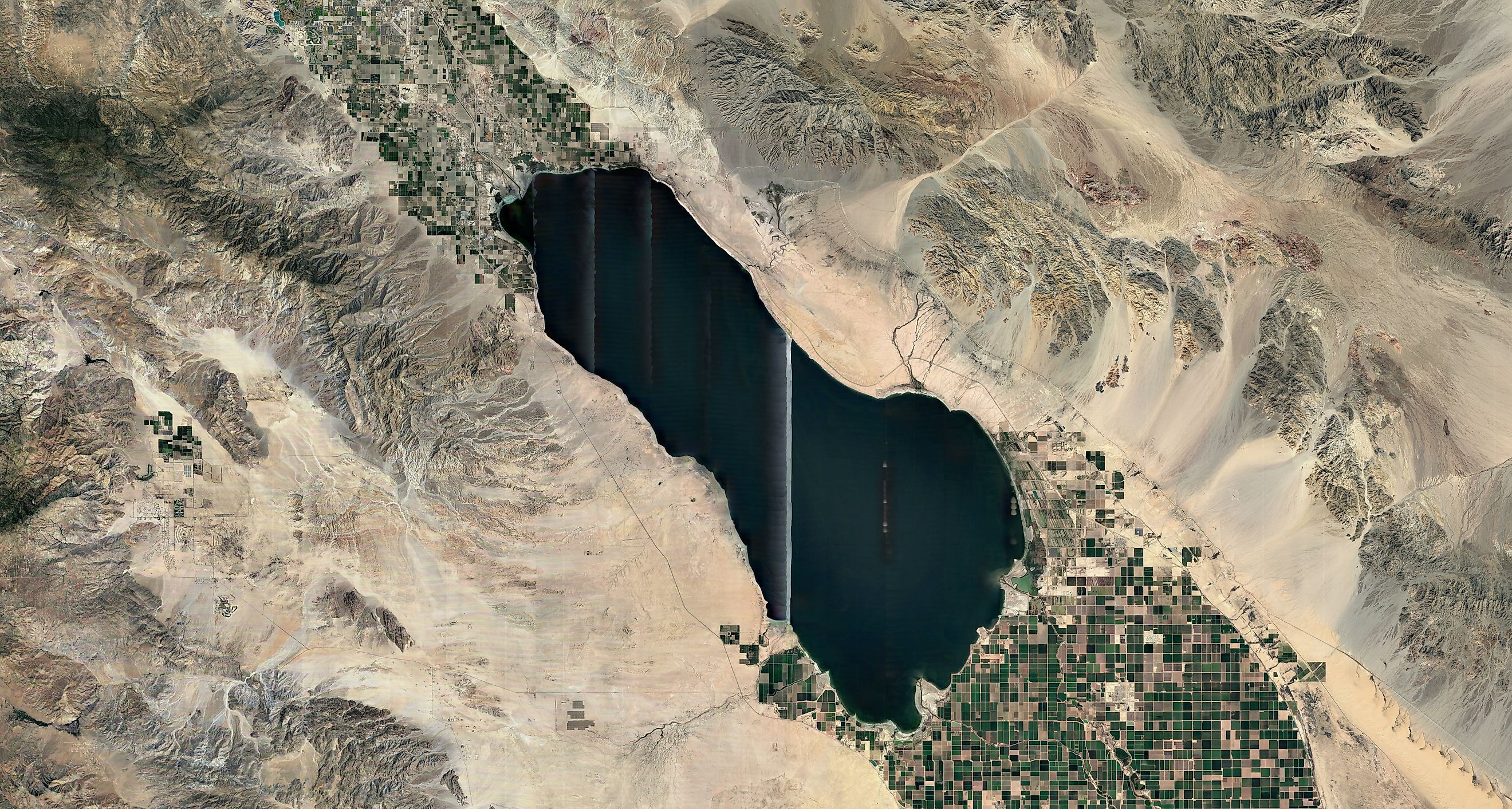
The make-shift sea was created from a breach in an irrigation canal on the Colorado River, which caused water to flow into the Imperial Valley in California in 1905, thus creating the iconic salty polluted lake called the Salton Sea.
This accident helped spur on a more comprehensive water control effort that would transform the desert of the Imperial Valley into one of the biggest agricultural powerhouses in the US today.
It began with a dream

The land where the Salton Sea is today was a deeply unforgiving desert. In the 18th century, A Spanish explorer named Juan Bautista de Anza and his men led an expedition through the Imperial Valley, where they experienced severe dehydration annd nearly starved.
In the 1850s, a geologist named William P. Blake discovered something unusual in this desert. Namely, he found a shoreline of long-since-disappeared waters within the surrounding Peninsular Mountain Ranges. By this shoreline, there was a deep basin, which sat below sea level. This basin, sometimes referred to as the Salton Trough, once contained a body of water called Lake Cahuilla. At its height, this lake was 2,200 square miles in size, getting the majority of its water from the Colorado River. By 1580, this lake had mostly dried up, save for smaller bodies of water that would temporarily form in the basin.

Blake noticed specifically that this low-lying basin could be irrigated and could support crops and settlers, especially with its fertile silty soil. Other experts were also intrigued by this possibility, like Dr. Oliver M. Wozencraft, who made recommendations for a canal on the Colorado River to redirect it into the Imperial Valley.
Work would begin in 1896 under the California Development Company, which sought a spot to dam the Colorado River. It was supported by investment from George Chaffey, who was the first to call the land Imperial Valley.
Their plan involved two steps. First, they built the Alamo Canal to connect the Colorado River to the Alamo River. Second, they added the Chaffey Gate (also known as the Alamo Gate), a wooden structure that controlled how much water flowed through the river. The Chaffey Gate was an international project, as most of it was located in Mexico.
How the Salton Sea was created

The Colorado River carries a great deal of silt, which constantly clogged the dam and required work to remove. This, in turn, slowed down the flow of water, which concerned new residents who had arrived to farm the recently irrigated land.
To address this concern, in 1904, the California Development Company dug an intake cut, which they hoped would improve water flow from the Colorado River into the Alamo River. This cut was little more than a small ditch that was 49 feet wide and 6.56 feet deep. It also required constant work to clear out silt, and it had no headgate, meaning it could not control water levels on any level.

This design flaw made it impossible for the dirt to hold back the Colorado River in the winter of 1904 to 1905 when waters gushed out from the Colorado into the Alamo and New Rivers, which in turn entered the Salton Sink. In October 1905, water levels were rising by close to a third of an inch every day.
The California Development Company made several efforts to stop the flow, including rock, rock gravel, and clay added in 1906, but this too was overwhelmed by a flood. The flow of water didn't stop until the Southern Pacific Railroad constructed the Clarke Dam in February 1907, but by that time there was now a large lake in the Salton Sink known as the Salton Sea.
The Salton Sea's changing landscape

When the Salton Sea was first created from 1905 to 1907, it was much larger and deeper than it is today. It was close to 316,000 acres with a water elevation of 197 feet below sea level. However, due to its position in the desert, evaporation slowly caused the lake to decrease. Within 13 years, the lake was nearly half its original size at 165,000 acres.
The Salton Sea would end up gaining more water from agricultural runoff transported by the Whitewater, Alamo, and New Rivers. This runoff was made possible due to the construction of another canal.
In 1911, the Imperial Irrigation District was formed out of the ruins of the defunct California Development Company. It pushed for the construction of a dam completely contained within American territory, rather than crossing into Mexico. It secured a deal via the 1928 Boulder Canyon Project Act, which empowered the U.S. Bureau of Reclamation to build the All-American Canal. Completed in 1942, this canal became the powerhouse of the Imperial Valley, irrigating close to 500,000 acres of farmland through IID's diversionary canals.

With this agriculture, runoff water could enter the Salton Sea, causing its levels to rise. The IID had to construct retaining berms at the lake to prevent it from flooding. Even so, inflows to the lake accounted for 1.2 to 1.3 million acre-feet annually.
However, the Salton Sea is shrinking and exposing salt-laden lake beds. This shrinking is due to improved agricultural methods, meaning less runoff waters entering the lake, and due to the 2003 Quantification Settlement Agreement, which caused a large portion of the Colorado River has been redirected to fast-growing urban areas.
A Salton health hazard

One of the primary impacts of this shrinking of the Salton Sea has been on the health of residents living in the Imperial Valley. This water is filled with salts and pollutants, which are carried by wind across the Imperial Valley.
Due to this, children living near the Salton Sea are experiencing noticeable lower lung issues, as they are exposed to so much dust. These airborne pollutants are also linked to heart issues.
To address this issue in 2026, California is using state and federal funds to build 9,500 acres of ponds and wetlands, along with a perimeter lake, designed to keep toxins out and restore the natural environment of the drying lakebed. There have also been temporary measures such as hay bales put down on the beach to keep dust from getting into the air.
The Salton Sea is deeply unusual

As befits its unusual creation, the Salton Sea is filled with unusual landmarks, such as Salvation Mountain, an art installation covered in Bible verses and Christian imagery via between 100,000 to 500,000 gallons of latex paint.
Another is the ruins of a tourist attraction known as the Bombay Beach Ruins. Bombay Beach was a once-popular resort town, but has been near-abandoned due to the toxicity of the waters. Now, only a few hundred residents live in the area and Bombay Beach has become a site for several art projects.
This intersection of human art and natural decay suits the Salton Sea, as its very creation was due to both a natural flood and human attempts to harness the Colorado River.