How Crater Lake Holds More Water Than Lake Okeechobee Despite Being Smaller
If lakes were bathtubs, Lake Okeechobee would be the world's widest kiddie pool, while Crater Lake would be the deep end. Crate Lake is smaller than Lake Okeechobee, but it holds close to five times the amount of water as Lake Okeechobee. The reason for this difference comes down to the depth of the basin that these two lakes sit in, as a lake can only go as deep as the basin itself. Crater Lake and Lake Okeechobee were formed through two very different geological events, one through a volcanic eruption and from rainwater.
Crater Lake: Small Yet Deep

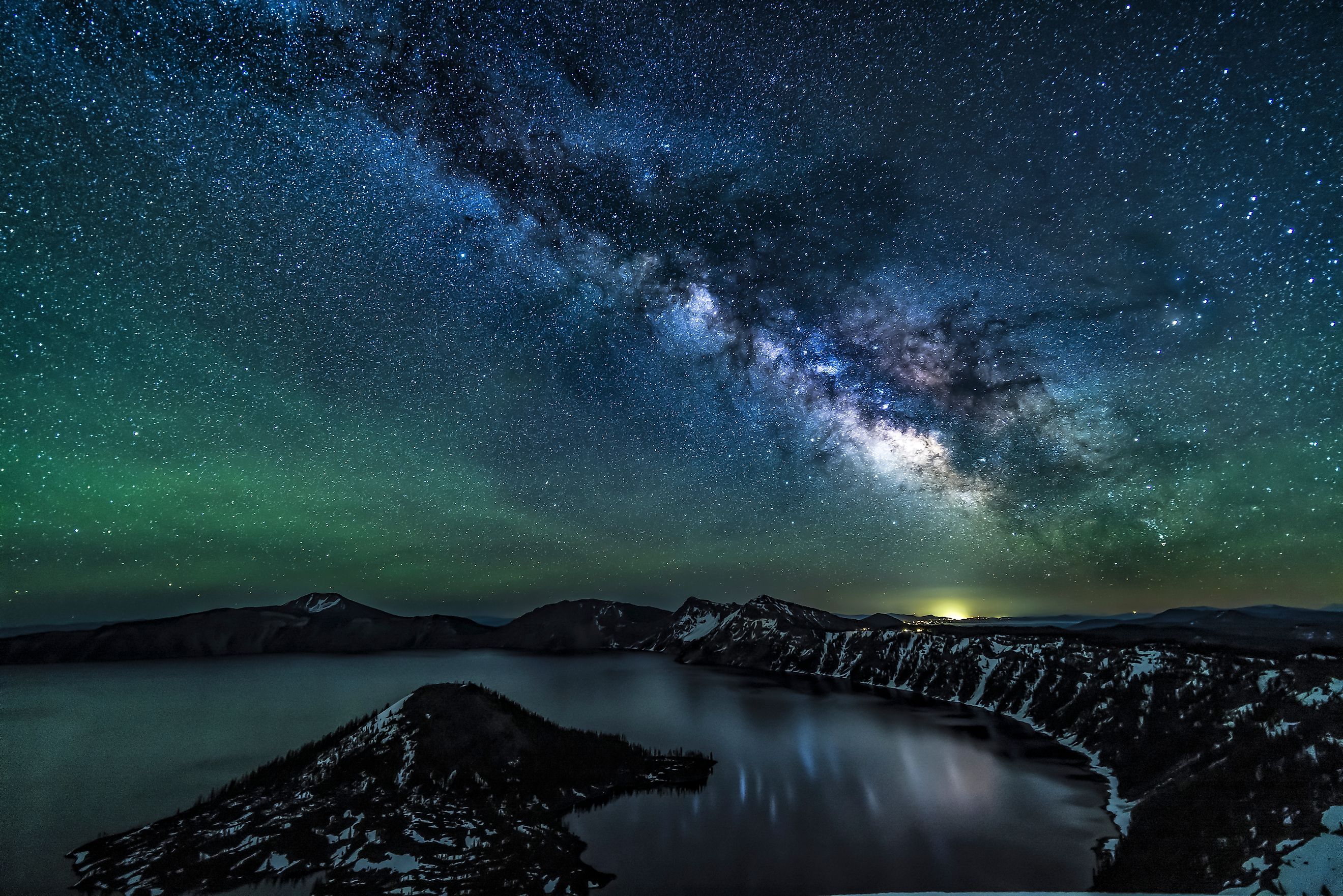
Oregon's Crater Lake sits at an elevation of 6,178 feet above sea level and is part of the larger Crater Lake National Park. This park's highest point is Mount Scott at 8,929 feet. It is relatively small at only 20.42 square miles, but it contains 4.9 trillion gallons of water.
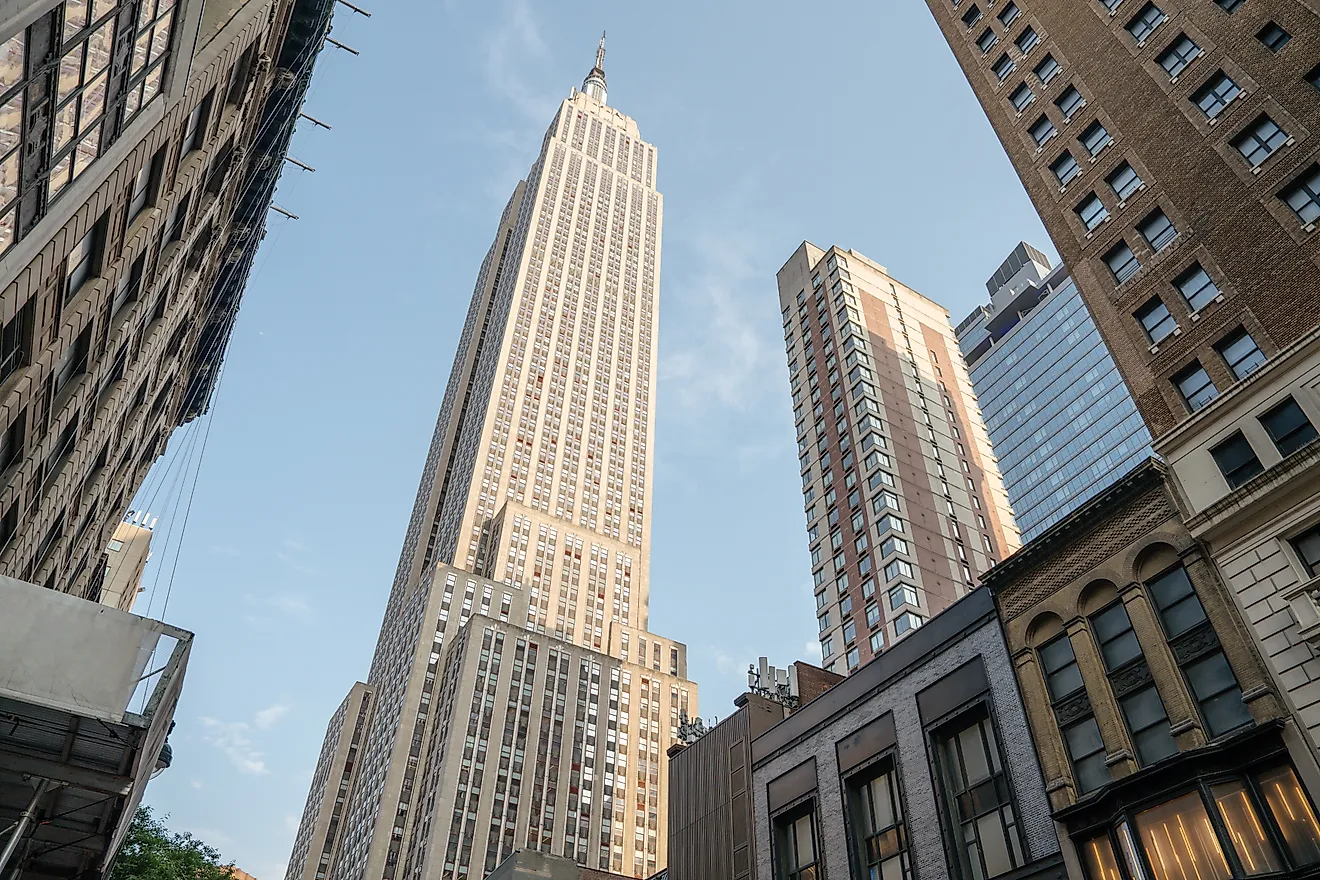
This volume of water in such a small space explains why Crater Lake is the deepest lake in the U.S., with an average depth of 1,148 feet and a maximum depth of 1,949 feet. It is more than 300 feet deeper than the second deepest lake in the US: Lake Tahoe. If one were to put the Empire State Building into the deepest part of Crater Lake, its antenna would be close to 500 feet underwater.
The other impressive factor of this lake is its exceptional water clarity. Most report being able to see 90 to 100 feet underwater, and the record clarity was 134 feet recorded in June 1997. The water is so clear because there are no inlets or outlets into the lake. It receives all of its water from snowmelt and rain at high elevations.
Lake Okeechobee: Wide but Crossable

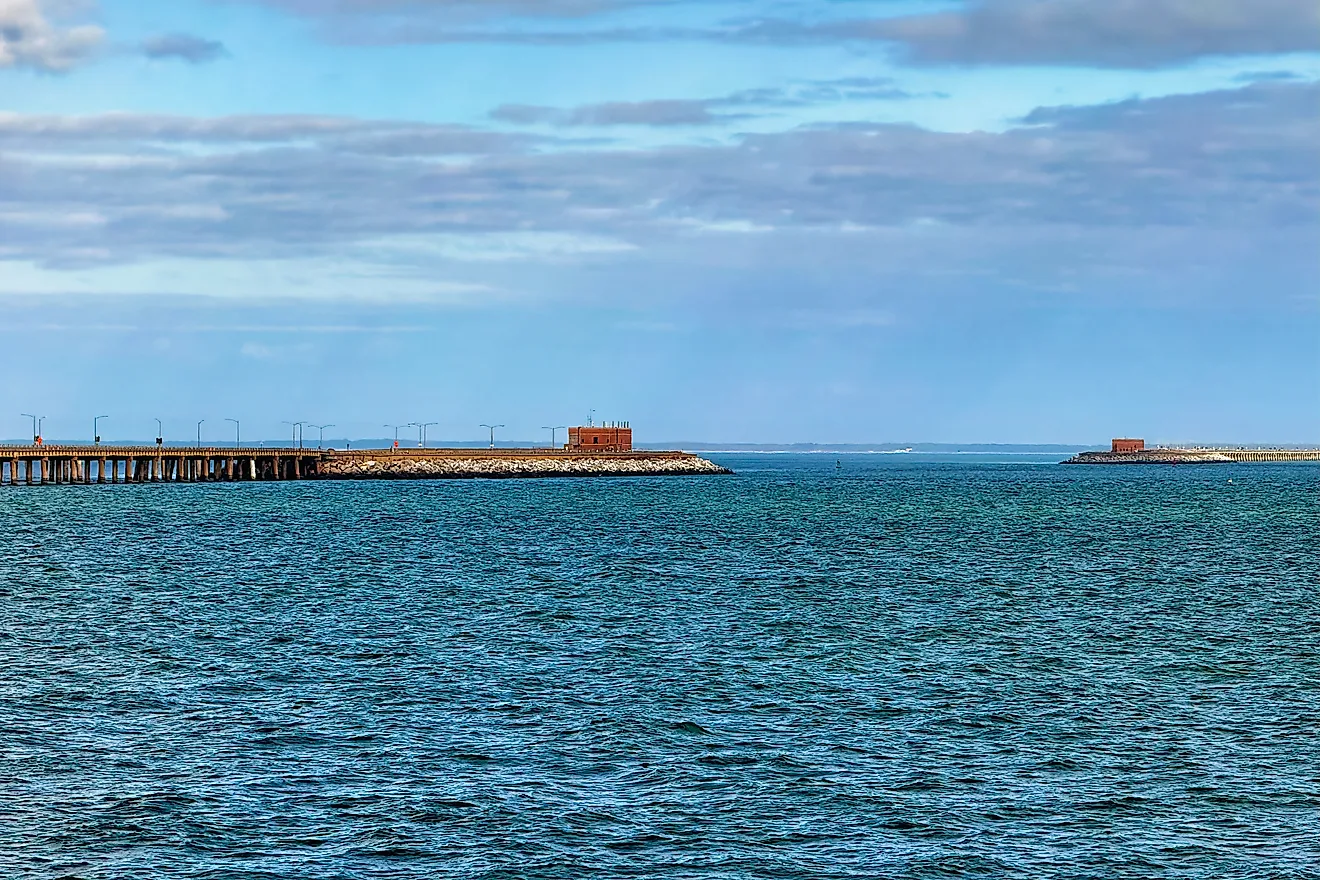
Located at the northern tip of the Everglades, Lake Okeechobee is the largest freshwater lake in Florida with a surface area of 730 square miles, which is close to 36 times larger than Crater Lake. It is 35 miles long and has a 135-mile shoreline.
However, it is smaller than Crater Lake in its water volume, with 1 trillion gallons of water at capacity. In addition, it is much shallower, with an average depth of 10 to 12 feet, but in some places the water is only a few feet deep, meaning a human could easily walk through it. Its primary water source is the Kissimmee River, which flows south to Lake Okeechobee.
Because it sits in a shallow basin, it can flood and cause damage to the Everglades and surrounding communities, as well as impact submerged plant beds. This is why the U.S. Army Corps of Engineers constructed the Herbert Hoover Dike, to earthern levee around teh lake, to hold back floodwaters. It also put in place a schedule to manage storage and outflow to keep the lake maintained during wet and dry seasons.
Shaped by the Sea

Crater Lake formed due to the eruption of a volcano: Mount Mazama. This 12,000-foot-tall volcano sits above a subduction zone, where the Juan de Fuca Plate is sliding beneath the North American Plate.
This type of subduction not only builds mountains, but also leads to increased pressures and temperatures, which in turn produce magma and the building blocks for volcanic eruptions. One such eruption occurred 7,700 years ago at Mount Mazama. The initial eruption sent forth 12 cubic miles of magma in the form of pyroclastic ash, pumice, and rhyodacite, covering a surface area of more than 1 million square miles. Smaller eruptions caused magma to flow out through lava vents.

With the exhaustion of the magma chamber, the mountain collapsed inward, forming a huge bowl-shaped caldera, which is 4,000 feet deep from the rim to the current bottom of Crater Lake. Other smaller eruptions would occur as well, causing the uplift of features such as Wizard Island. Around 6,000 to 5,000 years ago, the caldera was filled up with precipitation and snowmelt, creating the modern-day Crater Lake.
Although it is considered dormant today, Mount Mazama could erupt in the future, either within Crater Lake itself or just outside of it.
Shaped by The Sea

Lake Okeechobee formed around the same time, geologically speaking, as Crater Lake. It sits in a small depression that used to be underneath the ocean. Currents delivered an uneven amount of sedimentation during the Pliocene period from 5.33 to 2.58 million years ago.
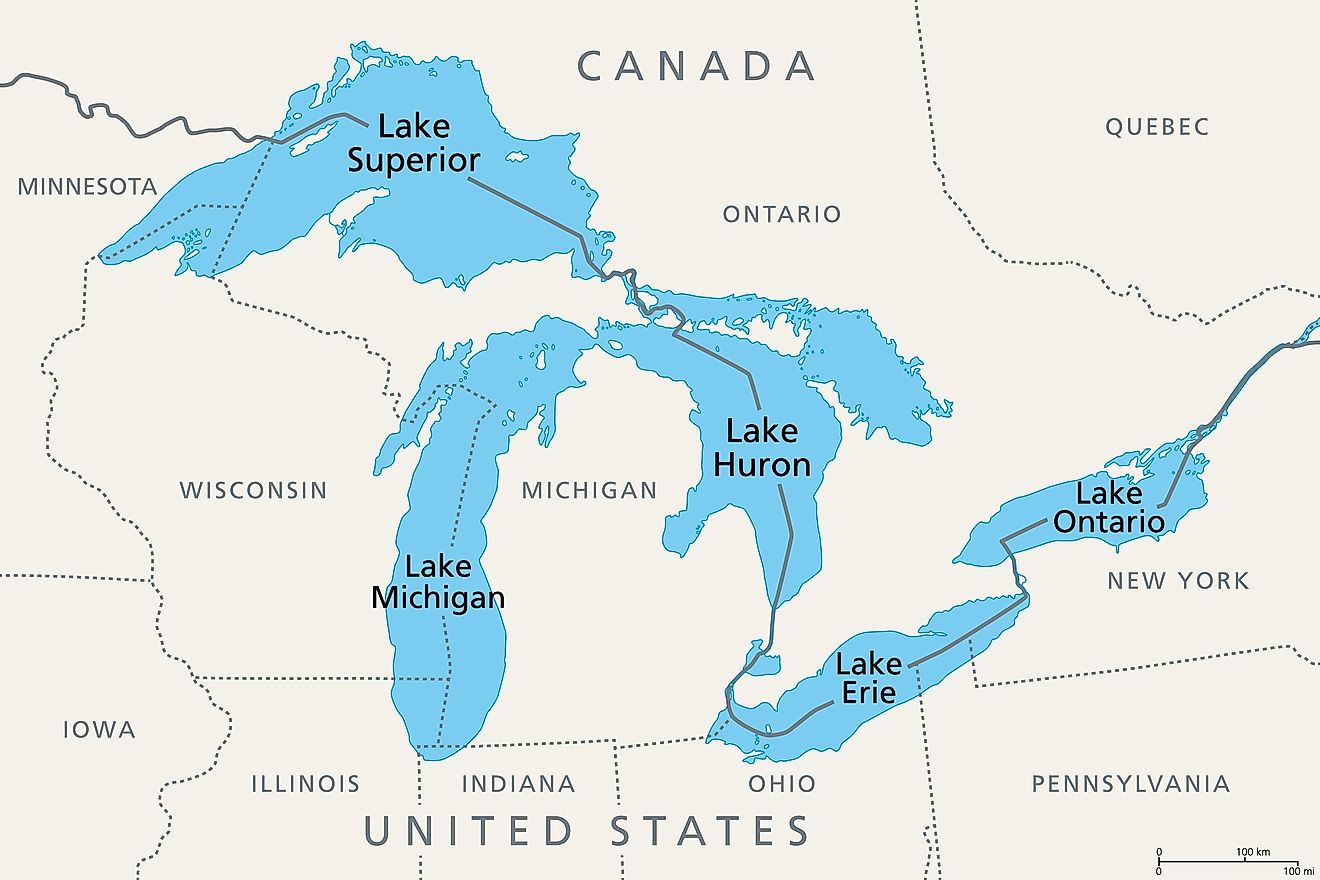
Lake Okeechobee formed in a depression left behind by an ancient sea floor, which filled with rainwater about 6,000 years ago. Florida itself has often been defined by various periods of flooding and uplift, such as during the Ice Age, when prehistoric natives lived on land that is now underneath the Gulf of Mexico. However, Florida never had any glaciers that would carve out the large basins that formed the Great Lakes. As a result, Lake Okeechobee's basin is much shallower than the Great Lakes.

Although at first this flat lake was likely saltwater, rainfall gradually drained out the salt with freshwater. It had a wetland zone and an open water zone, with the wetland zone being far bigger than the modern day, and could at times extend all the way to the Everglades.
Lake Okeechobee was inhabited by a variety of Native American groups including the Mayaimi and later the Seminole, with the Spanish being the first Europeans to see it in the 1500s. Its name comes from a word in the Hitchiti language meaning big water. Today, the lake has been heavily modified via a dike for flood control and the Okeechobee Waterway, a canal system to connect the Atlantic Ocean to the Gulf of Mexico. It cuts directly through the lake on its way to the Gulf.
Drinking Water vs. Postcard Views
Lake Okeechobee has a more immediate impact on the lives of humans than Crater Lake, as it provides clean drinking water for 6 to 9 million people in Florida, along with watering plants for the Everglades Agricultural Area. Both lakes are important places of recreation, as fishers come to catch bass in Lake Okeechobee, while hikers and national park visitors drive up to Crater Lake to get pictures of the deep blue water. However, the National Park Service does not sell water from Crater Lake, but individual hikers are known to taste the fresh water here.
While Crater Lake is a much smaller lake overall, if its water emptied out into Lake Okeechobee, it could fill it up nearly five times over. This difference demonstrates the importance of not just looking at the overall surface area of a lake, but also how deep it is, how much water it has, and how geology has shaped its depth and surface.