The Lakes Where Salmon Grow Largest Outside Alaska
Alaska produces the giant salmon that anglers dream about, but it is not the only place where these fish reach extraordinary sizes. Lakes in North America, Europe, and Patagonia have yielded salmon weighing more than 30 and even 40 pounds. Some of these fish belong to native populations. Others come from stocking programs that turned reservoirs and inland seas into productive sport fisheries. A few of the largest were caught in rivers after spending most of their lives feeding in a connected lake. Here are 10 lake systems where salmon grow largest outside Alaska.
1. Lago Argentino-Lago Anita System, Argentina

The Lago Argentino-Lago Anita system may hold the greatest potential anywhere for an exceptionally large Chinook salmon. These fish enter Argentina's Santa Cruz River from the Atlantic Ocean, then move through Lago Argentino and into the Río Caterina. That river links Lago Argentino with the smaller Lago Anita near the Upsala Glacier. By the time the salmon reach this remote spawning area, they have traveled several hundred miles. The Santa Cruz watershed is the only place in the world with a self-sustaining run of Atlantic-entering Chinook, a Pacific species introduced to South America decades ago.

In February 2024, an angler released a Caterina River Chinook measuring about 46.5 inches long with a girth of roughly 31.5 inches. A length-and-girth formula placed its estimated weight near 66 pounds. Local guides have described fish approaching 80 or 90 pounds, though those claims have not been confirmed on certified scales. The International Game Fish Association has separately recognized a 113-centimeter Chinook from the river as a length record. These salmon gain most of their weight at sea, but the connected lakes are a central part of their migration and spawning system.
2. Lake Michigan, United States

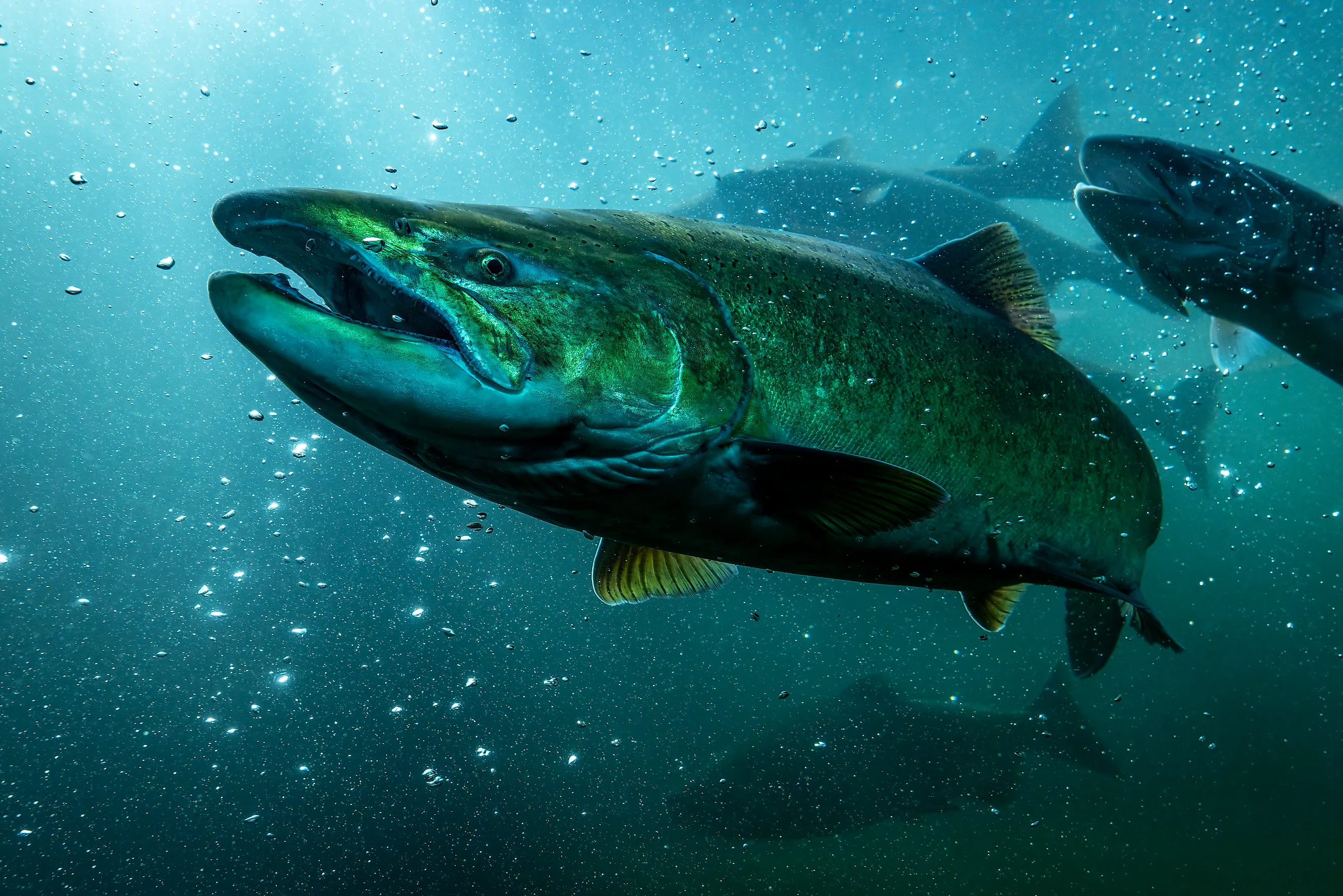
Lake Michigan holds the strongest documented claim for the largest salmon caught in open lake water outside Alaska. On August 7, 2021, Luis Ricardo Hernandez Martinez landed a Chinook near Ludington, Michigan. The fish weighed 47.86 pounds and measured 47.5 inches long, with a girth of nearly 28 inches. The catch broke a Michigan state record that had stood for 43 years.

Lake Michigan covers about 22,400 square miles and reaches a maximum depth of 923 feet. It contains enough cold, open water to support large populations of alewives, a small schooling baitfish that salmon feed on heavily. Chinook were introduced during the 1960s, partly to control an overabundance of alewives. The program also created one of the world's most valuable freshwater salmon fisheries. Lake Michigan now supports Chinook, coho, pink, and Atlantic salmon, and Chinook remain the largest by a wide margin. Most mature Chinook weigh between 10 and 25 pounds, which shows how unusual the 47.86-pound record fish was.
3. Lake Ontario, United States and Canada

Lake Ontario nearly matches Lake Michigan in record salmon size. The best-known fish tied to the lake weighed 47 pounds, 13 ounces. It was caught in New York's Salmon River in 1991, after leaving the lake to spawn. Because that fish was taken in a tributary rather than the lake itself, it does not count as an open-lake record. Ontario's largest recognized Chinook caught from open water weighed 46.38 pounds.

At 7,340 square miles, Lake Ontario is the smallest Great Lake by surface area. It is still an enormous salmon-growing environment. The lake reaches a depth of 802 feet and holds about 393 cubic miles of water. Chinook feed heavily on alewives, which are rich in fat and travel in large schools. New York and Ontario together stock millions of salmon and trout in a typical year, though the totals shift with management plans. Wild Chinook also spawn in several tributaries. The combination of stocking, natural spawning, and abundant prey has kept Lake Ontario within ounces of the Great Lakes size record.
4. Lake Vänern, Sweden

Lake Vänern stands apart because its largest salmon are not introduced Pacific Chinook. The lake supports the Gullspång salmon, a naturally landlocked form of Atlantic salmon that has been cut off from the sea for roughly 9,000 years. Individual fish can exceed 20 kilograms, or about 44 pounds, making this the largest surviving landlocked Atlantic salmon population in the world.

Vänern is also vast. It covers about 2,180 square miles, which makes it the largest lake in the European Union. Young salmon leave their birth rivers and enter the lake, which serves as a freshwater substitute for the ocean. There they feed on smaller fish such as vendace and smelt before returning to flowing water to spawn. Their available habitat has shrunk sharply. Dams and river modifications reduced a long stretch of historic spawning water to only a few accessible reaches. Hatchery production helps sustain the fishery, but wild Gullspång salmon remain rare. Their exceptional size is matched by their conservation importance.
5. Coeur d'Alene Lake, United States

Coeur d'Alene Lake produced one of the largest certified landlocked Chinook ever caught in the western United States. On September 13, 1987, Jane Clifford landed a salmon weighing exactly 42 pounds. The fish measured 41.25 inches long, with a girth of nearly 30 inches. More than three decades later, it remains Idaho's official freshwater Chinook record.
The lake covers about 49 square miles and has more than 100 miles of shoreline. Its deepest point is close to 220 feet. Those dimensions are modest next to the Great Lakes, but Coeur d'Alene supports a productive food web for salmon. Chinook there feed mainly on kokanee, a landlocked form of sockeye salmon. The population can also spawn in the Coeur d'Alene River and several connected tributaries. Idaho biologists count salmon nests to gauge how successfully the fish are reproducing, and the number of young salmon entering the lake changes sharply from one year to the next. That fluctuation affects both catch rates and average size, since a smaller group of salmon can leave more prey available for the survivors.
6. Lago Puelo, Argentina

Lago Puelo entered the conversation about giant salmon after an exceptional catch in March 2026. The Chinook weighed more than 18 kilograms, or roughly 40 pounds. It was taken near El Desemboque and was described as the largest documented salmon from that part of the watershed, exceeding the previous local mark by about 2 kilograms.
The lake lies in Chubut Province, near the border between Argentina and Chile. It covers about 17 square miles and reaches depths greater than 590 feet. Its waters eventually drain toward the Pacific Ocean through the Puelo River system. Chinook are not native to Patagonia. They descended from fish introduced elsewhere in Chile and later spread through connected rivers. Their success has been striking, and mature salmon now move between the Pacific, the rivers, and the deep Andean lakes. The 18-kilogram fish was not submitted as an International Game Fish Association record, so it stands as a regional benchmark rather than a world mark. Even so, it confirms Lago Puelo as a genuine 40-pound salmon system.
7. Lake Superior, United States and Canada

Lake Superior is the world's largest freshwater lake by surface area, covering about 31,700 square miles. It holds roughly 2,900 cubic miles of water and reaches a maximum depth of 1,332 feet. Despite that scale, its salmon usually grow more slowly than those in Lakes Michigan and Ontario. Superior is colder and less biologically productive, so there is generally less food to fuel rapid growth.
The lake has still produced a 33-pound, 4-ounce Chinook. That fish was caught in Minnesota waters in 1989 and remains tied for the state record. A second Chinook of the same weight came from the Poplar River, which feeds the lake. The open-lake fish measured more than 42 inches long. Most Lake Superior Chinook are far smaller. Many weigh fewer than 10 pounds, and a fish over 20 pounds is considered exceptional. Chinook, coho, and pink salmon all reproduce within the basin. The 33-pound record reflects an unusual combination of age, survival, and access to abundant prey in a lake that rarely produces giants.
8. Fort Peck Reservoir, United States

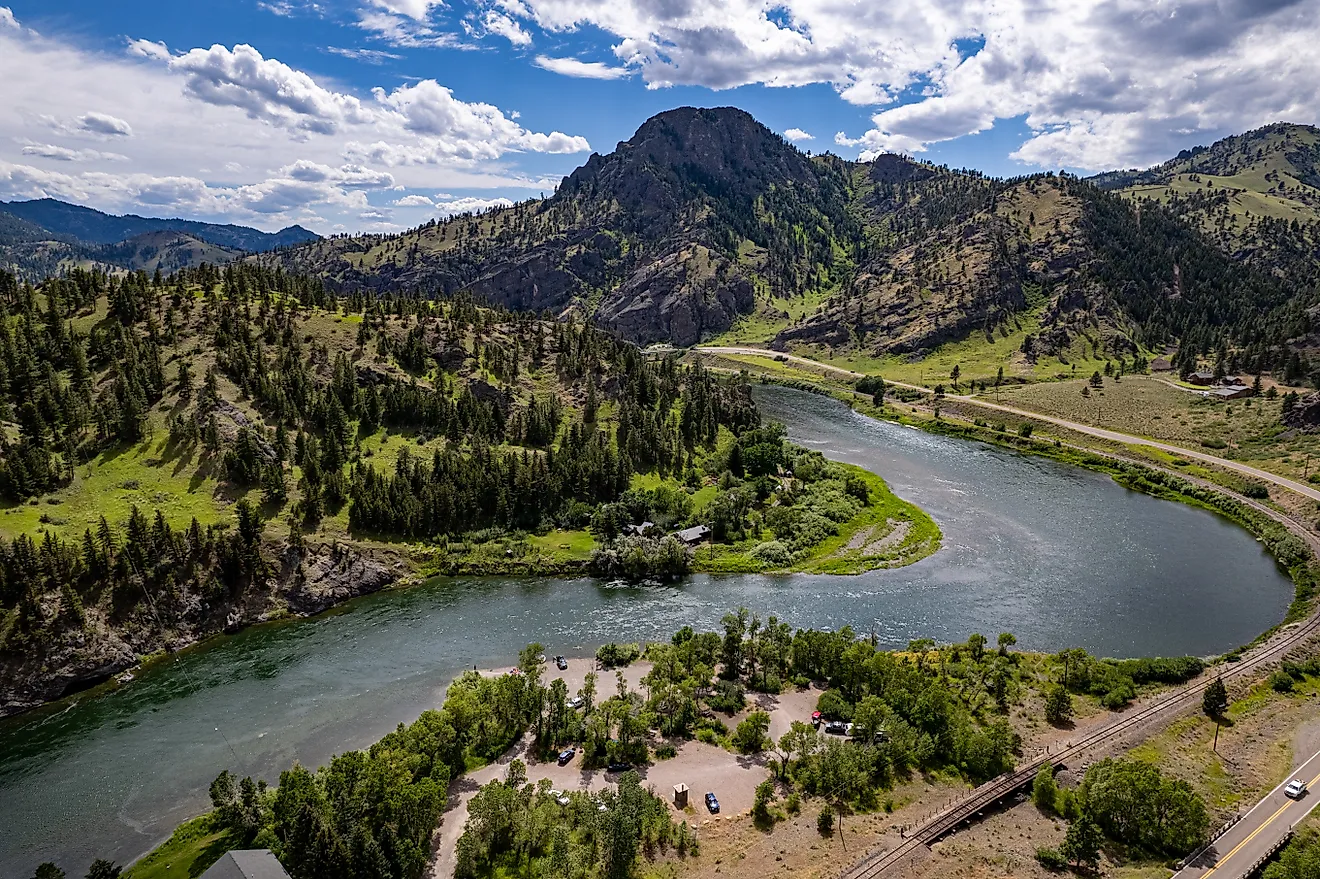
Fort Peck Reservoir is Montana's only major Chinook salmon fishery. It was created by the construction of Fort Peck Dam on the Missouri River. The reservoir stretches for about 134 miles and covers roughly 245,000 acres when full. Deep sections exceed 200 feet, which provides the cold summer water salmon need.
On August 9, 2024, Jim Fauth caught a Chinook weighing 32.62 pounds east of Fort Peck Marina. The salmon measured 38 inches long, with a 28-inch girth. It replaced a 32.05-pound state record set in 2020. The narrow gap between those two catches shows that Fort Peck can consistently produce fish near the 30-pound mark in strong years. Its salmon cannot maintain a stable population on their own. State crews collect eggs from mature adults, raise the young in hatcheries, and release them back into the reservoir. Those fish feed mainly on cisco and other open-water baitfish, and the trophy fishery depends on both prey conditions and continued hatchery support.
9. Lake Oahe, United States

Lake Oahe is a vast Missouri River reservoir that extends from central South Dakota into North Dakota. It covers roughly 370,000 acres and runs for more than 230 miles. The reservoir reaches depths near 200 feet close to Oahe Dam, and those lower sections hold enough cold water to support landlocked Chinook through the summer.
South Dakota's record salmon came from Lake Oahe in July 2016. Darrick Koch caught the 31.55-pound fish while trolling near the dam, and it measured 36 inches long. Salmon in the reservoir feed on rainbow smelt, lake herring, and other schooling fish, so their growth can shift quickly when prey populations rise or fall. Natural spawning is very limited. Mature adults are collected instead at the Whitlock Bay Salmon Spawning Station, where eggs are removed and raised in controlled conditions before the young salmon are returned to the reservoir. This program has supported the fishery for decades. Oahe's record shows that a managed prairie reservoir can grow a Chinook to rival fish from much larger natural lakes.
10. Lake Sakakawea, United States

Lake Sakakawea is one of the largest reservoirs in the United States. It covers about 307,000 acres and stretches for roughly 180 miles across western North Dakota. The deepest water lies near Garrison Dam, where depths approach 180 feet. Chinook were first stocked in the reservoir in 1976 to make use of this cold, open-water habitat.
North Dakota's official Chinook record weighs 31 pounds, 2 ounces. Thomas Schwartz caught the fish in the Missouri River system in 1986. The record does not clearly identify it as an open-water Sakakawea catch, so it carries more geographic uncertainty than the records from Fort Peck or Lake Oahe. Even so, Lake Sakakawea has produced many salmon over 20 pounds. The fish rely heavily on rainbow smelt and other open-water prey, and they depend on hatchery support because natural spawning is minimal. Water level is another variable. When the reservoir drops, cold-water habitat can shrink and prey can scatter. Strong years can still produce remarkably heavy salmon when food and temperature line up.
What Allows Lake Salmon to Grow So Large?
There is no single recipe for a 30- or 40-pound salmon. Lake Michigan and Lake Ontario offer vast cold-water feeding grounds with dense alewife populations. Fort Peck, Oahe, and Sakakawea depend on hatcheries to replace natural spawning. Lake Vänern preserves a native Atlantic salmon lineage that has spent thousands of years adapting to fresh water. Patagonia's largest Chinook grow at sea before passing through lakes on migrations that can cover hundreds of miles.
The record figures also need context. Lake Michigan's 47.86-pound fish was caught in open water and weighed on a certified scale. Lake Ontario's 47-pound, 13-ounce giant came from a tributary. The 66-pound Patagonian fish was estimated from measurements and then released. These are different kinds of evidence, but the conclusion is clear. Anglers do not need to travel to Alaska to find enormous salmon. Several lake systems outside the state have produced verified fish above 30 pounds, and at least five have reached or passed the 40-pound mark.