The North American Lakes Losing Native Fish Fastest
The rapidly dwindling endemic fish populations of several North American lakes appear to be part of a recent, rather terrifying, escalating trend. Consider the following, based on University of Arkansas research: "40% of native freshwater and diadromous fish species across the continent are currently classified as imperiled." This information isn't always front-page news; however, it should be noted that such developments are a major warning sign of severe, systemic environmental degradation and a clear sign that the foundations of an ecosystem are collapsing. This is important because fresh bodies of water are among the most vital natural resources on Earth. Irreversible shifts in water quality, pollution, invasive species, rising water temperatures, and depleted food webs are among the potential causes of these extinction events, according to leading scientists.
These problems are, in fact, fast becoming a worldwide phenomenon. According to sources at iucn.org, a paper titled "The World's Forgotten Fishes" reports that "One-third of freshwater fish face extinction." Freshwater fisheries are a primary source of sustenance for hundreds of millions of people across Africa, Asia, and South America...and this aquatic decline also seeks to undermine the commercial fishing business as well. In a glaring report warning of imminent disasters, scientists at sciencedirect.com have clearly stated that "Global migratory freshwater fish populations have dropped by over 80% since 1970." Severe, irreversible disruptions to the wildlife food chain (brought about by the decline of freshwater ecosystems and their related fisheries) could have devastating, far-reaching consequences for humanity.
The five lakes examined here represent the most documented cases of native fish decline in North America, driven primarily by invasive species and climate-related habitat loss.
Lake Michigan (WI/IL/IN/MI - East North Central states)

It is a recurring theme these days: zebra and quagga mussels (both invasive species) wreaking havoc in American waterways. Such is the case in Lake Michigan, where these depth dwellers have succeeded in depleting the plankton on which larval fish depend for survival. Specifically, this refers to fresh Lake Whitefish (Coregonus clupeaformis), an iconic commercial staple of Lake Michigan. Whitefish harvests have collapsed from nearly 7 million pounds (3.17 million kg) in 2009 to less than 2 million pounds (907,000 kg), according to the Michigan Sea Grant 2020 Status of Michigan Commercial Fisheries. This matters enormously because whitefish account for roughly 95% of all commercial Great Lakes fish sales, making the population collapse an economic crisis as much as an ecological one. Together with Lake Huron, Lake Michigan represents arguably the worst example of native fish population collapse in the US. Whitefish, in particular, have survived many threats that have extirpated other species, and it is estimated that they have been an institution in the Great Lakes for millennia. This problem is further exacerbated by the fact that there are few to no solutions in dealing with it, as no chemical exists that can tame the mussel population at such an incredible scale (Lake Michigan covers 22,406 mi², or 58,031 km²). In other words, this ancient lake seems destined to undergo a permanent, unnatural shift.
Lake Huron (Ontario/Michigan - CA and the US)

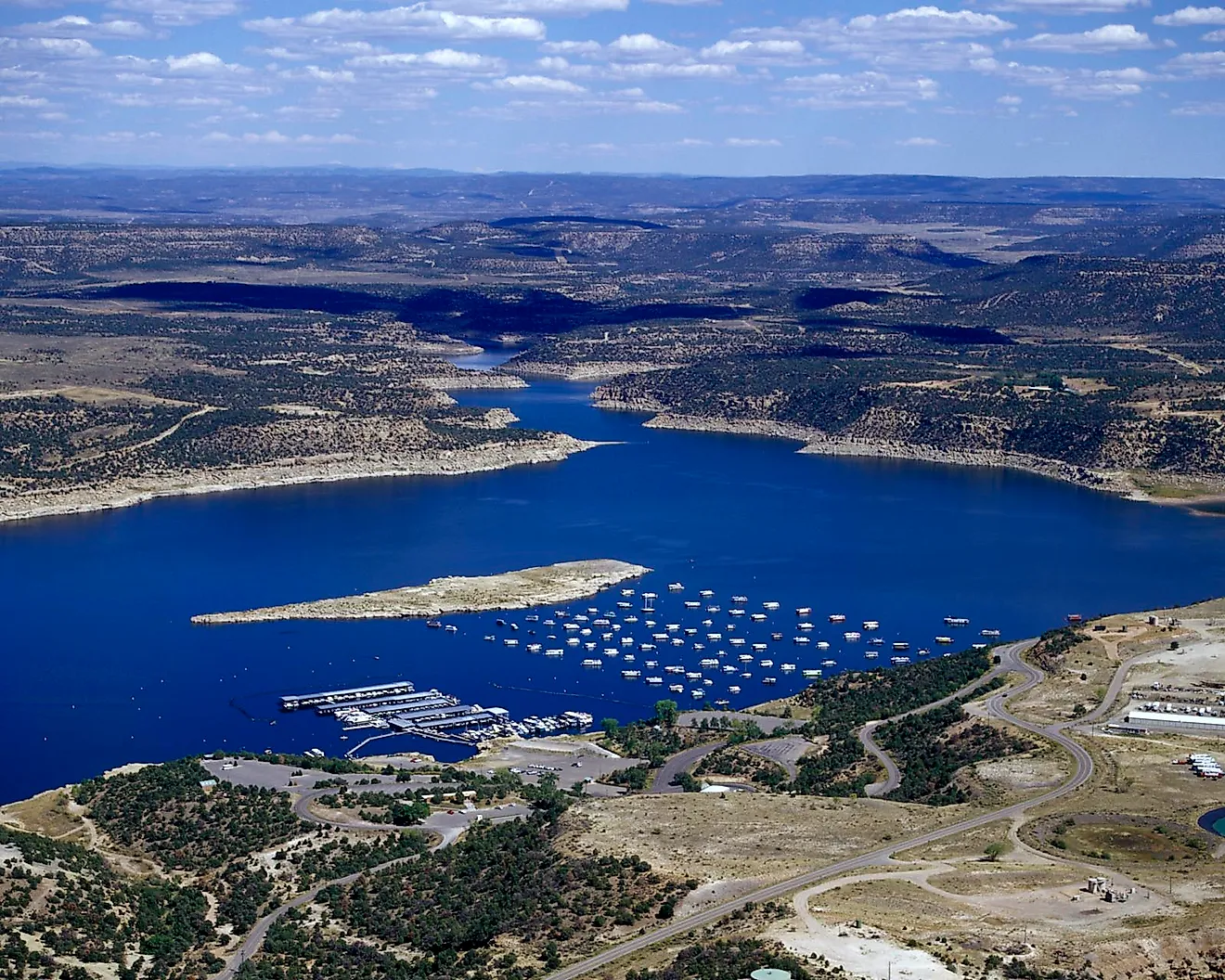
Perhaps equally disastrous, Lake Huron is also dealing with a historic Whitefish near-extinction event. That said, while this is taking place, there is some good news - Lake Trout and Walleye are making a comeback. The main focus should be on the depletion of Whitefish on the "forgotten" Great Lake, or "La Mer Douce" (the freshwater sea), as it was once nicknamed by French explorers. Once again, the culprits are the zebra and quagga mussels (which should come as no surprise given the connection to Lake Michigan, via the Straits of Mackinac, etc.). While not previously mentioned above, there are experimental restoration efforts underway; federal, state, and even tribal agencies are working together to try stocking whitefish eggs among inland rivers (such as the Jordan River in Lake Charlevoix), the idea being to prime the baby fish in more nutrient-rich waters before entering the lakes proper. The concept of using inland ponds as primary fish nurseries is also being explored. Lake Huron is the second-largest Great Lake by surface area, with around 30,000 islands and the longest shoreline of any of the five lakes.
Lake Ontario (Ontario/New York - CA and the US)

Lake Ontario, the easternmost and smallest of the Great Lakes (7,340 mi², or 19,009 km²), has also been dealing with mass die-offs of native fish species (as well as an overall decline in long-term native biodiversity). According to WXXI news, "In May and June 2025, thousands of dead alewives, a small, invasive silver fish, washed up along the Lake Ontario shoreline", an event which some have attributed to natural causes (i.e., a recurring spring phenomenon where the tiny fish perish due to temperature changes). While the alewives are considered invasive, they should be seen as a warning sign whenever there's a larger-than-normal increase in die-offs (as happened there in 2025). Such occurrences seem to signal unseen ecological changes. Taking this incident involving alewives into account, along with other native species such as lake trout, lake sturgeon, cisco, and whitefish, all of which are potentially endangered, further research is needed. Again, the potential offenders are the obvious zebra and quagga mussels, but there are other invasive animals present here, too, like the Sea Lamprey. Also worth noting is the presence of non-native salmonids (Chinook, Coho, and Steelhead), which have been stocked since the 1960s, and how they might have altered the ecosystem.
Adirondack Lakes (New York)

There appear to be two main problems causing loss of native fish species (e.g., brook trout, lake trout, and Atlantic salmon) in the Adirondack Lakes: lake "browning" due to climate change and the presence of invasive species. The first example causes cold-water fish to retreat into ever-shrinking zones within the lakes, which ultimately become uninhabitable due to oxygen loss in deep water. A potential source of the so-called "browning" here is organic runoff (an increase in dissolved organic carbon, or D.O.C.), which prevents sunlight from penetrating the deepest sections of the water. Similarly, and perhaps in tandem with this, there's the issue of invasive species, like the smallmouth bass. Essentially, these bass are simply outcompeting natives for prey, depleting the available food supply. In fact, a 20-year Cornell University study showed that "manual culling of bass [has largely] backfired, [and this] caused the bass to rapidly evolve, reproduce earlier, and [subsequently] multiply."
Lake Powell (AZ/UT)

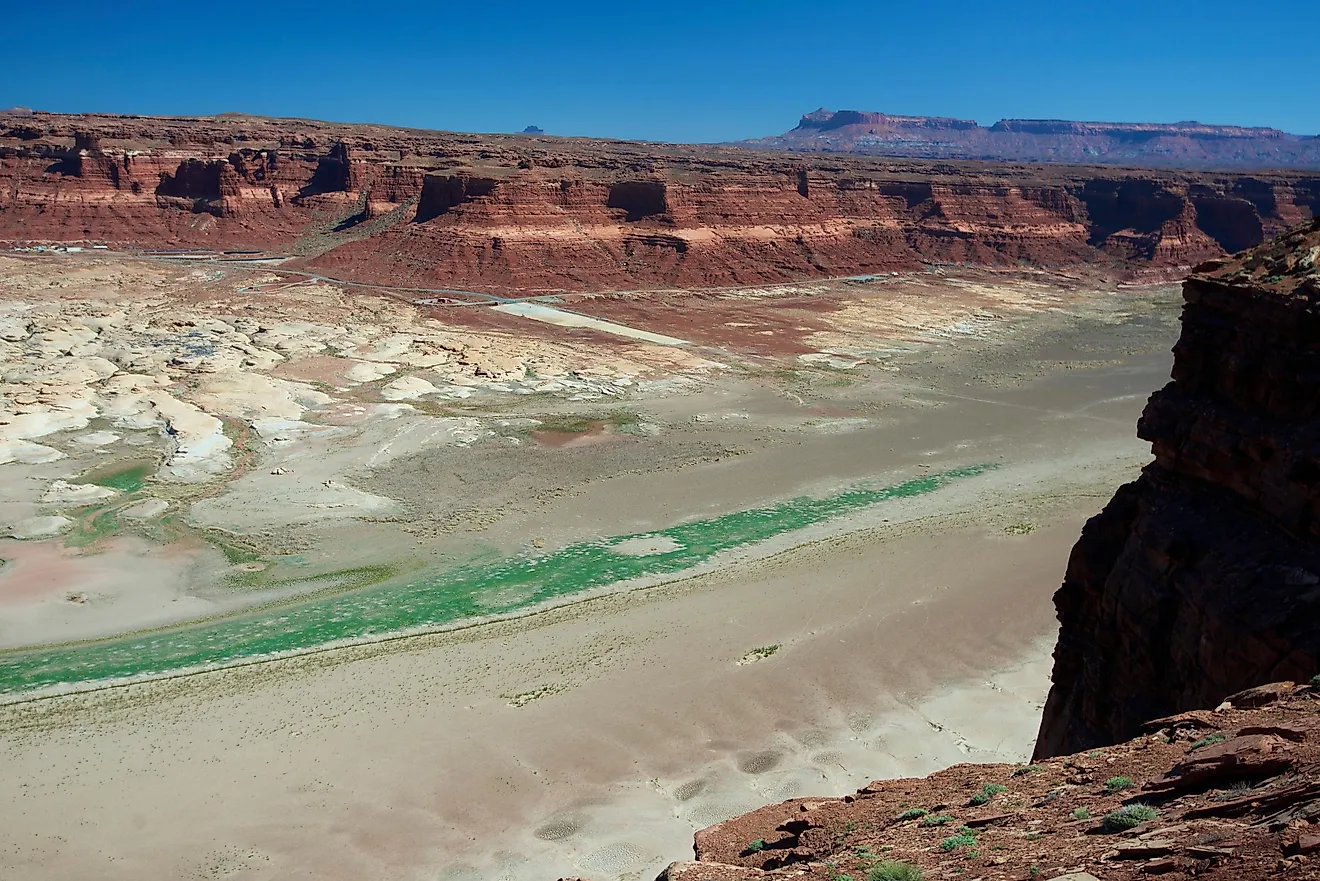
On the other side of the US, bodies of water such as Lake Powell are also dealing with invasive smallmouth bass. In this case, however, the greatest threat to native species (such as the humpback chub and Bonytail) stems from the lake's drastically reduced water levels. According to the Bureau of Reclamation, "Severe climate-driven drought has severely shrunk Lake Powell, dropping it to approximately 126 feet (38 meters) below full pool as of January 2025." This produces two problems: warmer waters, which are not ideal for such native species, and proliferation of the aforementioned bass, which thrive in shallower areas. Officials are attempting to use eDNA (genetic material shed into the water column) to track said invasive species, and even physically release cooler water into the lake (as practiced by the Bureau of Reclamation). It is hoped that these early detection and habitat modification efforts will ultimately lead to the reversal of the decline in Lake Powell's native fish species.

Mostly invasive, but also climatological
These are not the only Lakes dealing with ecological issues and endangered fish species, of course, but they are among the major current cases. At this time, most problems stem from the rapid aggregation of various invasive species, but climate change at both local and global scales also plays a role. In some instances, both appear to be working in tandem, further fueling environmental degradation.