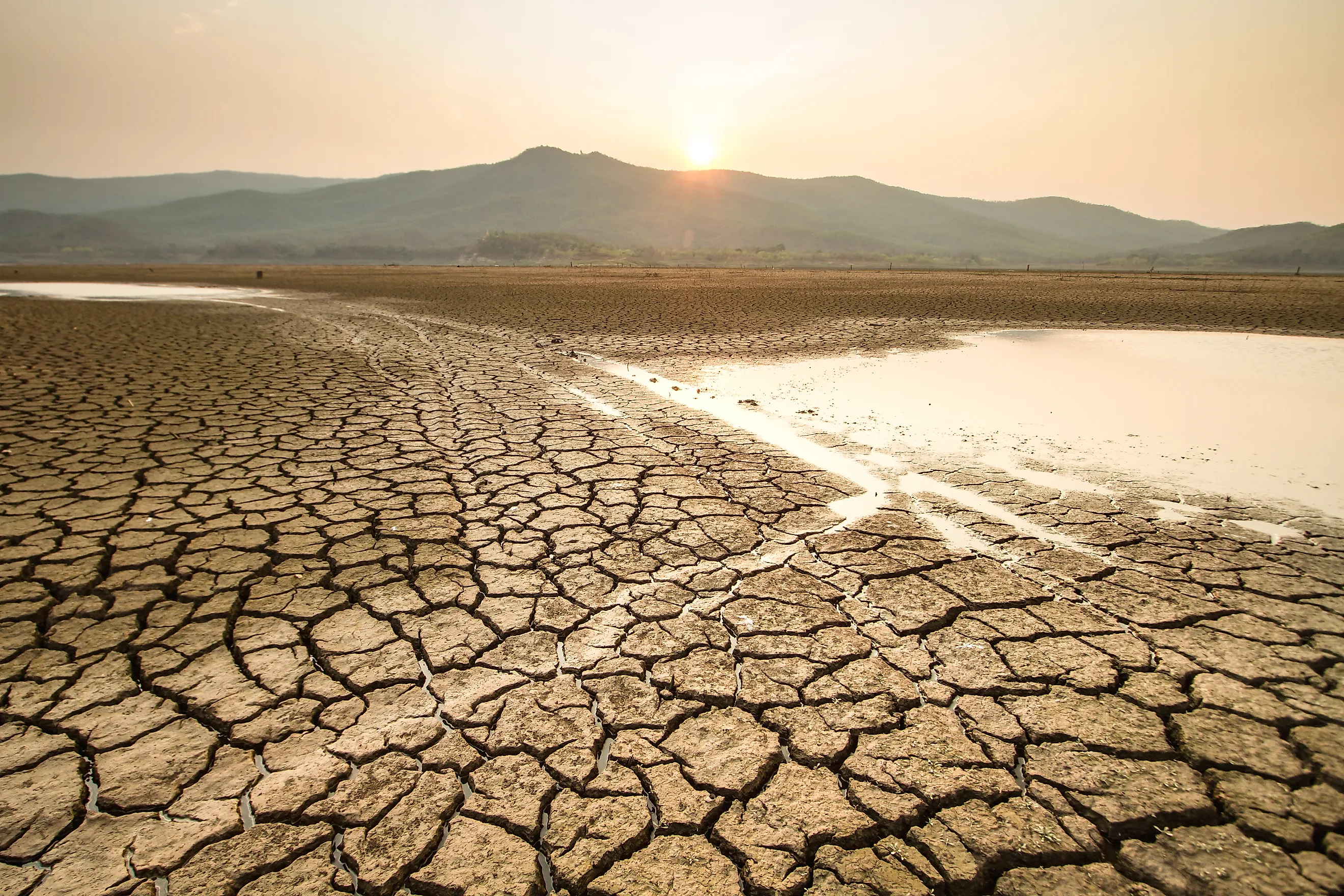
Why Some Lakes Are Disappearing Forever
Lakes can and do disappear, a process that often seems unlikely given their size and importance to local ecosystems. Yet the phenomenon appears throughout both modern records and prehistoric landscapes. Many lakes shrink slowly as water levels decline, while others reach a point where loss becomes permanent. The causes reflect a mix of human pressures and natural forces that influence inflow, climate, and evaporation. These factors help explain why some lakes continue to recede and why certain basins face conditions that make recovery difficult. A shrinking lake also signals changes in surrounding water systems already noted by hydrologists.
What Do the Statistics Say?

Although complete disappearance is rare, shrinking is common in lakes around the world. A 2023 study in Science reported that about 53 percent of the world’s largest lakes and reservoirs are losing water storage (volume). Because lakes hold 87% of the world’s surface freshwater, this trend has significant implications. Researchers track these changes to assess long-term shifts in regional water security.
Some of these lakes may eventually disappear. The reasons vary, but many connect to human use and changing climate patterns. The next sections outline both types of pressure, beginning with the effects of human demand for freshwater resources.
Humans Are Over-Taxing Lakes For Their Water Needs

The economic concept known as the tragedy of the commons is often applied to ecological issues and helps explain the shrinkage of many lakes. When a resource seems vast and accessible to everyone, users may assume their individual actions have little effect. This leads to overuse and eventual degradation. The pattern appears in many systems, including fisheries and grasslands, and it plays a role in the decline of some lakes. Small increases in demand across many users can lead to substantial reductions in available water.
As the world’s population has grown, so have demands for freshwater used in agriculture, drinking supplies, and industry. These pressures have a direct impact on lake size. Each sector depends on a predictable inflow which becomes strained when supply drops.
Water withdrawals take different forms, and most do not involve drawing water from the lake itself. More often, rivers that feed a lake are diverted, reducing essential inflow. Without those tributaries, a lake begins to shrink as evaporation continues without replacement. Dams and irrigation projects can intensify this effect. The Aral Sea is a well-known example of severe shrinkage caused by large-scale diversion of its tributaries.
Climate Change is Altering Weather and Evaporation Patterns

Long before human-driven climate change, shifts in weather patterns dried lakes around the world. Utah’s former mega lake, Lake Bonneville, with the modern Great Salt Lake as its remnant, is one example. Recent changes linked to human activity now produce similar effects.
A warming climate influences lake levels in several ways. Higher temperatures increase evaporation, especially in regions becoming drier. When combined with reduced inflow from diverted rivers, the impact can be severe. This imbalance accelerates water loss when inflow no longer keeps pace with evaporation.

Changes in rainfall also matter. Climate shifts can alter seasonal or long-standing precipitation patterns, and the rainfall that once sustained a lake may move elsewhere. Such shifts alter the balance between water gained and lost during the year. Lakes that normally freeze during winter face additional stress when ice cover becomes thinner or less consistent, since ice reduces evaporation during colder months. With less protection, more water is lost.
What This Means For Lakes

Without intervention, some lakes may not recover once water loss begins. Drying conditions can accelerate further decline in a process known as aridification, which makes it harder for a lake to regain lost volume. In some cases, water levels reach a threshold where long-term recovery becomes unlikely, similar to prehistoric lakes that disappeared for natural reasons. Once this point is reached, restoration requires conditions that may no longer exist in the surrounding watershed.
These patterns highlight the importance of understanding how water stress affects lake systems. Their condition reflects broader decisions about freshwater use and the management of connected rivers and basins. Any progress in stabilizing lake levels signals improvement in the way water resources are managed.