How Deep Submarines Can Actually Go
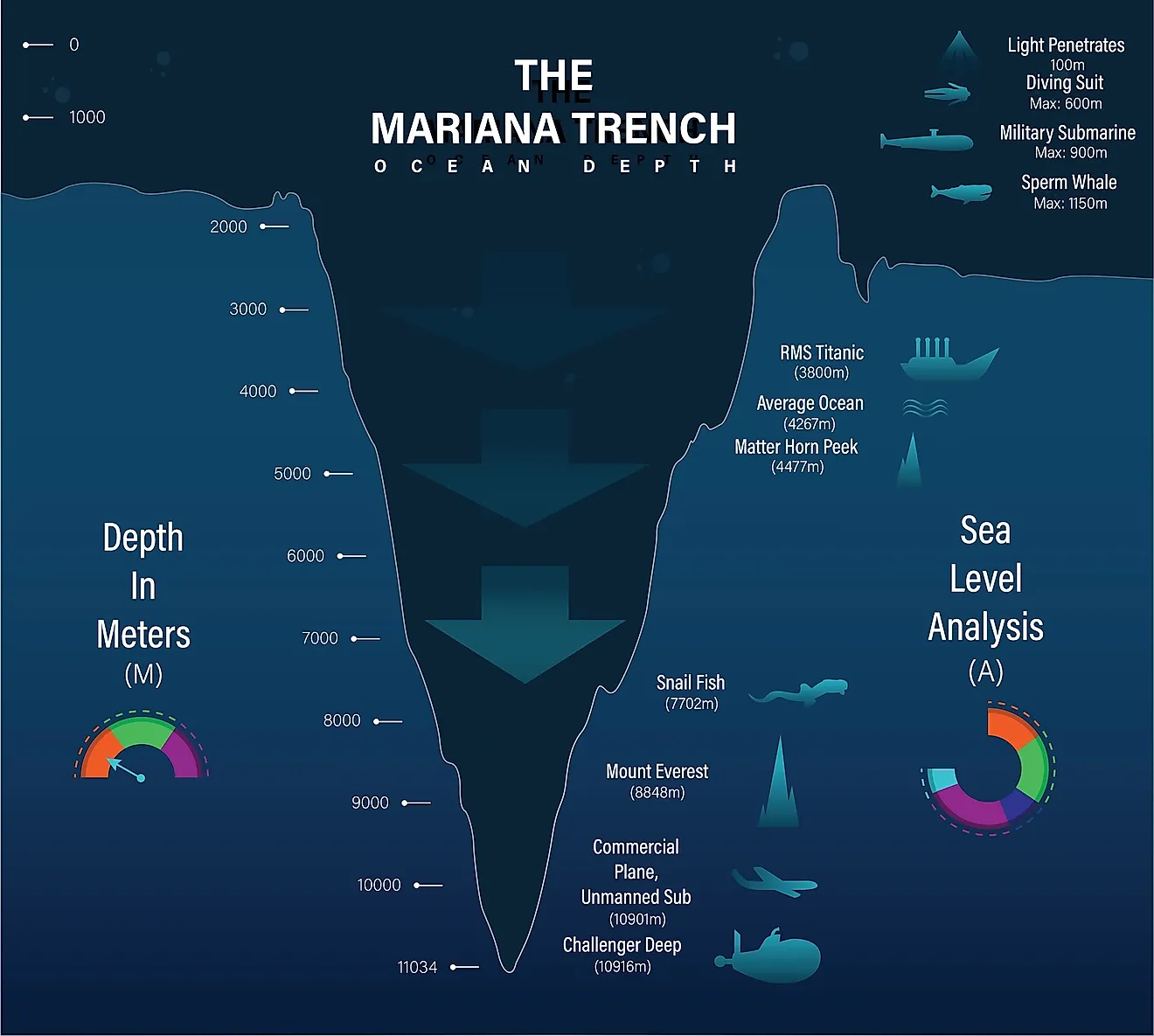
A modern U.S. Navy attack submarine can descend beyond 800 feet, but exactly how much farther is classified. Meanwhile, an American research submersible can carry three people more than four miles down, and specialized craft have reached Challenger Deep, 35,876 feet below sea level. Why the enormous gap? A military submarine has to move quickly, remain quiet, carry a large crew and weapons, and operate independently for weeks or months. A deep-sea submersible can sacrifice speed, living space, and endurance for a pressure vessel strong enough to withstand depths where the water exerts thousands of pounds of force per square inch.
How Deep Can US Navy Submarines Go?

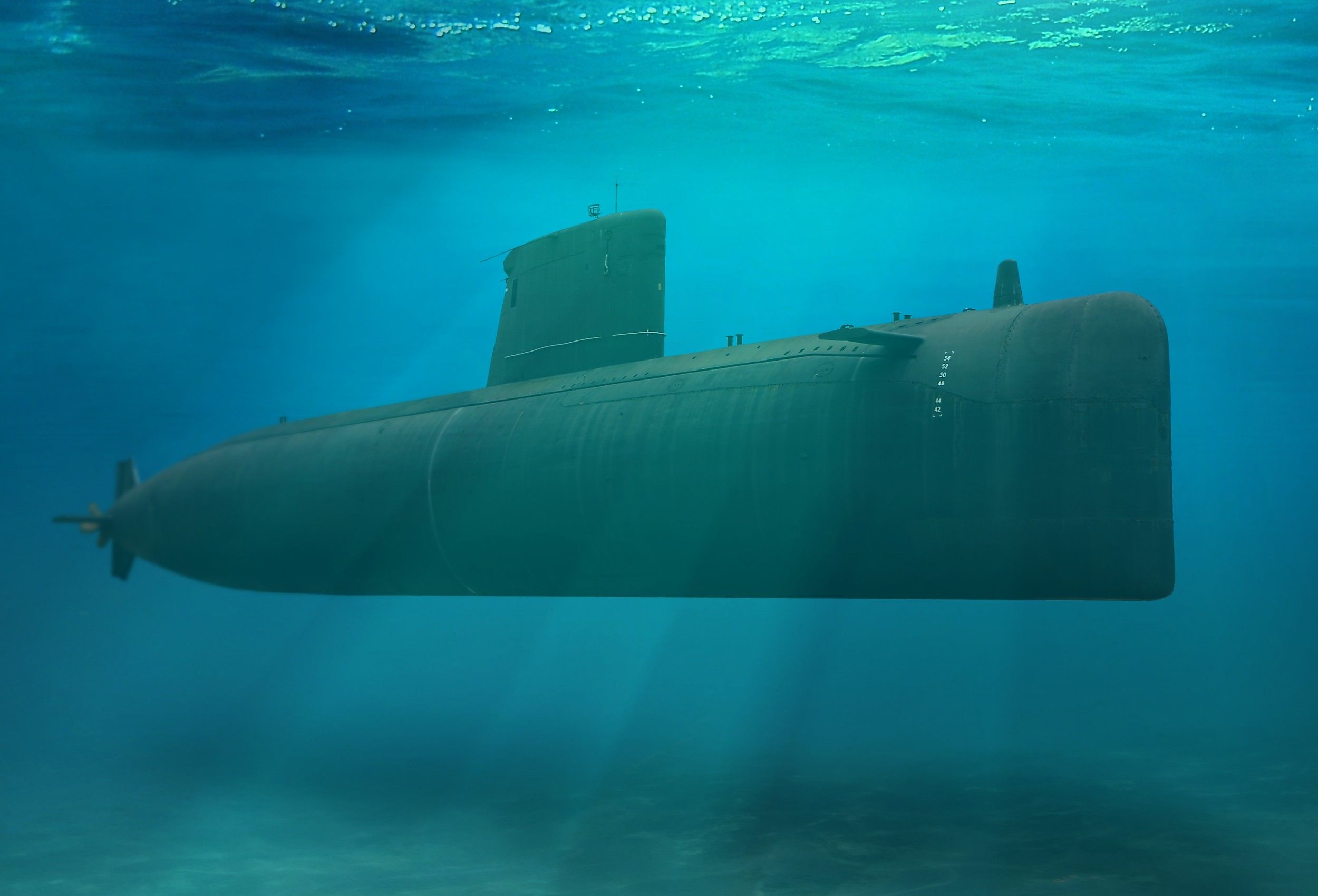
Public Navy material uses depth language such as "greater than 800 feet." The Navy gives that figure for Virginia-class attack submarines, including USS Hawaii, while official pages for Ohio-class boats similarly list test depth as greater than 800 feet. Unofficial claims cite depths down to 2,000 or 2,400 feet.
The Navy also distinguishes among several different depth limits. "Test depth" is a depth at which a particular submarine is actually tested. "Maximum operating depth" is the authorized limit during normal operations and is usually the test depth, although it can be reduced for an individual vessel. "Collapse depth" is the calculated depth at which the pressure hull would fail.
Why Doesn't A Military Submarine Dive Five Miles Down?

Pressure rises astonishingly quickly underwater. NOAA calculates that every additional 33 feet, or roughly 10 meters, of seawater adds about one atmosphere of pressure. At 100 meters, a vessel is already experiencing roughly 10 additional atmospheres from the water above it. At Challenger Deep, the deepest known point in the ocean, that translates to roughly 1,000 atmospheres of pressure. NOAA describes the pressure near the bottom as around eight tons per square inch.
A submarine's pressure hull has to resist that force while enclosing a comparatively enormous internal space. Military submarines need room for a reactor and propulsion machinery, sonar equipment, weapons, provisions, and well over 100 crew members. Increasing the strength necessary for extreme depths would add weight and impose enormous engineering penalties. Depth depends much more on pressure-hull strength, shape, construction, openings through the hull, material condition, and engineering safety margins. Navy specifications for pressure vessels include high-strength steels such as HY-80 and HY-100, while deep-diving research vehicles may use thick titanium pressure spheres.
How A Submarine Actually Dives

A submarine does use ballast tanks, but the process is more complicated than simply filling tanks with water to descend and air to rise. On the surface, air in the main ballast tanks helps keep the vessel positively buoyant. To dive, vents open and seawater floods into those tanks. Once submerged, the submarine is trimmed close to neutral buoyancy. Control surfaces and propulsion then help it change and hold depth, while smaller trim systems can compensate for changes in weight and balance. To surface, compressed air can force water out of the main ballast tanks and restore positive buoyancy.
Nuclear propulsion also explains why American military submarines can stay below the surface for so long. The Navy says its nuclear plants require no atmospheric oxygen, while submarines can manufacture oxygen and fresh water aboard. In practical terms, food supplies become one of the main limits on how long a patrol can remain submerged.
Submersibles Can Go Much Deeper

The vehicles that explore the deepest ocean solve a very different engineering problem. Rather than housing an entire military crew inside a long pressure hull, a human-occupied vehicle can place two or three people inside a compact sphere. A sphere is exceptionally useful under extreme external pressure because it distributes the force evenly across its surface. The personnel compartment of the American research submersible Alvin, for example, is a titanium sphere with walls about 2.9 inches thick.
Alvin is owned by the U.S. Navy and operated by Woods Hole Oceanographic Institution for the U.S. scientific community. Following its latest overhaul and recertification in July 2026, it is authorized to dive to 6,500 meters, or 21,325 feet, more than four miles below the surface. During testing in 2026, it reached 6,374 meters. That depth rating places about 99% of the world's seafloor within Alvin's reach. The distinction is important: Alvin has access to 99% of the seafloor, not that humans have explored 99% of it. NOAA reports that just 27.3% of the global seabed had even been mapped with modern high-resolution sonar by June 2025.
Some Vehicles Can Reach The Very Bottom

Alvin still cannot reach Earth's deepest trenches. Challenger Deep in the Mariana Trench is about 10,935 meters, or 35,876 feet, below mean sea level according to a modern pressure-based measurement published in 2021. That is roughly 6.8 miles down. Humans first reached its floor on January 23, 1960. U.S. Navy Lt. Don Walsh and Swiss engineer Jacques Piccard descended aboard the bathyscaphe Trieste. The Navy records their descent at about 35,797 feet, although the precise depth of Challenger Deep has been refined considerably since then as measuring technology improved.
Trieste looked nothing like an attack submarine. Most of its enormous body served as a buoyant float containing gasoline, while Walsh and Piccard sat inside a small spherical pressure vessel suspended beneath it. Releasable iron ballast pulled the craft downward; dropping that ballast allowed it to rise again. Modern full-ocean-depth craft use the same basic idea with far more sophisticated materials and systems. DSV Limiting Factor has repeatedly descended into Challenger Deep. Measurements collected during its dives helped researchers calculate the modern 10,935-meter estimate for the ocean's deepest known point.
Can A Submarine Drive Around On The Ocean Floor?

Ordinary military submarines are not designed to roam across the abyssal seafloor. Their job is to travel through the water column, and the majority of the ocean floor is thousands of feet deeper than publicly acknowledged U.S. submarine operating depths. Research submersibles are different. Alvin has seven thrusters that allow it to hover over difficult terrain, maneuver close to the seabed, or rest directly on the bottom. Its two manipulator arms can retrieve rocks, animals, fluids, and other samples for researchers.
Even these vehicles have limitations. Alvin dives for hours rather than months and depends on its support ship, R/V Atlantis, to carry it between research locations, launch it, recover it, and maintain it. Deep-diving HOVs are therefore better thought of as exceptionally strong exploration capsules than miniature versions of nuclear submarines.
The Ocean Is Much Deeper Than Most Submarines Need To Go
The U.S. Navy publicly acknowledges that its modern submarines operate beyond 800 feet but classifies more precise depth information. Alvin can descend 21,325 feet. Challenger Deep lies another 14,500 feet below even that. And despite decades of increasingly deep dives, most of the seabed remains poorly known. Modern sonar had mapped only 27.3% of it to contemporary standards as of June 2025. Going deeper is therefore not simply a contest to build a stronger hull. Each additional mile opens another part of a landscape humans have barely begun to see.