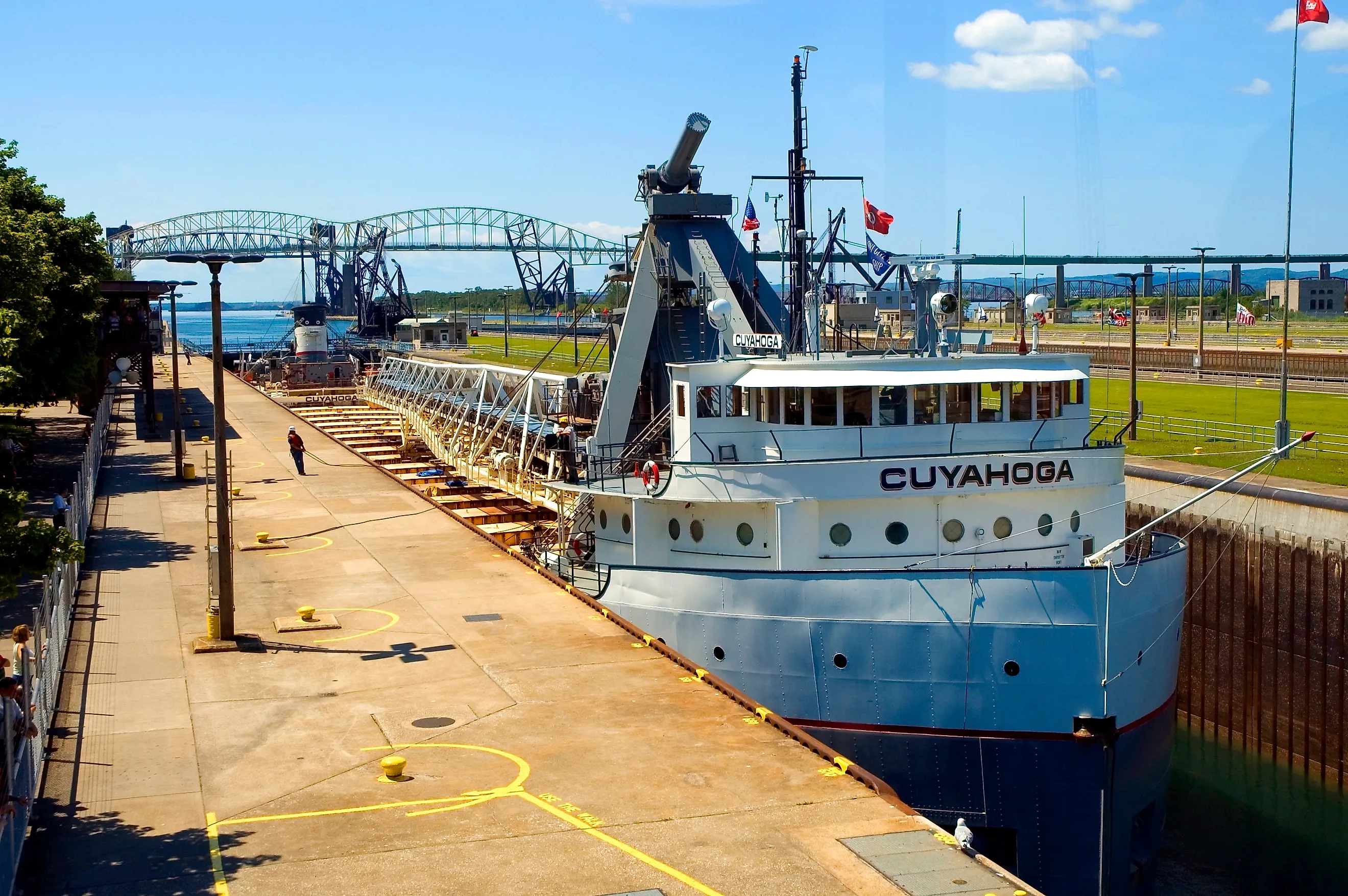
How Many Ships Pass Through The Soo Locks Every Year
About 4,500 vessels pass through the Soo Locks in a normal year, carrying up to 80 million tons of cargo between Lake Superior and the lower Great Lakes. The Army Corps of Engineers publishes that figure. A larger one, more than 7,000, appears on the agency's own project page for the same locks, and the two count different things. A lockage is not a ship, and a ship is not a season of trips, which is why published answers to this question run anywhere from 4,500 to 12,000.
The Corps Puts It At 4,500

The US Army Corps of Engineers, Detroit District, stated the figure plainly when it announced the 2026 season. More than 4,500 vessels maneuver through the locks annually, hauling up to 80 million tons of cargo. Iron ore, coal, wheat, and limestone rank among the commodities most often carried.
The same description appeared in the notices closing the two previous seasons. The wording covers a typical year rather than a single count. The locks themselves sit on the St. Marys River at Sault Ste. Marie, Michigan.
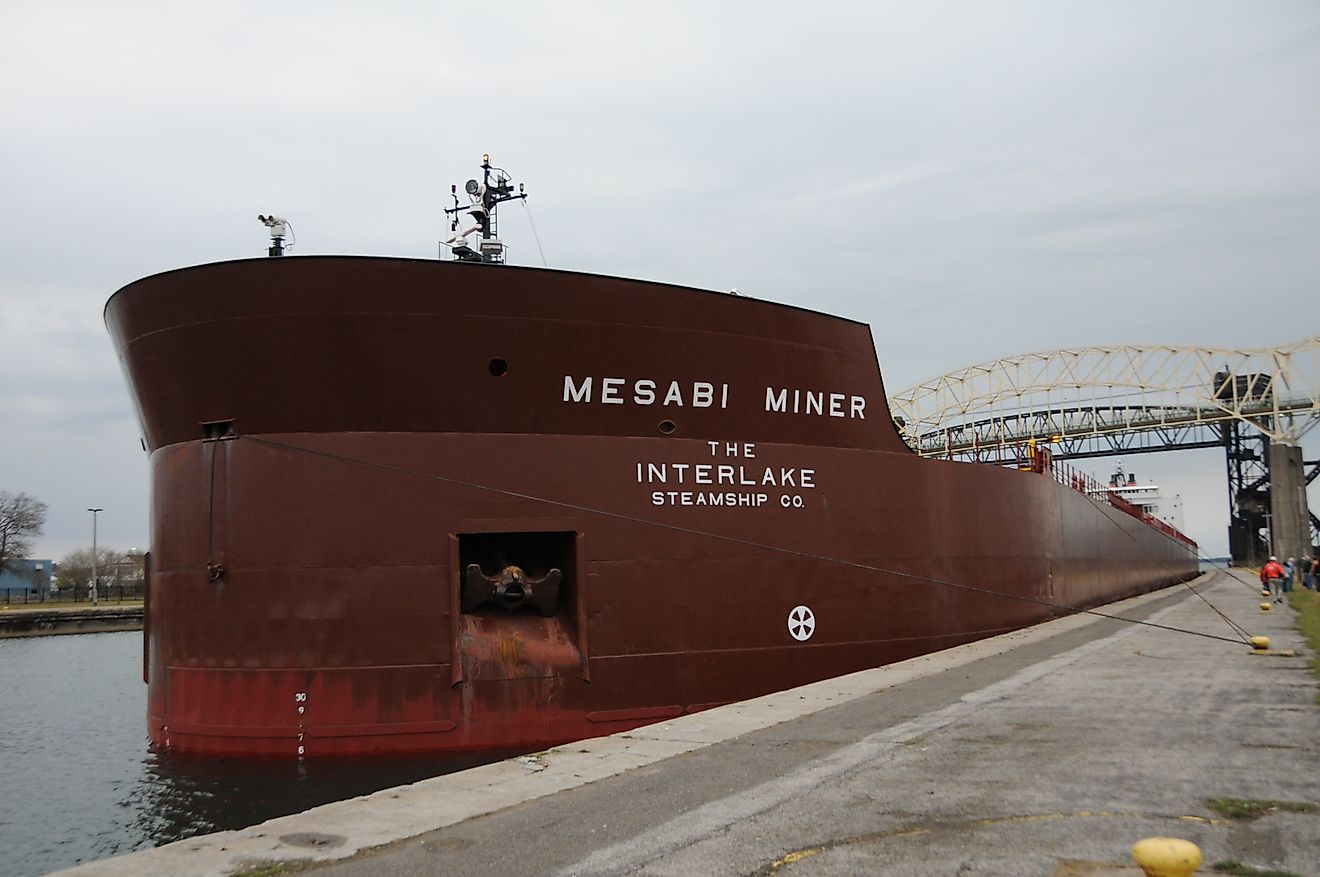
The chambers take government, commercial, and private vessels alike, which is how the agency describes who may pass. A 1,000-foot (305 m) ore carrier and a small motorboat both count as one vessel.
The Project Page Says Something Else

The Corps' dedicated Soo Locks page carries a different number, and it carries the number twice in two different units. A photo headline on that page reads that over 7,000 ships a year transit the locks. Directly beneath it, the caption states that crews complete over 7,000 lockages during the 42-week navigation season.
Ships and lockages are not interchangeable. The page was last updated on March 2, 2026. That date falls eight days before the season announcement carrying the 4,500 figure, so both numbers are current and both come from one district office.
Neither page reconciles the other. The gap between the two published figures runs to thousands of vessels.
Vessels, Barges, And Lockages

The Lock Performance Monitoring System records the traffic, and it has done so since 1975. Corps documentation sets out what the system captures at every chamber. The fields include the number of vessels and barges using a lock. They also cover the type and timing of each lockage, the direction of travel, and the tonnage carried. Published summaries then give the percentage of recreational craft and recreational lockages on their own.
The list settles the question, because vessels form one field of that database while lockages form an entirely different one.
One lockage is one cycle of one chamber. A single freighter fills a chamber by itself, so its transit and its lockage amount to the same event, counted once in each column. Several small boats can ride up together in a single cycle, which turns a group of vessels into one lockage. Nationally the scale is enormous, with more than 533,000 lockages recorded across all Corps lock sites in 2024.
A Small Fleet Making Many Trips

Vessel traffic at the Soo comes from a short list of boats. Corps data covering the 2025 to 2026 season showed that 284 different ships transited the locks, and more than 100 of those appeared only once or twice all season.
At the other end of the range sat the workhorses. The Lee A. Tregurtha led the season with 94 lockages. Two dozen other boats cleared 50 or more apiece, among them the tug Wilfred M. Cohen at 51.
A count of transits and a count of ships therefore answer two different questions. The first measures how busy the chambers were, and the second measures how many hulls the Great Lakes trade keeps in service. Those 284 vessels exclude recreational boats and the sightseeing craft that run tours through the chambers. Tour and pleasure traffic locked through thousands of times across the same 42 weeks.
The Boats That Are Not Freighters

Tour boats share the chambers with the ore carriers. Sightseeing runs carry passengers up and down the 21-foot (6.4 m) step all summer. The monitoring system logs those cycles in a recreational column, kept well apart from the commercial one. Both kinds of cycle still feed one annual total.
Private boats can lock through too. The Corps asks the owner of a motorized craft to raise the Chief Lockmaster on marine VHF Channel 14 before entering the water between the piers. Paddle craft and personal watercraft are barred from the American locks outright and are sent to the Canadian lock across the river, which runs on a seasonal schedule.
None of that traffic moves a ton of iron ore. Recreational traffic is the reason a lockage count and a cargo figure can point in opposite directions across one season.
Ten Weeks When Nothing Moves

Federal regulation fixes the calendar. Under 33 CFR 207.440 the operating season is set around the feasibility of vessels working in typical Great Lakes ice, which in practice means a long winter gap.
Traffic for 2025 ended when the last vessel cleared the Poe Lock on January 15, 2026. The chambers then stayed shut for 10 weeks. Crews dewatered the Poe. They cleaned out beneath the floor, ran a five-year inspection, repaired gates, and tested an experimental ice-shedding coating on the chamber walls. Vessels returned at 12:01 a.m. on March 25, 2026.
Nothing transits during that gap, which is why the annual number is a 42-week number. The locks otherwise run 24 hours a day, seven days a week. The MacArthur Lock stayed closed past the 2026 opening for further repairs and was scheduled to return in late April.
Two Working Chambers Out Of Four
The American complex holds four locks across two canals, and only two of them still operate. The MacArthur and the Poe occupy the South Canal. The Davis Lock and the Sabin Lock fill the North Canal, and the Corps retired both as too shallow for modern hulls.
Size decides which of the two survivors a boat can use. The Poe, opened in 1969, runs 1,200 feet (366 m) long, while the MacArthur of 1943 stops at 800 feet (244 m). Roughly 88% of the commodity tonnage crossing here is restricted by vessel size to the Poe, and in 2021 that chamber handled 92% of everything moving through the complex.
Chamber capacity is part of the arithmetic. Each Poe cycle moves more than 22 million gallons of water using gravity alone, with no pumps involved. A season's transits have to fit through two working chambers across 42 weeks.
The Year 12,000 Ships Came Through

Twelve thousand vessels moved through the canal in 1893, carrying just over 10 million tons. All of them used a single chamber called the Weitzel Lock. A decade earlier, in 1883, about 4,000 vessels had carried 1.8 million tons, according to a Corps history of Great Lakes navigation.
Today's traffic moves eight times the 1893 tonnage with roughly a third of the vessel count.
Ships grew, and tonnage kept climbing while the vessel count went the other way. The whole of the 1893 traffic squeezed through one chamber, where a modern ore carrier fills the Poe on its own. The 12,000 figure still circulating on visitor pages is a real number, drawn from the presidency of Grover Cleveland.
Three Answers, One River
The honest reply arrives with a question attached. Ships, transits, or lockages? Vessel traffic runs past 4,500 a year by the Corps' own count. Lockages run past 7,000. Individual hulls came to 284 in the most recent full season. All three describe the same stretch of water between Lake Huron and Superior, in the eastern Upper Peninsula of Michigan.