Who Were The Janissaries?
The Janissaries were an elite infantry unit in the Ottoman army responsible for protecting the sultan. As the first modern standing army in Europe, their role in military history is significant. Their recruitment system also reveals how religious minorities were treated in the Ottoman Empire. Their growing influence and resistance to reform later became factors in the empire’s decline. Understanding the Janissaries is therefore essential to understanding broader Ottoman history.
Origins

As the Ottoman Empire rapidly expanded in the 14th century, its leaders realised that they needed a formalised fighting force. While feudal lords or tribal chiefs often provided useful soldiers, their loyalty was ultimately to their local leaders rather than the Ottomans. Therefore, in the late 14th and early 15th centuries, the Ottomans developed a child-collection system (known as devshirme). This functioned as follows: government officials forcibly collected young Christian boys from the Balkans (modern-day Albania, Bosnia, Croatia, Kosovo, Serbia, Greece, Montenegro, and North Macedonia). The boys were then converted to Islam and trained in military schools to become the sultan's elite military force. This ensured that they had no ties to local elites and completely relied on the Sultan. These boys thus became a "new soldier" for the Ottoman Empire, which roughly translates to "yeniçeri" in Turkish, or janissary.
As the Ottoman Empire expanded in the 14th century, its leaders realised they needed a formal fighting force. Feudal lords and tribal chiefs supplied soldiers, but their loyalty stayed with local leaders rather than the Ottomans. In the late 1300s, the Ottomans created a child collection system known as devshirme. Government officials forcibly collected young Christian boys from the Balkans, including modern-day Albania, Bosnia, Croatia, Kosovo, Serbia, Greece, Montenegro, and North Macedonia.
The boys were converted to Islam and trained in military schools to serve as the sultan's elite force. This system removed ties to local elites and made the boys dependent on the sultan. They became a “new soldier” for the empire, a phrase that roughly translates to “yeniçeri” in Turkish, or janissary.
Their Role and Importance in the Ottoman Empire

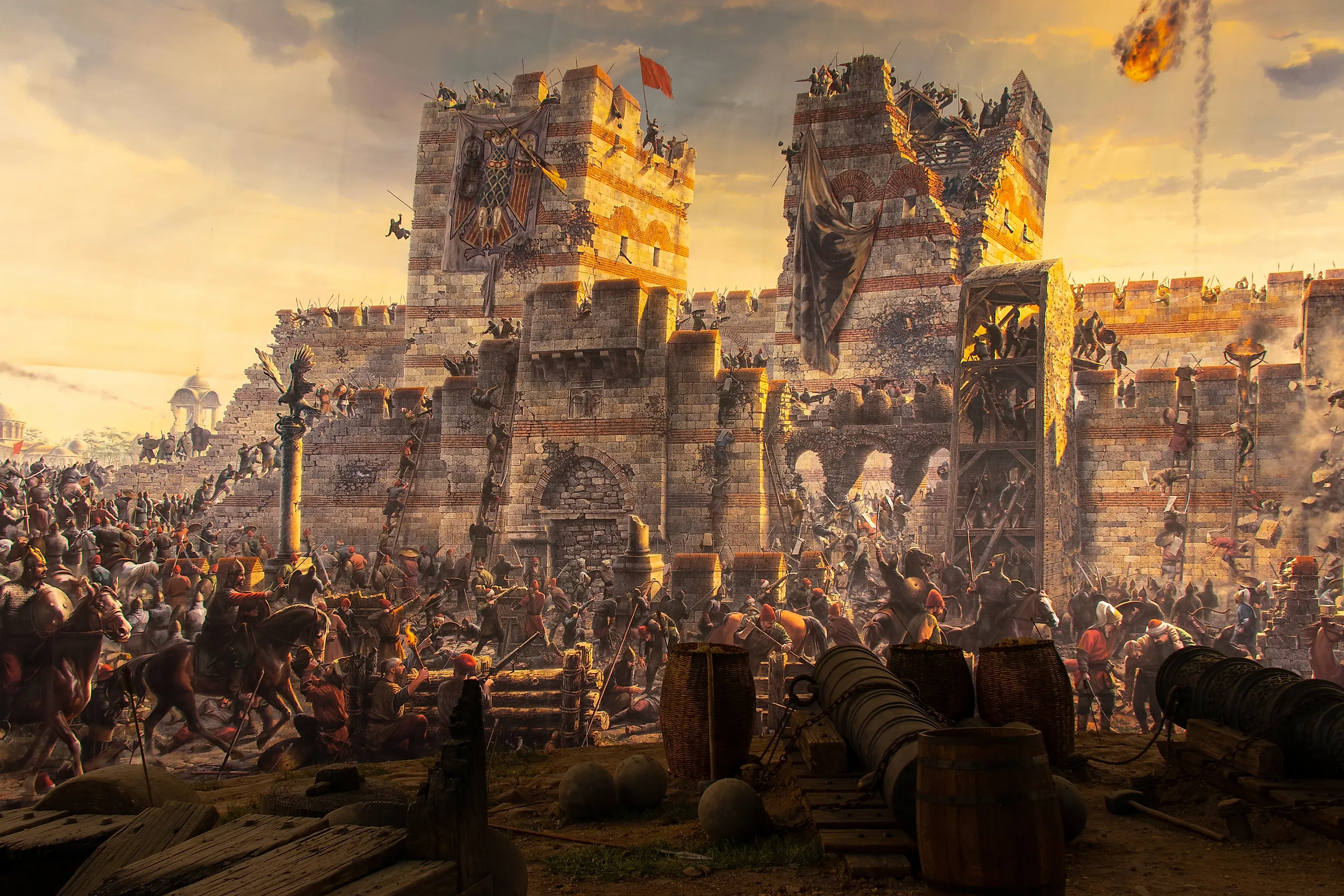
The Janissaries played a key role in the military, political, and social trajectory of the Ottoman Empire. They helped expand its territory by participating in many major campaigns. Their most notable conflict was the Conquest of Constantinople in 1453, which ended the Byzantine Empire and established the Ottomans as a major world power. The Janissaries also served as the sultan's personal guard. They received salaries, lived in cities, and took part in everyday life. Their reputation and privileges gave them significant status in Ottoman society.
This status created problems in the 17th and 18th centuries. The Janissaries used their influence to shape Ottoman politics, at times pressuring or overthrowing sultans when faced with policies they opposed. Some positions also became hereditary, which weakened training standards and discipline, since many now entered the corps by birthright rather than merit. These changes reduced their military effectiveness.
The End of the Janissaries

As other European armies modernised, many Ottoman sultans sought to rein in the Janissaries' power. In the 16th century, Ottoman sultans attempted to tighten Janissary discipline, including efforts to address pay and commercial activities. The Janissaries either ignored these reforms or responded with mutinies. Osman II's attempt to create a replacement army in the 1620s then resulted in his deposition and murder. Selim III also tried to create a new, modern European-style army in the late 18th and early 19th century, but this too led to his deposition.
All these failures necessitated drastic measures to curb the Janissaries' power. In 1826, Mahmud II announced the creation of a new, more modern army. When the Janissaries revolted, Mahmud II's new military corps surrounded them in their barracks and set the building on fire, killing thousands of Janissaries. Those who survived were exiled, imprisoned, or executed. This event, known as the “Auspicious Incident,” marked the end of the Janissaries.
Legacy and Importance

The Janissaries played a crucial role in Ottoman history. Without them, the Ottomans likely could not have expanded as quickly as they did. The manner in which the Janissaries were initially recruited, through forcible collection and conversion to Islam, shows that while the Ottomans were more tolerant of religious minorities than some contemporary empires, their system imposed clear limits. As standards declined and their political and cultural influence increased, the Janissaries became a major problem. This led to their destruction in the “Auspicious Incident.” Even though the Ottomans could then focus on building a more modern army, the centuries spent falling behind other European powers in military strength still contributed to the empire's collapse.