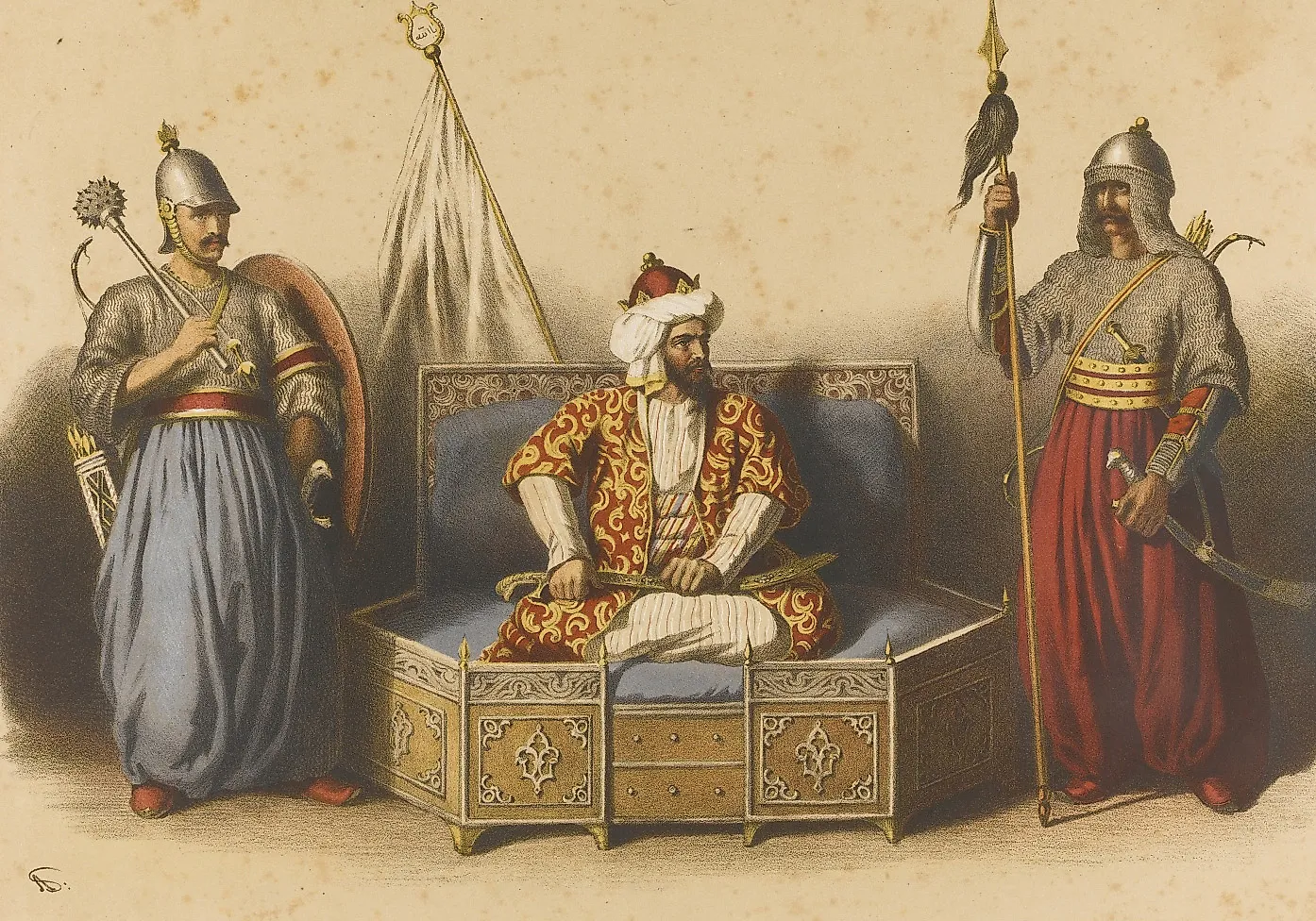
How Did Osman I Found The Ottoman State?
During the 1300s and 1400s, the Ottoman Empire rapidly accumulated territory, eventually coming to control all of Anatolia and the Balkans. This was largely possible due to the foundation established by its first sultan, Osman I. His importance is difficult to overstate. Indeed, by focusing his military endeavors and taking advantage of the Ottomans' geostrategic positioning, he created the bedrock for an empire that became one of the largest and most influential in world history. Therefore, investigating in detail how Osman I actually founded the Ottoman state is a worthwhile endeavour.
A Fractured Anatolia

At the beginning of the 1300s, Anatolia was divided between many competing powers. Across most of the peninsula, many Turkic states, known as Beyliks, had their own spheres of influence. In the West, the Byzantine Empire controlled some territory. Finally, the Mongols, under the Ilkhanate, were also making incursions into the region during this period. This disunity made Anatolia a prime target for imperial conquest, since there was little chance of the competing powers joining together to fight a common threat.
The Ottoman Empire's Founding Myth

Osman was likely born around the year 1255 in the town of Söğüt in a small frontier beylik near the Byzantine border. Due to a lack of sources from this period, little is known about his early life. However, it is generally agreed that he came to lead his beylik (which was subsequently named Osman, or "Ottoman" in English) near the end of the 1200s. The founding myth of Osman's reign is the first crucial component in understanding how his state rapidly accumulated power. Supposedly, he saw a vision of himself leading an empire that stretched across North Africa, the Middle East, and Europe. While likely untrue (or at least heavily exaggerated), this founding myth provided a basis around which members of Osman's beylik formed a strong shared identity.
Geopolitical Positioning

Being located at the crossroads of the Byzantine Empire in the west and many different beyliks in the east also helped Osman establish his state as a dominant power. First, it gave him access to key trade routes and agricultural lands. Therefore, rather than directly attacking Byzantine cities, the Ottomans instead gradually drained their resources, thereby forcing an internal collapse. Second, being situated between many different states meant that Osman had access to a variety of followers. Perhaps the most important of these followers early on were ghazis, Muslim warriors who fought against non-Muslims. They proved crucial in the fight against the Byzantines. However, Turkic nomads, Byzantine deserters, and many different types of mercenaries also helped Osman accumulate territory.
Focus on the Byzantines
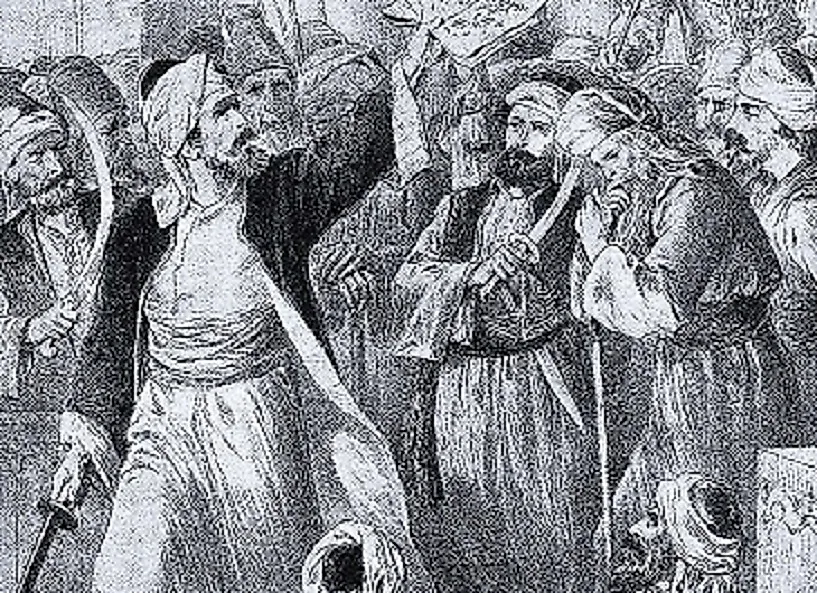
The final way Osman established the Ottoman beylik as a major power was by focusing on the Byzantines. Doing so helped him to win over Muslims from rival beyliks, since many of them also wanted to fight the Christian Byzantines. Furthermore, this strategy prevented a costly multifront war against several states and allowed Ottoman resources to be put toward one major goal. This focus paid off in the 1302 Battle of Bapheus, in which Osman led his troops to their first major military victory against the Byzantines. Perhaps more than any other event during Osman's reign, this established the Ottomans as a major regional power and encouraged even more people to join them.
The Death of Osman I

Osman died in 1326. By this point, his son, Orhan, was largely running affairs. Indeed, that same year, Orhan led the Ottomans to a major victory in the Battle of Bursa. This was a major blow to the Byzantines, resulting in the Ottomans establishing their first capital in Bursa. It is unclear whether Osman I lived to learn of this victory. Some accounts assert that Ohran rushed home to inform his father about the battle, who then passed away shortly after learning the news. However, the "storybook" nature of this account brings it into question.
The Rise of the Ottoman Empire
Regardless of whether Osman knew or not, the foundation he established created the conditions for victory and the subsequent rise of the Ottoman state as an empire. Indeed, Osman's vision of leading a multicontinent empire provided a strong founding myth around which people could unify. Furthermore, he took advantage of the Ottoman beylik's strategic positioning by controlling agricultural lands, trade routes, and gathering a diverse array of warriors to fight the Byzantines. Finally, Osman's focus on the Byzantines meant that the Ottomans did not get bogged down fighting too many enemies at once. With the Ottoman Empire's reign lasting into the early 20th century, Osman's legacy cast a long shadow.