Ancient Walls That Defied Empires
Humans have been building walls ever since they had something to protect. Cities, forts, castles, and nations all used sturdy barriers to safeguard their people and resources from hostile forces. Walls also played an important strategic role, acting as boundaries asserting a civilisation’s power, strength, and stability.
Today, we may think of some of these defences as unique tourist attractions and a good place to take a vacation photo, but monuments like the Great Wall of China in Asia and the Aurelian Walls in Rome were life and death to the people who built them. They offered much-needed protection and were also astounding feats of engineering that are particularly remarkable given the primitive tools early civilisations had to work with.
Walls helped draw the maps and write the history books of the ancient world, helping determine which empires would rise and which would fall. Below, we take a look at some of the most era-defining walls of ancient times and how they changed history.
Long Walls of Athens

Athens in the 5th century BCE was a dangerous place. The Greek capital was under repeated attack from the Persians, Spartans, and others looking to strike at the heart of Grecian power. In 461 BCE, construction began on an ambitious project designed to protect the city and ensure its survival during sieges. The Long Walls consisted of two barriers that ran from Athens out to the harbour ports of Piraeus and Phaleron. In shielding the city from east and west, the walls also created a safe corridor from which the city could access the sea. This effectively eliminated any strategic advantage an invading army would have during a siege.
The Long Walls proved their worth during the Peloponnesian War of 431-404 BCE when Athens became a safe haven for Greeks fleeing the conflict in the countryside. Hunkered down inside the walls, with supplies coming in from the sea, they simply had to outlast their attackers. Their safety didn’t last, however. The Athenian fleet was overwhelmed during the Battle of Aigospotamoi in 405 BC, and the city fell to Sparta. One of the first things the Spartans did post-victory was to order the walls torn down.
Theodosian Walls of Constantinople

Built in the 5th century CE, the Theodosian Walls of Constantinople were built by King Theodosius II to protect the legendary city from sieges by rival empires. They held off the Huns and stood firm for thousands of years, safeguarding the stronghold of the Byzantine Empire behind their 7.2 km (4.6 mile) barrier.
Today, the walls are a UNESCO World Heritage Site in recognition of their place in history and remarkable engineering. Built to make the city impregnable, the walls consisted of three layers. The first was topped with archers ready to shoot down invaders, the second included a firing platform, and the third contained tall watchtowers. To make things even more difficult, the triple-lined walls were surrounded by a moat. Theodosius’ walls were very effective, protecting Constantinople from the Arabs, Bulgars, and others until the city was finally breached, when, in 1453, after a seven-week siege, the city fell to the Ottomans.
Today, the walls have been partially restored amid efforts to open them up to the public. There are now several visitor centers at the site in Istanbul, allowing tourists to climb the towers and walk the battlements.
Aurelian Walls

Constructed to defend the heart of Roman power, the Aurelian Walls were the brainchild of Emperor Aurelian, who sought to protect the capital city from attacks by Germanic forces in the 3rd century CE. Building began in 271 CE and continued under Emperor Probus, who took power in 276 CE.
The walls reached a total length of around 19 km (11.8 miles) and featured several square towers and arched gates. They were continually reinforced and upgraded as emperors added their own embellishments. The well-preserved Aurelian Walls still weave through the center of modern-day Rome. The best areas to see them are in Porta San Sebastiano, Testaccio, and Porta Maggiore. Visit the Museo delle Mura to access walkable sections and enjoy beautiful views of the city from its historic defences.
The Great Wall of China

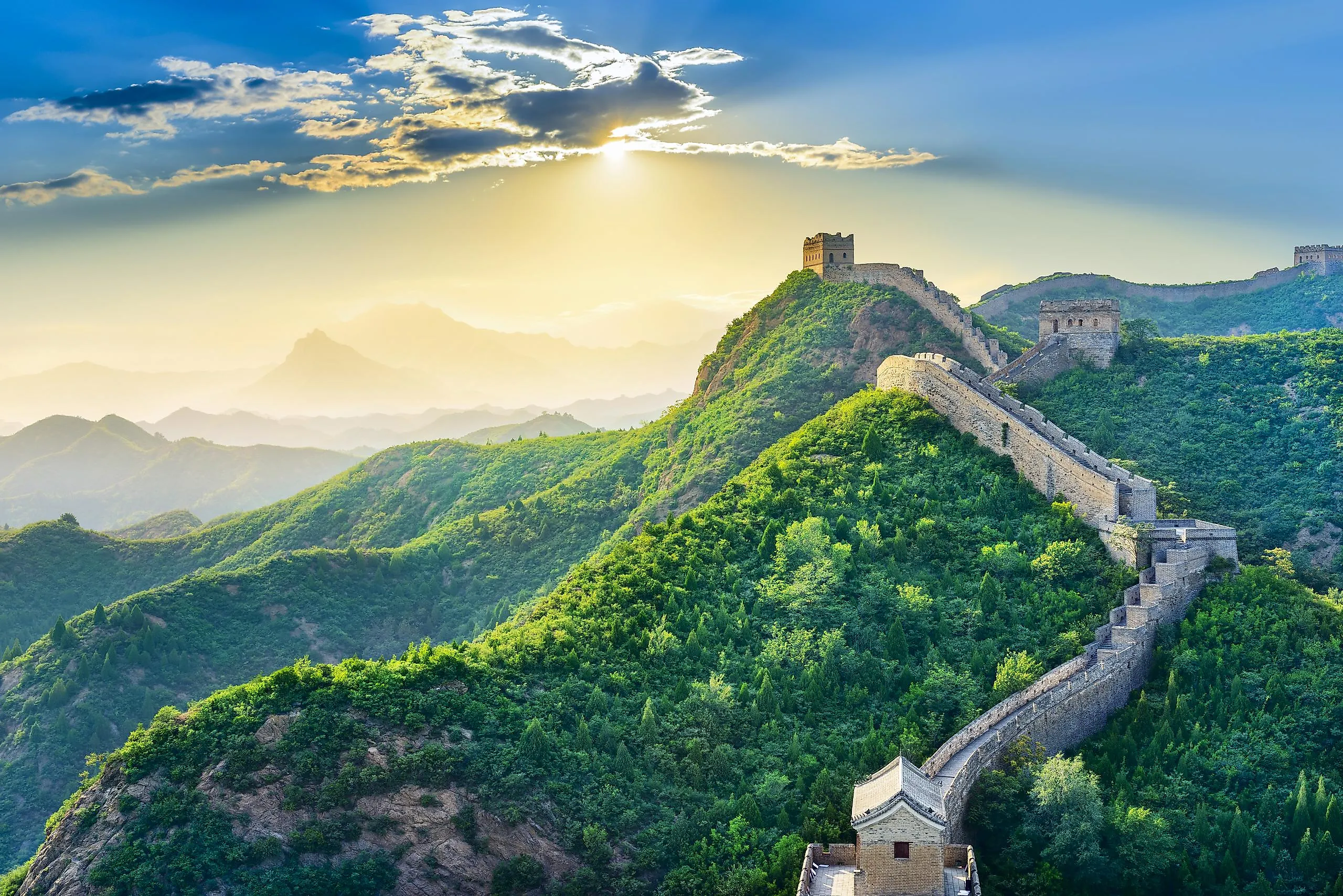
No list of ancient walls that defied empires would be complete without the Great Wall of China. Possibly the most famous wall in the world, this barrier stretches more than 20,000 km (or over 13,000 miles) across northern China. The wall isn’t a single, continuous line but a series of fortifications built over 2,000 years as Chinese empires wrestled for control of the northern kingdoms.
Building began in the 3rd century BCE under China’s first emperor, Qin Shi Huang, and continued until the Ming dynasty, which rose to power in the 1300s. The wall was originally built to keep out marauding barbarians from the north and preserve Chinese culture from these bandits. With the establishment of the Silk Road, it became even more important to protect Chinese boundaries and fend off any empires that sought to gain control of the lucrative trade route.
A UNESCO World Heritage Site and one of the New 7 Wonders of the World, the Great Wall is one of China’s most popular tourist attractions. Over 10 million people visit each year to walk this ancient symbol of Imperial China’s dominance. The sheer scale of the barrier makes it the largest historical wall in the world. Don’t believe the myth, though, the Great Wall isn’t actually visible from space.
The Amorite Wall of Sumer

From the world’s most famous wall to one of its oldest: in the 21st century BCE, the ancient Sumerians constructed a huge barrier, also called the Wall of Mardu or the Western Wall, believed to have measured over 250 km (155 miles), to keep the Amorites out of Sumerian territory in Mesopotamia.
The wall is believed to have stretched from the Tigris to the Euphrates Rivers and was built towards the end of the Ur III empire, a Sumerian state known for its sophisticated legal system, economic prosperity, and distinct culture. An ambitious project, the wall was ultimately a failure. It was too long to be properly manned, and it wasn’t secured at either end, giving the Amorites room to simply walk around it.
The Great Wall of Gorgan

Stretching almost 200km (124 miles) through Northern Iran, the Great Wall of Gorgan is the longest fort-lined ancient barrier between Central Europe and China. There are 38 forts along the wall, which was built in 420 CE and is now being considered for UNESCO World Heritage status. The wall was erected by the Persian Empire to stop attacks from the Huns and Turks at its vulnerable northern border.
Incredibly sophisticated for its time, the Great Wall of Gorgon is made entirely of red bricks, which earned it the nickname, ‘the Red Snake’. Brick kilns were positioned at regular intervals along the wall so builders didn’t have far to carry the heavy stones. An estimated 200 million fired bricks were used in the wall’s construction, which also required the building of an aqueduct and water channels.
Wonders of the World
Military defences, territorial boundaries, psychological borders; walls served a lot of functions in ancient times. From the kiln-fired red bricks of the Great Wall of Gorgon to the granite and wood of the Great Wall of China, they were also demonstrations of the resourcefulness of bygone civilizations. Using materials they could source locally and significant manpower, these walls took decades, sometimes centuries, to complete. Many have lasted longer than the superpowers that built them, giving visitors a chance to view the history of civilization in the crumbling fortifications of distant empires.