These 6 Florida Towns Have The Best Historic Districts
Some of Florida's best historic districts are found in towns that most visitors drive past on the way to somewhere else. Which means a lot of missed opportunities, as the best of them have so much to offer beyond just road signs. Whether it's the Spanish colonial-era streets of old St. Augustine or the almost forgotten downtown of Micanopy, each of these Florida towns offers a peek into the country's past. Here's what to look for when you get there.
St. Augustine

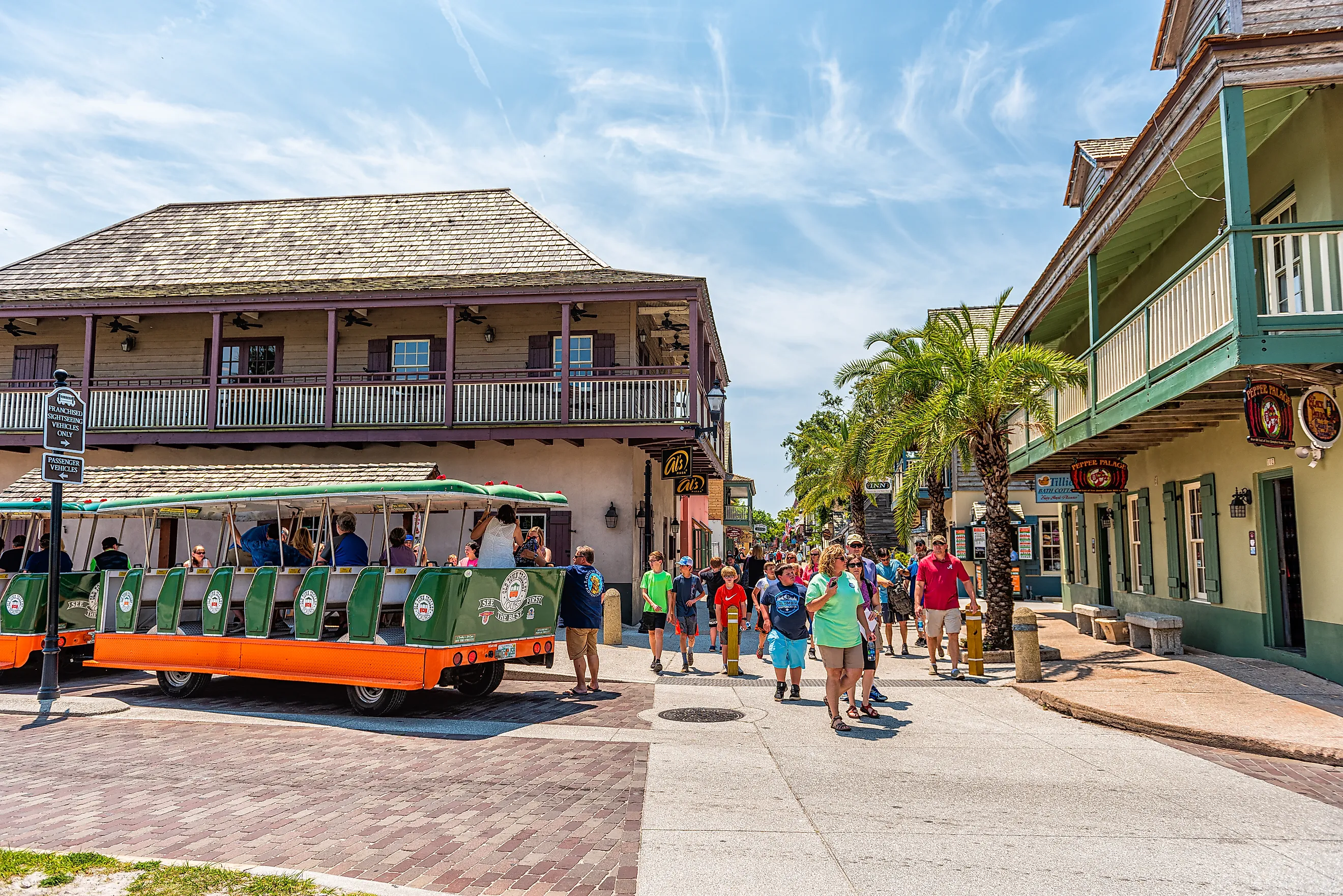
The St. Augustine Town Plan Historic District covers the colonial core of the oldest continuously occupied European settlement in the continental United States. Founded by Pedro Menéndez de Avilés in 1565, 42 years before Jamestown, the town began to take its present shape in 1603, when the Spanish laid out a grid of narrow streets extending out from a central plaza in line with the Laws of the Indies, the planning code the Spanish crown issued for its colonial towns in 1573.
Although little from the 16th century survived after a British raid in 1702 burned down the town, the Castillo de San Marcos, the fort begun in 1672 and completed in 1695, made it through intact. Of the 30 colonial houses that remain, most are located between King Street and Bridge Street, along St. George, Aviles, and St. Francis streets.

And they're easy to spot. Look for overhanging wooden balconies, coquina walls, and rejas, the iron and wooden grilles over the windows. Coquina is a local limestone consisting of compacted shells. The Llambias House at 31 St. Francis Street is one of the best examples.
The Plaza de la Constitución in the middle of town is also rich in heritage buildings. Here the Cathedral Basilica of St. Augustine takes center stage, with the old public market of 1824 and Trinity Episcopal Church, built in 1825, also worth seeing. West of the plaza, railroad developer Henry Flagler built Hotel Ponce de Leon and Hotel Alcazar in 1887 and 1888, bringing the Spanish Renaissance and Moorish Revival styles that would later spread across Florida.
Fernandina Beach

Two separate historic districts explain how Fernandina Beach, the only town on Amelia Island in the far northeast corner of the state, came to look the way it does. The first is Old Town, a mile north of the present downtown. It was here the Spanish platted the original settlement of Fernandina in 1811 and named it for King Ferdinand VII. Laid out on the same Laws of the Indies grid the Spanish had used in St. Augustine two centuries earlier, it has the distinction of being the last Spanish town platted in this way in the Western Hemisphere.
The town moved in the 1850s to a site to the south as the Atlantic terminus of the Florida Railroad, the first line to cross the state, completed in 1861. The Victorian-era seaport that evolved beside the railroad wharves is now known as the Fernandina Beach Historic District, covering 50 blocks of late 19th and early 20th century buildings. Centre Street runs from the river through the middle of it.

It's at the former railroad depot at the foot of Centre Street that most visitors start exploring Fernandina Beach. Now the Amelia Island Welcome Center, staff and volunteers will point out landmarks like the Palace Saloon, Florida's oldest saloon, pouring drinks since 1903. The side streets to the south make up the Silk Stocking District, named for the prosperity of the sea captains and merchants who built its Victorian houses.
On South Third Street, the Amelia Island Museum of History occupies the former Nassau County jail and runs tours covering the eight flags that have flown over the island, including those of France, Spain, and the Confederacy. Old Town is a short drive north, and at the island's northern tip, Fort Clinch State Park preserves a brick fort begun in 1847 and garrisoned by Union troops during the Civil War.
Key West

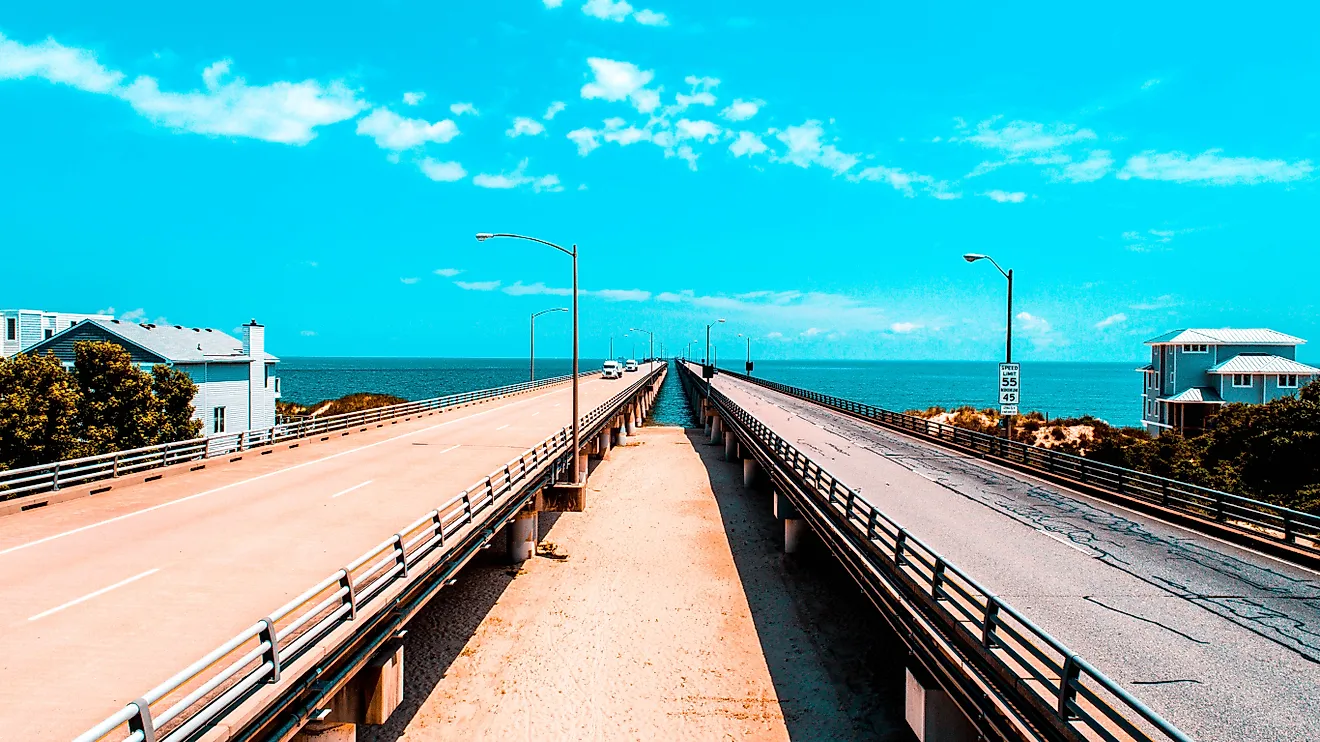
At the far end of the Overseas Highway, 150 miles from Miami, the Key West Historic District occupies the western half of the island, the area everyone calls Old Town. The United States Navy established a base here in 1822, and for the rest of the 19th century the town lived on two industries. These were salvaging cargo from ships that ran onto the reef, and hand-rolled cigars made by Cuban workers who arrived from the 1860s. The E.H. Gato cigar factory on Simonton Street, rebuilt in concrete after a 1915 fire destroyed the original wooden factory, survives from the height of the cigar trade.
What makes the district unusual is the material used to construct many of the buildings here. It's believed to be the largest predominantly wooden historic district in the country, with close to 3,000 structures. Typical among them are conch houses, one- or two-story frame cottages with wide porches, tall ceilings, tin roofs, and louvered shutters. Most were built by ship's carpenters from a dense local pine known to resist rot and termites.

Some houses even came from the Bahamas in pieces. The John Bartlum House on Eaton Street was dismantled in the Bahamas, shipped to Key West, and reassembled by its shipbuilder owner. The most visited of the larger landmarks is the Ernest Hemingway Home on Whitehead Street. Built in 1851 from quarried limestone, the home was where Hemingway lived from 1931 to 1939 and wrote To Have and Have Not. He left behind the famous six-toed cats, whose descendants still patrol the grounds.
Within a few blocks of each other are two other must-see historic landmarks. One is the Harry S. Truman Little White House, the naval quarters built in 1890 and visited by Truman 11 times. The other is Fort Zachary Taylor, begun in 1845 and held by the Union throughout the Civil War.
Micanopy

The whole of Micanopy, give or take a few streets, is a historic district simply because the town never had more than a few hundred residents. The Micanopy Historic District is centered on Cholokka Boulevard, with 39 listed buildings at its core. The oldest inland town in Florida, Micanopy was first settled in 1821, the same year Spain handed Florida to the United States.
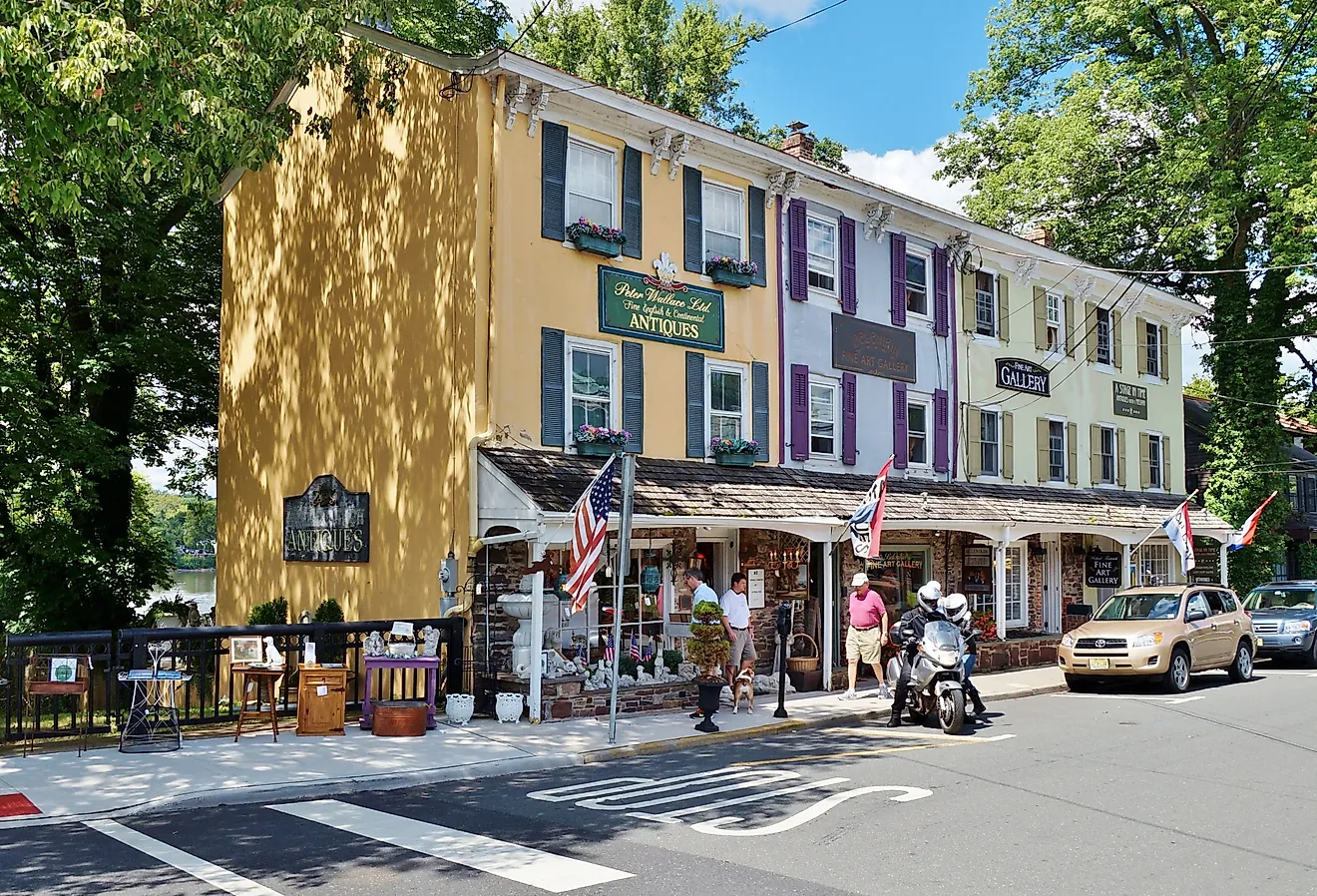
The town took its name from Chief Micanopy, head chief of the Seminoles during the Second Seminole War of 1835 to 1842, and has been continuously settled since then. What survives is certainly unique. Cholokka Boulevard, a former Native American trading route lined with live oaks and Spanish moss, has a mix of wooden and brick commercial buildings now occupied by antique and book shops.

The town's larger homes are a short stroll away. Herlong Mansion is one of the best-looking and now operates as a B&B. Originally a frame house built in 1875, it was wrapped in a brick neoclassical shell in 1915.
The Micanopy Historical Society Museum is worth a visit to learn more about Micanopy's past. It's housed in the old Thrasher Warehouse, a wooden building from the 1890s that served a general merchandise business, and its exhibits include an 18-foot dugout canoe made by the chip-and-burn method plus portraits of the Seminole War chiefs.
Cocoa

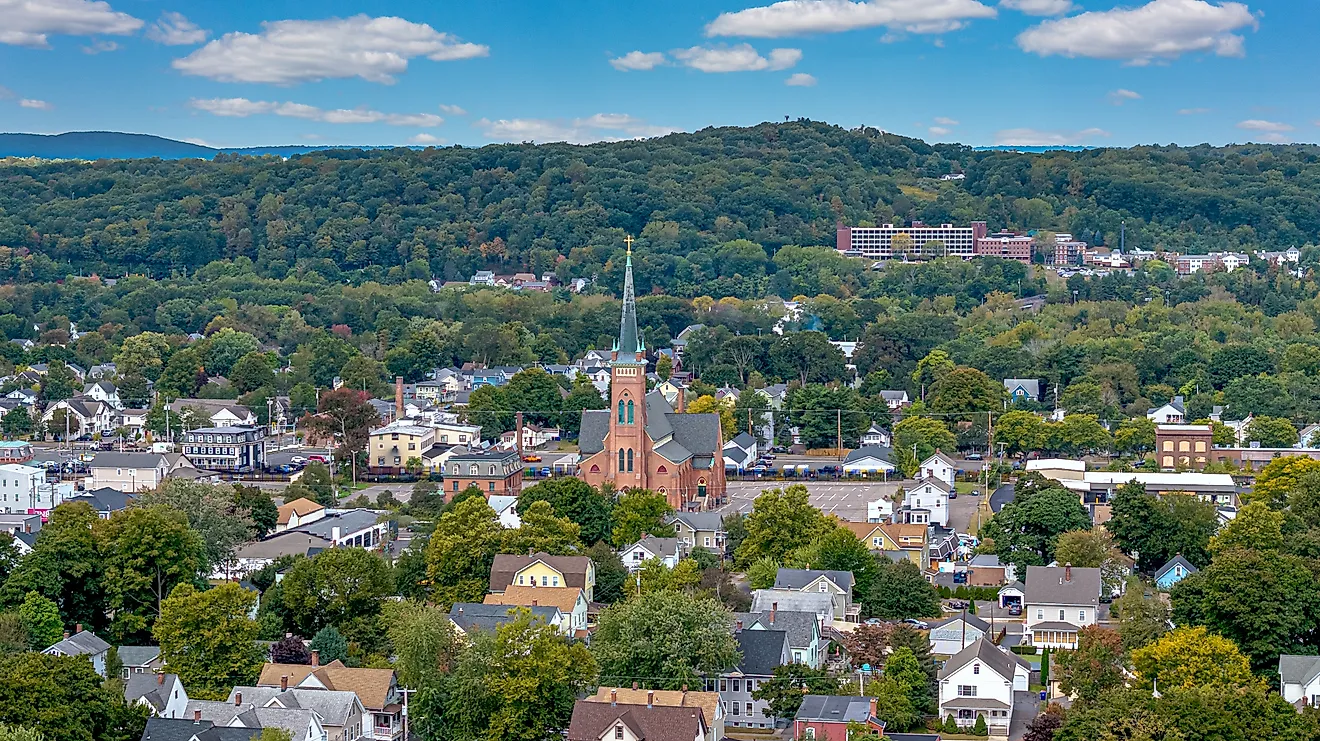
Across the Indian River from Merritt Island and the Space Coast beaches, Cocoa Village is the old downtown of a town that came close to emptying out before the rockets arrived. Settlers moved onto the riverbank in the early 1860s, the Florida East Coast Railway was extended to the town, and Cocoa was incorporated in 1895.
The Great Freeze of 1894 and 1895 had already killed the orange crop. Yes, Florida does occasionally get chilly! By the early 1900s the town had shrunk to a few hundred folks. Things didn't pick up until the space program arrived after the Second World War, and that long lull is why the old commercial blocks along Brevard Avenue and Delannoy Avenue were never torn down.

The oldest survivor is the S.F. Travis Company. Started in 1885 on a merchant boat working the river between Jacksonville and Fort Pierce, this historic store occupies a brick building put up in 1891, one of the first constructed after a fire in 1890 leveled the wooden downtown. Five generations later, it's still a hardware store, complete with rolling ladders, tin ceilings, and a facade that has changed little since a 1924 renovation.
The Cocoa Village Playhouse is another historic landmark. Debuting in 1924 when silent films were accompanied by an organist, it has been fully restored and now stages community musicals. Porcher House is also worth seeing. Completed in 1916 and built of coquina rock, it features stones cut into the shapes of a club, diamond, heart, and spade on its front wall, a nod to the owner's love of bridge.
Vero Beach

Most of downtown Vero Beach went up in a single generation after the Florida East Coast Railway laid tracks through what was then a humble citrus-growing settlement. Platted in the 1910s, its compact downtown is centered on 14th Avenue with buildings from the 1920s and 1930s. A residential district, Osceola Park, was added to the National Register of Historic Places in 2013.
Historic highlights in Vero Beach include the Pueblo Arcade, built in 1926 in Mission Revival style and designed to funnel breezes through the building long before air conditioning became a thing. The nearby Vero Theatre opened in 1924 with Lon Chaney in The Hunchback of Notre Dame and is a survivor from the original downtown, though it no longer operates as a theater.
The Heritage Center and Indian River Citrus Museum occupies the Vero Beach Community Building, constructed in 1935. Its main hall, with its open-beamed ceiling, pine floors, and a coquina fireplace, hosted dances for servicemen during World War II. The citrus museum in the 1943 wing explains how the Indian River name became a byword for grapefruit and oranges.
Florida's Best Historic Districts
Between them, these six districts pretty much cover Florida's history, from Spanish colonial layouts established in 1603 to New Deal-era structures put up in 1935. What they have in common is a concentration of buildings listed on the National Register of Historic Places, all easy to explore on foot. Pick one for a day trip, or pair Amelia Island and Key West with the live oaks of Micanopy.