Why Water Moccasins Bask On Sunny Winter Days
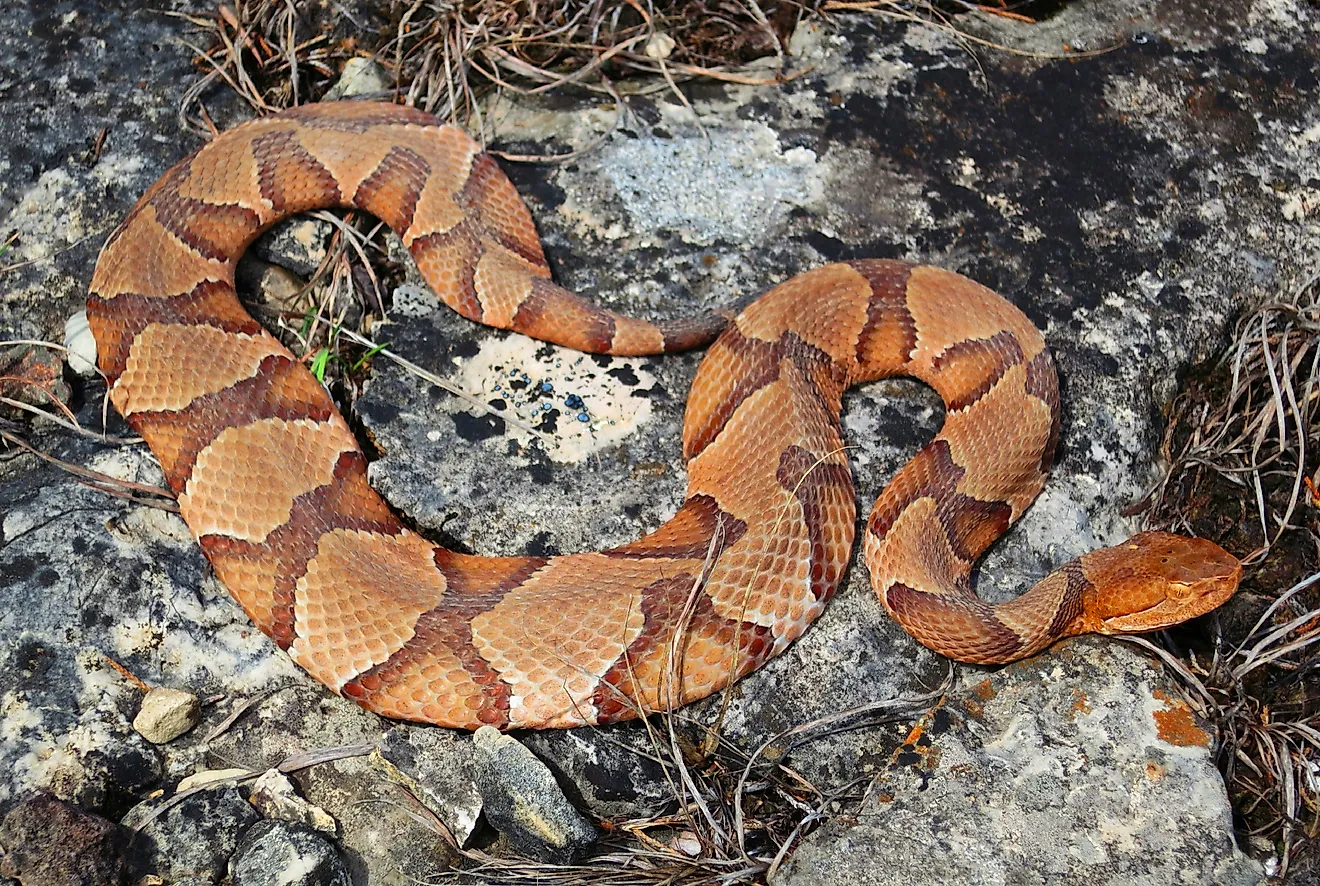
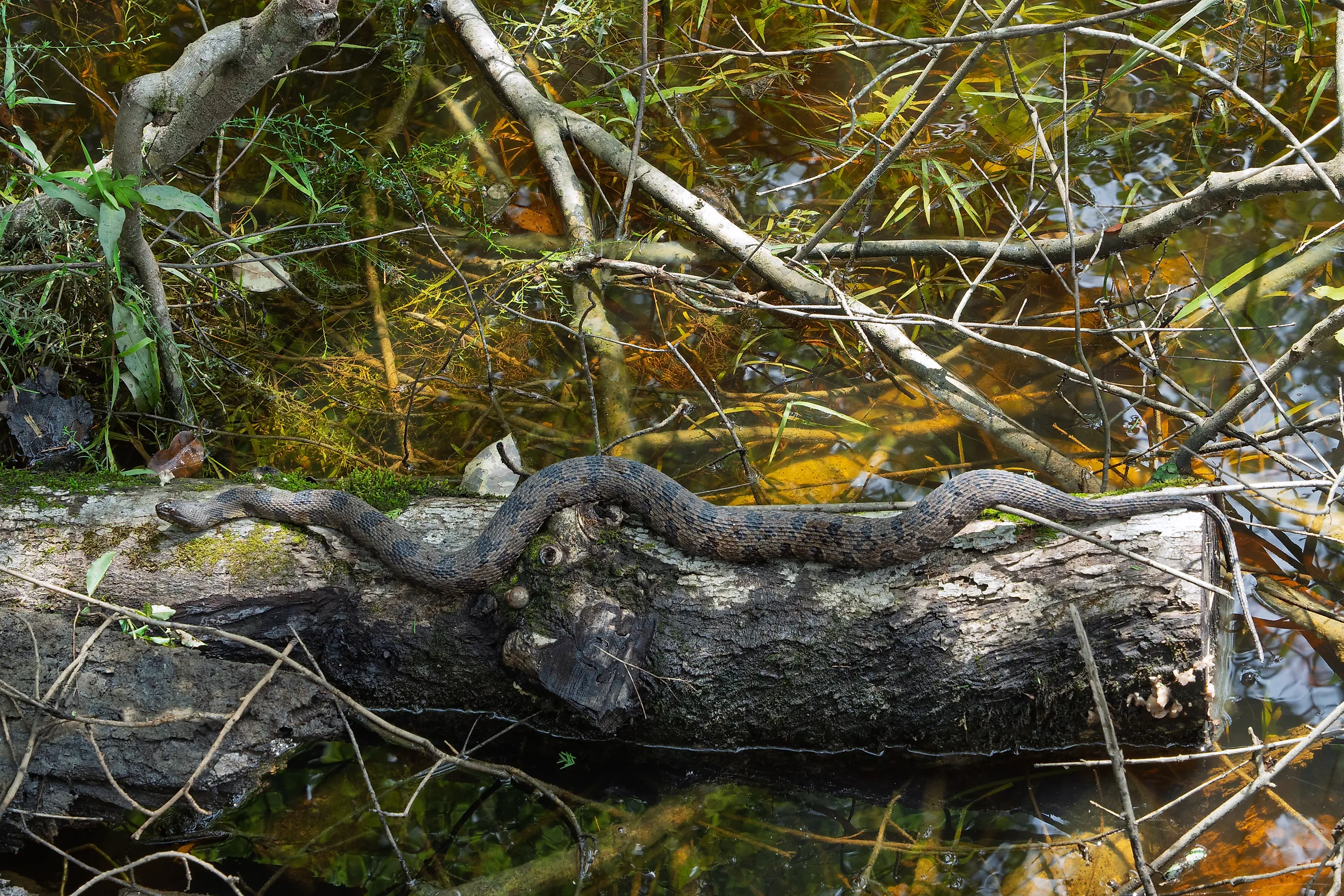
A cottonmouth lying on a log in January is not confused about the season. It is doing the one thing a cold-blooded animal can do to raise its body temperature, and in the southern states where this species lives, winter supplies enough sunny days to make it worth the trip out of the den. The behavior is routine, documented by wildlife agencies, and the reason people are surprised by it is that they expect snakes to disappear entirely for five months. Across most of the cottonmouth's range, they never do.
Southern Winters Do Not Shut Them Down

The species occupies a range where full dormancy is often unnecessary.
In the southern parts of the cottonmouth's range, hibernation may be short or omitted altogether. Near the southern tip of Florida, along the coasts and on some islands, the species may remain active year-round.
Because these snakes live across the warm South, their winters are mild and they do not fully shut down the way snakes in colder climates do.
Basking Is How A Snake Gets Warm

The mechanism is simple and it is the whole explanation.
Cottonmouths are ectothermic, meaning body temperature follows the environment rather than being generated internally. A snake that needs to be warmer has one option, which is to find a warm surface or direct sun.
North Carolina's wildlife profile describes them basking on branches, logs or stones at the water's edge as standard behavior for the species.
They Come To The Den Mouth First

Winter basking does not usually mean a snake out hunting in open country.
On unusually warm winter days cottonmouths emerge briefly to bask before returning to shelter when temperatures drop again. The animal stays within reach of the den it came out of.
Drainage ditch banks are a good example of why: the bank supplies the frost-free burrow and the sun deck in one place, so a snake can ride out the whole winter without going far.
The Threshold Is About Sixty Degrees

The same temperature figure governs the whole annual cycle for this species.
Cottonmouths generally start looking for winter shelter when daytime temperatures fall consistently below 60 degrees Fahrenheit. A winter day that climbs back above it reverses the logic.
The trigger is a trend rather than a single reading, which is why a run of mild days produces more sightings than one warm afternoon does.
They Need To Drink, Not Eat

There is a practical errand attached to some of these winter appearances.
Snakes cannot eat during brumation but still need water, and will come to the surface to drink on warmer winter days. Dehydration is a genuine risk in a dry den across months.
Research at western diamondback dens has recorded snakes emerging after cold rain at 37 degrees Fahrenheit to collect water on their own coils. Thirst moves them when nothing else will.
A Cold Snake Cannot Leave Quickly

This is the practical consequence for anyone walking a southern wetland in winter.
North Carolina's profile puts it directly: on a cool day a basking snake may not yet have the energy to move away, so it may require more time and warmer temperatures before it can retreat.
A snake that would normally slide into the water and vanish may simply stay where it is. That is not aggression, and it is not the snake standing its ground.
They Bask Differently In Summer

The seasonal reversal in behavior confirms that this is about temperature rather than habit.
On bright sunny summer days cottonmouths are usually found coiled or stretched out somewhere in the shade. They emerge at sunset to warm themselves on roads and sidewalks, then become active through the night.
So the same animal avoids sun in July and seeks it in January. The surface it chooses is whatever brings it toward its preferred body temperature.
Winter Sightings Are Not Misidentification

People often assume a snake seen in January must be something else, and in the South that assumption is wrong.
Winter basking in cottonmouths is documented by multiple state wildlife agencies as ordinary behavior rather than an anomaly. A snake on a ditch bank in December is doing what the species does.
The genuine misidentification problem is between cottonmouths and harmless watersnakes, which bask year-round in the same places and are far more numerous.
Northern Populations Behave Differently

The behavior is not uniform across the species, and latitude explains the variation.
At the northern edge of the range in southern Illinois, a cottonmouth may brumate for four or five months with minimal surface activity. The same species in south Florida may not brumate at all.
Winter basking becomes more common the further south you go, which is also where most people encounter these snakes.
The Short Answer

Cottonmouths bask on sunny winter days because they are ectothermic and the southern winter supplies enough warm days to make it worthwhile. They emerge when daytime temperatures climb back above roughly 60 degrees, stay close to the den they came from, and go back in when it cools.
Some of those trips are for water rather than warmth, since a brumating snake cannot eat but still needs to drink. The one thing worth knowing is that a snake basking on a cold day may be too sluggish to retreat, which looks like defiance and is simply physics.