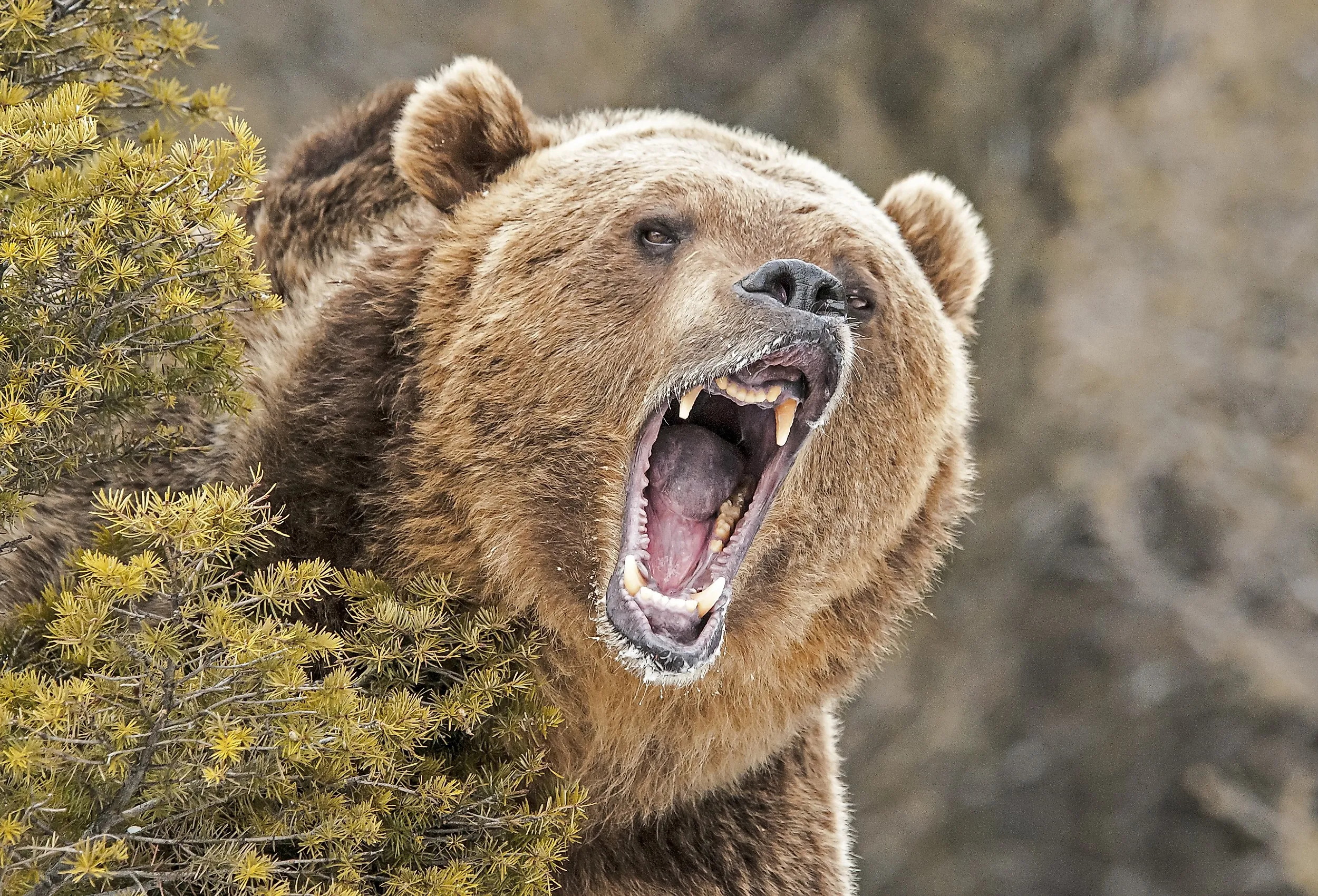
Where Grizzlies And Black Bears Overlap
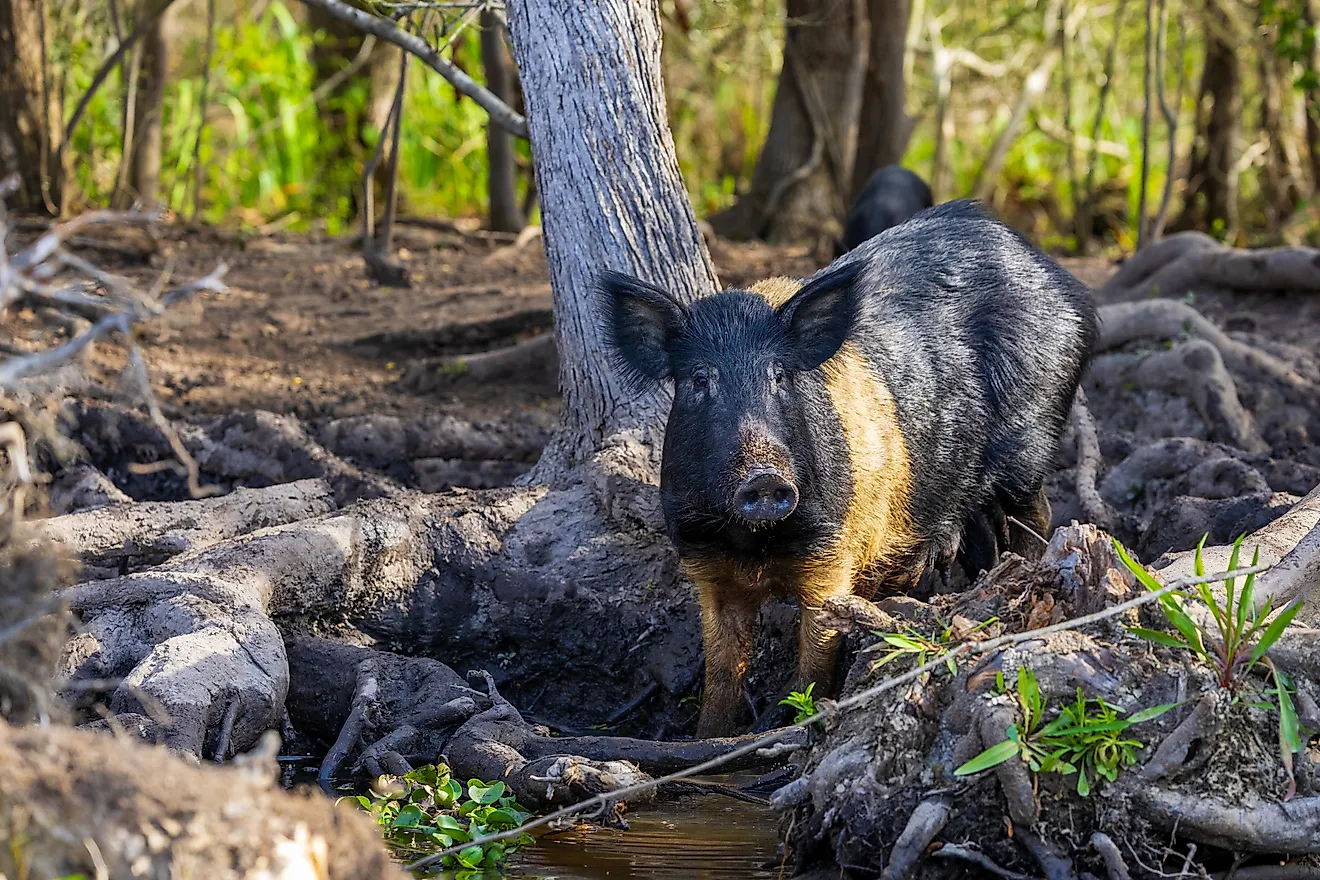
Where grizzlies and black bears share ground, the grizzly sometimes kills and eats the black bear, and Yellowstone biologists have been documenting it since the 1970s. That threat keeps black bears close to trees they can climb while grizzlies take the open meadows and tundra. The standoff plays out across Alaska and the Canadian Rocky Mountains and in a few pockets of the Lower 48, in parks that millions of Americans and Canadians visit every year.
Greater Yellowstone, Wyoming, Montana, And Idaho

Greater Yellowstone is the southernmost place in North America where both bears still live, with grizzlies spread across parts of Wyoming, Montana, and Idaho. The National Park Service put the ecosystem's grizzly population at about 1,050 in 2025, up from 136 in 1975. Roughly 150 to 200 of those bears have home ranges at least partly inside Yellowstone National Park. Black bears are common there as well, though the park says little is known about their numbers.
Inside the park, the boundary between the two species often follows the edge of the forest. The Park Service says grizzlies make much more use of large meadows and open valleys, and black bears are adapted mainly to forests and their edges. Visitors see black bears most often around Tower and Mammoth in the park's north. Of the two species, the black bear is also the far better climber.
Open ground can be dangerous for a black bear. In a 2002 note in the journal Ursus, Yellowstone bear biologist Kerry Gunther and colleagues described the probable killing of an adult male black bear by a grizzly in Hayden Valley, in the center of the park. The nearest tree the black bear could have climbed was a dead snag about 236 feet (72 meters) away, on a small island in the Yellowstone River. An earlier study led by David Mattson documented grizzlies killing black bears across the ecosystem between 1975 and 1990.
Glacier National Park, Montana

North of Yellowstone, along the Canadian border, Glacier National Park holds about twice as many black bears as grizzlies. DNA from roughly 34,000 hair samples, gathered in 2004 by the Northern Divide Grizzly Bear Project, pointed to around 300 grizzlies and 600 black bears inside the park. Both species feed in avalanche chutes, the brushy strips that repeated snow slides keep clear of trees, and in berry patches. Away from those shared feeding spots, black bears spend most of their time in the forest, and on the park's east side some grizzlies spend the whole summer in lowland meadows and aspen groves.
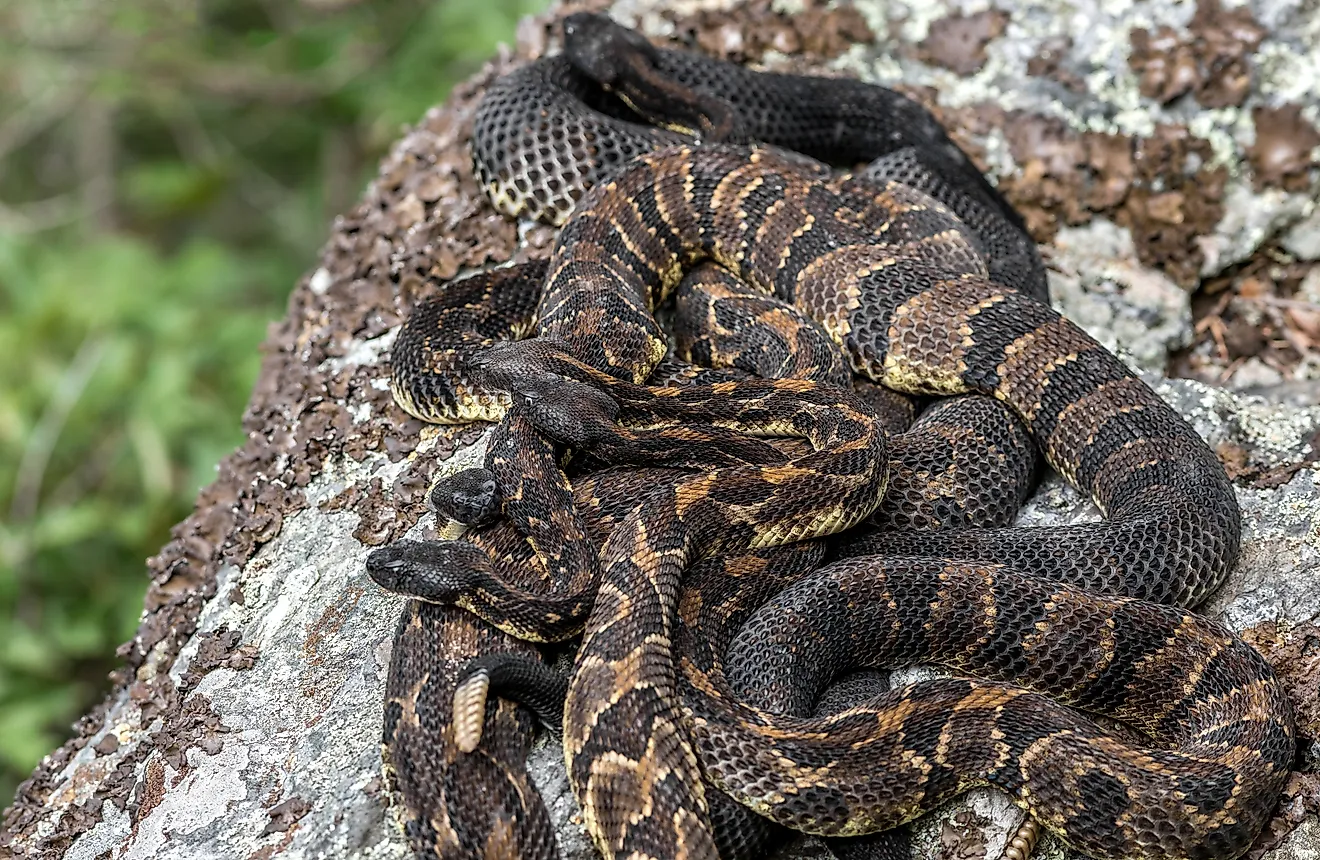
Their claws match those habits. A black bear's are about 1.5 inches (3.8 cm) long and curved for climbing, and a grizzly's reach about 4 inches (10.2 cm), better suited to digging. Glacier sits within the Northern Continental Divide Ecosystem, home to about 1,100 grizzlies by Montana Fish, Wildlife and Parks' estimate. Grizzlies remain federally protected and cannot be hunted in Montana, so the state requires black bear hunters to pass a bear identification test before they can buy a license. Fur color is little help on that test. Glacier's black bears can be black, blond, brown, or cinnamon, and its grizzlies range from blond to nearly black.
Cabinet-Yaak And Selkirk Mountains, Montana, Idaho, And Washington

West of Glacier, the overlap narrows to two small mountain ecosystems in the far northwest corner of Montana, the Idaho Panhandle, and northeast Washington, where the grizzly is the rare bear. The Interagency Grizzly Bear Committee's science subcommittee estimated 60 to 65 grizzlies in the Cabinet-Yaak Ecosystem in 2024 and 80 to 90 in the Selkirk Ecosystem, a count that includes bears on the British Columbia side of the border. Black bears share the same forests, and several recent grizzly deaths here happened during black bear hunts. In September 2024, a black bear hunter killed a female grizzly and her two cubs in self-defense near Keno Creek in Montana's Cabinet-Yaak, the US Fish and Wildlife Service reported. In May 2025, a hunter in the Priest Lake drainage of northern Idaho shot a young female grizzly he mistook for a black bear. Since January 2025, Idaho has required every black bear hunter to show proof of passing a bear identification test, and Washington requires the same test for bear hunting in its northeastern game units.
The Cabinet-Yaak population has also been rebuilt partly by hand. Between 1990 and 1994, biologists released four young females captured in southeast British Columbia into the Cabinet Mountains, and between 2005 and 2024 they moved 18 more bears from the Flathead River area. Five of those 22 bears are known to have reproduced, according to the Fish and Wildlife Service, which counted 13 known or probable human-caused grizzly deaths in the ecosystem between 2019 and 2024.
Banff National Park, Alberta

North of the border, grizzlies outnumber black bears in Banff National Park. Parks Canada estimates about 65 grizzlies and 20 to 40 black bears in the park, and about 109 grizzlies in neighboring Jasper National Park. The balance can swing within a few years. A DNA study published in PLoS ONE in 2012 estimated about 74 grizzlies and 63 black bears in Banff's Bow Valley in 2006, then about 50 grizzlies and 82 black bears in 2008, and its authors linked the grizzly decline to high levels of human-caused mortality. Parks Canada says even Banff, Jasper, Yoho, and Kootenay national parks combined do not hold enough habitat for a self-sustaining grizzly population, so many of these bears spend part of their lives outside the parks. Alberta's 2021 provincial estimate put its grizzly population at 865 to 973, and British Columbia holds an estimated 15,000. In southeastern British Columbia, a hair-trap study across about 2,122 square miles (5,496 km²) found black bears more often in gentle valley bottoms with less open ground, and found each species near the other less often than habitat alone predicted, a pattern the researchers linked to competition.
Anan Wildlife Observatory, Southeast Alaska

Northwest along the coast, in Southeast Alaska, the two species meet at Anan Wildlife Observatory, in the Tongass National Forest about 30 miles (48 km) southeast of Wrangell. The site is reached only by boat or floatplane, and Recreation.gov describes Anan Creek as one of the few places in the world where black bears and brown bears, as Alaska's coastal grizzlies are called, feed in the same creek at the same time. They come for a pink salmon run of about 200,000 to 300,000 fish each year. Black bears far outnumber their bigger neighbors. In 2017, Forest Service staff estimated 50 to 60 black bears and about 15 to 20 brown bears using the creek at the peak of the run. Stikine Tlingit clans kept summer fish camps here to preserve salmon for winter.
Around Anan, the island bear map gets patchy. The Alaska Department of Fish and Game says black bears live on most Southeast Alaska islands except Admiralty, Baranof, Chichagof, and Kruzof, which hold brown bears instead. Those island brown bears have been isolated from mainland populations for more than 40,000 years and are genetically distinct. South of Frederick Sound, brown bears are largely absent from the islands, including Prince of Wales Island, so the mainland coast around Anan, along with a few near-shore islands where brown bears are scarce, is where the two species live side by side.
Denali National Park And Preserve, Alaska

Farther north in interior Alaska, the treeline divides the two species in Denali National Park and Preserve. The National Park Service says black bears keep mainly to the park's forests and grizzlies mainly to the open tundra, so almost all the bears visitors see along the Denali Park Road are grizzlies. Black bear sightings are very rare, with most reports coming from the east end of the park, the Kantishna Hills, and the south side of the Alaska Range. Grizzlies weigh about twice as much as black bears, and the Park Service says that size lets them keep black bears away from the best food. Denali's black bears tend to choose habitat that keeps them clear of their larger competitor. Beyond the park, the overlap thins out toward the state's treeless west and north. Black bears are absent from the Seward Peninsula, the Yukon-Kuskokwim Delta, and the land north of the Brooks Range, according to the Alaska Department of Fish and Game, which leaves those regions to brown bears. Alaska holds more than 98 percent of the brown bears in the United States, by the same agency's count.
Where The Overlap Ends

Some of the sharpest edges on the bear map lie where one species is missing entirely. Kodiak Island has no black bears, and neither do Montague and Hinchinbrook islands in the Gulf of Alaska, according to the Alaska Department of Fish and Game. Black bears also drop out on the Alaska Peninsula beyond Lake Iliamna, leaving the brown bears there with the country to themselves.
In the Lower 48, the gaps belong to black bears. Two of the six federal grizzly recovery zones still have no established grizzly population. Individual grizzlies have been documented in the Bitterroot Ecosystem along the Idaho and Montana border, but no population has taken hold there. In Washington, the last verified grizzly in the North Cascades was seen in 1996. In April 2024, the National Park Service and the US Fish and Wildlife Service decided to restore the species there, including in North Cascades National Park, by moving three to seven grizzlies a year for five to ten years. As of mid-2026, the Fish and Wildlife Service reported that no bears had been moved and no timeline had been set.
Wherever the two bears share ground, the dividing line tends to follow cover. Grizzlies work the meadows and tundra, black bears stay within reach of a climbable tree, and the two mix most freely where food is packed into one place, as it is on Anan Creek during the salmon run. The shared map is still moving. Montana Fish, Wildlife and Parks put the occupied range of the Northern Continental Divide grizzly population at about 24,173 square miles (62,608 km²) for 2010 through 2024, about 12 percent larger than its estimate for 2008 through 2022. In Greater Yellowstone, a December 2025 analysis found grizzlies occupying about 3.5 percent less ground, even with that population above 1,000 bears. As grizzlies spread outward from Glacier, forests that black bears have had to themselves are gaining a larger neighbor, and a court has set December 18, 2026, as the deadline for a federal rule that could revise or remove the grizzly's protections in the Lower 48.