What Is The Alliance Of Sahel States
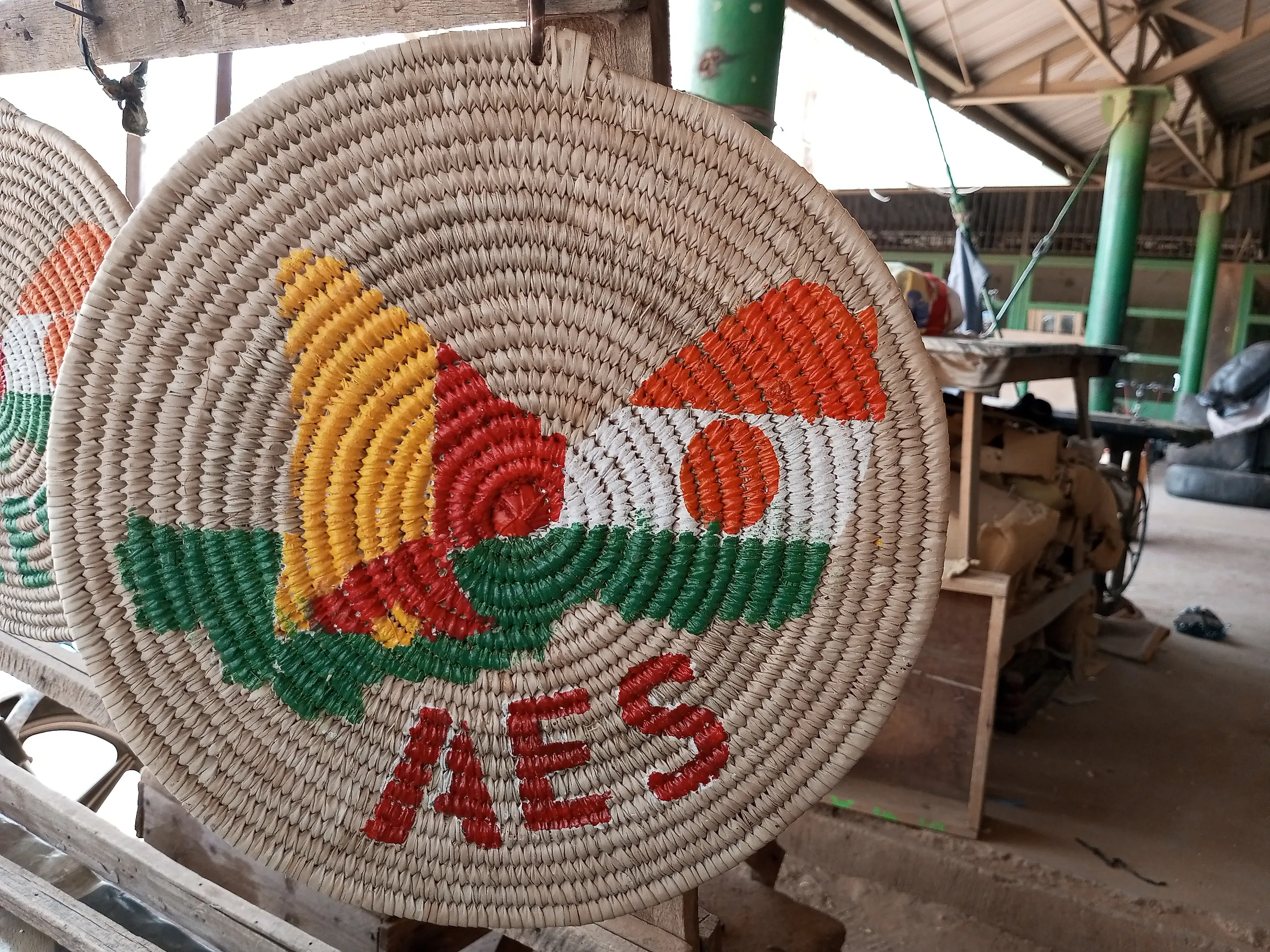
The Alliance of Sahel States (Alliance des États du Sahel, AES) is a tri-state confederation of Mali, Burkina Faso, and Niger. The three governments, all installed by military coup between 2020 and 2023, formed the AES as a mutual defense pact in September 2023, upgraded it to a confederation in July 2024, and on January 29, 2025 formally withdrew their countries from the Economic Community of West African States (ECOWAS), the West African regional bloc all three had been founding members of in 1975. The AES covers approximately 2.78 million square kilometers (1.07 million square miles) of the western Sahel, with a combined population of approximately 75 million. It is led by a one-year rotating presidency; Mali's Assimi Goïta held the inaugural term through 2024-2025, and Burkina Faso's Ibrahim Traoré took over the rotating presidency on December 24, 2025. The AES is the most significant attempt to redraw West Africa's institutional map since ECOWAS itself was founded.
The Three Coups That Made The AES Possible

The AES would not exist without three separate but linked military takeovers across the central Sahel. In Mali, Army Colonel Assimi Goïta led a first coup in August 2020 against President Ibrahim Boubacar Keïta, then a second in May 2021 against the transitional civilian leadership that had been installed in the interim. Goïta has been Mali's head of state ever since, formally as transitional president. In Burkina Faso, two coups occurred in a single year: Lieutenant Colonel Paul-Henri Damiba overthrew President Roch Kaboré in January 2022, and Captain Ibrahim Traoré overthrew Damiba in September 2022, citing the deteriorating security situation as the reason for both takeovers. Traoré, who was 34 at the time of his coup, remains in power as transitional president. In Niger, General Abdourahamane Tchiani, commander of the presidential guard, overthrew elected President Mohamed Bazoum on July 26, 2023. Tchiani is currently serving a self-declared five-year transitional mandate after a March 2025 national conference that he convened.
Each of the three governments came to power on substantially the same complaint: jihadist insurgents were expanding their territorial control in the rural areas; the existing security partnership with France and broader Western powers was failing to contain them; and the elected civilian governments were unable or unwilling to change the strategy. The Niger coup in particular triggered the regional crisis that produced the AES, because ECOWAS, under the chairmanship of Nigerian President Bola Tinubu, imposed unprecedented sanctions and openly considered military intervention to restore Bazoum. The threat of an ECOWAS military operation against a fellow coup-installed government provoked Mali and Burkina Faso to declare that any such intervention would be treated as an act of war against all three. The Charter of Liptako-Gourma, signed on September 16, 2023, formalized that pledge.
Geography Of The Sahel Confederation

The AES is named for the Liptako-Gourma region, the geographic area where the three member states' borders meet. All three countries are landlocked, all sit primarily within the Sahel climate band south of the Sahara desert, and all face the same set of physical and economic constraints: chronic water scarcity, recurrent drought, advancing desertification along the Saharan margin, and food-system fragility. The geography also gives the three states substantial resource exposure. Niger is one of the world's largest uranium producers and was among the top four suppliers of uranium to the European Union in both 2022 and 2023 according to the Euratom Supply Agency. Mali is one of Africa's largest gold producers, with output running at approximately 65 to 70 tonnes per year, mostly from the Loulo-Gounkoto and Sadiola complexes operated under foreign joint ventures (which the Goïta government has been renegotiating since 2023). Burkina Faso is also a major gold producer and an important regional supplier of cotton and other agricultural commodities. The combined economic output of the three states is approximately $60 billion in nominal GDP, a small fraction of Nigeria's GDP alone but disproportionately important in critical-minerals terms.
The Break With ECOWAS

ECOWAS was founded by the Treaty of Lagos in May 1975 as both a trading bloc and a political coordination body. It permitted free movement of citizens between member states, operated the Economic Community of West African States Monitoring Group (ECOMOG) peacekeeping force, and has long been considered one of Africa's more integrated regional organizations. Eight of its 15 founding members shared the West African CFA franc, a currency pegged first to the French franc and now to the euro, with reserves long held in the French Treasury; the eight included Mali, Burkina Faso, and Niger, which remain members of the West African Economic and Monetary Union (UEMOA) even after the AES exit. The CFA arrangement was a longstanding source of complaint among the eventual AES governments, viewed as a continuation of French monetary control after political independence.
The withdrawal from ECOWAS itself followed a defined sequence. On January 28, 2024, the three governments announced their intention to leave. ECOWAS treaty rules require a one-year notice period, which expired on January 29, 2025; the departure became formally effective on that date. Between those two dates, on July 6, 2024, the leaders of the three states met in Niamey and signed a Confederation Treaty upgrading the September 2023 mutual-defense pact into a full confederation with a 25-point program of joint action. The same Niamey summit established the rotating presidency, planned the joint parliament, and committed the three states to coordination on currency, defense, infrastructure, and foreign policy. After the formal exit on January 29, 2025, the AES governments began issuing a joint biometric AES passport on the same day, the most visible symbol of the institutional separation from ECOWAS. ECOWAS for its part has continued to recognize existing ECOWAS-marked travel documents held by Mali, Burkina Faso, and Niger citizens, leaving practical movement across the wider region largely intact for now.
Building A Confederation
The AES has moved more quickly than most outside observers expected to assemble the institutions of a real regional bloc. The official AES flag was launched on February 22, 2025. A common customs duty of 0.5% on imports from non-AES countries was introduced at the end of March 2025. The three states' culture ministers validated an official AES anthem in May 2025. The same month, the energy regulators met in Bamako to coordinate energy security and renewable policy. Most significantly, on December 12, 2025, the AES formally established its Confederal Investment and Development Bank (Banque Confédérale d'Investissement et de Développement, BCID-AES), headquartered in Bamako, with a founding charter signed by Goïta as outgoing AES president. The bank is explicitly designed to finance infrastructure across the three states without reliance on Western multilateral lenders such as the World Bank or the African Development Bank.
The most-discussed remaining project is a proposed common AES currency that would replace the CFA franc across the three states. The proposal has been put forward most consistently by Niger's General Tchiani, and would require either a coordinated exit from UEMOA or the creation of a parallel monetary union; both options are technically demanding and the timeline remains unclear. The AES also launched a confederation-wide television channel in December 2025 and is working on a joint parliament that will be hosted by Burkina Faso.
The Unified Force And The Africa Corps

The security partnership at the core of the AES has been operationally remade since 2022. France, which had been the dominant external military presence across all three states under Operation Barkhane and earlier missions, withdrew its forces from Mali by August 2022, from Burkina Faso by February 2023, and from Niger by December 2023. The United Nations MINUSMA peacekeeping mission was forced out of Mali by the end of 2023. The United States completed its withdrawal from Niger, including the strategically important drone base at Agadez, in September 2024 after the post-coup government revoked the status-of-forces agreement.
The void has been filled, mostly, by Russia. The Russian Defense Ministry's Africa Corps, formed in late 2023 to take over the operations previously run by the Wagner Group after Yevgeny Prigozhin's death in August 2023, deployed personnel to Mali in 2024 and to Niger from April 2024 onward. Wagner itself formally dissolved in June 2024. The Africa Corps presence has been most extensive in Mali, where the Russians have replaced French forces in the counterinsurgency role, but is also significant in Burkina Faso and Niger. Russian advisers, training programs, and military hardware (including helicopters, drones, and armored vehicles) have become the principal external security input across the three states.
On December 20, 2025, the AES inaugurated its own Unified Force at a ceremony at an air base in Bamako. The force is currently planned at approximately 5,000 personnel, drawn from all three member states and placed under the command of Burkinabe General Daouda Traoré. The Unified Force is explicitly designed to operate across all three national borders against the regional insurgent groups, and to be sustained without the donor funding that had financed the earlier G5 Sahel joint force (which had grouped Mali, Niger, Burkina Faso, Mauritania, and Chad, and which has effectively ceased to exist since the AES was formed). Whether the AES states can fund the Unified Force at scale without external support is the central unresolved question of the alliance's military strategy.
An Insurgency That Has Not Been Defeated
The justification for the three coups was that the elected civilian governments could not defeat the jihadist insurgencies operating across the Sahel. By mid-2026, this case has not been settled. The two principal insurgent networks are Jama'at Nusrat al-Islam wal Muslimin (JNIM, an al-Qaeda affiliate that consolidated several earlier groups in 2017 under Tuareg leader Iyad Ag Ghaly) and the Islamic State Sahel Province (ISSP, also called ISGS), which split from JNIM in 2015 and aligned with the Islamic State. The two groups have been fighting each other as well as state forces since 2019.
Despite the change in security strategy and partners, territorial control by the insurgents has expanded rather than contracted since 2022 in several major rural regions. According to International Crisis Group analysis, jihadist groups now control significant areas of central and northern Burkina Faso, parts of central Mali, and the Tillabéri and Tahoua regions of western Niger. Major insurgent attacks have hit population centers previously considered relatively safe, including a JNIM raid in the Malian capital Bamako in September 2024 and a coordinated attack on the northern Burkinabe town of Djibo in May 2025 that killed dozens of soldiers and civilians. Insurgent activity has also moved south, with regular attacks on northern Benin and northern Togo since 2022. Burkina Faso has been the worst-affected country: by Crisis Group figures, more than 7,500 violent deaths and 1.6 million internally displaced persons resulted from the 2015 to 2021 phase of the conflict alone, and the totals have risen substantially since.
Regional Frictions Beyond ECOWAS

The AES has also opened diplomatic frictions with several non-ECOWAS neighbors. In April 2025, Mali and Algeria clashed after Algerian forces shot down a Malian military drone near the shared border. All three AES states froze diplomatic relations with Algiers in response, and the breach has not been repaired. Burkina Faso has repeatedly accused Côte d'Ivoire of harboring opposition figures and supporting destabilization plots; Niger has made parallel accusations against Benin. Chad sent a delegation to Mali in early 2024 to discuss possible AES membership but has not formally joined.
The AES has also distanced itself institutionally from the French-speaking world more broadly. On March 17, 2025, Mali announced its withdrawal from the Organisation internationale de la Francophonie (OIF), the French-speaking countries' organization, citing selective sanctions and disrespect for sovereignty; Burkina Faso and Niger have followed similar trajectories. In December 2025, the United States under the second Trump administration announced an expanded travel ban affecting AES nations, taking effect on January 1, 2026. The three states responded with reciprocal travel restrictions on US citizens.
What The Confederation Has Achieved And What Remains Open
Two years and eight months after the Charter of Liptako-Gourma, the AES has produced a functioning rotating presidency, a confederation treaty, a joint biometric passport, an investment bank, a joint customs duty, a flag, an anthem, a television channel, and a 5,000-strong unified military command. None of these existed in any form before September 2023. By the standards of African regional integration, the speed of institution-building has been unusually fast. The unresolved questions are whether the proposed common currency will materialize on a workable timetable, whether the Unified Force can be sustained financially without external donors, whether the three transitional governments will hold elections that return them to civilian rule or extend indefinitely (Tchiani's five-year transitional mandate in Niger extends to 2030, and Mali's and Burkina Faso's roadmaps have similarly slipped), and most fundamentally whether the security strategy that justified the coups will actually reduce the territorial control of JNIM and ISSP. Through 2026, the answer to the last question is no. The AES is real, it is institutionally consolidating, and it has achieved much of what it set out to achieve in the first three years; but the insurgency that originally provided its political justification has not yet been pushed back, and the central question of whether the alliance can survive on its own resources remains open.