Why The US Wants Greenland
The United States has had its eyes on Greenland for more than 150 years. American secretaries of state and presidents have all eyed the island for its strategic location and untapped resources. Donald Trump revived the idea early in his second term in 2025. He has since pushed for the acquisition through purchase or diplomacy and at one point refused to rule out military force. Denmark and Greenland have continued to reject any sale as of May 2026. Here is why the US is currently so interested in this remote and rugged territory.
A Greenland Primer

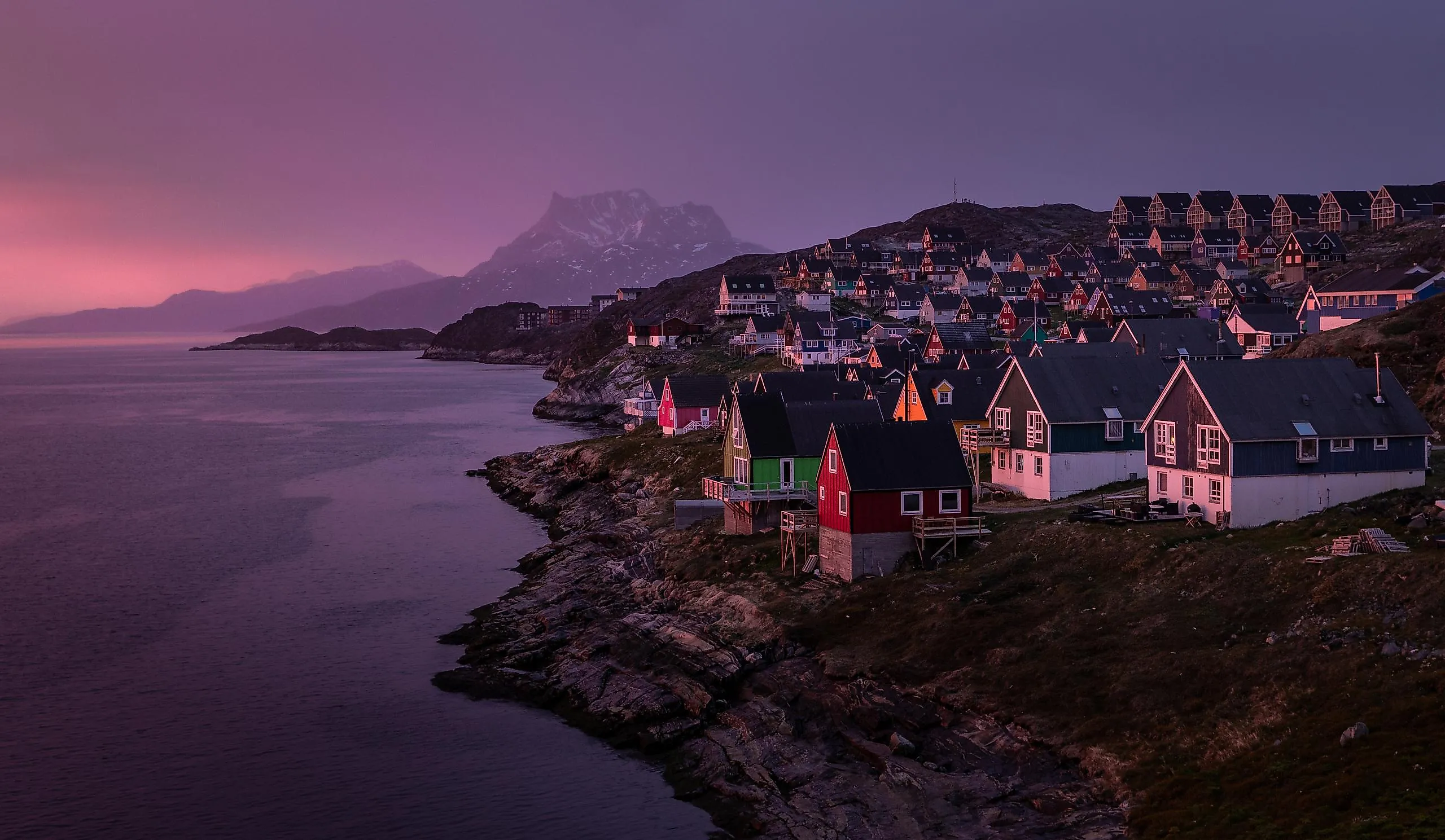
A territory of the Kingdom of Denmark, Greenland is the world’s largest island that is not itself considered a continent. With a population of approximately 57,000 inhabitants, Greenland sits between the Arctic and Atlantic oceans just east of the Canadian Arctic Archipelago and shares maritime borders with Canada, Iceland, and Norway.
The Danish constitution of 1953 fully integrated Greenland into Denmark, ending its longtime status as a colony. President Donald Trump has repeatedly cited national security in his multiple calls for the US to annex or otherwise control the self-governing Danish territory.
Greenland holds vast untapped natural resources, including rare earth minerals, zinc, gold, silver, coal, diamonds, uranium, and possibly oil. Trump’s desire to access Greenland’s critical minerals has also been intensified by Russian and Chinese activity in the Arctic, including military exercises, shipping, and research. The US president’s proposal to build a so-called “Golden Dome” for missile defense adds further motivation.
American Presence In Greenland

US Secretary of State William H. Seward, who negotiated the Alaska Purchase from Russia, in 1867 called the US annexation of both Iceland and Greenland an idea “worthy of serious consideration.” By 1868, Seward was reportedly close to advancing a $5.5 million offer for both islands, though no formal proposal was ever submitted. A separate proposal for Greenland’s integration into the US in 1910 failed to come to fruition.
Denmark is a European Union (EU) member. The US defended Greenland against Nazi Germany during World War II, prior to America’s entrance in the war, and throughout the Cold War.
American military forces remained in Greenland until 1945. A year later, the US under President Harry S. Truman offered to purchase Greenland from Denmark in 1946 for USD $100 million, roughly the 2025 equivalent of around USD $1.7 billion. That offer was flatly rejected, with Greenland viewed as an integral part of the Danish kingdom’s national identity.
In 1951, the US and Denmark inked the Greenland Defense Agreement, which permitted the US to move freely and keep its three main military bases in Greenland. It further allowed the United States to establish newer “defense areas” if backed by NATO under the condition it didn’t infringe upon Denmark’s sovereignty in the large Arctic island.
Renewed Political Interest

America’s interest in Greenland has intensified under the Trump administration thanks to its critical placement between North America, Europe, and the Arctic region. The US hopes to reduce its dependence on China for the attainment and processing of rare earth minerals to secure American military, defense, and economic objectives, and securing Greenland would go a long way toward achieving that end.
Meanwhile, melting ice in the Arctic Ocean attributed to climate change has opened new shipping routes and access for naval and military personnel, with the US having a vested interest in preventing China or Russia from gaining a stronger presence in the region. Russia has reportedly increased its military activity in the Arctic, with China continuing investments in research and other infrastructure initiatives. The GIUK Gap (Greenland-Iceland-UK) in the North Atlantic is a critical chokepoint for naval and submarine operations in the Arctic.
Trump had publicly floated the idea of the US buying Greenland from the Danish government as early as 2019 during his first four-year term in office, in a push for expanded influence, investment, and military cooperation. “Essentially it’s a large real estate deal. A lot of things can be done,” Trump stated in 2019.
In January 2026, Trump threatened further tariffs on Denmark and its European allies if they did not capitulate on the Greenland issue, and initially refused to rule out military force, which caused a brief diplomatic crisis within the NATO allies. But Danish Prime Minister Mette Frederiksen and Greenlandic leader Jens-Frederik Nielsen have firmly rejected any idea of relinquishing Denmark’s island territory.
“We need it really for international, for world security,” Trump said during his March 2025 address to a joint session of Congress. “I think we’re going to get it. One way or the other, we’re going to get it,” he added.
During the 56th World Economic Forum in Davos, Switzerland, Trump speculated that “it may be a choice” whether the US would opt to seize Greenland or preserve the tenets of the North Atlantic Treaty Organization (NATO).
Meanwhile, the United States operates the Pituffik Space Base (formerly Thule) in northwest Greenland, one of the northernmost US military installations, to support missile warning, space surveillance, and other Arctic operations.
Local Opinions

Leaders of both Greenland and Denmark have said repeatedly the island was “not for sale.” A majority of Greenlanders opposed the idea of joining the United States, according to polling.
Greenland’s parliamentary general election on March 11, 2025, was won by the center-right Demokraatit party led by Jens-Frederik Nielsen, a result widely regarded as a repudiation of US overtures to claim the island and a rejection of rushed independence for the Danish territory.
Demokraatit took nearly 30% of the vote and 10 seats in the Inatsisartut, Greenland’s legislative body, with a net gain of seven lawmakers. It beat the Naleraq party, led by Pele Broberg, which favored an expedited process for Greenland’s independence. Naleraq finished with just over 24% of the vote and eight seats, a net gain of four.
Next Steps
As of May 2026, no deal for the sale or US annexation of Greenland has transpired. The 1951 Greenland Defense Agreement remains the legal basis for the American military presence on the island.
Meanwhile, the US continued plans to upgrade port access, facilities, runway, and other special operations at Pituffik Space Base while the Danish military increased its own presence in apparent response.