Who Controls Territory In The Sudan Civil War
Civil war erupted in Sudan in April 2023. The country sits in northeast Africa on the southern edge of the Sahara Desert. Tens of thousands of direct combat deaths have been reported since the war began. Broader estimates that account for hunger and disease place the toll much higher, with some figures running as high as 400,000. Around 14 million people have been displaced from their homes. Aid groups have described Sudan as the world's largest displacement crisis and one of the worst humanitarian emergencies on record.
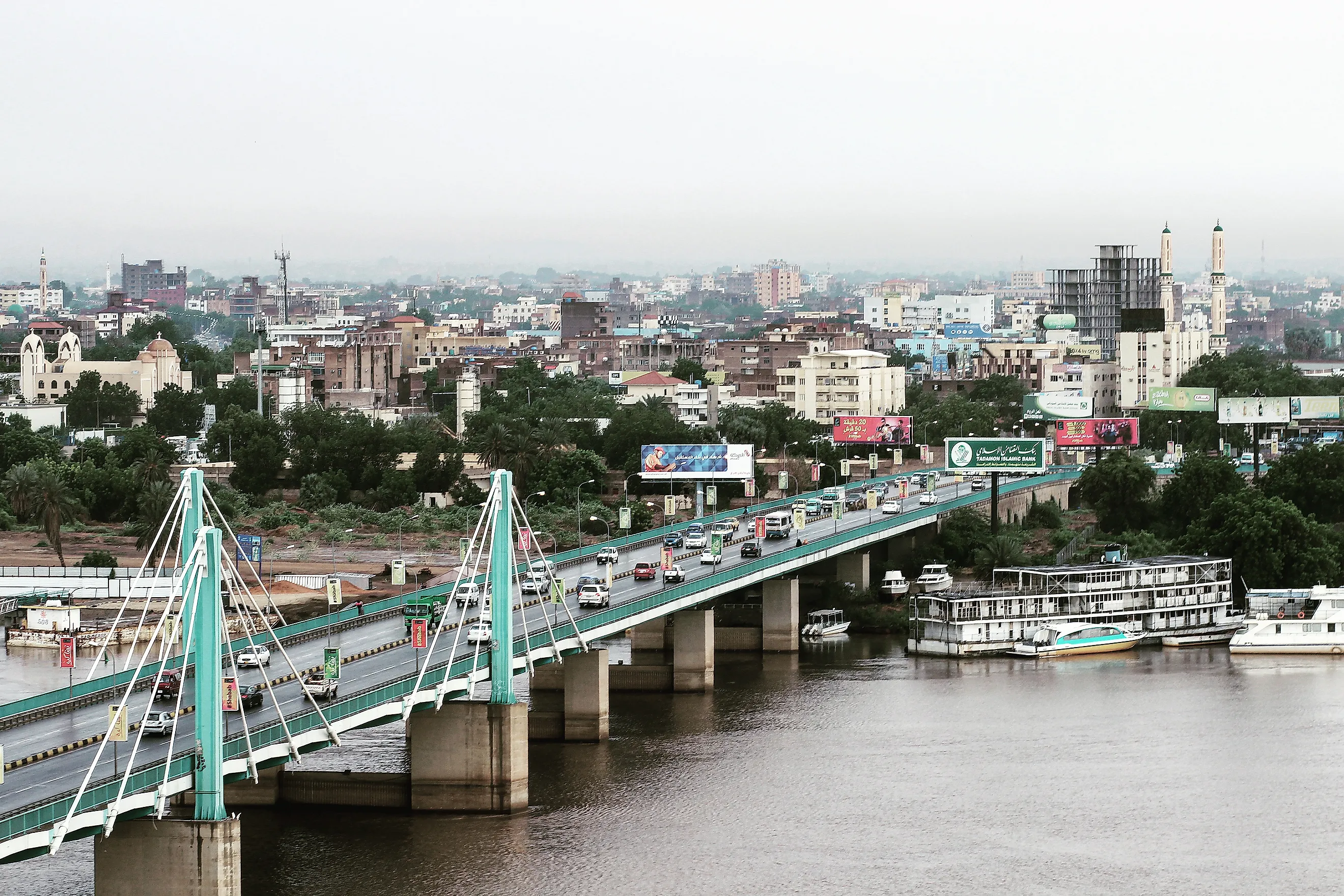
Sudan is bounded by Egypt to the north, the Red Sea, Eritrea, and Ethiopia to the east, South Sudan to the south, the Central African Republic and Chad to the west, and Libya to the northwest. Its capital city, Khartoum, is located roughly in the geographical center of the country and is the center of Sudan's commerce and government. Khartoum was the main stage during the beginning of the Sudanese Civil War on April 15, 2023. Tension arose between the Sudanese Armed Forces (SAF) and the Rapid Support Forces (RSF). It is disputed who fired the first shot, but the conflict quickly escalated, resulting in the RSF gaining control over much of Khartoum.
Which Regions Does The SAF Control?

Since the Civil War broke out, the SAF has consolidated control over most of northern and eastern Sudan, and much of central Sudan. The SAF is backed by Egypt, which borders Sudan to the north and shares the waters of the River Nile, the longest river in the world.
Burhan turned Port Sudan, the major seaport of Sudan located on the Red Sea, into his headquarters and the country's de facto administrative capital for much of the war, before Sudan's government announced its return to Khartoum in January 2026. The Red Sea separates the coasts of Egypt, Sudan, and Eritrea to the west from the coasts of Saudi Arabia and Yemen to the east. Control over the Red Sea is beneficial to the SAF as Port Sudan is the primary hub for trade of imports and exports in the region.
The Council on Foreign Relations (CFR) reported that between September and October of 2024, the SAF orchestrated a coordinated offensive around the three metropolitan cities of Khartoum, Omdurman, and Bahri, catching the RSF off guard. Consequently, the RSF faced disarray and territorial losses. As of January 2025, the SAF successfully drove RSF forces out of Omdurman, recaptured an oil refinery north of Khartoum, and regained near-total control of Bahri. By February 2025, SAF forces broke the RSF's nearly two-year siege of El Obeid, a strategic city with railway connections to Khartoum.
SAF's Control as of May 2026
As of May 2026, the SAF controlled most of northern, eastern, and central Sudan, including Khartoum and Port Sudan. In Kordofan and Darfur, however, control remained more fluid. According to Sudans Post, an independent South Sudanese online newspaper, the SAF briefly captured the town of Bara in North Kordofan in March 2026, but the RSF reportedly recaptured it days later. Kordofan is a region of central and southern Sudan, bordering Darfur to the west and the valley of the White Nile River to the east. Bara remained strategically important because it sits near routes connecting Khartoum State and central Sudan with the Darfur region.
Which Regions Does The RSF Control?

Following the outbreak of the Civil War in April 2023, the RSF gained control of much of Khartoum, which they maintained until 2025 when the SAF regained control. By then, many of Khartoum's government ministries, banks, hospitals, and clinics had been damaged or destroyed, sometimes with patients still inside. Years of airstrikes, shelling, drone attacks, and street fighting left much of the capital devastated.
In December 2023, the RSF attacked Wad Madani, the state capital of Al-Gezira. However, as with Khartoum, the SAF regained control over Wad Madani on January 11, 2025, according to The Guardian.
The RSF established control across much of western Sudan, particularly in the Darfur region. The Darfur region lies between Kordofan to the east and Wadai to the west, stretching southwards to the Bahr al-Ghazal River and northwards to the Libyan Desert. Amnesty International reported that in April 2025, the RSF carried out a large-scale attack on Zamzam, the largest camp for Internally Displaced Persons (IDPs). The makeshift encampment was located in an open field near the town of El Fasher in North Darfur. During the attack, the RSF deliberately killed civilians, took hostages, and pillaged and destroyed mosques, schools, and health clinics.
On October 26, 2025, after an eighteen-month siege, the RSF captured El Fasher, the capital of North Darfur and the last major city under government control in the region. In the following days, reports of mass killing, sexual violence, and attacks targeting non-Arab ethnic groups in Darfur raised concerns of genocide.
RSF's Control as of May 2026
While the SAF briefly captured Bara before the RSF reportedly retook it, the RSF and allied forces also captured the village of Al Bardab, which is located west of the main road connecting Kadugli to Dilling and north of the South Kordofan state capital. The advance followed a series of RSF and allied captures that renewed pressure on both Kadugli and Dilling.
Humanitarian Crisis

With the indiscriminate and widespread nature of attacks from both the SAF and RSF, the Sudanese people have been faced with two choices: flee their homes or get caught in the crossfire. According to the International Rescue Committee (IRC), as of April 2026, around 14 million people have been displaced since April 2023. Over 4.5 million people have fled to neighboring countries such as Ethiopia to the east, South Sudan to the south, and Chad to the west, which have welcomed Sudanese refugees fleeing conflict. However, these neighboring countries lack the resources to meet the humanitarian needs of those coming across the border, even with international support.
The IRC has also reported that millions of Sudanese are internally displaced without reliable access to clean water, food, and health care. Sudan's food system is being pushed to its limits, with millions of families surviving on one meal a day, or less. Due to the conflict between the SAF and RSF, the process of transporting food from farms to markets to homes has turned into a dangerous and deadly process. Humanitarian agencies estimate that 28.9 million people need food-security assistance. A 2026 food-security assessment found that nearly 19.5 million people were facing high levels of acute food insecurity.
The severe food shortage, combined with the loss of the country's infrastructure, has left millions without access to medical care and susceptible to illness and infection. More than a third of Sudan's health facilities are non-functional, and aid groups warn that the health system has collapsed in many conflict-affected areas. A cholera outbreak that began during the war infected over 120,000 people and resulted in more than 3,000 deaths before Sudanese health authorities declared the outbreak over in March 2026.
Tom Perriello, former U.S. special envoy for Sudan, estimated in 2025 that the death toll had exceeded 400,000 due to violence, hunger, and lack of proper healthcare. The total number of losses remains highly uncertain due to active fighting, limited access to affected areas, and collapsed infrastructure.
Outbreak Of The Civil War

Much of Sudan's modern history was dominated by the dictatorship of Omar al-Bashir, who seized power in a 1989 coup. Bashir oversaw conflicts, including the Second Sudanese Civil War and the Darfur War, during which Arab militias known as the Janjaweed committed atrocities against non-Arab groups. Bashir's regime imposed strict Islamic rule, suppressed opposition, and relied heavily on militias to maintain power.
The Janjaweed later evolved into the Rapid Support Forces (RSF), formally established in 2013 under the leadership of Mohamed Hamdan "Hemedti" Dagalo. The RSF became a powerful paramilitary force involved in border security, foreign conflicts, and repression of protests, while Hemedti amassed wealth through control of gold mines.
In 2019, amid widespread protests against Bashir's rule, the Sudanese Armed Forces (SAF) under General Abdel Fattah al-Burhan and the RSF jointly overthrew Bashir and formed a transitional government. Civilian prime minister Abdalla Hamdok attempted reforms, but the military and RSF carried out another coup in 2021, suspending the constitution and undermining Sudan's democratic transition.
Negotiations over a return to civilian rule continued through 2022, but tensions grew between Burhan and Hemedti, particularly over plans to integrate the RSF into the national army. By April 2023, both forces had heavily deployed troops across Khartoum and other parts of Sudan. Although it is disputed over who fired the first shot, on April 15, 2023, fighting broke out between the SAF and RSF, beginning the current Sudanese civil war.
Ongoing Conflict
While the government officially returned to Khartoum after operating from Port Sudan as a temporary capital since August 2023, the end of the conflict is still not in sight. As the Sudan Civil War enters its fourth year, the SAF and RSF remain in a power struggle, with neither side showing signs of backing down. Al Jazeera reported in May 2026 that Burhan has estimated the war could continue until 2033, whereas Hemedti claimed his soldiers are prepared to continue fighting "until 2040" if it is necessary. While the war rages on, the civilians of Sudan continue to face displacement, famine, and violence.