Every Country With Arctic Territory
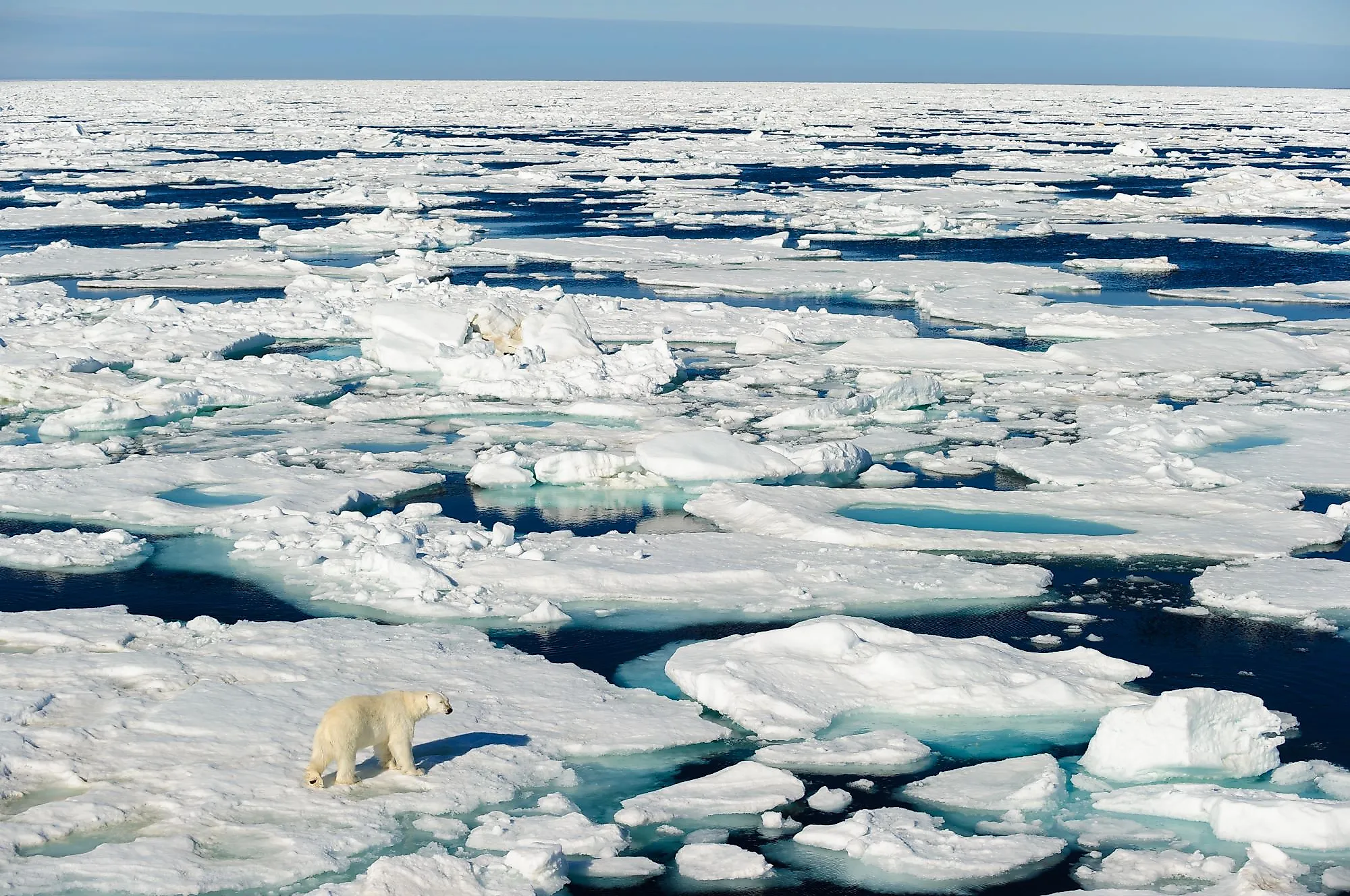
The Arctic region is generally understood to include all the ice-covered seas and treeless tundra that lie north of the Arctic Circle, located at roughly 66°33′ north latitude. As of May 2026, eight countries hold Arctic territory: Canada, Denmark (through Greenland), Finland, Iceland, Norway, Russia, Sweden, and the United States. These eight states form the Arctic Council, established by the 1996 Ottawa Declaration to coordinate environmental and scientific cooperation across the far north. The Council marks its 30th anniversary in 2026, and it does so under unusual strain: Russia's full participation has been suspended since 2022, Sweden and Finland have joined NATO, and the second Trump administration's pressure to acquire Greenland brought the United States and Denmark to the edge of a tariff war in early 2026 before a cooling-off framework was agreed at Davos. This article walks through each country's Arctic territory and the political and security developments now reshaping the region.
Canada

Northern Canada stretches across an enormous network of islands and mainland tundra, forming one of the largest continuous Arctic landscapes on Earth. The Canadian Arctic Archipelago includes Baffin Island, Ellesmere Island, and Victoria Island, among many others. The deep channels separating these islands form the Northwest Passage, a sea route between the Atlantic and Pacific that historically opened only briefly each summer, but has been ice-free for longer windows in recent years as Arctic sea ice has retreated.
The mainland Arctic extends across Nunavut and the Northwest Territories, where permafrost dominates the ground and low vegetation defines the terrain. Canada's Arctic coastline faces the Beaufort Sea and the Arctic Ocean, with long stretches of shallow continental shelf. Canada considers the Northwest Passage to be internal waters, while the United States and several other countries treat it as an international strait. The disagreement has remained unresolved for decades and now matters more, given that the route is becoming navigable for longer each year. Canada's 2019 Arctic and Northern Policy Framework and its NORAD modernization plan have committed substantial funding to northern infrastructure and surveillance.
Denmark (Greenland)

Denmark's Arctic presence comes through Greenland, the world's largest island, which sits between the Arctic and Atlantic Oceans. Roughly 80% of Greenland is covered by an ice sheet that reaches a maximum thickness of about 3.2 kilometers (around 2 miles). The coastline is deeply indented by fjords, especially along the western side, where most of the population is concentrated in towns including Nuuk, the capital. Greenland's far north extends well into the high Arctic, with regions like Peary Land remaining largely ice-free because precipitation there is too low to sustain glaciation.
Greenland has held expanded self-rule under the 2009 Self-Government Act, which gives it the right to declare independence from Denmark through a referendum. A draft Greenlandic constitution was unveiled in 2023, and in March 2025 the center-right Demokraatik party, which favors a gradual path to independence, won the parliamentary election. Jens-Frederik Nielsen took office as Greenland's head of government shortly afterward.
The biggest external pressure on Greenland in 2025 and 2026 came from Washington. The second Trump administration, which began on January 20, 2025, made acquiring Greenland an explicit foreign-policy goal, citing strategic value for missile defense and concern about Chinese and Russian interest in Arctic resources. Through 2025 and into early 2026 the administration combined diplomatic pressure with public threats, including refusal to rule out the use of force and tariff threats of 10% rising to 25% on goods from Denmark and seven other European nations. The crisis peaked in mid-January 2026, with European troops from France, Germany, Sweden, and Norway deployed to Greenland at Denmark's request to bolster security. On January 21, 2026, Trump met NATO Secretary-General Mark Rutte at the World Economic Forum in Davos and announced that he would not pursue force or tariffs and that the two sides had agreed to "the framework of a future deal" on Arctic security cooperation. Both Greenland and Denmark have continued to reject any sale or annexation while indicating willingness to expand the existing US defense partnership, which already includes Pituffik Space Base, the US military's northernmost installation, in northwest Greenland.
Finland
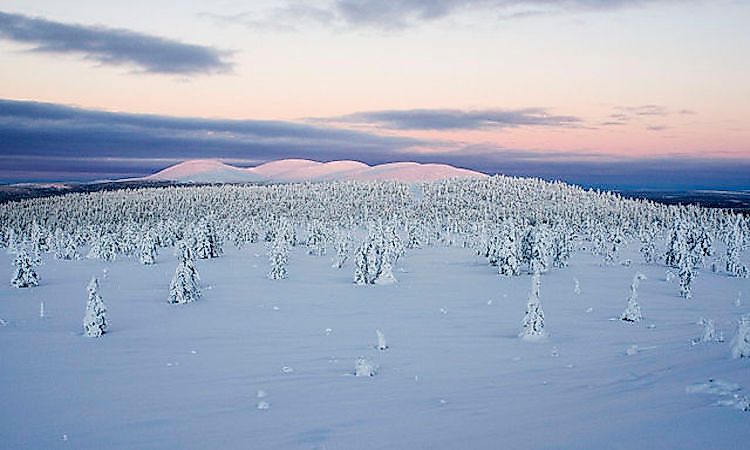
A sizable portion of Finland's northernmost region of Lapland lies above the Arctic Circle. Unlike the island-dominated Arctic zones of Canada or Norway, Finnish Lapland is characterized by boreal forests transitioning into open tundra. The terrain is gently rolling and dotted with lakes, and Lapland has become one of the most heavily visited Arctic destinations in Europe over the past two decades, particularly for winter aurora tourism. The town of Rovaniemi, just south of the Arctic Circle, markets itself as the official hometown of Santa Claus, drawing several hundred thousand visitors a year.
The northernmost point of Finland sits near Nuorgam, where the landscape opens into broad, sparsely populated expanses near the Norwegian border. In April 2023, Finland formally joined NATO, ending more than 70 years of military non-alignment. Finland has no Arctic Ocean coastline of its own, but it shares a long land border with Russia and sits adjacent to northern Norway, giving its Arctic and sub-Arctic territory significant strategic weight in alliance planning.
Iceland

Nearly all of Iceland sits just south of the Arctic Circle, with one small piece of its territory, the island of Grímsey off the north coast, crossing into the Arctic zone. The country itself is defined by volcanic landscapes, large glaciers including Vatnajökull, and a coastline exposed to the North Atlantic. Although Iceland has limited land within the Arctic Circle, its position on the Greenland-Iceland-United Kingdom (GIUK) gap makes it a key transit point for both civilian shipping and military activity in the North Atlantic.
Iceland has no standing military but has been a NATO member since the alliance's founding in 1949. The base at Keflavík continues to host alliance maritime patrol aircraft on a rotational basis, and the country regularly serves as a forward staging point for NATO Arctic exercises. The waters around Iceland are part of the broader Arctic marine environment, with cold currents and seasonal sea ice influencing fisheries and navigation.
Norway

Norway's Arctic geography includes both mainland territory and islands. Northern Norway extends well above the Arctic Circle, with deeply carved fjords and mountainous coastlines facing the Barents Sea. Further north lies the Svalbard archipelago, situated roughly halfway between mainland Norway and the North Pole.
Svalbard holds an unusual legal status under the Svalbard Treaty, signed in Paris on February 9, 1920. The treaty recognizes Norwegian sovereignty while granting citizens of all signatory states equal rights to engage in commercial activities and scientific research on the archipelago. Norway administers Svalbard under those terms, and the main settlement, Longyearbyen, serves as a research and logistical hub. The treaty's open-access provisions have produced a long-running tension over how its terms apply to Svalbard's offshore waters and continental shelf, where Russia, the European Union, and Norway have all advanced competing interpretations. Norway held the chairship of the Arctic Council from May 2023 to May 2025, working to keep the institution intact through a period when Russian participation was suspended.
Russia

Russia's Arctic territory spans a continuous arc from the Barents Sea in the west to the Bering Strait in the east, giving it the longest Arctic coastline of any country. The region includes extensive tundra plains, the major Siberian river systems of the Ob, Yenisei, and Lena, and large island groups including Novaya Zemlya, Severnaya Zemlya, the New Siberian Islands, and Wrangel Island. The Northern Sea Route runs along this coastline and provides a seasonal shipping corridor between Europe and Asia that Russia has aggressively promoted as climate change shortens the ice-bound months.
Following Russia's full-scale invasion of Ukraine in February 2022, the seven other Arctic Council members paused cooperative activities. Russia completed its rotating chairmanship in 2023 and handed off to Norway in May of that year, but its full participation in the Council has remained limited since. Project-level work resumed in virtual format in February 2024 without Russian involvement in many activities, while ministerial and Senior Arctic Official meetings have not resumed in person. The Kingdom of Denmark assumed the Council chairmanship from Norway on May 12, 2025, and will hold it through 2027. Russia has continued to invest heavily in its Arctic territory, viewing the region as central to both national security and energy export revenue.
Sweden

Sweden's Arctic region lies in its far north, primarily within Norrbotten County. The landscape includes forested valleys, mountain ranges along the Norwegian border, and tundra zones at higher elevations. The area is part of the traditional homeland of the Sámi people, and reindeer herding remains an important land use across the region.
Key geographic features include Abisko National Park and the Scandinavian Mountains, which form a natural boundary with Norway. Sweden joined NATO on March 7, 2024, ending more than 200 years of formal military non-alignment. Combined with Finland's accession in 2023, the move means that every Arctic Council state except Russia is now a NATO member, transforming the security map of the region.
United States

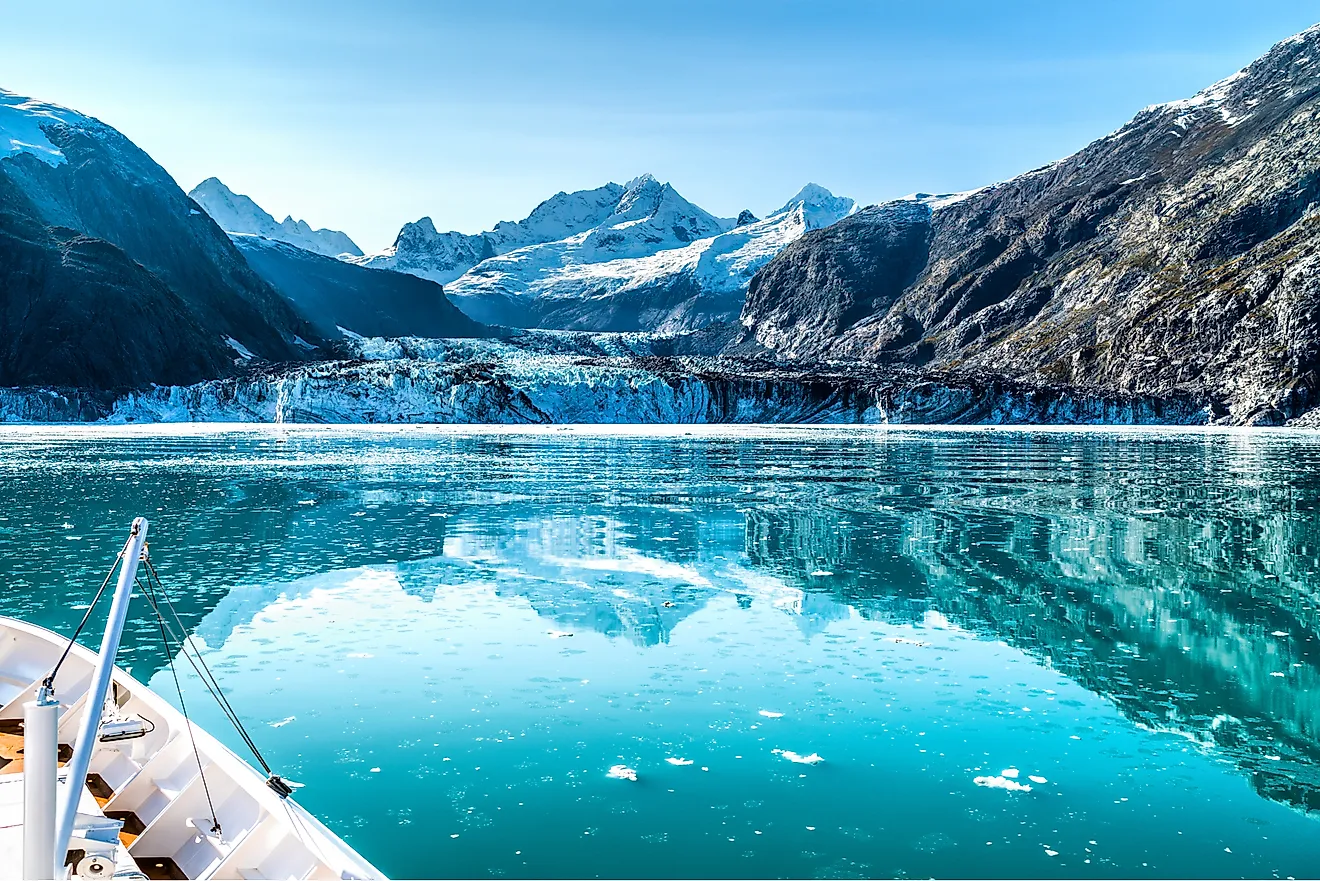
The United States acquired its Arctic territory through the 1867 purchase of Alaska from Russia. The northern coast of Alaska faces the Chukchi and Beaufort Seas, with tundra plains, barrier islands, and permafrost-rich ground extending inland. The Brooks Range runs east to west across northern Alaska and separates the Arctic coastal plain from the interior.
Communities such as Utqiaġvik (formerly known as Barrow) sit along the Arctic Ocean, where sea ice conditions shape daily life and transportation. The 2019 Department of Defense Arctic Strategy emphasized Alaska's role in early warning and air defense, and a revised 2024 strategy expanded the focus to include infrastructure resilience and climate adaptation. The North Slope and the Beaufort Sea coast remain the focus of debates about oil and gas drilling within the Arctic National Wildlife Refuge and the National Petroleum Reserve in Alaska.
The Ilulissat Declaration
Five of the eight Arctic countries (Canada, Denmark through Greenland, Norway, Russia, and the United States) directly border the Arctic Ocean and are referred to as the Arctic Five, or A5. In May 2008, the A5 met in Ilulissat, Greenland, to discuss the implications of opening Arctic sea routes and growing interest in Arctic seabed resources, including oil, gas, and rare-earth minerals. The resulting Ilulissat Declaration affirmed that existing international law, particularly the United Nations Convention on the Law of the Sea (UNCLOS), provides the framework for resolving overlapping claims to Arctic territory and the seabed.
UNCLOS allows coastal states to claim an extended continental shelf beyond their 200-nautical-mile exclusive economic zone if they can demonstrate that the seabed is a natural prolongation of their landmass. Russia, Canada, and Denmark have all submitted overlapping claims that include the Lomonosov Ridge, an underwater mountain chain running across the Arctic Ocean and through the geographic North Pole. The UN Commission on the Limits of the Continental Shelf reviews the science of these submissions but does not resolve overlaps; that remains a matter for the states involved to negotiate. As of 2026, the Ilulissat framework continues to govern these disputes despite the wider tensions between Russia and the other A5 members.
Eight Nations, One Arctic
Although Arctic territory is divided among eight states, the region is bound together by an environment that ignores borders. Ice sheets, tundra, fjords, and seasonal seas define the far north regardless of where lines are drawn on maps, and human settlement remains sparse, concentrated in small coastal communities and a handful of larger administrative centers.
The Arctic of 2026 looks different from the Arctic of even five years ago. Sea ice extent continues to decline. NATO has expanded to cover seven of the eight Arctic states. Russia's role in the Arctic Council is diminished, and the Council is now chaired for the first time by the Kingdom of Denmark, with Greenland in a leading role. The United States and Denmark have just stepped back from the most serious Western diplomatic crisis the Arctic has seen in decades. Whether the existing legal frameworks of UNCLOS, the Svalbard Treaty, the Ilulissat Declaration, and the Arctic Council can continue to absorb the strain of these shifts will be one of the defining questions for the region in the years ahead.