Every Country That Claims The South China Sea
For decades, nations have disputed rights to the South China Sea. China, Taiwan, Vietnam, the Philippines, Malaysia, Brunei, and Indonesia all hold overlapping territorial and maritime claims in the region, which functions as both a vital shipping route and a strategic frontier. The sea's oil, gas, fisheries, and seabed resources have raised the stakes of these claims considerably. Tensions remain active in 2026: in April, Philippine officials confirmed that bottles seized from Chinese fishing boats near Second Thomas Shoal in February and October 2025 had tested positive for cyanide. The country-by-country picture below covers what each claimant wants and how their claims overlap.
Disputes

The South China Sea is one of the world's most important trade routes. According to the US Energy Information Administration, about 10 billion barrels of petroleum and petroleum products passed through the sea in 2023, along with roughly 6.7 trillion cubic feet of liquefied natural gas. The sea also contains valuable fisheries and energy resources of its own. Reefs and small islands in the region are often claimed not because they are especially habitable, but because control over them can strengthen claims to nearby waters and resources. Access to those waters in turn brings shipping, fishing, and energy benefits.
Multiple nations claim overlapping rights to the area. Two island groups are especially contested. The first is the Paracel Islands, which China controls but Vietnam and Taiwan also claim. The second is the Spratly Islands, a scattered group of more than 100 small islands, reefs, and other features claimed by several countries. The broader sea also contains significant oil and gas resources, especially along its continental margins. Disputes have continued for decades as countries seek to protect their claims, resources, and access to important trade routes.
Brunei

Brunei is a small country in northern Borneo whose north coastline sits against the South China Sea. Rather than claiming a strip of land in the sea, Brunei claims a 200-nautical-mile exclusive economic zone (EEZ). This claim brings Brunei into conflict with China, whose broad South China Sea claims overlap with waters Brunei considers part of its EEZ. China has long used a dashed-line map to support its position in the region, and its 2023 official map showed a ten-dash line that drew protests from nearby governments. Brunei's southern Spratly-area claims also overlap with China's. Brunei's relationship with Malaysia, by contrast, has been more cooperative. The two countries have reached agreements to share oil and natural gas and to respect boundaries within the region.
China

China is the largest country in Asia and one of the largest in the world by land area. As a result, its geography is diverse. China stretches 3,250 miles from east to west and 3,400 miles from north to south. Within its borders are deserts, mountains, plains, plateaus, hills, and coastal areas along the Bohai Sea, Yellow Sea, East China Sea, and South China Sea. The South China Sea is where most of the country's maritime claims are in dispute. China claims extensive rights across much of the sea through its dashed-line claim. Inside that line are islands, reefs, and other features the nation claims as its own. These claims conflict with those of neighboring countries and with the provisions of the United Nations Convention on the Law of the Sea, which sets out what maritime activities states have the right to conduct.
Indonesia

Indonesia is an island nation spread across an archipelago off the coast of Southeast Asia. Like Brunei, Indonesia claims an exclusive economic zone in the South China Sea. It has negotiated with Vietnam to clarify boundaries and claims in the region, and the two countries reached a formal EEZ delimitation agreement in 2022. Indonesia's claimed EEZ overlaps with China's dashed-line claim near the Natuna Islands, creating recurring tension between the two countries. Indonesia does not have land disputes over the Spratly or Paracel Islands.
Malaysia

Malaysia sits on two sides of the South China Sea. The eastern portion of the country occupies the northern end of the island it shares with Indonesia, while the western portion sits on the southern tip of the mainland directly south of Thailand. Malaysia's claims in the area are based partly on its Continental Shelf Act 1966, its 1979 map, and later boundary submissions. The country claims parts of the Spratly Islands near its continental shelf, giving it a basis for seabed-resource claims in the area. Malaysia controls several southern Spratly features, but its claims conflict with those of Vietnam, the Philippines, China, and Taiwan. Malaysia also disputes China's claims around the submerged James and Luconia Shoals, which Malaysia regards as lying on its continental shelf. In 2009, Malaysia appeared to step back from its claim to Louisa Reef as part of an exchange of letters with Brunei, though the full details of the arrangement were not made public.
Philippines

The Philippines is a group of islands sandwiched between the Philippine Sea to the east and the South China Sea to the west. Like Malaysia, the Philippines has complex claims in the region. The country claims a good portion of the Spratly Islands, which it calls the Kalayaan Island Group, as well as the Scarborough Shoal. China and Taiwan also claim the shoal. The features within China and Taiwan's dashed-line claims put them at odds with the Philippines' EEZ and continental shelf claims. China's claims over Scarborough Shoal have escalated to the use of enforcement vessels, creating heightened tensions with the Philippines.
Two notable confrontations have shaped the recent record. In July 2016, an international tribunal administered by the Permanent Court of Arbitration ruled largely in favor of the Philippines in its case against China. The case addressed maritime rights and conduct around features including the Spratly Islands, Scarborough Shoal, Second Thomas Shoal, and Sandy Cay. The Philippines had challenged China's claim of historic rights across much of the South China Sea, and the tribunal found that the dashed-line claim had no legal basis under the United Nations Convention on the Law of the Sea. The tribunal also ruled that artificial construction on reefs could not turn them into natural islands capable of generating an exclusive economic zone. China rejected the ruling and continues to dismiss it.
The second confrontation has been ongoing since 2023 and centers on Second Thomas Shoal, where the Philippines maintains a small naval garrison aboard the BRP Sierra Madre, a World War II-era landing ship deliberately grounded on the shoal in 1999 to assert Manila's claim. After a violent June 2024 incident in which Filipino sailors were injured during a Chinese coast guard interception of a resupply mission, both countries reached a provisional resupply agreement. Tensions then shifted to the use of small boats and fishing vessels. On October 24, 2025, Philippine Marines intercepted Chinese fishing boats near the shoal and confiscated bottles of suspected cyanide chemicals believed to be used for destructive fishing. The Philippine National Security Council confirmed in April 2026 that laboratory tests by the National Bureau of Investigation had established cyanide content in bottles seized in February and October 2025, alleging four documented incidents between February 2025 and March 2026. Manila called the practice environmental sabotage; Beijing denied involvement and called the allegations a stunt. The standoff at Second Thomas Shoal remains live.
Taiwan

Taiwan is a self-governing island off the east coast of China, officially called the Republic of China (Taiwan). The People's Republic of China claims Taiwan as part of China under its one-China principle, which states that there is only one China and that Taiwan is part of it. As of 2026, Taiwan held formal diplomatic relations with 11 United Nations member states plus the Holy See, the smallest such count in its modern history. Beyond the Taiwan Strait dispute, Taiwan also has South China Sea claims that closely resemble China's, including features within a U-shaped line such as the Spratly Islands and Scarborough Shoal. Taiwan administers Itu Aba (Taiping Island), the largest natural feature in the Spratlys. The overlap puts Taiwan in conflict with several of the same countries that dispute China's claims.
Vietnam

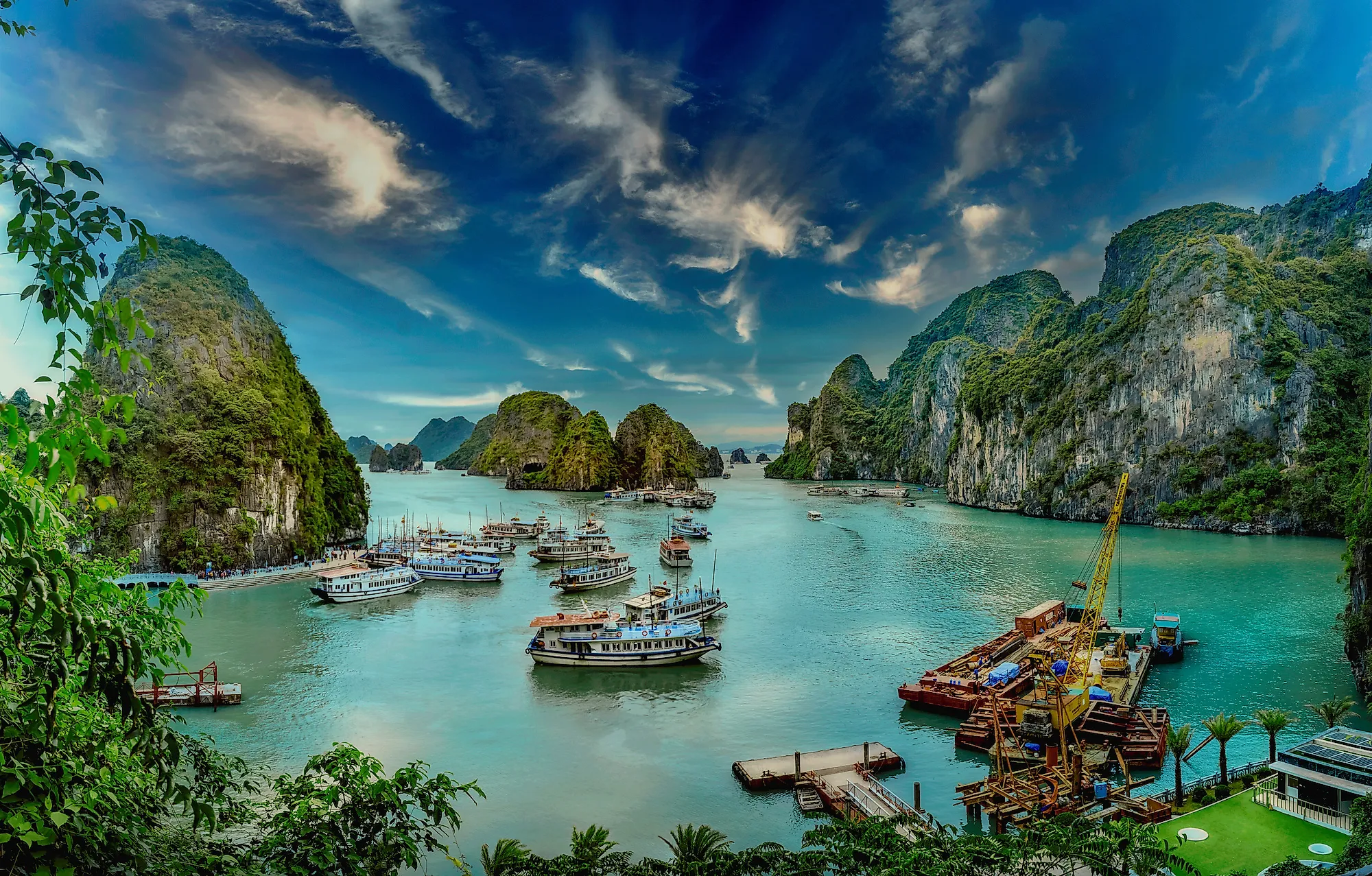
Vietnam lies on the eastern edge of Southeast Asia and borders the South China Sea. Vietnam claims both the Spratly and Paracel Islands, though its most active construction has been in the Spratlys. The country has expanded its presence through land reclamation, the process of artificially adding usable land to existing maritime features. By mid-2025, Vietnam had created more than 2,300 acres of artificial land in the Spratlys and expanded all 21 of its occupied rocks and low-tide elevations there, according to the Center for Strategic and International Studies' Asia Maritime Transparency Initiative. Reclamation has taken place at features including Barque Canada Reef, Alison Reef, and Namyit Island. Analysts assess that Vietnam is on track to match or surpass China's total reclaimed area in the Spratlys, though Vietnamese facilities remain less heavily militarized than China's three flagship outposts at Mischief Reef, Subi Reef, and Fiery Cross Reef.
The South China Sea's Geography
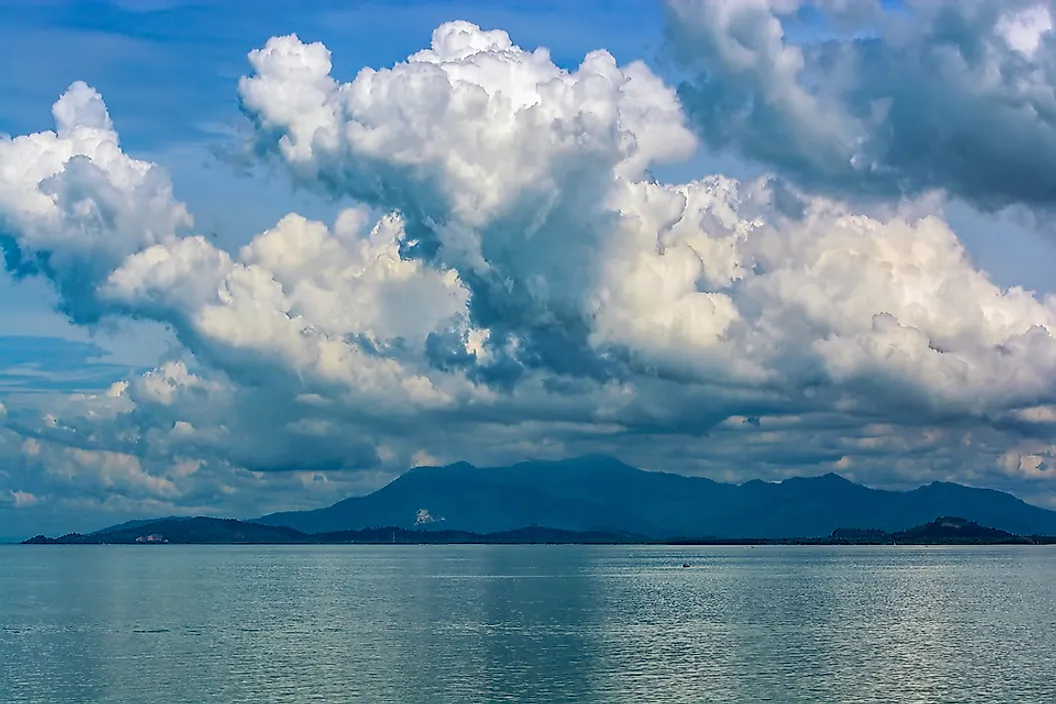
The South China Sea is part of the western Pacific Ocean and borders Southeast Asia. Its deep central basin is known as the China Sea Basin. The eastern side of that basin is filled by shoals and borders the Philippine islands of Luzon and Palawan. On the basin's northern side lies a shelf that includes the island of Taiwan. Along the western side of the sea lies Vietnam.
Other geographic features include underwater river valleys and the Sunda Shelf, a shallow continental platform extending from mainland Southeast Asia beneath parts of the southern South China Sea, the Gulf of Thailand, and the Java Sea. Several water channels connect to the South China Sea, including the Taiwan Strait and the Luzon Strait, alongside smaller straits. On its southwestern edge, the sea connects to the Indian Ocean through the Strait of Malacca, a roughly 500-mile-long waterway between Sumatra and the Malay Peninsula.
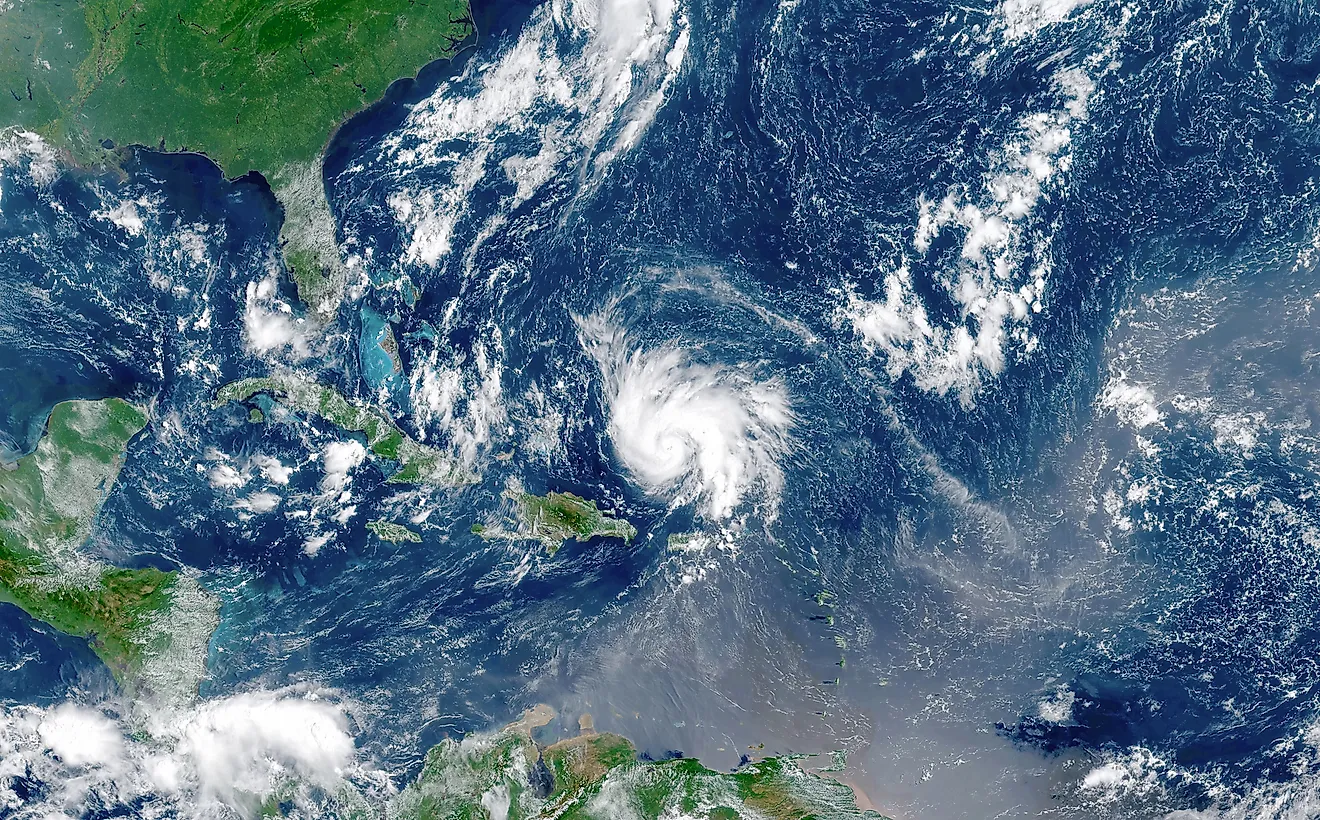
The South China Sea is a tropical region where the weather is influenced by monsoons, major wind systems that reverse seasonally. Summer winds typically blow from the southwest, while winter winds blow from the northeast. During summer, these winds bring increasingly rainy conditions and the threat of typhoons, large tropical cyclones that can devastate the area.
Ongoing Disputes
The claims in the South China Sea are complex and involve many nations making separate claims using different justifications. Some claim islands and other maritime features based on historical arguments, while others rely on maritime zones and rights set out by the United Nations Convention on the Law of the Sea. The 2016 Permanent Court of Arbitration ruling rejected China's broad historic claim but did not resolve the practical dispute, since China has not accepted it. Given the region's economic importance and the value of activities in the area, these disputes are likely to continue for the foreseeable future.