The Poorest Countries In South America
The economic gap between the richest and poorest sovereign states of South America is one of the widest of any continent. According to the International Monetary Fund's World Economic Outlook (October 2025), Guyana's GDP per capita in 2025 will reach $31,378, ten times Venezuela's projected figure of $3,103. The regional average sits at about $10,224. The continent's ranking has shifted dramatically since the late 2010s, primarily because Guyana, ranked among the poorest South American economies as recently as 2018, has been transformed by ExxonMobil's offshore oil discoveries beginning in 2015 and is now the region's highest-income state. The eight countries below sit at or below the regional average per capita figure and remain the lower-income economies of the continent. Figures are 2025 IMF projections in current US dollars (nominal).
1. Venezuela - $3,103
Venezuela remains the poorest country in South America by nominal GDP per capita. The country's 2025 figure of $3,103 represents a further decline of approximately $1,400 from 2024, the only South American economy projected to shrink in per-capita terms in 2025. The economic collapse has been the most severe peacetime contraction in modern Latin American history. Venezuela's GDP shrank by roughly 75% between 2013 and 2020, and inflation peaked at over one million percent in 2018 before the government effectively abandoned the bolívar and partially dollarised the economy. Oil output, despite Venezuela holding the world's largest proven crude oil reserves, fell from about 3.2 million barrels per day in 2008 to under 800,000 barrels per day by 2020 before recovering modestly under the Maduro government and partial US sanctions relief.
The human consequences have been severe. More than 7.9 million Venezuelans have emigrated since 2014, the largest displacement crisis in the Americas and one of the largest in the world, with the bulk settling in Colombia, Peru, Chile, Ecuador, and Brazil. The 2024 presidential election, in which the Maduro government declared victory despite opposition-controlled tally sheets indicating a substantial win for Edmundo González, deepened the political crisis and triggered another round of sanctions. The capital city of Caracas remains the political and economic centre, though much of the upper-middle class has departed.
2. Bolivia - $4,585
Bolivia has now surpassed Venezuela by a meaningful margin and is no longer the poorest South American economy, but it remains the second-lowest by nominal GDP per capita. The country is landlocked, one of two such states in South America alongside Paraguay (it borders Peru, Brazil, Paraguay, Argentina, and Chile), and the loss of its coastline to Chile in the 1879-1884 War of the Pacific continues to feature in Bolivian foreign policy. The economy ran on natural gas exports through the 2000s and 2010s but has been hit by declining production, falling foreign reserves, and a foreign-currency shortage that triggered shortages of dollars, fuel, and imported goods in 2024 and 2025. The country's currency, the boliviano, has effectively traded at a substantial parallel-market discount to the official peg.
Bolivia's longer-term economic asset is its lithium endowment in the Salar de Uyuni and adjoining Andean salt flats, part of the "lithium triangle" with northern Chile and Argentina. Bolivian lithium reserves are estimated at 21 million tonnes, the largest single national reserve in the world, but production has lagged far behind Chile and Argentina due to public-sector control of extraction and weak technology partnerships. Sucre is the constitutional capital; La Paz is the seat of government and the world's highest-elevation administrative capital at approximately 3,640 metres. Bolivia is the most indigenous-majority country in South America (approximately 41% of the population identifies as indigenous in the latest census).
3. Paraguay - $6,799
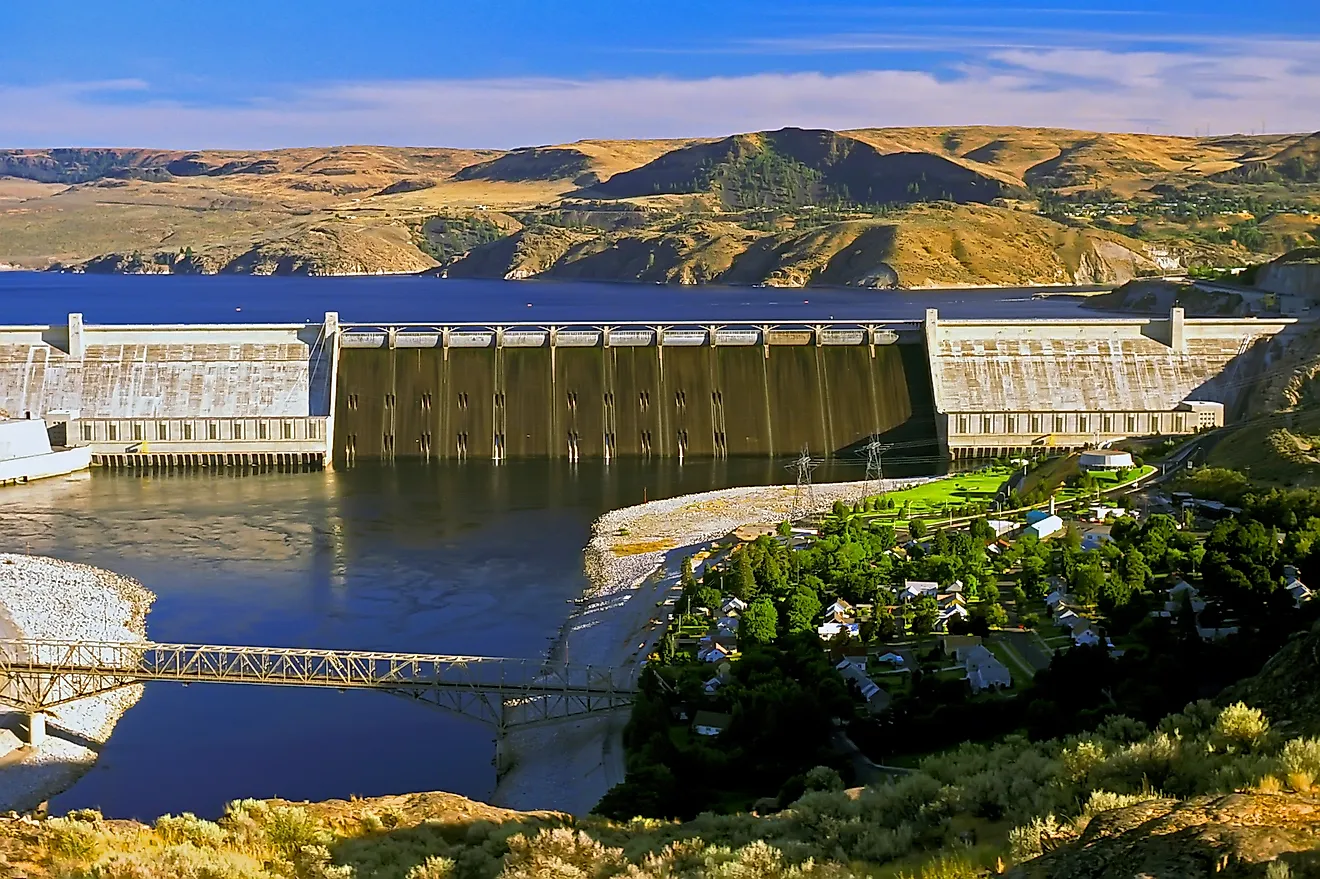
Paraguay is the other landlocked South American state and shares the Paraná-Paraguay river system with Argentina, Brazil, Bolivia, and Uruguay. The economy is anchored by agriculture (soybeans, beef, corn) and hydroelectric power. Paraguay shares the binational Itaipú Dam with Brazil on the Paraná River; the facility was the world's largest hydroelectric plant by generation until China's Three Gorges Dam surpassed it. Paraguay sells the bulk of its share of the Itaipú output to Brazil under a long-running treaty whose terms were renegotiated in 2024 to give Paraguay improved tariff revenue.
Paraguay is the only South American country with two co-equal official languages: Spanish and Guaraní. The latter is spoken by a majority of the population and is the only widely spoken indigenous language anywhere in the Americas to function as a national language alongside a European tongue. The capital Asunción sits on the Paraguay River across from Argentina. Paraguay's economy has grown faster than the regional average through most of the past decade, with 2024-2025 growth projected at around 4%, though absolute income levels remain well below the South American average. The country is the world's fourth-largest soybean exporter and the seventh-largest beef exporter.
4. Suriname - $6,843
Suriname is the smallest South American country by both population (around 625,000) and area (163,820 km²). It is the only South American state where Dutch is the official language, a legacy of its status as a former Dutch colony from 1667 until independence on November 25, 1975. The capital, Paramaribo, holds approximately 40% of the national population, and its historic inner city is a UNESCO World Heritage Site. Suriname is one of the most ethnically diverse societies in South America, with significant Hindustani (descendants of Indian indentured labourers brought in after the 1873 end of slavery), Javanese, Maroon, Indigenous, and Creole populations.
The economy has been in difficulty since the bauxite-mining collapse of the 2010s, with the IMF projecting Suriname's 2025 per-capita GDP slightly lower than 2024 (the only other South American country aside from Venezuela seeing a per-capita decline). The country defaulted on external debt in 2020 and entered an IMF programme in 2021. The major upside is offshore oil: TotalEnergies and APA Corporation made a final investment decision in October 2024 on the GranMorgu project in Block 58, expected to begin production in 2028 at around 220,000 barrels per day. If Suriname's offshore reserves develop as projected, the country may follow a Guyana-style transformation later this decade, though at lower volumes.
5. Ecuador - $7,210
Ecuador dollarised its economy in 2000 after a banking collapse and currency crisis, replacing the sucre with the US dollar. The arrangement has held for a quarter century and provides monetary stability that several South American neighbours lack, though it also removes monetary policy as an economic tool. The country's per-capita output is moderately above Suriname and Paraguay but remains below the regional average. Oil is the largest single export, with most production from the Amazon basin pumped through the OCP and SOTE pipelines to the Pacific coast. Ecuador also exports bananas, shrimp, flowers, and cacao at globally significant volumes.
Ecuador's principal recent challenge has been the security crisis that intensified through 2023-2025. Cocaine trafficking through the Pacific coast and the Galápagos shipping lanes turned the country, previously one of the more peaceful in South America, into one of the most violent in the region by homicide rate. President Daniel Noboa, elected in 2023 and re-elected in 2025, declared internal armed conflict against criminal organisations in January 2024 and has run an extended security operation since. The capital Quito sits at 2,850 metres in the Andes, the second-highest capital in the Americas after La Paz. The Galápagos Islands, 1,000 kilometres west of the mainland, drive significant tourism revenue and host one of the most protected marine reserves in the world.
6. Colombia - $8,249
Colombia is the second-most populous South American country at approximately 52 million residents and the third-largest economy by nominal GDP after Brazil and Argentina, though it ranks sixth in the region by per-capita output. The economy runs on oil (primarily Ecopetrol), coal (the country is the world's fifth-largest coal exporter), coffee, flowers, and mining. Colombia is also the world's largest cocaine producer, with coca cultivation reaching record levels in 2023 according to UN Office on Drugs and Crime estimates.
The decades-long internal conflict with the FARC guerrilla movement formally ended with the November 2016 peace agreement signed under President Juan Manuel Santos, who received the Nobel Peace Prize that year. Smaller armed groups, including the ELN and various drug-trafficking factions, remain active in parts of the country. Gustavo Petro became Colombia's first leftist president in 2022 and has pursued a "Total Peace" negotiation framework with remaining armed groups, with mixed results. Colombia is also the largest host of Venezuelan migrants, with approximately 2.8 million Venezuelans estimated to live in the country. The capital Bogotá sits at 2,640 metres in the Andes and is the largest city in the country.
7. Peru - $9,256
Peru is one of the most mineral-rich countries in the world and is consistently among the top three global producers of copper, silver, and zinc, as well as a major producer of gold, lead, and tin. Mining accounts for roughly 60% of Peruvian exports and around 10% of GDP. The country also has substantial agricultural output (asparagus, blueberries, grapes, avocados, coffee) and Pacific fisheries (anchovy fishmeal). Peru's diversified economy and prudent macroeconomic management produced one of the strongest growth records in Latin America from 2002 to 2013, with GDP per capita roughly doubling, before slowing as the commodity supercycle ended.
Peru's recent political record has been turbulent. The country has had six different presidents between 2018 and 2023, including the December 2022 self-coup attempt and subsequent removal of Pedro Castillo, followed by widespread protests in early 2023 that left dozens dead. Dina Boluarte succeeded Castillo and has governed since. The capital Lima holds nearly one-third of the national population of approximately 34 million. Quechua and Aymara are official languages alongside Spanish, and Peru shares Lake Titicaca with Bolivia at 3,812 metres of elevation, the world's highest navigable lake.
8. Brazil - $10,578
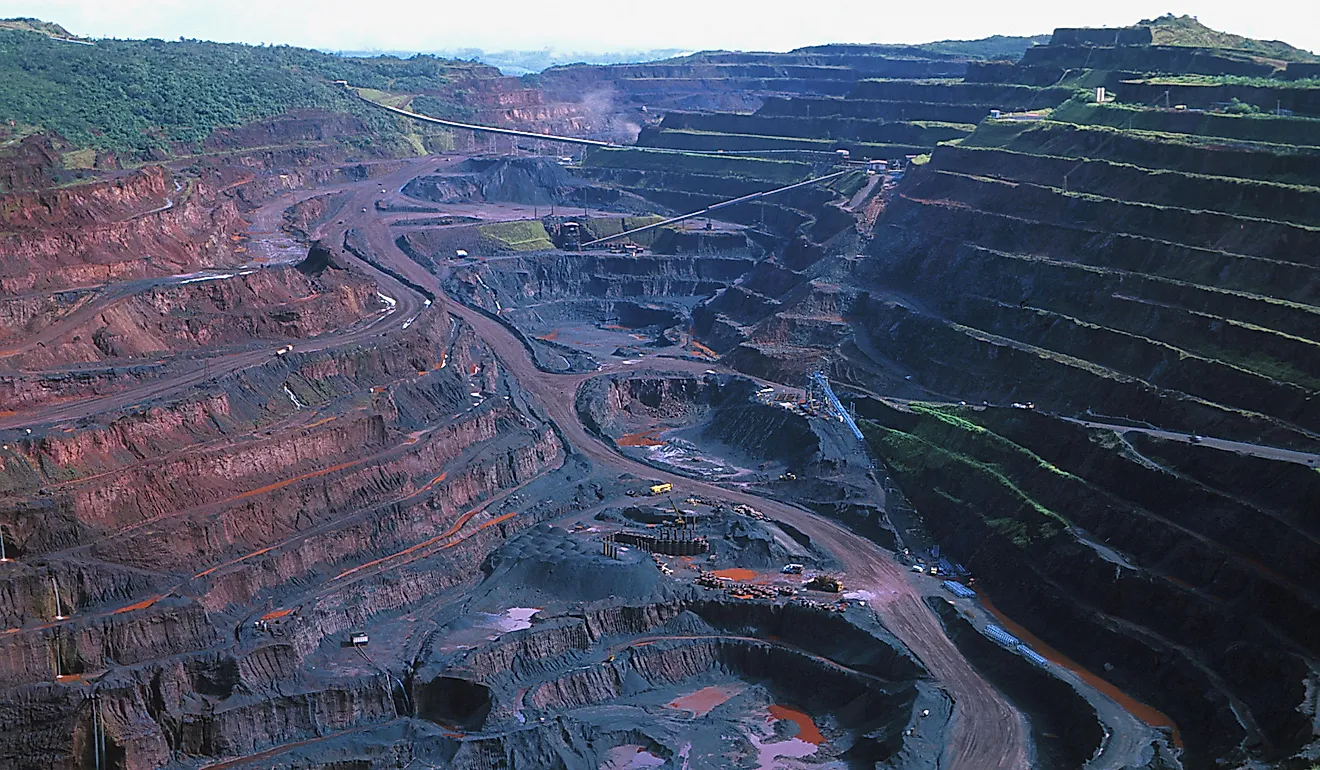
Brazil's 2025 per-capita GDP sits just above the regional average of $10,224, but the country is included here because it remains in the lower half of the South American per-capita ranking despite being by far the region's largest economy in absolute terms. Brazil's total GDP is roughly 47% of the South American total and the country is the only South American economy in the global top ten. The economy is highly diversified across agriculture (Brazil is the world's largest exporter of soybeans, beef, sugar, coffee, and orange juice), mining (iron ore, the country is the second-largest producer after Australia), manufacturing (Embraer is the third-largest commercial aircraft manufacturer in the world), services, and oil (offshore pre-salt fields operated primarily by Petrobras).
Brazil's population of approximately 217 million is the seventh-largest in the world and accounts for roughly half of South America's total population. The country is the only Portuguese-speaking nation in the Americas, a legacy of Portuguese colonisation from 1500 to 1822. President Luiz Inácio Lula da Silva began his third term in January 2023 after defeating Jair Bolsonaro in the October 2022 election. The capital Brasília is a planned city inaugurated in 1960 by President Juscelino Kubitschek, designed by Oscar Niemeyer and Lúcio Costa, and listed as a UNESCO World Heritage Site. The Amazon basin in northern Brazil holds about 60% of the world's largest tropical rainforest and remains central to global climate considerations.
How Guyana Reshaped The Ranking
The most significant change to the South American economic ranking in the past decade did not come from the poorest end of the table but from a country that was on it. Guyana's 2018 GDP per capita of approximately $4,689 ranked third from the bottom of the continent. The 2015 discovery of the Liza field in the Stabroek Block offshore Guyana, followed by 17 further oil discoveries through 2024, transformed the country's economic position. Production began in December 2019 and reached approximately 650,000 barrels per day by mid-2025, with projections approaching 1.2 million barrels per day by 2027 as further fields come online. The country's per-capita GDP grew by more than 600% between 2019 and 2025 and now exceeds $31,000 nominal (about $94,000 in purchasing-power-parity terms, the tenth-highest in the world). The transformation has created its own challenges, including absorptive-capacity limits on government spending, regional inflation pressures, and a long-running border dispute with Venezuela over the Essequibo region (which contains much of the offshore production area). The Guyana case illustrates how rapidly resource-driven economic positions can shift in South America, and Suriname may follow a similar trajectory once its Block 58 production begins in 2028. The table below summarises the current ranking of all twelve South American sovereign states by 2025 nominal GDP per capita.
| Rank | Country | GDP per capita 2025 (USD, nominal) | GDP per capita 2025 (Int. $, PPP) | Capital |
|---|---|---|---|---|
| 1 | Venezuela | $3,103 | $8,785 | Caracas |
| 2 | Bolivia | $4,585 | $11,439 | Sucre / La Paz |
| 3 | Paraguay | $6,799 | $17,827 | Asunción |
| 4 | Suriname | $6,843 | $22,309 | Paramaribo |
| 5 | Ecuador | $7,210 | $16,805 | Quito |
| 6 | Colombia | $8,249 | $22,396 | Bogotá |
| 7 | Peru | $9,256 | $17,950 | Lima |
| 8 | Brazil | $10,578 | $23,310 | Brasília |
| 9 | Argentina | $14,359 | $31,311 | Buenos Aires |
| 10 | Chile | $17,181 | $35,286 | Santiago |
| 11 | Uruguay | $24,380 | $37,190 | Montevideo |
| 12 | Guyana | $31,378 | $94,189 | Georgetown |